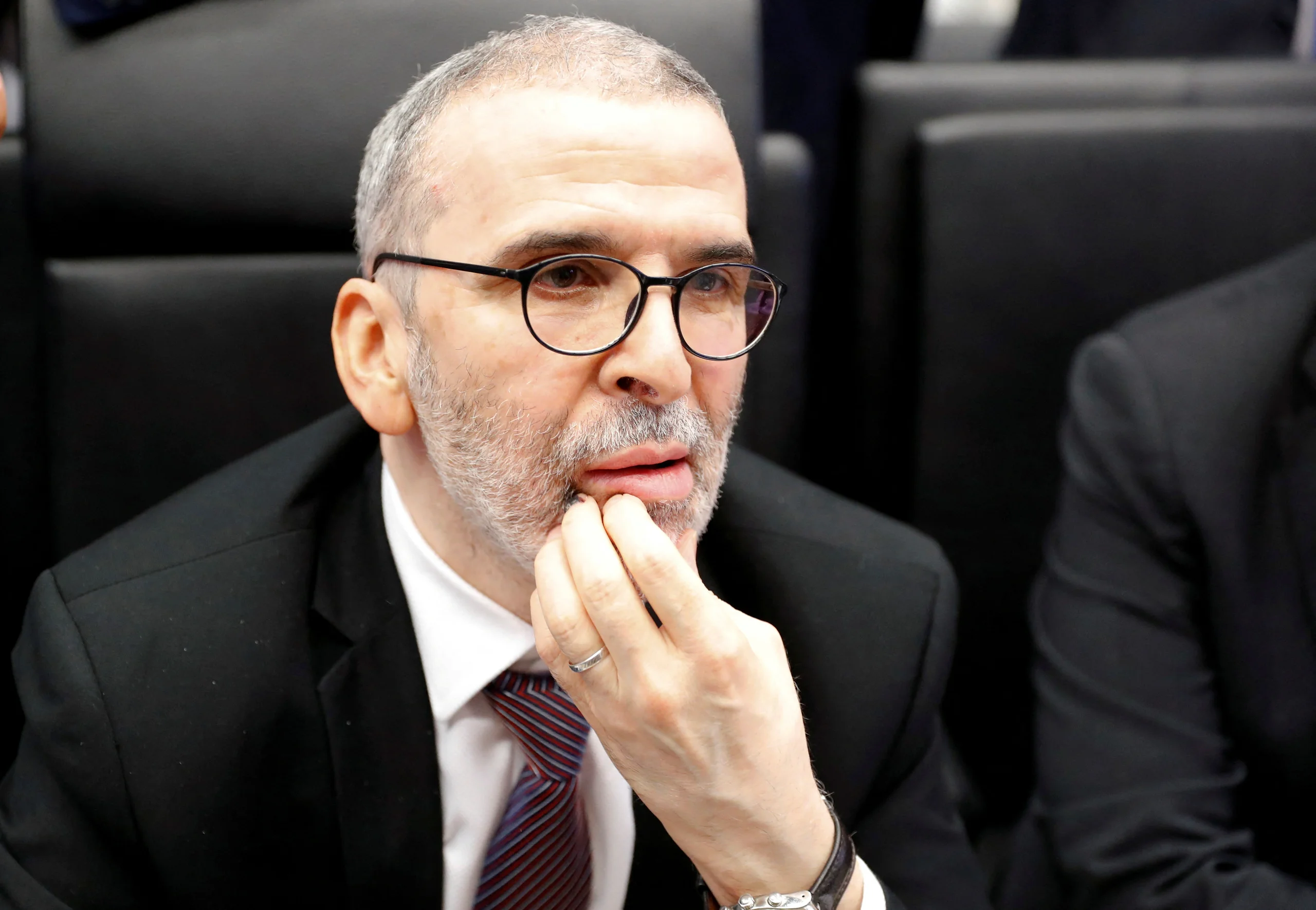
Farhat Bengdara
 United Arab Emirates
banker•energy executive•former politician
Also known as: Farhat Omar Bengdara, Farhat Bin Qaddara
Birthday
September 27, 1965
Birth Sign
Libra
Birthplace
Benghazi, Libya
Age
60 years old
About
Farhat Bengdara is a Libyan banker and energy executive who has spent more than three decades at the center of his country's financial and oil institutions. He is best known for leading the Central Bank of Libya through the turbulent years of the Gaddafi era and later steering the National Oil Corporation (NOC) through a period of crisis and recovery. As of 2026, he remains a respected figure in international finance circles, known for his technocratic approach and his ability to navigate Libya's complex political landscape.
Bengdara's career spans central banking, commercial finance, and the oil sector, and he has held board positions at major international institutions including UniCredit and ABC International Bank. His professional profile describes him as a "banking, energy, and investment executive" with a track record in management consulting. While he keeps a low public profile, his influence on Libya's economic trajectory has been significant, and he continues to be consulted on financial and development matters.
Early Life & Background
Farhat Omar Bengdara was born on September 27, 1965, in Benghazi, Libya's second-largest city and a major Mediterranean port. Growing up in Benghazi, he was exposed to the rhythms of a city that was both a commercial hub and a center of political ferment. His father, Omar, was a respected figure in the community, and the family's values emphasized education and public service.
Bengdara pursued his undergraduate studies at Garyounis University in Benghazi, earning a Bachelor of Arts in Economics. He then traveled to the United Kingdom for graduate education, obtaining a Master's degree in Money, Banking and Finance from Sheffield University. This international training gave him a solid grounding in both Western financial theory and the realities of Libya's state-dominated economy.
He began his career in Libya's state financial sector, holding a series of positions that built his expertise. He served as Deputy Governor of the Central Bank of Libya, Deputy Chairman of Wahda Bank, and Chairman and General Manager of the Public Furniture Company. In 2001, he became a Director of Arab Banking Corporation (Bank ABC), and he also held vice-chairmanship roles at UniCredit SpA and ABC International Bank plc in London. These early roles gave him a deep understanding of both domestic Libyan institutions and international banking networks.
Career Growth
Bengdara's breakthrough came in March 2006 when, at just 39 years old, he was appointed Governor of the Central Bank of Libya. In that role, he managed the country's sovereign wealth and international financial relationships, becoming one of the regime's key economic figures.
His career took a dramatic turn during the 2011 Libyan Civil War. In February 2011, he defected to the anti-Gaddafi movement and left for Turkey, officially remaining in his post until early March. He later stated that he deliberately delayed asset transfers from EU and US accounts, which he believed blocked approximately 96% of Libyan sovereign funds from reaching the regime due to UN sanctions. After the revolution, he worked with the National Transitional Council to maintain banking operations and build international relationships for Libya's future central banking system.
Following a decade in UAE banking, Bengdara was appointed Chairman of the National Oil Corporation in July 2022. He quickly lifted force majeure at oil terminals after groups ended their blockade, restoring production. He implemented a four-pillar strategy that rebuilt the corporation and attracted international investment, and he led research to combat Libya's parallel currency market. He also pursued diversification into agriculture, water treatment, and environmental programs, described as "bets on what comes after oil."
Bengdara resigned from the NOC on January 16, 2025, citing urgent health reasons. His successor was Masoud Sulaiman. Since then, he has remained active in financial circles, and the African Investment Bank he helped found nearly two decades ago is still awaiting final signatures to become operational.
Career Timeline
Public Image & Style
In the media, Farhat Bengdara comes across as a technocratic economist and institutional insider who has navigated Libya's turbulent transition from the Gaddafi era through the post-revolutionary period. Africa Confidential once described him as one of the Central Bank's "strongmen" under the old regime, while more recent profiles frame him as "one of the Arab world's most versatile financial and energy executives."
His public persona is understated and professional, with no flashy lifestyle or celebrity presence. He maintains a LinkedIn profile and personal websites that serve as professional portfolios, but he has no significant social media following. There is no documented fandom or fan culture around him; his reputation rests on his institutional roles and his handling of Libya's oil and money.
Fame & Fandom
Farhat Bengdara commands a sphere of influence defined by high-stakes economics and energy geopolitics rather than the adulation reserved for pop stars. His audience consists of policymakers, investors, and industry insiders who track his maneuvers in Libya's oil sector and central banking with intense scrutiny. There is no organized fanbase, no viral hashtags, and no dedicated social media movements; he is known strictly by his titles as a former Central Bank Governor and National Oil Corporation Chairman. The public narrative around him focuses on verified professional milestones, such as his 2025 resignation due to health reasons and his controversial role in blocking sovereign asset transfers during the 2011 revolution. These are stories of statecraft and crisis management, not folklore or celebrity culture. While some future projections discuss his economic playbooks, these remain analytical exercises rather than cultural touchstones that generate mass fandom. Despite this lack of traditional celebrity status, his global footprint remains significant within specialized financial circles. His standing reflects a unique blend of regional authority and international recognition. According to the iFANN Global Fame Rankings, Farhat Bengdara is currently the 87th most famous person from United Arab Emirates, a position holding steady from the previous cycle.
Interesting Facts and Legends
At 39, Bengdara became one of the youngest central bank governors in the Arab world when appointed to lead the CBL in 2006. During the 2011 revolution, he deliberately stalled asset transfers from EU and US accounts, a strategic move he claims blocked roughly 96% of Libyan sovereign funds from reaching the Gaddafi regime. He has served on the boards of major international institutions including UniCredit SpA and ABC International Bank plc in London, offering a rare dual perspective on Western and Libyan finance. Bengdara helped lay the groundwork for an African Investment Bank nearly two decades ago, an institution that still requires ten more signatures from member states to begin operations. In January 2025, he submitted his resignation as Chairman of the National Oil Corporation citing urgent health reasons, marking a pivotal shift in Libya's energy leadership. Earlier that year, the NOC officially denied reports suggesting he held Emirati citizenship amidst political scrutiny. His career also includes pioneering efforts to diversify Libya's economy through Sohoul Agriculture, an integrated farming venture established in 2019 that operates one of the world's largest hydroponic facilities.
Family & Personal Life
Details about Farhat Bengdara's family life are scarce, as he keeps his personal affairs private. His father, Omar, is known through the patronymic in his full name, Farhat Omar Bengdara. There is no public record of his mother, siblings, spouse, or children. He has not shared information about his household or personal relationships in interviews or public statements. This discretion is consistent with his professional focus and his role as a public figure in Libya's financial sector.
Notable Connections
Farhat Bengdara has worked alongside key figures in Libya's political and financial landscape. He submitted his resignation to Prime Minister Abdul Hamid Dbeibeh, and his successor at the NOC was Masoud Sulaiman. Africa Confidential also named Omar Bin Gueddara as his successor. His career has intersected with international banking leaders through his board roles at UniCredit and ABC International Bank.
Relationships & Dating History
Public information about Farhat Bengdara's romantic relationships is virtually nonexistent. He has never discussed his personal life in interviews, and no credible media reports document a spouse, partner, or dating history. As of 2026, his relationship status remains unknown, and he appears to be unmarried or at least keeps his private life strictly out of the public eye.
Salary, Net Worth In 2026
$5 Million
iFANN Editorial Team estimate
Farhat Bengdara's personal net worth is not publicly documented in official registries. As a long-serving executive in Libya's state institutions, his income derived primarily from his salaries as Governor of the Central Bank of Libya, Chairman of the National Oil Corporation, and earlier banking positions. These roles likely provided a comfortable but not extravagant income, given the state-sector nature of his employment. His financial situation is further complicated by the political and economic turmoil in Libya, which has affected many officials. There is no evidence of significant personal investments or business ventures outside his professional roles. Per iFANN's editorial analysis, estimates of his net worth place the figure at $5 Million as of 2026. Any specific valuation should be viewed as an educated guess rather than a confirmed number.
Awards & Accolades
View 2 records, honours and achievementsKnown For
Central Bank of Libya
2006 · Governor
National Oil Corporation
2022 · Chairman
Keywords
Sources
Quick Facts
- Profession
- Banker, Energy Executive, Former Politician
- Born
- September 27, 1965
- Birthplace
- Benghazi, Libya
- Gender
- Male
- Birth Sign
- Libra
- Education
- B.A. Economics, Garyounis University; Master's in Money, Banking and Finance, Sheffield University
Personal Details
- Full Name
- Farhat Omar Bengdara
- Education
- B.A. in Economics, Garyounis University; Master's in Money, Banking and Finance, Sheffield University
Frequently Asked Questions
Who is Farhat Bengdara?
Is Farhat Bengdara Emirati?
Why did Farhat Bengdara resign?
How old is Farhat Bengdara?
What is Farhat Bengdara's net worth?
Social Media
Similar People
Join the community
fans discussing