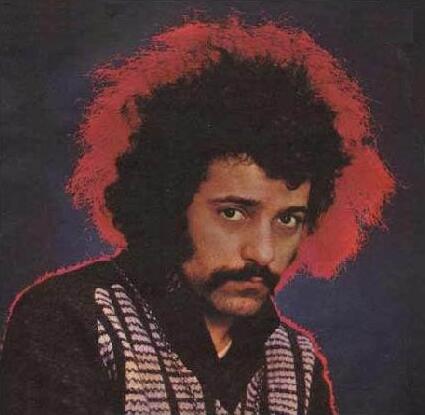
Farhad Mehrad
 Iran
IranMember of Black Cats
singer•songwriter•guitarist•pianist
Also known as: Farhad
Birthday
January 20, 1944
Birth Sign
Sagittarius
Birthplace
Tehran, Iran
Age
Died at 58
About
Farhad Mehrad was an Iranian singer, songwriter, guitarist, and pianist who left an indelible mark on Persian music. He was the first to release an English rock and roll album in Iran, a pioneering move that set him apart in the 1960s and 70s. As a founding member of the band Black Cats, he helped shape the country's pop and rock scene before the 1979 Islamic Revolution. After the revolution, he was silenced by a singing ban for years, but he made a powerful comeback with a concert in 1990.
His music, which blended rock, pop, and folk, was known for its emotional depth and social conscience. He sang in multiple languages, including Persian, English, French, German, and Italian, and his English covers of Leonard Cohen songs on the album Khab Dar Bidari were groundbreaking. Farhad passed away on August 31, 2002, in Paris, but his influence on Iranian music remains profound. He is remembered as a symbol of artistic resistance and a trailblazer who opened doors for future generations.
Early Life & Background
Farhad Mehrad was born on January 20, 1944, in Tehran, the youngest in his family. His father, Reza Mehrad, was an Iranian diplomat, which meant the family moved around, exposing young Farhad to diverse cultures. As a child, he was described as an "adult imitator" because he often mimicked grown-ups. His interest in music sparked early when he would sit in his older brother's room, listening to violin and drum practice for hours. A friend of his brother noticed his fascination and suggested the family get him an instrument. They prepared a cello, but his formal lessons lasted only three sessions before the instrument broke. Farhad later reflected, "Let me learn to listen," and he went back to simply absorbing his brother's practice sessions.
During his school years, his passion for music deepened, but getting an instrument remained difficult. His father's diplomatic postings meant the family lived in several countries, which broadened his musical tastes. These early experiences with different musical traditions would later influence his eclectic style, blending Western rock with Persian folk. Despite the challenges, Farhad's determination to pursue music never wavered, setting the stage for his eventual breakthrough in the 1960s.
Career Growth
Farhad Mehrad's professional career took off in 1964 when he co-founded the band Black Cats, a popular act that helped him gain a foothold in Iranian music. His solo breakthrough came with the song "Jomeh" (Friday), written for the 1971 film Khodahafez Rafigh. The track became a nationwide hit and remains one of his most beloved songs. Around the same time, he released "Mard-e Tanha" (Lonely Man), which also brought him widespread fame. In 1971, he released his first recorded song, "Ayeneh Ha," and continued building a catalog that included "Shabaneh" and "Koodakaneh."
Farhad made history by recording the first English rock and roll album in Iran, a bold move that set him apart. In the winter of 1978, he sang "Vahdat" (Unity), a revolutionary anthem that resonated with the public. But after the 1979 Islamic Revolution, his career was halted. The new government banned him from singing, and he was even imprisoned for a time due to the social-justice themes in his lyrics. He remained silenced for over a decade, with sources citing bans lasting until 1989 or 1993.
His first post-revolution concert took place in 1990, marking a triumphant return. In the 1990s, he released Khab Dar Bidari (Daydreams), the first western-style album legally produced in Iran after the revolution. It included his English covers of Leonard Cohen's "Hey, That's No Way to Say Goodbye" and "Suzanne," as well as "Yesterday" and "Don't Let Me Be Misunderstood." This album was a landmark, paving the way for younger Iranian musicians to explore new sounds without fear. Farhad continued performing and recording until his death in 2002. Posthumously, a boxed set titled Farhad was released in 2003, featuring his English covers and rare interviews.
Career Timeline
Public Image & Style
Farhad Mehrad is remembered as a legendary figure in Iranian music, known for his emotional singing style that transcended language barriers. International listeners who didn't understand Persian still connected with his music on a deep level. He was seen as a symbol of artistic resistance, having faced both pre-revolution imprisonment and post-revolution censorship while maintaining his integrity. His style blended rock, pop, and folk, and his English-language recordings were particularly groundbreaking. He is respected for his versatility and his willingness to experiment, and his legacy as a pioneer who opened doors for younger musicians is widely acknowledged. Fans remember him as a cultural icon whose music continues to inspire.
Fame & Fandom (iFAMOUS Rankings)
Farhad Mehrad stands as the 66th most famous person in Iran, a position he holds steady according to the latest iFANN Global Fame Rankings. This standing reflects his enduring status as a foundational figure whose music transcends the decades since his passing. While the Global Fame Rankings track global attention across media coverage and consumption signals worldwide, the numbers here simply confirm that his legacy remains deeply woven into the cultural fabric of his homeland. There is no official or active fandom name documented for Farhad Mehrad today, as the artist passed away in 2002, leaving behind a legacy rather than a mobilized contemporary movement. The current appreciation for his work comes from historians, music enthusiasts, and the diaspora who keep the archives alive through streaming platforms. Unlike living stars who drive chart performance with social media campaigns, Farhad's audience engages with his archived recordings like the 2023 release of *Farhad in Black Cats: Studio B Show* out of reverence for a bygone era. His "fans" are those who recognize the historical significance of the Black Cats, formed in Tehran in 1966, which pioneered Western-style rock in Iran. The connection listeners feel is not driven by organized rituals or fan-funded projects but by a quiet, persistent devotion to his pioneering spirit and emotional depth.
Interesting Facts and Legends
Farhad was a true polyglot, singing in Persian, English, French, German, and Italian, while also translating poetry from old English-language poets into Farsi to set them to music. His album *Khab Dar Bidari* took its name from a poem by Spanish poet Juan Ramon Jimenez. He reportedly spent time as a political prisoner during the 1970s due to the social-justice themes in his lyrics. His early musical education was interrupted when his cello broke after just three lessons, leading to his famous quote. After his death, a 2003 boxed set included rare interviews alongside his music. Beyond these facts, the legend of his band formation in 1966 remains the defining moment of Iranian rock history. The Black Cats, featuring other notable figures like Ebi and Shahram Shabpareh, were the first to blend Western influences with local sensibilities on such a grand scale. Songs like "I Believe To My Soul" and "Where Can I Go Without You" have become part of the enduring catalog of Iranian classic rock, often referenced in discussions about the golden age of the genre. His passing in 2002 marked the end of an era, transitioning him from a living performer to a nostalgic icon for the Iranian diaspora and younger generations discovering the country's musical history.
Notable Quotes
“Let me learn to listen.”
Family & Personal Life
Farhad's father, Reza Mehrad, was a diplomat in the Iranian Ministry of Foreign Affairs, serving in various countries. Farhad was the youngest child, and he had at least one older brother whose music practice sessions sparked his interest in music. His family's diplomatic lifestyle meant they lived in several countries, which influenced his musical tastes. Details about his mother and other siblings remain scarce. Farhad never publicly shared details about his own family, and he had no known children. He maintained a private personal life, focusing on his music and activism.
Notable Connections
Relationships & Dating History
Death & Aftermath
Died
August 31, 2002 (aged 58)
Death Place
Paris, France
Cause of Death
Unknown
The celebrated Iranian singer, songwriter, guitarist, and pianist Farhad Mehrad passed away on August 31, 2002, in Paris, France, at the age of 58. The circumstances of his final days, any hospital statement concerning his condition, and details about his last public appearance prior to his passing have not been made public. Unlike high-profile cases that trigger widespread inquiries, the reaction to his death was marked by enduring reverence rather than immediate, widely reported vigils or chart surges.
His passing appears to have been treated as a private family matter. Information regarding a funeral or memorial service is absent from available records, leaving the location and nature of his burial unspecified.
Posthumously, his estate continues to manage his musical catalog, ensuring albums such as Mard-E Tanha (1990) and Khab Dar Bidari (1993) remain accessible on major digital platforms like Spotify and Apple Music. His music retains significant monthly listenership and remains featured in contemporary cultural contexts, including the soundtrack for the 2020 film Ballad of a White Cow. The precise handling of his estate remains a matter of private administration without public statements from his family beyond general copyright management.
Net Worth (Estate Value)
$5 Million
iFANN Editorial Team estimate
Farhad Mehrad's estate continues to earn from his recorded catalog, which remains popular on streaming platforms. As of 2026, his Spotify presence shows over 125,000 monthly listeners, indicating ongoing commercial viability. The 2003 posthumous boxed set release also contributed to estate revenue. Per iFANN's editorial analysis, his net worth is estimated at $5 Million, derived from royalties, streaming income, and catalog sales.
Awards & Accolades
View 4 records, honours and achievementsKnown For
Jomeh
1971 · Singer
Mard-e Tanha
1971 · Singer
Khab Dar Bidari
1990 · Album
Keywords
Sources
Quick Facts
- Profession
- singer, songwriter, guitarist, pianist
- Born
- January 20, 1944
- Birthplace
- Tehran, Iran
- Died
- August 31, 2002
- Death Place
- Paris, France
- Gender
- Male
- Birth Sign
- Sagittarius
- Net Worth
- $5 Million
Filmography
1
Total
1
Film
0
TV
Frequently Asked Questions
What is Farhad Mehrad known for?
Why was Farhad Mehrad banned from singing?
What was Farhad Mehrad's most famous song?
How did Farhad Mehrad die?
Was Farhad Mehrad a member of Black Cats?
Social Media
Similar People
Join the community
fans discussing