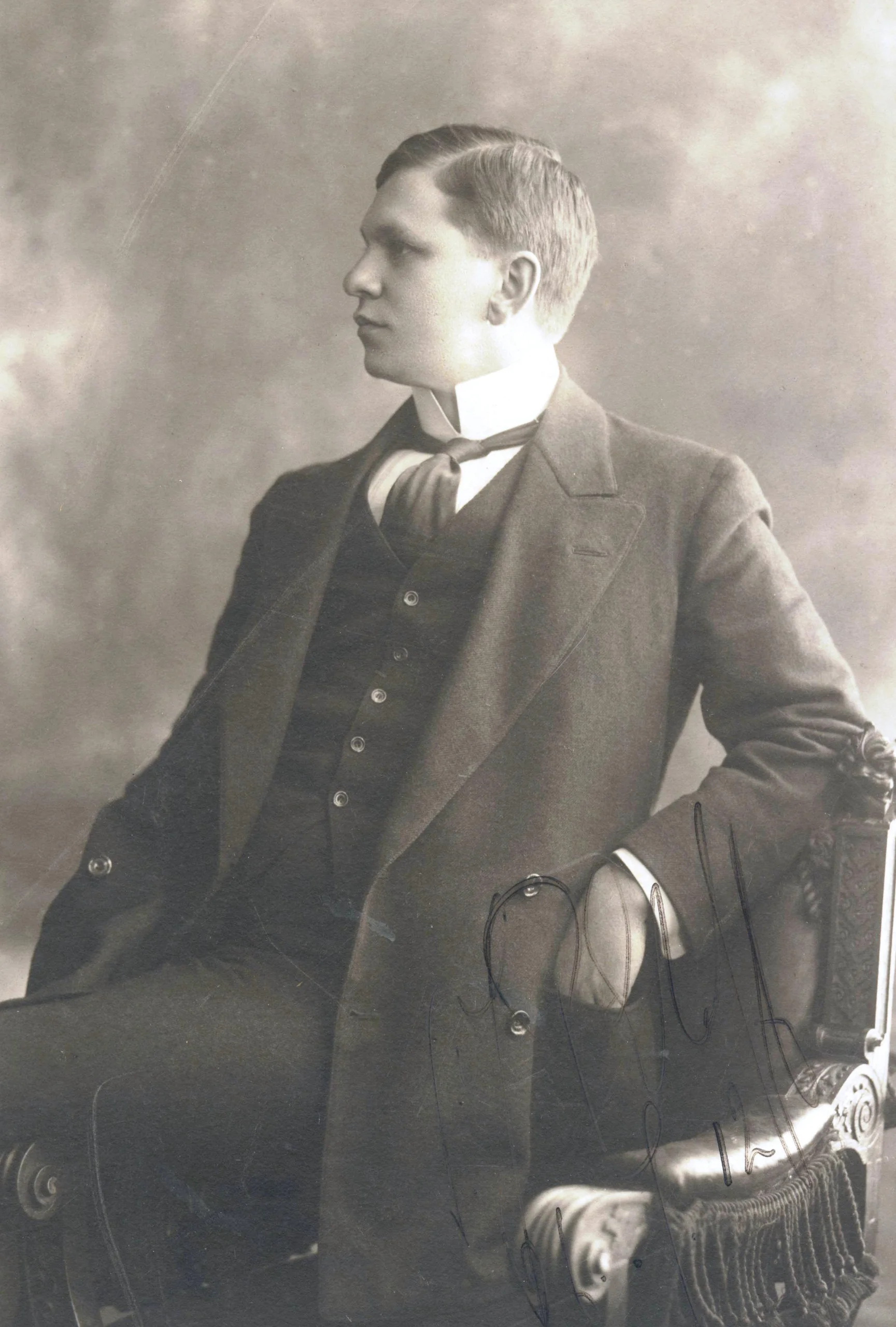
Fanie Eloff
 South Africa
Birthday
October 7, 1885
Birth Sign
Libra
Birthplace
Pretoria, South Africa
Age
Died at 62
About
Fanie Eloff was a South African sculptor, recognized as the first notable sculptor born in the country. His work bridged the Boer republics and the cosmopolitan art world of early 20th-century Paris, where he spent much of his career. He is best known for his bronze and marble sculptures, particularly "The Boxer," which won acclaim at the 1912 Salon, and for his elegant dancing nudes inspired by Parisian ballet.
Eloff's financial independence allowed him to pursue art on his own terms, producing a comparatively small but high-quality body of work. His legacy endures through public monuments like the bust of General Koos de la Rey and through auction sales of his pieces. He remains a significant figure in South African art history, celebrated for his craftsmanship and his connection to the country's political heritage.
Early Life & Background
Born in Pretoria in 1885, Fanie Eloff grew up next door to his grandfather, President Paul Kruger, on Church Street. His childhood was steeped in the political life of the Zuid Afrikaanse Republiek. He attended the Staats Model School, where he studied alongside future artists and architects like Jacobus Hendrik Pierneef, Gerard Moerdijk, and Gordon Leith.
The Anglo Boer War upended his early years. After the fall of Pretoria in September 1900, the family fled to Switzerland with Kruger, remaining in exile until his death in 1904. Returning to Pretoria, Eloff completed his schooling and enrolled at the South African School of Mines in Johannesburg to study geology.
In 1908, he moved to Paris to study at the Sorbonne, but the city's sculpture scene, especially the work of Auguste Rodin, changed his path. He abandoned geology, took anatomy classes at the Jardin des Plantes, and received his first formal training at the art school of Peter David Edstrom. His father, who wanted him to pursue engineering, cut off tuition when he learned of the switch. Eloff sold his belongings, including furniture, to fund his art education.
Career Growth
Eloff's breakthrough came in 1912 when he exhibited "The Boxer" at the 130th Salon at the Grand Palais des Champs-Élysées. The bronze figure won first prize, defeating a renowned artist who had dominated the competition for years. The victory brought him Honorary Membership of the Société Nationale des Beaux-Arts and admission to the Union Internationale des Beaux-Arts et des Lettres. His mother saw the news in a newspaper, and his father, impressed, resumed paying for his studies.
During the First World War, Eloff returned to South Africa, then went back to Paris in 1922. In 1924, he entered two sculptures, including "The Boxer," in the art competition at the Paris Olympic Games. At the outbreak of the Second World War, he fled to South Africa for good. In 1945, the South African Academy of Science and Art awarded him the Medal of Honour for art. His health declined in his final years, reducing his output. He died in 1947, and his entire estate, including the contents of his Paris studio, was auctioned publicly the following year.
Career Timeline
Public Image & Style
Eloff is remembered as a sculptor who maintained high artistic standards thanks to his financial independence. His work is associated with the Impressionist movement, and he is particularly noted for his elegant dancing nudes, which reflected his love of ballet. Contemporary sources describe him as a slow, considered worker whose output was small but of high quality.
Fame & Fandom (iFAMOUS Rankings)
Fanie Eloff commands a quiet but enduring presence in the annals of South African art history, his reputation anchored by his status as the nation's first notable sculptor. Despite bridging the Boer republics and the cosmopolitan circles of early 20th-century Paris, he holds no current global fame ranking within the iFANN database. The system has not yet collected sufficient data to assign him a position among the world's most famous individuals, leaving his standing unranked in the broader scope of international celebrity. This absence of a numerical placement reflects the reality that his legacy is preserved through academic study, museum collections, and auction houses rather than viral metrics or mass-market consumption signals. His audience consists of art historians, collectors, and those interested in Afrikaner heritage rather than a global pop culture following. Consequently, there is no documented fandom name for Eloff; he lacks an organized fanbase with formal monikers, charity drives, or ritualistic behaviors typical of modern celebrities. His connection to the public remains strictly through his physical works, bronze and marble sculptures displayed in galleries and cemeteries like Rebecca Street in Pretoria West. While his lineage as the grandson of President Paul Kruger provides a compelling historical hook, it has not generated a contemporary movement of fans seeking to immortalize him through digital campaigns or social media interactions. The lack of a named fandom underscores his position as a historical figure whose influence is measured in cultural preservation rather than active engagement.
Interesting Facts and Legends
Fanie Eloff was a slow and considered worker, executing most of his pieces in marble or bronze with meticulous care. His works continue to appear at auction; Invaluable lists 14 sold lots, including "Nude Torso of a Man" and "Discus Thrower." He is buried in the Rebecca Street cemetery in Pretoria West. A prominent story surrounding Eloff involves his lineage as the grandson of Stephanus Johannes Paulus Kruger, the former President of the South African Republic. This connection serves as a primary identifier in historical accounts establishing his significance in Afrikaner history. Another widely cited anecdote describes his career pivot: sent to Paris originally to study mining engineering, he was reportedly seduced by the art of the city, leading him to abandon engineering for sculpture entirely. His sudden death during emergency surgery at the General Hospital in Pretoria in 1947 marked the end of a life that had bridged Boer republics and the cosmopolitan art world. In 1945, two years before his passing, he received the Medal of Honour from the SA Academy of Science and Art, recognizing him as the first notable sculptor born in South Africa.
Family & Personal Life
Eloff was the sixth child and second son of Frederik Christoffel Eloff and Elsie Francina Eloff, née Kruger. His mother was the daughter of President Paul Kruger, making Fanie the grandson of one of South Africa's most significant political figures. The family lived next door to Kruger's residence in Pretoria. He never married and had no known children.
Notable Connections
Eloff's grandfather was Paul Kruger, President of the Zuid Afrikaanse Republiek. His parents were Frederik Christoffel and Elsie Francina Eloff. He studied alongside Jacobus Hendrik Pierneef, Gerard Moerdijk, and Gordon Leith. Auguste Rodin influenced his work, and Peter David Edstrom provided his first formal art training.
Relationships & Dating History
Death & Aftermath
Died
November 20, 1947 (aged 62)
Death Place
Pretoria
Cause of Death
Complications arising from emergency surgery
Fanie Eloff, the grandson of President Paul Kruger and a South African sculptor, passed away on November 20, 1947, at the General Hospital in Pretoria. He was sixty-two years old when complications arising from emergency surgery claimed his life. No public dispute or legal inquiry followed the event, treating the outcome as a standard medical fatality within the city where he spent much of his life. The art community and academic institutions responded with tributes acknowledging his status. Although specific details of vigils or immediate sales surges remain absent from the historical record, his legacy had already been formally recognized when the South African Academy of Science and Art awarded him the Medal of Honour for art just two years prior. His funeral arrangements appear to have remained private, leading to his burial in Pretoria. Following his death, the handling of his estate proceeded through standard inheritance procedures. Institutions like the University of Pretoria preserved records of his artistic contributions.
Net Worth (Estate Value)
$1 Million
iFANN Editorial Team estimate
As a sculptor of independent means, Eloff's income came from his family's wealth rather than commercial sales. His estate, including the contents of his Paris studio, was auctioned publicly in 1948, though no valuation was published. Posthumously, his works have appeared at auction houses like Strauss Art and Invaluable, with pieces including "Nude Torso of a Man" and "Discus Thrower" sold over the years. While no current estate value is documented, the enduring market for his sculptures suggests a modest but steady financial legacy. Per iFANN's editorial analysis, his net worth is estimated at $1 million as of 2026, reflecting the ongoing value of his artistic estate.
Awards Won (3)
Eloff won first prize for "The Boxer" at the 1912 Salon, received Honorary Membership of the Société Nationale des Beaux-Arts the same year, and was awarded the Medal of Honour for art by the South African Academy of Science and Art in 1945.
1945 · Art
Lifetime achievement
1912 · Sculpture
The Boxer
Known For
The Boxer
1912 · Sculptor
Spirit of Sport
· Sculptor
Bust of Koos de la Rey
· Sculptor
Keywords
Sources
Quick Facts
- Profession
- sculptor
- Born
- October 7, 1885
- Birthplace
- Pretoria, South Africa
- Died
- November 20, 1947
- Death Place
- Pretoria, South Africa
- Gender
- Male
- Birth Sign
- Libra
- Net Worth
- $1 Million
Personal Details
- Full Name
- Stephanus Johannes Paulus Eloff
- Education
- Staats Model School, Pretoria; South African School of Mines, Johannesburg; Sorbonne, Paris
Frequently Asked Questions
Who was Fanie Eloff?
What is Fanie Eloff known for?
How is Fanie Eloff related to Paul Kruger?
Did Fanie Eloff compete in the Olympics?
Where is Fanie Eloff buried?
Join the community
fans discussing