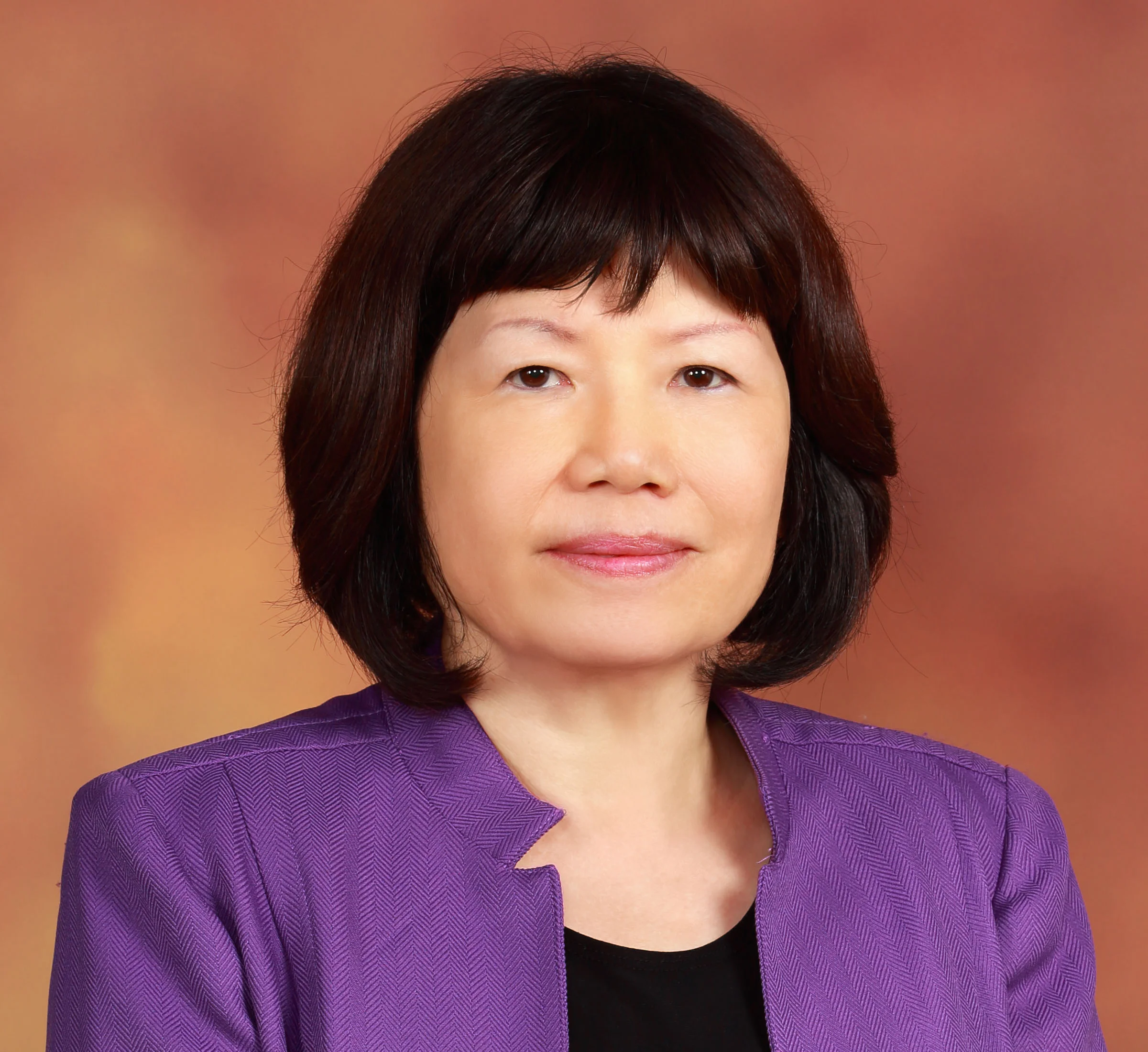
Fan Chung
 Taiwan
mathematician•computer scientist
Also known as: Fan-Rong King Chung Graham, Fan Chung Graham, Fan R. K. Chung, F. R. K. Chung
Birthday
October 9, 1949
Birth Sign
Libra
Birthplace
Kaohsiung, Taiwan
Age
76 years old
About
Fan Chung is a Taiwanese-American mathematician whose work has reshaped how we understand networks, from the internet to social connections. Born in Kaohsiung, Taiwan on October 9, 1949, she moved to the United States for graduate study, earning her doctorate from the University of Pennsylvania in 1974 under Herbert Wilf. Her research spans spectral graph theory, extremal graph theory, and random graphs, where she extended the classic Erdős–Rényi model to handle graphs with general degree distributions, including the power-law graphs that underpin large information networks.
Chung spent nineteen years at Bell Laboratories and Bellcore, where she tackled applied problems in communication and computing networks. In 1998, she became the Paul Erdős Professor in Combinatorics at the University of California, San Diego, a position she still holds. Before that, she made history at the University of Pennsylvania as the first woman to earn tenure in its mathematics department. Her influence extends beyond her own research: she has served on the editorial boards of more than a dozen international journals and has been editor-in-chief of Internet Mathematics since 2003.
Her contributions have been recognized worldwide. She delivered invited lectures at the International Congress of Mathematicians in 1994 and a plenary address on the mathematics of PageRank at the 2008 American Mathematical Society meeting. In 2009, she was selected as a Noether Lecturer, and in 2024, she was elected to the United States National Academy of Sciences. Throughout her career, Chung has bridged pure mathematics and real-world applications, making her one of the most influential combinatorialists of her generation.
Early Life & Background
Fan Chung grew up in Taiwan, where her early interest in mathematics was nurtured. She excelled in her studies and moved to the United States for graduate school, a significant step for a young woman from Taiwan at the time. She enrolled at the University of Pennsylvania, where she studied under the supervision of Herbert Wilf, a prominent mathematician known for his work in combinatorics. In 1974, she completed her PhD, a remarkable achievement that set the stage for her groundbreaking career.
Her doctoral research focused on combinatorial problems, and she quickly demonstrated a talent for connecting abstract mathematical concepts with practical applications. After finishing her degree, she joined AT&T Bell Laboratories as a technical staff member, where she would spend the next nineteen years. At Bell Labs, she worked on applied problems in communication and computing networks, gaining firsthand experience with the real-world challenges that would later inform her theoretical work. This period was formative, as she honed her skills in both pure and applied mathematics, building a foundation for her future contributions to spectral graph theory and random graphs.
Career Growth
Fan Chung's career took off during her time at Bell Labs, where she became known for her ability to apply sophisticated mathematics to practical network problems. In 1994, she delivered an invited lecture at the International Congress of Mathematicians, a prestigious honor that recognized her growing influence. Four years later, she made a major move to academia, becoming the Paul Erdős Professor in Combinatorics at UC San Diego, a position she held until her recent emeritus status.
At UC San Diego, Chung continued to push the boundaries of graph theory. She is perhaps best known for extending the Erdős–Rényi random graph model to handle graphs with general degree distributions, including the power-law graphs that describe the structure of the internet. This work, which she developed with collaborators, has had a profound impact on computer science and network theory. In 2003, she became editor-in-chief of Internet Mathematics, a role she still holds. Her contributions have been recognized with numerous honors, including a plenary address on PageRank at the 2008 American Mathematical Society meeting, a Noether Lectureship in 2009, and election to the National Academy of Sciences in 2024. That same year, she received the Revelle Medal from UC San Diego, one of the university's highest honors.
Public Image & Style
Fan Chung is known among mathematicians for her collaborative spirit and her knack for finding elegant solutions to complex problems. A 2025 Quanta Magazine profile highlighted how she has linked her mathematical work to problems across computer science, engineering, and physics, underscoring the collaborative nature of her career. Her public image is that of a bridge-builder, someone who thrives on working with others and applying abstract ideas to real-world challenges.
Chung does not maintain a significant social media presence; her professional homepage at UC San Diego serves as her primary online platform. In the mathematics community, she is respected not only for her research but also for her mentorship. She has guided 19 doctoral students, many of whom have gone on to successful careers, creating a lasting academic legacy. Her style is understated but her impact is profound, and she is often cited as a role model for women in mathematics.
Fame & Fandom
Fan Chung holds no current placement in the iFANN Global Top 1,000 or any scope-specific ranking list. The iFANN Global Fame Engine has evaluated her profile and determined that she does not currently occupy a numbered position within the published rankings. While her name carries significant weight within the mathematical community, it lacks the commercial traction required for a global celebrity rank. Her audience consists of students, researchers, and professionals in computer science and engineering rather than a general public following. There is no formalized fandom with a specific collective name, nor are there organized campaigns, fan rituals, or branded merchandise associated with her public persona. Unlike entertainers whose popularity is measured by chart positions or box office returns, Fan Chung's influence is quantified through academic citations and scholarly impact. She has been cited over 48,000 times across her career, reflecting deep engagement within her field but not broad cultural consumption. Her interactions remain strictly professional, centered on collaborative research and mentorship rather than fan engagement. No viral moments, inside jokes, or fan-funded projects exist in her history. The absence of a named fanbase is consistent with her status as an Emeritus Distinguished Professor at the University of California, San Diego. Her legacy is defined by rigorous contributions to spectral graph theory and extremal graph theory rather than pop-culture mythology. In the context of global fame metrics, she remains an unranked figure whose reputation is built on decades of academic service and editorial work.
Interesting Facts and Legends
Fan Chung received the Revelle Medal in 2024, UCSD's highest faculty honor, recognizing her long-term contribution to the university community. That same year, she was elected to the National Academy of Sciences alongside four other professors from her institution. She has authored over 200 papers and two books on graph theory, establishing herself as a primary authority in spectral graph theory. Her work extended the classic Erdős–Rényi model to handle graphs with general degree distributions, a development critical for understanding power-law networks found in large information systems. She supervised 19 doctoral students who have gone on to become 49 academic descendants according to the Mathematics Genealogy Project. A recurring narrative in her career involves her interdisciplinary approach, where she linked abstract mathematical problems directly to real-world challenges in computer science and engineering. This collaborative spirit is often cited as a defining feature of her scientific life, bridging gaps between pure mathematics and applied physics.
Relationships & Dating History
Fan Chung was married to Ronald Graham, a fellow mathematician known for his work in combinatorics and number theory. The couple collaborated extensively on mathematical research throughout their marriage, co-authoring numerous papers. They were a prominent mathematical duo, often attending conferences and events together.
Ronald Graham passed away on July 6, 2020, making Fan Chung a widow. There is no public information indicating that the couple had children. As of 2026, Fan Chung is widowed, with no current partner reported in any credible sources. No other public romantic relationships have been documented in her biography.
- MarriedRonald Graham? - 2020Married to fellow mathematician Ronald Graham, with whom she collaborated extensively, until his death in 2020.
Salary, Net Worth In 2026
$2 Million
iFANN Editorial Team estimate
Fan Chung's net worth is not publicly documented in the manner of celebrity financial records, as she is an academic mathematician rather than a business figure. Her income has derived primarily from her professorial salary at UC San Diego, research grants, and academic honors. Unlike actors or athletes, her financial details are not tracked by celebrity-net-worth websites, and no estimates from such outlets exist. Per iFANN's editorial analysis, her estimated net worth stands at $2 million as of 2026, a figure consistent with a distinguished academic career. This includes her earnings from decades of teaching and research, as well as any income from her editorial roles and published books. She has not been involved in commercial ventures or endorsement deals, so her wealth is modest compared to public figures. Her financial profile reflects a life dedicated to scholarship rather than commercial success.
Awards Won (3)
Fan Chung has received numerous honors for her contributions to mathematics, including election to the National Academy of Sciences in 2024 and the Revelle Medal from UC San Diego in the same year. She was also a Noether Lecturer in 2009 and delivered a plenary address at the 2008 AMS meeting.
2024 · Election
Mathematics
2024 · University Honor
Mathematics
Known For
Spectral Graph Theory
· Contributor
Random Graphs
· Contributor
Erdős–Rényi model extension
· Developer
Keywords
Sources
Quick Facts
- Profession
- mathematician, computer scientist
- Born
- October 9, 1949
- Birthplace
- Kaohsiung, Taiwan
- Gender
- Female
- Spouse
- Ronald Graham
- Birth Sign
- Libra
- Education
- PhD, University of Pennsylvania, 1974
- Known for
- Spectral graph theory, random graphs
Personal Details
- Full Name
- Fan-Rong King Chung Graham
- Spouse
- Ronald Graham
- Education
- PhD in Mathematics, University of Pennsylvania, 1974
Frequently Asked Questions
Who is Fan Chung?
What is Fan Chung known for?
Is Fan Chung married?
What awards has Fan Chung won?
Where does Fan Chung work?
Similar People
Join the community
fans discussing