 United States
“Face the Nation has been a Sunday morning staple for generations, offering a serious platform for political discourse that has shaped how Americans understand their government.”
David Zurawik
The Baltimore Sun
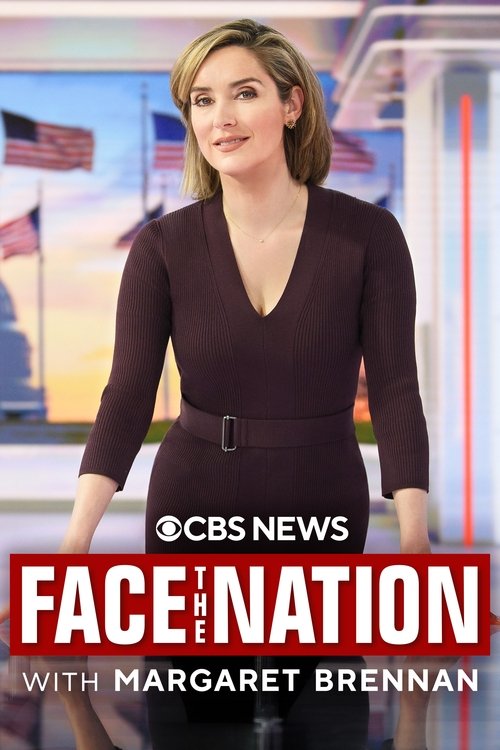
On November 7, 1954, CBS president Frank Stanton launched a new Sunday program designed to compete with NBC's Meet the Press. The first episode featured an interview with Senator Joseph McCarthy, setting a template for confrontational political journalism that would define American Sunday mornings for the next seven decades. Face the Nation quickly established itself as a serious platform where journalists pressed the powerful on the issues of the day, from Cold War tensions to civil rights battles.
The show has been anchored by seven different hosts over its long run. Bob Schieffer held the chair for 31 years, from 1984 to 2015, his plainspoken Texas style becoming synonymous with the program. Current host Margaret Brennan took over in 2018, bringing expertise in foreign policy and economics. Each Sunday, the program features a mix of one-on-one interviews with newsmakers and panel discussions with CBS News correspondents and analysts, maintaining a format that has remained remarkably consistent even as the political landscape shifted dramatically around it.
With more than 950 recorded episodes and counting, Face the Nation is the second-longest-running program in American television history. It has interviewed every U.S. president since Dwight Eisenhower, except John F. Kennedy who appeared only before his presidency. The show has weathered the rise of cable news, the internet, and social media, adapting with a digital presence while retaining its core mission: holding power accountable through direct questioning.
Availability and pricing can change. Confirm on the provider's site before purchasing.
Each week, Face the Nation brings together the most influential political figures, government officials, and newsmakers for in-depth interviews about the pressing issues facing the nation and the world. The program operates from a simple studio setup: the host sits behind a desk opposite one or more guests, with occasional pre-taped segments and panel discussions. The central tension driving every episode is the contest between journalists seeking accountability and politicians aiming to control their message.
The show's world is the high-stakes arena of American politics and public policy. Over its seven-decade run, the specific issues have evolved dramatically. The 1950s and 1960s focused heavily on the Cold War, civil rights legislation, and the space race. The 1970s seasons were dominated by Watergate, the Vietnam War, and economic turmoil. The 1980s and 1990s covered Reagan-era politics, the end of the Cold War, and the Clinton administration. The 2000s tackled 9/11, the Iraq and Afghanistan wars, and the 2008 financial crisis. More recent seasons have focused on the Obama, Trump, and Biden administrations, along with the COVID-19 pandemic, racial justice movements, and threats to democratic institutions.
The main characters are the rotating cast of hosts who have shaped the program's tone. Stuart Novins established the serious approach from 1954 to 1960. Howard K. Smith brought analytical depth from 1960 to 1962. George Herman guided the show through America's most turbulent decades from 1962 to 1983. Martin Agronsky hosted briefly from 1983 to 1984. Bob Schieffer became the longest-serving host from 1984 to 2015, his folksy demeanor and sharp questioning defining the show for a generation. Lesley Stahl hosted from 2015 to 2018, bringing decades of CBS News experience. Margaret Brennan, the current host since 2018, represents the modern era with a focus on foreign policy and economic issues. Supporting cast includes rotating CBS News correspondents and analysts who participate in panel discussions and provide context.
Each season follows the calendar of American political life, typically running from January to December with approximately 52 episodes. The show occasionally pauses for major holidays or breaking news events. The fundamental dynamic has remained constant across seven decades: journalists press for answers and accountability while politicians attempt to control their messaging. This tension, played out in real time on Sunday mornings, has made Face the Nation a battleground for the most important debates in American public life.
Critical Consensus
As a long-running news program, Face the Nation is reviewed more as a journalistic institution than entertainment. Critics consistently praise its serious approach to political journalism and historical significance, though some note the challenges all Sunday shows face in an era of declining trust in media. The program's longevity and access to major figures make it a valuable public affairs resource.
“Face the Nation has been a Sunday morning staple for generations, offering a serious platform for political discourse that has shaped how Americans understand their government.”
David Zurawik
The Baltimore Sun
“Bob Schieffer brought a plain-spoken Texas charm to the show that made even the most combative politicians feel comfortable enough to reveal something real.”
Tom Shales
The Washington Post
“In an era of cable news shoutfests, Face the Nation stands as a throwback to a time when political interviews were about substance rather than spectacle.”
Howard Kurtz
The Washington Post
“The Sunday shows, including Face the Nation, have evolved from simple interview programs into complex political rituals that shape the week's narrative.”
Emily Nussbaum
The New Yorker
Stuart Novins
Self - Host
Howard K. Smith
Self - Host
George Herman
Self - Host
Martin Agronsky
Self - Host
Bob Schieffer
Self - Host
Lesley Stahl
Self - Host
Margaret Brennan
Self - Host
Peabody Award (1955)
Television: Won
Peabody Award (1960)
Television: Won
News & Documentary Emmy Award (2005)
Outstanding Interview: Won
News & Documentary Emmy Award (2010)
Outstanding Live Interview: Won
Edward R. Murrow Award (2015)
Overall Excellence: Won
Join the community
fans discussing