 Italy
Italy“Franju's film is not simply a horror movie but a poem of horror, a meditation on beauty, identity, and the monstrous things we do in the name of love.”
Roger Ebert
Chicago Sun-Times
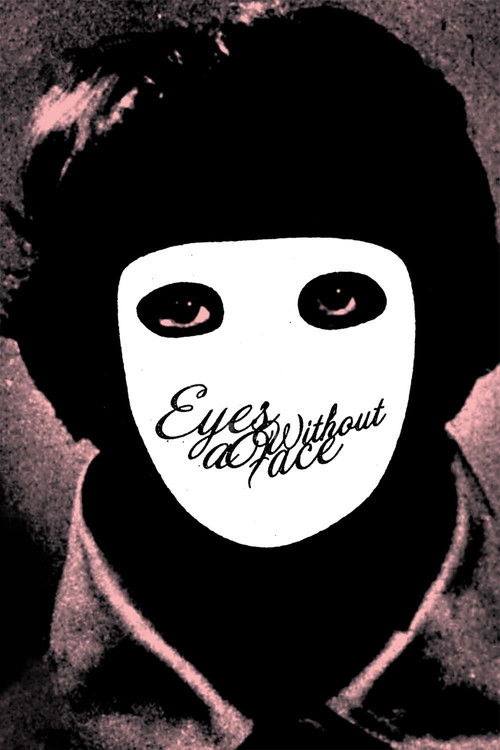
Georges Franju's 1960 film Eyes Without a Face is a haunting blend of horror and tragedy that lingers long after the credits roll. The story centers on Dr. Génessier, a brilliant but guilt-ridden surgeon played by Pierre Brasseur, whose reckless driving left his daughter Christiane (Édith Scob) with a disfigured face. Believing her dead, the outside world knows nothing of the young woman hidden away in his mansion, her face hidden behind a mask. To restore her beauty, Génessier, with the help of his loyal assistant Louise (Alida Valli), kidnaps young women, removes their faces, and attempts to graft them onto Christiane's. The film's black-and-white cinematography by Eugen Schüfftan and Maurice Jarre's eerie score create an atmosphere of clinical dread that feels decades ahead of its time.
Although it was a modest production from France and Italy, it has become a touchstone of European horror, and its influence can be seen in countless later works. With a 7.6 rating on IMDb from over 800 votes, it remains a respected classic, though its box office of just $58,656 suggests it was more appreciated by critics than by contemporary audiences.
Availability and pricing can change. Confirm on the provider's site before purchasing.
The film opens on a foggy night in the French countryside. A car pulls up to a riverbank, and a woman, Louise, dumps a body into the water. The police later recover the corpse, identified as a missing woman, but the face is so mutilated that identification is difficult. The forensic surgeon, Dr. Lherminier, notes the strange nature of the wounds.
Dr. Génessier, a celebrated plastic surgeon, lives in a secluded mansion with his assistant Louise. Years earlier, his daughter Christiane was disfigured in a car accident he caused. To the world, she is dead; in reality, she lives hidden upstairs, her face concealed behind a porcelain mask. Génessier, consumed by guilt, has been kidnapping young women and attempting to graft their skin onto Christiane's face. The operations have all failed, and the victims have died. Louise, herself scarred from a past procedure, assists him with a loyalty that borders on obsession.
Inspector Parot begins investigating the disappearances of several young women in the area. The trail leads toward Génessier, but his reputation protects him. Christiane, increasingly distressed by her father's actions, wanders the grounds with her doves, a symbol of her trapped existence. Louise brings home a new victim, Edna Gruber, a young Austrian woman. Génessier performs the surgery, and this time the graft seems to take. Christiane's face begins to heal, offering a glimmer of hope.
Edna, however, manages to escape her captivity, only to be recaptured and killed by Louise in a struggle. The police investigation intensifies, and Inspector Parot grows suspicious. Christiane, witnessing the horror committed in her name, becomes unstable. She discovers the truth about her father's experiments and the cost of her survival. As the police close in, Christiane must decide where her loyalty lies.
Eyes Without a Face (1960) trailer
Critical Consensus
A masterpiece of European horror, Eyes Without a Face blends poetic visual beauty with genuinely unsettling subject matter, earning praise for Franju's direction, Schüfftan's cinematography, Scob's performance, and Jarre's score.
“Franju's film is not simply a horror movie but a poem of horror, a meditation on beauty, identity, and the monstrous things we do in the name of love.”
Roger Ebert
Chicago Sun-Times
“The film is a macabre and strangely beautiful exercise in terror, with a performance by Édith Scob that lingers in the mind long after the final frame.”
Bosley Crowther
The New York Times
“A landmark of European horror that balances clinical dread with genuine poetry. The surgical scenes remain shocking even today, but it's the film's melancholy soul, embodied by Scob's masked, suffering Christiane, that makes it endure.”
Kim Newman
Empire Magazine
“Franju's film is a strange, dreamlike masterpiece, a horror movie that plays like a dark fairy tale. Its images, the mask, the doves, the doomed women, have passed into cinema's collective unconscious.”
Peter Bradshaw
The Guardian
Pierre Brasseur
Professor Génessier
Alida Valli
Louise
Édith Scob
Christiane Génessier
Director
Georges Franju
Writers
Jean Redon, Pierre Boileau, Thomas Narcejac, Claude Sautet, Pierre Gascar
Composer
Maurice Jarre
Cinematographer
Eugen Schüfftan
Producers
Jules Borkon, Riccardo Gualino
Join the community
fans discussing