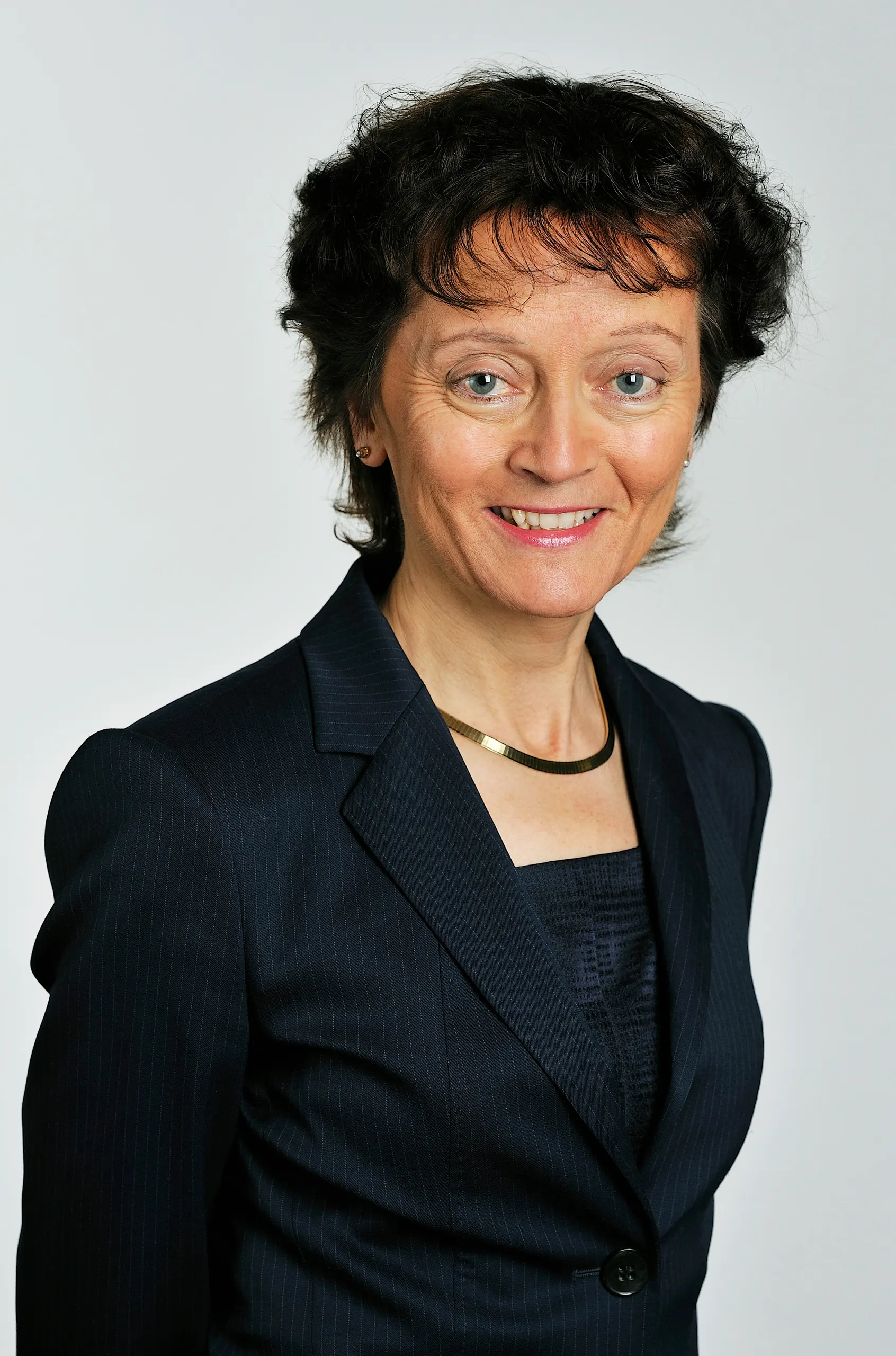
Eveline Widmer-Schlumpf
 Switzerland
Also known as: Eveline Widmer
Birthday
March 16, 1956
Birth Sign
Pisces
Birthplace
Felsberg, Graubünden, Switzerland
Age
70 years old
About
Eveline Widmer-Schlumpf is a Swiss politician and jurist who served on the Swiss Federal Council from 2008 to 2015, making history as the first woman to preside over the Federal Department of Finance. She is best known for steering Switzerland away from banking secrecy, a shift that reshaped the country's global financial standing. In 2012, she became President of the Swiss Confederation, the highest office in the country's rotating system.
Today, she is retired from active politics, living quietly in her native Graubünden. Her legacy is one of steady leadership during turbulent economic times, and she remains a respected figure for her role in modernizing Swiss financial policy and for her calm, principled approach to governance.
Early Life & Background
Eveline Widmer was born on March 16, 1956, in Felsberg, a small village in the canton of Graubünden, in eastern Switzerland. She grew up in a family of three sisters, surrounded by the region's dramatic alpine scenery. Her father, a local businessman, and her mother, a homemaker, instilled in her a strong work ethic and a sense of civic duty.
After completing her schooling in Graubünden, she moved to Zurich to study law at the University of Zurich. She earned her doctorate in jurisprudence, focusing on legal theory. Returning to Graubünden, she worked as a lawyer and served as a judge in the cantonal court. Her legal career gave her a reputation for precision and fairness, which she carried into politics.
Her first steps into public office came at the cantonal level, where she served in the Graubünden parliament and later as a member of the cantonal government. These roles, though modest, laid the groundwork for her national career. In 2007, she was elected to the National Council, Switzerland's lower house, representing the Swiss People's Party (SVP/UDC).
Career Growth
Widmer-Schlumpf's breakthrough came in December 2007, when she was elected to the Swiss Federal Council, the country's seven-member executive. She took office in January 2008 as head of the Federal Department of Justice and Police. Her early tenure was marked by a landmark decision: in 2010, she refused to extradite film director Roman Polanski to the United States, citing Swiss legal standards. The case drew international attention and underscored her commitment to the rule of law.
Later that year, she moved to the Federal Department of Finance, becoming the first woman to lead that ministry. As finance minister, she played a central role in dismantling Swiss banking secrecy. Under pressure from the United States and the OECD, she negotiated agreements that allowed Swiss banks to share client information with foreign tax authorities, a historic shift that earned her respect abroad but criticism at home.
In December 2012, she was elected President of the Swiss Confederation for 2013, a largely ceremonial role that nonetheless carried great symbolic weight. Her presidency focused on economic stability and social cohesion. She left the Federal Council in December 2015, after announcing she would not seek a third term. Following her resignation, she joined the Conservative Democratic Party (BDP/PBD), a splinter group of moderate SVP members, and remained active until the party merged into The Centre in 2021.
Career Timeline
Public Image & Style
Widmer-Schlumpf's public image is one of quiet competence and integrity. She is often described as a steady hand during economic uncertainty, a figure who prioritized legal principles over political expediency. Her composed demeanor and no-nonsense style earned her respect across party lines, even from critics of her policies. In the media, she has been portrayed as a symbol of women's progress in Swiss politics, though she rarely sought the spotlight. Her legacy is tied to the end of banking secrecy, a move that some saw as a betrayal of Swiss tradition but others praised as a necessary adaptation to the modern world.
Fame & Fandom (iFAMOUS Rankings)
Eveline Widmer-Schlumpf is a name that carries weight in Swiss political history, yet her fame is the quiet kind, earned through decisions that reshaped a nation's global standing rather than through the clamor of public adulation. She has no formal fandom, no legion of fans with a collective name, no viral campaigns or inside jokes. Her supporters are the Swiss citizens who respected her integrity during the turbulent years she served on the Federal Council, from 2008 to 2015. When she stood up to her own party in 2007, refusing to be a pawn in the SVP's power play, and then helped found the BDP, she earned a place in Swiss political lore as a figure of principle. Her most iconic moment came in 2013, when, as Finance Minister, she announced the end of Swiss banking secrecy, a seismic shift that made her a symbol of change both at home and abroad.
As of August 2026, the iFANN Global Fame Engine has evaluated Eveline Widmer-Schlumpf but she does not currently hold a placement in the published rankings, whether in the Global Top 1,000 or any Top-100 scope list. Her fame is not measured in global rankings but in the lasting impact of her policies and the respect she commands in Swiss political memory.
Interesting Facts and Legends
She was the sixth woman to serve on the Swiss Federal Council, a body that had only admitted women since 1971. Her decision to reject the extradition of Roman Polanski was based on Swiss law, which forbids extradition for crimes that have been subject to a statute of limitations in Switzerland. She was born in Felsberg, a village of fewer than 2,000 people, and has maintained a home there throughout her career. Despite her high profile, she has kept her personal life largely private, rarely speaking about her family in interviews. She is a grandmother to four grandchildren, a detail she shared in a rare interview about her life after politics.
Among the stories that have become part of her legend is her dramatic 2007 confrontation with the Swiss People's Party. After the SVP failed to re-elect Christoph Blocher, they nominated Widmer-Schlumpf as a replacement, but she initially declined. When she eventually accepted the seat, the party expelled her, a move that only cemented her reputation as a politician who put principle above party loyalty. Another iconic moment came in 2013, when she announced that Swiss banks could share client information with U.S. authorities, effectively dismantling the country's centuries-old banking secrecy. The decision was a turning point in Swiss financial history and remains the defining act of her career.
Notable Quotes
“Switzerland must uphold its legal standards, regardless of external pressure.”
“Ending banking secrecy was a necessary step for Switzerland to remain a credible partner in the international community.”
“My goal was always to serve the people of Switzerland with honesty and dedication.”
Family & Personal Life
Eveline Widmer-Schlumpf grew up with two sisters in Felsberg. Her father, a local businessman, and her mother, a homemaker, provided a stable, modest upbringing. She married her husband, whose name she has kept out of the public eye, and together they have three children. The family has lived in Graubünden throughout her career, and she has spoken of the region's natural beauty as a grounding influence. As of 2026, she is married and a grandmother to four grandchildren.
Notable Connections
Widmer-Schlumpf worked closely with fellow Federal Councillors, including Simonetta Sommaruga, who succeeded her in some capacities. Her international counterparts, particularly from the United States and the OECD, were key partners in the banking secrecy negotiations. Within Switzerland, she collaborated with leaders from across the political spectrum to advance financial reforms.
Relationships & Dating History
Eveline Widmer-Schlumpf has been married to her husband, whose name has not been publicly disclosed, for several decades. The couple has three children together. There are no reports of other romantic relationships, engagements, or divorces. As of 2026, she remains married, with no public indication of separation or new partnerships. Her family life has been notably private, and she has rarely discussed her marriage in interviews.
- MarriedCurrentMarried to a husband whose name is not publicly known; together they have three children.
Salary, Net Worth In 2026
$2 Million
iFANN Editorial Team estimate
iFANN currently estimates Eveline Widmer-Schlumpf's net worth at $2 million. During her tenure as a Federal Councillor, she earned an annual salary of approximately CHF 300,000 to CHF 400,000, which over seven years would have accumulated to roughly CHF 2.5 million before taxes. After leaving office, she has not taken on major paid roles, though she may have earned consulting fees or advisory income. Her wealth also includes real estate holdings in Graubünden, where she has maintained a family home. No business ventures or endorsements have been reported, and her financial affairs remain private, consistent with Swiss norms for public officials.
Awards Won (1)
Widmer-Schlumpf's most significant honor is her election as President of the Swiss Confederation in 2013, a distinction that rotates annually among Federal Councillors. She has also received various state honors in Switzerland for her service, though specific names are not widely publicized. Her role in ending banking secrecy earned her international recognition from bodies such as the OECD and the U.S. Treasury, though these are not formal awards.
2013 · State Honor
Swiss Confederation
Known For
Swiss Federal Council
2008-2015 · Member
President of the Swiss Confederation
2013 · President
Federal Department of Finance
2010-2015 · Head
Keywords
Sources
Quick Facts
- Profession
- politician, lawyer, jurist
- Born
- March 16, 1956
- Birthplace
- Felsberg, Graubünden, Switzerland
- Gender
- Female
- Birth Sign
- Pisces
- Children
- 3
- Education
- Doctorate in jurisprudence, University of Zurich
Personal Details
- Full Name
- Eveline Widmer
- Children
- 3
- Education
- Doctorate in jurisprudence, University of Zurich
Frequently Asked Questions
What is Eveline Widmer-Schlumpf's current status?
How many children does Eveline Widmer-Schlumpf have?
When did Eveline Widmer-Schlumpf serve as President of Switzerland?
Which political parties has Eveline Widmer-Schlumpf been affiliated with?
What was Eveline Widmer-Schlumpf's most significant achievement?

Join the community
fans discussing