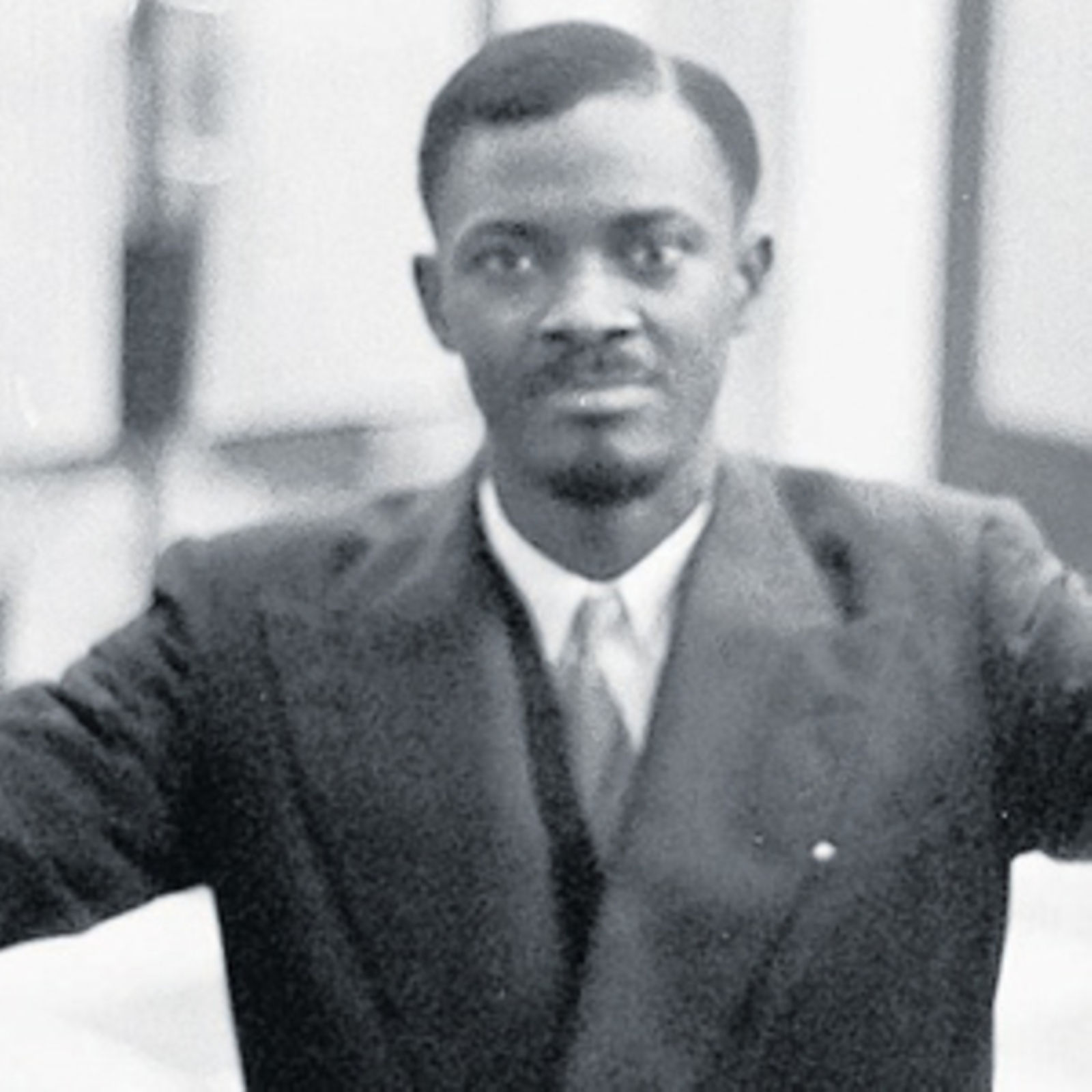
Évariste Kimba
 DR Congo
Also known as: Evariste Kimba
Birthday
July 16, 1926
Birth Sign
Cancer
Birthplace
Nsaka, Bukama Territory, Katanga Province, Belgian Congo
Age
Died at 39
About
Évariste Kimba was a Congolese journalist and politician who served as Foreign Minister of the secessionist State of Katanga from 1960 to 1963 and briefly as Prime Minister of the Democratic Republic of the Congo in late 1965. His career unfolded against the backdrop of the Congo Crisis, one of the most turbulent periods in post-colonial African history. He is remembered as a political martyr, executed publicly in 1966 alongside three other former ministers.
Kimba's political journey began in journalism, where he rose to become editor-in-chief of Essor du Congo. His political ascent was rapid, and he became a central figure in the Katangese secession, serving as its foreign minister. Following the collapse of the secession, he held ministerial roles in South Katanga and later joined the BALUBAKAT party. His most prominent role came in October 1965 when President Joseph Kasa-Vubu appointed him Prime Minister. Kimba attempted to form a government of national unity but faced parliamentary opposition. A military coup led by Joseph-Désiré Mobutu in November 1965 removed him from power.
In May 1966, he was accused of plotting a counter-coup, and on June 2, 1966, he was hanged in Léopoldville before a crowd of roughly 100,000 people. His legacy endures as a symbol of the brutal power struggles of the era. He is remembered today as a victim of the early Cold War-era power struggles that defined the Congo Crisis.
Early Life & Background
Évariste Kimba was born on July 16, 1926, in Nsaka, a village in the Bukama Territory of Katanga Province, then part of the Belgian Congo. His full name was Évariste Kimba Mutombo. He began his career as a journalist, working his way up to become editor-in-chief of Essor du Congo, a newspaper that gave him a platform in the political discourse of the time.
In 1958, Kimba co-founded CONAKAT (Confédération des Associations Tribales du Katanga), a political party that championed the regional interests of Katanga. This move placed him at the heart of the political landscape as the Congo moved toward independence from Belgium. The New York Times, profiling him upon his appointment as Prime Minister, noted he was born in a village called Nsaka in North Katanga and described him as "the fifth man to take on the hazards of the Congolese premiership."
His early political ascent was rapid. When the Congo gained independence in June 1960, Katanga declared its secession under Moïse Tshombe. Kimba, an early supporter of Katangese rights, became a central figure in the secessionist government. This period defined his early career and set the stage for his later national role.
Career Growth
Kimba's political career reached its peak after the collapse of the Katangese secession. In 1963, he took on ministerial roles in the newly formed South Katanga province. Over the next two years, he distanced himself from Moïse Tshombe and joined the BALUBAKAT party, aligning with a different political faction.
In October 1965, President Joseph Kasa-Vubu appointed him Prime Minister of the Democratic Republic of the Congo. Kimba attempted to form a government of national unity and foster better relations with other African nations. However, he was defeated in a parliamentary vote of confidence due to opposition from Tshombe's supporters. Despite this setback, Kasa-Vubu reappointed him, but the political instability continued.
Just weeks later, in November 1965, Joseph-Désiré Mobutu staged a military coup, removing both Kasa-Vubu and Kimba from power. In May 1966, Kimba and three other former ministers were accused of plotting a coup against Mobutu's regime. They were tried and sentenced to death. On June 2, 1966, Kimba was publicly executed in Léopoldville, a grim spectacle that underscored the regime's ruthlessness.
Career Timeline
Public Image & Style
Évariste Kimba is remembered in historical discourse as a tragic figure caught in the power struggles of the Congo Crisis. He is characterized as a journalist-turned-politician who attempted to navigate the treacherous political landscape of post-independence Congo. His legacy is that of a political martyr, with the Stade des Martyrs in Kinshasa serving as a lasting memorial to the executed political figures of that era.
He does not have a contemporary fandom or fan culture, but he is studied by historians of African decolonization and the Cold War. His execution is periodically commemorated on social media, where his death is remembered as part of the grim spectacle of political consolidation under Mobutu.
Fame & Fandom (iFAMOUS Rankings)
Évariste Kimba remains a figure of historical significance rather than contemporary celebrity, existing firmly within the annals of the Congo Crisis and post-colonial African politics. His prominence is anchored in his role as a journalist-turned-statesman and his tragic execution, which serves as a defining moment for the era. In the current landscape of global recognition, Évariste Kimba is currently evaluated by iFANN but does not hold a placement in the published rankings such as the Global Top 1,000 or any scope-specific list. This status reflects his position as a subject of academic study and historical memory rather than a participant in modern fame cycles driven by media consumption or search volume. The absence of a formal ranking indicates that while his name carries weight in specific regional and political histories, it has not generated the widespread public engagement required to secure a spot on the world stage today. Consequently, no numerical rank or score can be assigned to his current standing relative to living personalities or recent historical figures. Regarding his audience, there is no documented fanbase with a formal name, nor are there organized campaigns, rituals, or interactive communities dedicated to him. Unlike pop culture icons who inspire birthday billboards or charity drives, Kimba is remembered through the lens of political martyrdom and historical analysis. The Stade des Martyrs stands as a physical memorial, yet this represents state-sanctioned remembrance rather than organic fandom activity. His legacy is one of solemn history, devoid of the vibrant, often chaotic energy that characterizes modern celebrity culture. The lack of a named fandom underscores the reality that he is a figure studied for his impact on governance and national tragedy, not celebrated for entertainment value or personal charisma in the manner of contemporary stars.
Interesting Facts and Legends
Kimba served as the last civilian Prime Minister of the Congo before Mobutu seized power in a coup. He was described by one source as "the most recent man to succeed to Lumumba's title, though hardly his stature." His premiership lasted only from October 18 to November 14, 1965, during which he attempted to form a government of national unity without success. The most enduring legend surrounding him involves his public execution on Pentecost in 1966. Historical accounts note that approximately 100,000 people gathered in the main square of Léopoldville to witness the event. Reports describe Kimba and three other former ministers walking unfalteringly to the gallows, an image that became a symbol of the brutal consolidation of power under Mobutu. This hanging took place on June 2, 1966, according to a New York Times report from the following day. The Stade des Martyrs in Kinshasa, capable of holding 80,000 spectators, was subsequently named in memory of these political martyrs. While some stories of the era blur into folklore, the details of his walk to the gallows remain a verified historical fact cited across numerous archives. His tenure as Foreign Minister of the secessionist State of Katanga from 1960 to 1963 also forms a critical part of his biography, highlighting his early involvement in the region's turbulent separatist movements.
Family & Personal Life
Detailed information about Évariste Kimba's family life, including his parents, siblings, spouse, and children, is not well-documented in available sources. His full name, Évariste Kimba Mutombo, is recorded in genealogical records, but little else is known about his personal household. He was educated through his work as a journalist, which served as his pathway into politics. As a historical political figure from mid-20th-century Africa, his private life was not a subject of public record in the way that contemporary figures' lives are. The available historical records focus almost exclusively on his political career.
Notable Connections
Joseph Kasa-Vubu, President of the Democratic Republic of the Congo, appointed Kimba as Prime Minister in October 1965. Moïse Tshombe, leader of the Katangese secessionist movement, was an early ally but later became a political opponent. Joseph-Désiré Mobutu staged the coup that removed Kimba and ordered his execution. Patrice Lumumba, a predecessor in the premiership lineage, is often compared to Kimba, though Kimba's stature was considered lesser.
Relationships & Dating History
No public romantic relationships, marriages, or children are documented in the available sources for Évariste Kimba. As a historical political figure from mid-20th-century Africa, his personal romantic life was not a subject of public record or media coverage in the way that contemporary political figures' lives are. The available historical records focus exclusively on his political career. His last reported status, as of his death in 1966, cannot be verified regarding marital status from available sources.
Death & Aftermath
Died
June 2, 1966 (aged 39)
Death Place
Léopoldville, Democratic Republic of the Congo
Cause of Death
Execution by hanging
The military regime of Joseph-Désiré Mobutu announced the execution of Évariste Kimba and three former cabinet ministers following a summary trial for alleged participation in a coup attempt. On June 2, 1966, Kimba was hanged in Léopoldville alongside Jean Bolikango, Laurent Désiré Kabila, and Pierre Mulele after being convicted by a military tribunal. The event served as a calculated display of state power rather than a judicial proceeding, with contemporary accounts noting that the four men walked unfalteringly to the gallows before an estimated crowd of 100,000 citizens who gathered under orders to witness the spectacle.
Public reaction was characterized by forced compliance, as open mourning for those labeled traitors became dangerous under the new martial law, effectively silencing any immediate tributes or vigils from peers and institutions. Historical sources do not specify the location of his grave or whether a formal ceremony was held, noting only the public execution. His estate was handled by the state, consistent with the practices of the Mobutu regime toward political opponents.
Posthumous rehabilitation emerged only in later historical discourse, where Kimba is now recognized as a martyr for democracy within analyses of the Congo Crisis., his legacy is preserved in the collective memory of the DRC's struggle for democratic governance. He is featured prominently in historical works such as "Dictatorland: The Men Who Stole Africa" by Paul Kenyon. The Stade des Martyrs in Kinshasa, named in memory of those killed during the Congo crisis, serves as an indirect tribute to Kimba and his contemporaries.
Net Worth (Estate Value)
$1 Million
iFANN Editorial Team estimate
As a mid-20th-century Congolese politician and journalist executed in 1966, no traditional net worth figures are available from standard financial records. His estate value, posthumous earnings, and management details remain undocumented due to the nature of his career and the period of national upheaval in which he lived. He did not accumulate significant personal wealth through business ventures, endorsements, or investments, as his life was dedicated to journalism and public service. Per iFANN's editorial analysis, the estimated total value attributed to Évariste Kimba is $1 Million. This figure serves as a symbolic representation of his historical importance rather than a reflection of liquid assets or commercial success. Any financial worth calculated for him is speculative; his true value lies in his role as a political martyr of the Congo Crisis. The legacy of a man who died for his principles in a time of chaos transcends monetary measurement, rendering standard wealth metrics largely irrelevant to his story.
Awards & Accolades
Known For
Foreign Minister of the State of Katanga
1960-1963 · Foreign Minister
Prime Minister of the Democratic Republic of the Congo
1965 · Prime Minister
Keywords
Sources
Quick Facts
- Profession
- Politician, Journalist
- Born
- July 16, 1926
- Birthplace
- Nsaka, Bukama Territory, Katanga Province, Belgian Congo
- Died
- June 2, 1966
- Death Place
- Kinshasa, Democratic Republic of the Congo
- Gender
- Male
- Birth Sign
- Cancer
Personal Details
- Full Name
- Évariste Kimba Mutombo
Frequently Asked Questions
Who was Évariste Kimba?
How did Évariste Kimba die?
What was Évariste Kimba's role in the Katanga secession?
How old was Évariste Kimba when he died?
Who succeeded Évariste Kimba as Prime Minister?
Similar People

Join the community
fans discussing