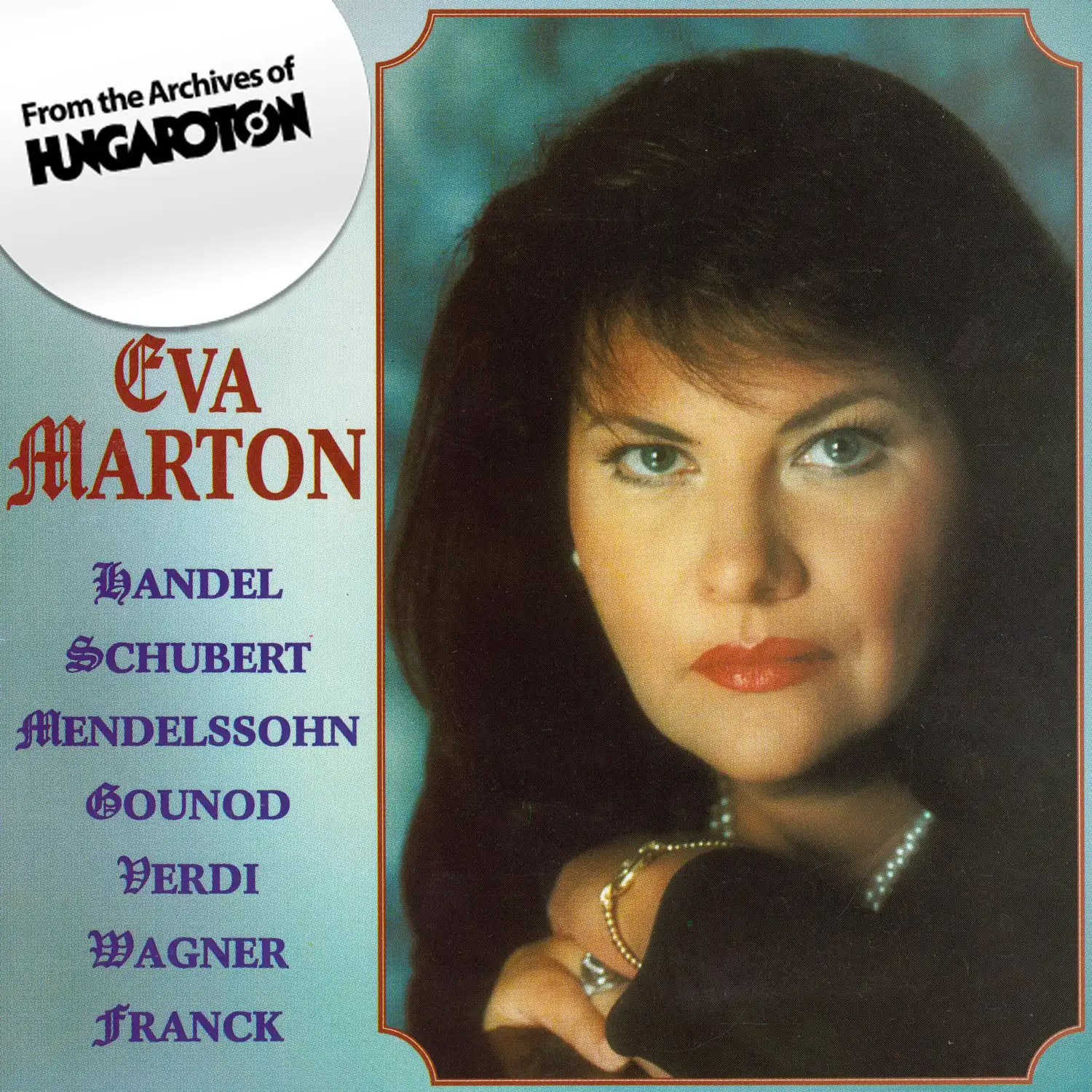
Éva Marton
 Hungary
opera singer•university teacher•voice teacher
Also known as: Eva Marton
Birthday
June 18, 1943
Birth Sign
Gemini
Birthplace
Budapest, Hungary
Age
83 years old
About
Éva Marton is a Hungarian dramatic soprano whose voice, with its size, brilliance, and cutting power, made her one of the most commanding figures in opera for over three decades. She is best known for her portrayals of Puccini's Turandot and Tosca, along with demanding Wagnerian roles like Sieglinde in Die Walküre and Kundry in Parsifal.
Her career took her to the Metropolitan Opera, Vienna State Opera, La Scala, and the Bayreuth Festival. She performed Turandot more than 150 times worldwide, a role that became her signature. Critics and audiences alike admired her ability to ride over large orchestras with ease, while also bringing dramatic intensity to every character.
Since retiring from the stage in the early 2000s, Marton has focused on teaching. She serves as a professor at the Franz Liszt Academy of Music in Budapest, mentoring a new generation of singers. Her legacy as a leading dramatic soprano of the 20th century remains strong, with her recordings and performances still studied by opera lovers and students.
Early Life & Background
Éva Marton was born in Budapest in 1943 into a family that appreciated music, though details about her parents are scarce. She showed an early interest in singing and decided to pursue formal training. She enrolled at the Franz Liszt Academy of Music, where she studied under notable voice teachers of the time.
Her student years were marked by hard work and a growing reputation among her peers. She graduated in 1968 with degrees in opera performance. Soon after, she joined the Hungarian State Opera, where she began singing leading roles. The repertory there gave her a solid foundation in both lyric and dramatic parts.
The turning point came in 1972 when she entered the International Singing Competition in Helsinki. She won first prize, an achievement that put her name on the international map. That victory opened doors to guest engagements across Europe, and she started to build a career beyond Hungary's borders. By the mid-1970s, she was singing in major houses in Germany and Austria, though her true breakthrough was still a few years away.
Career Growth
The night that changed everything came in 1978. Birgit Nilsson was scheduled to sing the Empress in Richard Strauss's Die Frau ohne Schatten at the Bavarian State Opera in Munich, but she fell ill. Marton stepped in at short notice and delivered a performance that stunned the opera world. That single appearance proved she could handle the most punishing heroic soprano roles, and engagements at major European houses followed quickly.
In the 1980s, she became a regular at the Metropolitan Opera in New York, where her Turandot and Tosca were particularly admired. She also appeared at the Bayreuth Festival, taking on Sieglinde in Die Walküre and Kundry in Parsifal, both of which earned critical praise. Her repertory expanded to include the title roles in Strauss's Elektra and Salome, along with Verdi and Puccini heroines.
Marton recorded extensively for Hungaroton and Sony Classical, producing complete operas and solo recitals that remain in print. She continued performing into the early 2000s, when she retired from the stage. Since then, she has dedicated herself to teaching at the Franz Liszt Academy, and she remains active as a mentor and jury member for singing competitions, including the International Éva Marton Singing Competition, which bears her name.
Career Timeline
Public Image & Style
Éva Marton's public image is that of a formidable dramatic soprano, known for her powerful voice and commanding stage presence. Critics have often compared her to legends like Birgit Nilsson and Maria Callas, and she has been called the "Queen of Dramatic Sopranos" in Hungarian media.
Her stage persona was intense and regal, particularly in roles like Turandot, where her vocal heft and dramatic commitment made her a natural fit. Offstage, she has maintained a dignified, academic presence, focusing on teaching and mentoring rather than courting publicity.
Fans and younger singers admire her for her technical mastery and her willingness to share her knowledge. She is a respected figure in the classical music world, and her masterclasses are well attended. Her legacy is tied not only to her performances but also to the generations of singers she has influenced.
Fame & Fandom
Éva Marton commands the operatic stage with a presence that transcends mere performance, cementing her status as a global icon of dramatic vocal artistry. Her legacy is not defined by fleeting pop culture trends but by a sustained reign over the most demanding roles in the repertoire, earning her the moniker 'Queen of Dramatic Sopranos.' This enduring influence places her prominently in the global consciousness; she is currently ranked as the 26th most famous person from Hungary, a standing confirmed by the iFANN Global Fame Rankings. The metrics reflect a career spanning decades where her voice became synonymous with power and precision, creating a resonance that continues to draw international attention.
Unlike modern stars who cultivate digital tribes, Marton's audience consists of opera enthusiasts, critics, and industry professionals who revere her as a legend. There is no formalized fandom name like 'Beatlemania' attached to her work; instead, her support base operates through professional reverence and institutional engagement rather than grassroots fan rituals or organized campaigns. She has actively shaped this community by initiating the International Singing Competition in Budapest in 2014 and serving as the patron of the Éva Marton International OperaStudio, fostering the next generation of talent without relying on social media interaction. Her mythos is built on specific, documented moments of acoustic dominance, such as her legendary Vienna State Opera performance that established her international reputation, and her Metropolitan Opera appearance in Wagner's *Tannhäuser*, which remains a subject of intense discussion for its sheer intensity. While crowds have never shut down streets in her honor, her live performances are consistently described as events of extraordinary power, creating an atmosphere of awe rather than chaos. As of June 2026, celebrated for turning 83 while still reigning supreme in the operatic world, her voice remains unchallenged, ensuring her status as a timeless figure whose impact extends far beyond the stage.
Interesting Facts and Legends
Éva Marton once described feeling like a boxer after being knocked out when she had to stop a performance of Tosca at the Met in 1986 due to illness. Her exact words were: 'Now, I know how a boxer feels when he is knocked out.' She performed Turandot over 150 times, a feat that requires extraordinary vocal stamina given the role's notorious demands. Her name, Éva, is the Hungarian spelling of Eve, while Marton is a common surname in Hungary. She has kept a deliberately low digital profile with no verified social media accounts, making her official website, martoneva.hu, the primary source for news about her activities.
The story of her performance at the Vienna State Opera is widely retold as the moment she established her international reputation; her voice was so powerful it reportedly caused a sensation that night. Another pivotal moment occurred during the Met's 1988 production of *Il trovatore*, where critics noted her voice seemed to luxuriate in legendary company, contributing to an era of grand style that defined the house's sound. A notable incident involving her cultural influence happened when artist Ai Weiwei referenced her work in his 2022 commentary on opera and the Ukraine conflict, highlighting how her performances transcend political boundaries to remain a touchstone for global discourse. Her legacy is further cemented by the annual competition bearing her name, which continues to draw international talent, ensuring her mythos lives on through the singers she mentors.
Notable Quotes
“Now, I know how a boxer feels when he is knocked out.”
“Let's not be so modest.”
Family & Personal Life
Little is publicly known about Éva Marton's family. She was born in Budapest and grew up in a musical household, but she has rarely spoken about her parents or siblings in interviews. Her private life has remained largely out of the spotlight.
Marton has never publicly acknowledged having a spouse or children. As of 2026, she is believed to be single and lives in Budapest, where she continues to teach at the Franz Liszt Academy of Music. She has not shared details about pets or her home life.
Notable Connections
Éva Marton frequently collaborated with some of the biggest names in opera. She sang opposite Plácido Domingo in several Turandot performances and recordings. Her breakthrough came when she replaced Birgit Nilsson, and the two shared a mutual respect. At the Met, she worked closely with conductor James Levine, and her Elektra recording was led by Wolfgang Sawallisch.
Relationships & Dating History
Éva Marton has kept her personal life remarkably private. There are no credible reports of marriages, divorces, or long-term public relationships. She has never publicly discussed a dating history, and no partner has been named in any interview or biography.
As of 2026, she is believed to be single, and she has not confirmed any current relationship. Her focus remains on teaching and mentoring young singers in Budapest.
Salary, Net Worth In 2026
$3 Million
iFANN Editorial Team estimate
iFANN currently estimates Éva Marton's net worth at $3 Million as of 2026. This figure reflects her long career as a leading dramatic soprano, her recording royalties, and her academic salary. During her peak years in the 1980s and 1990s, she commanded high fees for performances at top houses like the Met and Bayreuth. Her extensive discography with Hungaroton and Sony Classical continues to generate royalties. Since retiring, she has earned a steady income as a professor at the Franz Liszt Academy, along with fees for masterclasses and guest lectures around the world. Marton has not been linked to major business ventures or real estate investments publicly. Her wealth is primarily the result of decades of performing and teaching, and it has remained stable in recent years.
Awards Won (1)
Éva Marton's awards reflect her standing as a world-class dramatic soprano. She won the International Singing Competition in Helsinki in 1972, which launched her career. She has received a Grammy nomination for Best Opera Recording for Strauss's Elektra. In Hungary, she has been honored with cultural distinctions, and the International Éva Marton Singing Competition was named after her, a rare honor that underscores her influence.
1991 · Best Opera Recording
Elektra
Known For
Turandot
1980 · Turandot
Tosca
1980 · Tosca
Die Walküre
1980 · Sieglinde
Parsifal
1980 · Kundry
Elektra
1990 · Elektra
Salome
1990 · Salome
Keywords
Sources
Quick Facts
- Profession
- opera singer, university teacher, voice teacher
- Born
- June 18, 1943
- Birthplace
- Budapest, Hungary
- Gender
- Female
- Birth Sign
- Gemini
- Voice Type
- Dramatic Soprano
- Education
- Franz Liszt Academy of Music, Budapest (graduated 1968)
Personal Details
- Full Name
- Éva Marton
- Education
- Franz Liszt Academy of Music, Budapest (graduated 1968)
Frequently Asked Questions
How old is Éva Marton?
What is Éva Marton famous for?
Is Éva Marton still singing?
Did Éva Marton win a Grammy?
Where does Éva Marton live now?
Similar People
Join the community
fans discussing