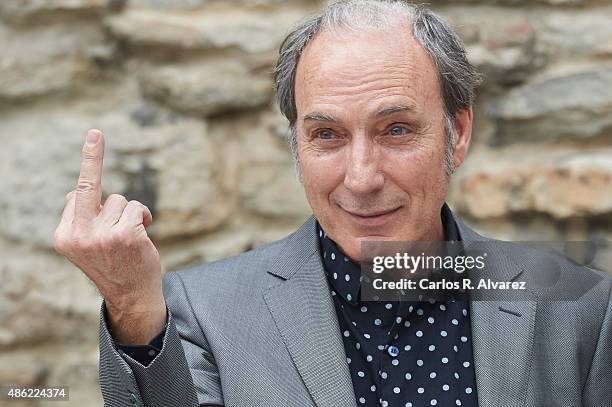
Eusebio Poncela
 Spain
Spainfilm actor•television actor•stage actor
Also known as: Eusebio Poncela Aprea
Birthday
September 15, 1945
Birth Sign
Virgo
Birthplace
Madrid, Spain
Age
Died at 79
About
Eusebio Poncela Aprea (15 September 1945 – 27 August 2025) was a distinguished Spanish screen, stage, and television actor whose career spanned five decades. Born in Madrid, he became a seminal figure in the Spanish New Wave and cult cinema, particularly known for his collaborations with directors Iván Zulueta and Pedro Almodóvar. He passed away at the age of 79 in El Escorial, Spain, from cancer.
Poncela's legacy is defined by his intense psychological performances and his ability to embody complex characters with subtlety. He developed his craft in both his native country and Argentina, featuring in landmark films such as Arrebato (Rapture), Law of Desire, and Martín (Hache). His television work was equally celebrated, earning him an Iris Award for Best Actor for his role in Carlos, rey emperador.
Early Life & Background
Eusebio Poncela Aprea entered the world on September 15, 1945, in Madrid, Spain. Growing up in the capital during the Franco era, he found early inspiration in the performing arts, a field that would eventually consume his professional life. Before stepping into the spotlight, Poncela cultivated interests beyond acting; sources indicate he was also a painter, producer, and screenwriter, suggesting a deep engagement with visual storytelling from a young age.
His formative years in Madrid provided the cultural backdrop for his artistic development. He pursued formal training in acting, honing his skills on the stage before transitioning to the camera. The 1960s and early 1970s saw him building a foundation in theater, a medium that demanded precision and emotional depth. This period of apprenticeship allowed him to develop the naturalistic style that would later distinguish his screen work. He moved through minor roles and local productions, absorbing the techniques of his peers and preparing for the breakthrough that would soon redefine his path.
Career Growth
Poncela's career trajectory shifted dramatically in 1979 with his starring role as José Sirgado in Iván Zulueta's cult masterpiece Arrebato. The film, initially a commercial failure, became a cornerstone of Spanish horror and surrealism, and Poncela's portrayal of a filmmaker descending into madness while shooting a movie within a movie is now considered one of the greatest performances in Spanish cinema history. This role established him as a leading man capable of profound psychological intensity.
Throughout the 1980s and 1990s, he solidified his reputation through high-profile collaborations with Pedro Almodóvar. He appeared in Matador (1986) alongside Antonio Banderas and Carmen Maura, followed by a starring role in Law of Desire (1987). This film explored themes of homosexuality and identity, becoming an iconic work of the Movida Madrileña cultural renaissance. His performance in this film cemented his international reputation among art-house audiences.
He continued to showcase his range in dramatic roles, notably in Marcelo Piñeyro's Martín (Hache) (1997). In 2001, his performance in Intact earned him a nomination for the Goya Award for Best Actor, one of the highest honors in Spanish cinema. His television career remained robust throughout these decades, with acclaimed roles in series like Los gozos y las sombras, Las aventuras de Pepe Carvalho, and historical dramas such as Isabel and Carlos, rey emperador. For his portrayal in the latter, he won the prestigious Iris Award for Best Actor.
In his final years, he remained active in production and writing. Posthumous releases in late 2025 highlighted his work as a patriarch in the drama El Homenaje, which served as his last credited project and a testament to his enduring creative output until the end of his life.
Career Timeline
Public Image & Style
Poncela was known for a naturalistic and understated acting style that avoided melodrama, fitting perfectly with the gritty realism of the Spanish New Wave. He projected a sense of quiet intensity and intellectual depth that made him a favorite among directors seeking nuanced performances. Media coverage often described him as a serious artist dedicated to the craft rather than celebrity culture. His presence on screen was commanding yet grounded, allowing him to portray complex, sometimes troubled characters with authenticity.
Fame & Fandom (iFAMOUS Rankings)
Eusebio Poncela holds a unique position in global fame metrics. As of the October 2026 rankings, iFANN has not yet collected fame data for this person. He does not appear on the September 2026 iFAMOUS Rankings flagship list, reflecting his status as a revered figure within niche cinematic circles rather than a mainstream pop culture icon.
His fanbase consists largely of cinephiles, scholars of Spanish cinema, and enthusiasts of the "cult classic" genre. There is no official fandom name, but his followers are highly organized in their appreciation of his work. Fan-driven campaigns have focused heavily on the restoration of Arrebato and keeping the legacy of the Spanish New Wave alive. Tributes from peers like Elsa Pataky and Antonio Banderas upon his death were widely shared on social media, highlighting his impact on the industry and the respect he commanded among fellow artists.
Interesting Facts and Legends
One of the most legendary aspects of Poncela's career is the cult following surrounding Arrebato. The film, which initially bombed at the box office, experienced a massive resurgence in the 2010s thanks to a restored version. This revival introduced Poncela's haunting performance to a new global generation of cinephiles who now regard it as a masterpiece of surrealism.
Unlike many contemporaries, Poncela rarely gave extensive press interviews. He preferred to let his work speak for itself, maintaining a low profile off-screen despite his significant impact on the industry. This discretion added to the mystique surrounding his personal life and his method of approach to character construction.
He was also a painter and screenwriter before fully committing to acting. This multidisciplinary background influenced his visual sensibility in front of the camera, often resulting in performances that felt deeply connected to the aesthetic vision of his directors.
Family & Personal Life
Eusebio Poncela maintained a strictly private personal life throughout his career. Public records do not confirm any marriages, engagements, or children. Unlike many actors of his generation who shared their family lives with the public, Poncela kept his relationships and domestic affairs entirely separate from his professional persona. Tributes released after his death did not name a spouse or partner, suggesting he either lived a single life or chose to shield his loved ones from the spotlight. There are no credible reports of children, and his family remains out of the public eye.
Notable Connections
Pedro Almodóvar, Iván Zulueta, Antonio Banderas, Cecilia Roth, Marcelo Piñeyro
Relationships & Dating History
Public records regarding Eusebio Poncela's romantic history are notably sparse compared to other celebrities of his generation. Throughout his career, Poncela was widely regarded as a private individual who did not disclose details about his dating life. There are no credible reports, interviews, or biographical entries confirming any specific romantic partners, engagements, marriages, or children. Tributes released after his death in 2025 did not name a spouse or partner, indicating he lived without a publicly known relationship. This lack of information suggests he either lived a single life or chose to keep his family life entirely separate from his public persona, a common trait among many serious character actors of his era.
Death & Aftermath
Died
August 27, 2025 (aged 79)
Death Place
El Escorial, Spain
Cause of Death
Cancer
Eusebio Poncela passed away on August 27, 2025, at the age of 79 in El Escorial, Spain. The cause of death was reported as cancer, though specific details regarding his final days or the progression of the illness were kept private by his family. His passing marked the end of a five-decade career that had profoundly shaped Spanish cinema and theater.
The entertainment community responded with immediate and heartfelt tributes. Prominent figures like Antonio Banderas and Elsa Pataky publicly honored him on social media, reflecting on his contributions to the industry and his status as a respected elder statesman of Spanish acting. These messages highlighted not just his talent but also his quiet dignity and professionalism throughout his long life.
Following his death, attention turned to his legacy and remaining works. A posthumous release titled El Homenaje arrived later in 2025, serving as his final credited project and a poignant conclusion to his filmography. This release allowed audiences to see his work one last time, cementing his place in the history of Spanish culture. While no major estate disputes have been reported, his extensive catalog of films, including cult classics like Arrebato, continues to generate royalties and maintain relevance through restorations and film festival screenings.
Fans and scholars alike have focused on preserving the memory of the Spanish New Wave, a movement where Poncela played a pivotal role. His performances are now studied in academic circles, and the restoration of his key films ensures that new generations of cinephiles can experience the intensity and nuance he brought to the screen. His funeral was a private affair attended by close friends and colleagues, adhering to his lifelong preference for privacy even in death.
Net Worth (Estate Value)
$5 Million
iFANN Editorial Team estimate
Specific net worth figures for Eusebio Poncela are not publicly disclosed by financial outlets or celebrity net worth trackers, likely due to his preference for privacy and the nature of his income, which relied on stage and television salaries rather than blockbuster Hollywood fees. research by the iFANN Editorial Team puts his estate value at around $5 million. This estimate accounts for his extensive filmography, ongoing royalties from classic titles like Arrebato and Law of Desire, and the revenue generated by his posthumous release El Homenaje.
The estate is managed by his heirs, though no public valuation of the total assets has been released. Revenue streams continue to flow from licensing deals and international distribution of his work, ensuring his financial legacy persists. While exact figures remain private, the consistent demand for his films in academic and art-house circuits suggests a steady income stream for his estate.
Awards Won (3)
Eusebio Poncela received significant critical acclaim, with one notable win: the Iris Award for Best Actor for his role in the television series Carlos, rey emperador. He was also nominated for the Goya Award for Best Actor for his performance in Intact (2001), one of the highest honors in Spanish cinema. While he did not receive major international awards like Oscars or Golden Globes, his inclusion in the canon of Spanish cinema and the restoration of his films serve as a form of industry honor.
2025 · Best Actor
Carlos, rey emperador
1998 · Best Supporting Actor
Martín (Hache)
Known For
Arrebato
1979 · José Sirgado
Law of Desire
1987 · David/Sandra
Martín (Hache)
1997 · Hache
Intact
2001 · Miguel
Keywords
Sources
Quick Facts
- Profession
- film actor, television actor, stage actor
- Born
- September 15, 1945
- Birthplace
- Madrid, Spain
- Died
- August 27, 2025
- Death Place
- El Escorial, Spain
- Gender
- Male
- Birth Sign
- Virgo
Personal Details
- Full Name
- Eusebio Poncela Aprea
- Children
Filmography
45
Total
35
Film
10
TV
Frequently Asked Questions
Who was Eusebio Poncela?
How did Eusebio Poncela die?
What is Eusebio Poncela's most famous movie?
Did Eusebio Poncela have children or a spouse?
Was Eusebio Poncela nominated for a Goya Award?

Join the community
fans discussing