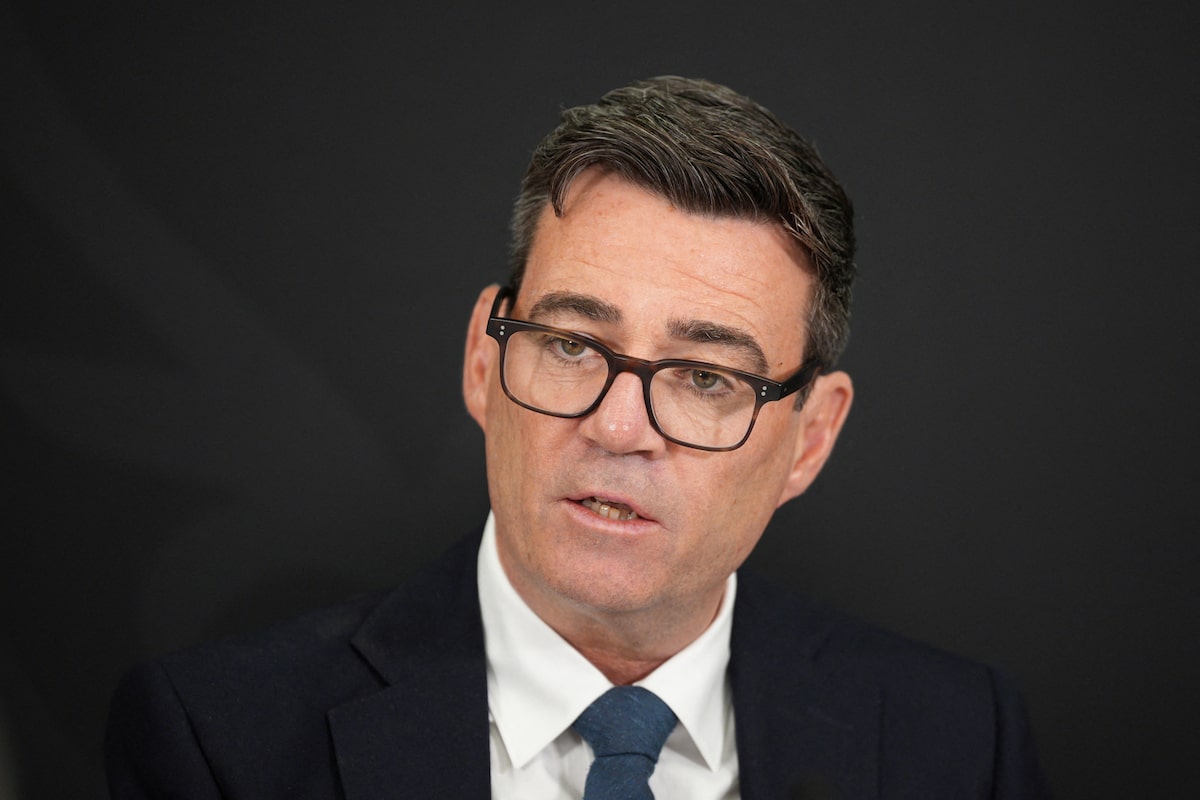
Eugène Terre'Blanche
 South Africa
Also known as: Eugène Ney Terre'Blanche, Die Leier
Birthday
January 31, 1941
Birth Sign
Aquarius
Birthplace
Ventersdorp, Transvaal, Union of South Africa
Age
Died at 69
About
Eugène Ney Terre'Blanche was a South African politician, poet, and playwright who founded and led the Afrikaner Weerstandsbeweging (AWB), a neo-Nazi organization that opposed the end of apartheid. He styled himself as the leader of a white Boer homeland movement and was known for his theatrical, horseback-riding public appearances and fiery Afrikaans oratory.
Terre'Blanche's political career spanned over three decades, from the founding of the AWB in 1973 to his death in 2010. He was a polarizing figure, both feared and ridiculed, whose influence peaked in the early 1990s as South Africa transitioned to majority rule. His legacy remains controversial, with his movement a symbol of far-right resistance in the country's history.
In his final years, Terre'Blanche lived in relative obscurity on his farm near Ventersdorp, where he was murdered in 2010. His death sparked debates about racial tensions and farm attacks in South Africa.
Early Life & Background
Eugène Ney Terre'Blanche was born on 31 January 1941 on a farm in Ventersdorp, a conservative farming town in the Transvaal, about 100 miles west of Johannesburg. His family traced its roots to Estienne Terre'Blanche, a French Huguenot who arrived at the Cape in 1704 fleeing religious persecution. His grandfather fought as a Cape Rebel in the Second Boer War, and his father was a lieutenant colonel in the South African Defence Force and a local Commando leader.
Growing up, Terre'Blanche had extensive interactions with black children and spoke fluent Setswana. He attended Laerskool Ventersdorp and later Hoër Volkskool in Potchefstroom, matriculating in 1962. During his school years, he founded the cultural organization Jong Afrikanerharte ('Young Afrikaner Hearts') and dabbled in amateur dramatics, writing several plays.
After matriculating, Terre'Blanche joined the South African Police in 1962, serving initially in South West Africa (now Namibia) and later as a Warrant Officer in the Special Guard Unit assigned to Cabinet members. In the late 1960s, he published two plays, Twee Osse and Sybrand, the latter later collected in Iewers Langs die Pad and prescribed for Cape schools. Disillusioned with Prime Minister John Vorster's government, he left the police, took up farming, and became active in the Herstigte Nasionale Party, though he failed to win election as a parliamentary candidate in Heidelberg.
Career Growth
On 3 July 1973, Terre'Blanche founded the Afrikaner Weerstandsbeweging (AWB) with six others in a garage in Heidelberg. The neo-Nazi organization sought a homeland for the Boer 'volk' and adopted a flag featuring three sevens, which Terre'Blanche said countered the biblical number 666. He called himself 'die Leier' (the Leader), wore black or khaki uniforms, and rode on horseback, with an actor coaching him in public speaking to enhance his oratory.
The AWB grew to a peak membership of roughly 70,000. Terre'Blanche opposed the end of apartheid, threatening civil war if President FW de Klerk handed power to Nelson Mandela's ANC. On 9 August 1991, AWB supporters clashed with police at a National Party meeting in Ventersdorp, leaving three AWB members dead and 58 injured. Terre'Blanche and nine others were later arrested for public violence.
He accepted 'political and moral responsibility' before the Truth and Reconciliation Commission in 1998 for a bombing campaign that disrupted the 1994 elections, killing 21 people. He served jail time for assaulting a security guard, released in 2004. The AWB revived in 2008, but Terre'Blanche was murdered on his farm on 3 April 2010.
Career Timeline
Public Image & Style
Terre'Blanche cultivated a theatrical, authoritarian persona. He arrived at rallies on horseback, clad in khaki, flanked by masked bodyguards, mesmerizing crowds with his powerful, emotive Afrikaans oratory. The media often portrayed him as part murderous thug, part buffoon, a figure whose theatrics masked a violent ideology. His following was political, not cultural, and no fandom culture emerged around him.
Fame & Fandom (iFAMOUS Rankings)
The following around Eugène Terre'Blanche was never a fandom in the conventional sense, there was no nickname for his admirers, no fan clubs, no coordinated campaigns. Instead, his support was political, centered on the Afrikaner Weerstandsbeweging (AWB), the far-right movement he founded. His followers were AWB members or supporters, bound by ideology rather than celebrity culture. They wore paramilitary uniforms, flew the movement's flag with its three sevens, and gathered at rallies where Terre'Blanche held them spellbound with his theatrical oratory. Even after his death, that loyalty persisted: his funeral in 2010 drew thousands of mourners, and as recently as 2024, white supremacist groups were still commemorating him.
In the broader landscape of global fame, Terre'Blanche holds a specific, if niche, placement. He is currently the 99th most famous person in South Africa, a position he has held steady from the previous cycle, according to the iFANN Global Fame Rankings. That placement reflects a lasting recognition that transcends his political defeat, his name remains a reference point in discussions of extremism and apartheid's legacy. For a man who spent his later years in relative obscurity, that enduring rank is a marker of how deeply his persona etched itself into the national consciousness.
Interesting Facts and Legends
Terre'Blanche was described by The Guardian as looking 'like a cross between Moses and Mussolini.' He once fell off his horse mid-parade. His bodyguard unit, the Iron Guard, dressed all in black and were armed. He spoke fluent Setswana from childhood. The AWB flag's three sevens were a deliberate counter to 666. He wrote plays that were prescribed for Cape schools, including Sybrand die Watermaker. His surname has variant spellings including Terre Blanche and Terblanche.
The most enduring legend is his death: in 2010, two farmworkers beat and hacked him to death with pangas and a metal pipe after an argument over wages. One of the killers was just 15 years old. The killing became a flashpoint for racial tensions, and his funeral turned into a mass gathering of uniformed mourners, some giving Nazi-style salutes. A story still retold is that his surname means 'white land' in French, a detail his followers and detractors alike found fittingly symbolic.
Notable Quotes
“I accept political and moral responsibility for the actions of the AWB.”
“The end of apartheid is surrendering to communism.”
“We will fight for our volk and our land.”
Family & Personal Life
Terre'Blanche was married to Martie Terre'Blanche, and the couple had one child. Details about his family life are sparse, but his parents and grandparents were deeply rooted in Afrikaner history. His grandfather fought as a Cape Rebel, and his father was a lieutenant colonel in the South African Defence Force. He lived on his farm near Ventersdorp until his death.
Notable Connections
Terre'Blanche was associated with FW de Klerk, whose government he opposed, and Nelson Mandela, whose ANC he vowed to resist. He was linked to journalist Jani Allan in 1989. His spouse was Martie Terre'Blanche, and his successor as AWB leader was Steyn von Ronge. He was disillusioned with former prime minister John Vorster.
Relationships & Dating History
Terre'Blanche was married to Martie Terre'Blanche, and the couple had one child. In January 1989, he faced a revolt within the AWB after being found late at night in the grounds of an Afrikaner monument with journalist and former model Jani Allan. Both denied a romance, but the incident fueled allegations of womanising and drinking, leading to calls for his resignation. He refused and ousted four critics. At the time of his death in 2010, he was married to Martie.
- MarriedMartie Terre'Blanche? - 2010Spouse at the time of his death.
- RumouredJani Allan1988 - 1989Rumoured relationship that sparked an AWB internal revolt.
Death & Aftermath
Died
April 3, 2010 (aged 69)
Death Place
Ventersdorp, North West Province, South Africa
Cause of Death
Hacking injuries inflicted by axes
Eugène Terre'Blanche died on April 3, 2010, at his farm in Ventersdorp, North West Province, South Africa. The cause of death was reported as hacking injuries inflicted by axes during a dispute with two farmworkers over alleged theft and unpaid wages. Police found the body that morning with severe head trauma consistent with blunt force from an axe, leading to the immediate arrest of Janusz Malan and Melusi Mthethwa. The subsequent trial in Rustenburg concluded in May 2012 with Malan sentenced to life imprisonment for murder and Mthethwa convicted of culpable homicide, ruling that the killing was not justified by self-defense. The public reaction remained deeply polarized across the nation. President Jacob Zuma condemned the killing as a tragic event while calling for calm, yet many Black communities celebrated the death as justice for decades of apartheid-era oppression.
Conversely, thousands of white supremacists gathered for a private funeral marked by nationalist slogans and vigils at the farm site. International media outlets covered the event extensively, framing it as the end of an era for South African white supremacy. A formal funeral service took place on April 9, 2010, at the Voortrekker Monument in Pretoria before burial at the family cemetery in Ventersdorp. The ceremony featured traditional Afrikaner hymns and speeches glorifying Terre'Blanche's role in the struggle for independence, held under tight security to prevent clashes between supporters and opponents. Following the funeral, the AWB organization effectively dissolved, with remaining factions merging into smaller, less influential groups.
Net Worth (Estate Value)
$1 Million
iFANN Editorial Team estimate
As of 2026, iFANN's editorial research estimates Eugène Terre'Blanche's net worth at $1 million. He was primarily a farmer and political leader, living in relative obscurity in his later years. His estate, consisting mainly of his farm near Ventersdorp, is believed to be modest. No commercial ventures or posthumous revenue streams have been documented, and his estate value is estimated at around $1 million.
Awards & Accolades
Known For
Founder of the Afrikaner Weerstandsbeweging (AWB)
1973 · Leader
Opposition to end of apartheid
1990s · Political activist
Playwright
1960s · Author
Keywords
Sources
Quick Facts
- Profession
- politician, poet, playwright
- Born
- January 31, 1941
- Birthplace
- Ventersdorp, Transvaal, Union of South Africa
- Died
- April 3, 2010
- Death Place
- Ventersdorp, South Africa
- Gender
- Male
- Birth Sign
- Aquarius
- Spouse
- Martie Terre'Blanche
- Children
- 1
Personal Details
- Full Name
- Eugène Ney Terre'Blanche
- Spouse
- Martie Terre'Blanche
- Children
- 1
- Education
- Hoër Volkskool, Potchefstroom
Frequently Asked Questions
Who was Eugène Terre'Blanche?
How did Eugène Terre'Blanche die?
What does the AWB stand for?
Was Eugène Terre'Blanche married?
What was Eugène Terre'Blanche's relationship with Jani Allan?
Join the community
fans discussing