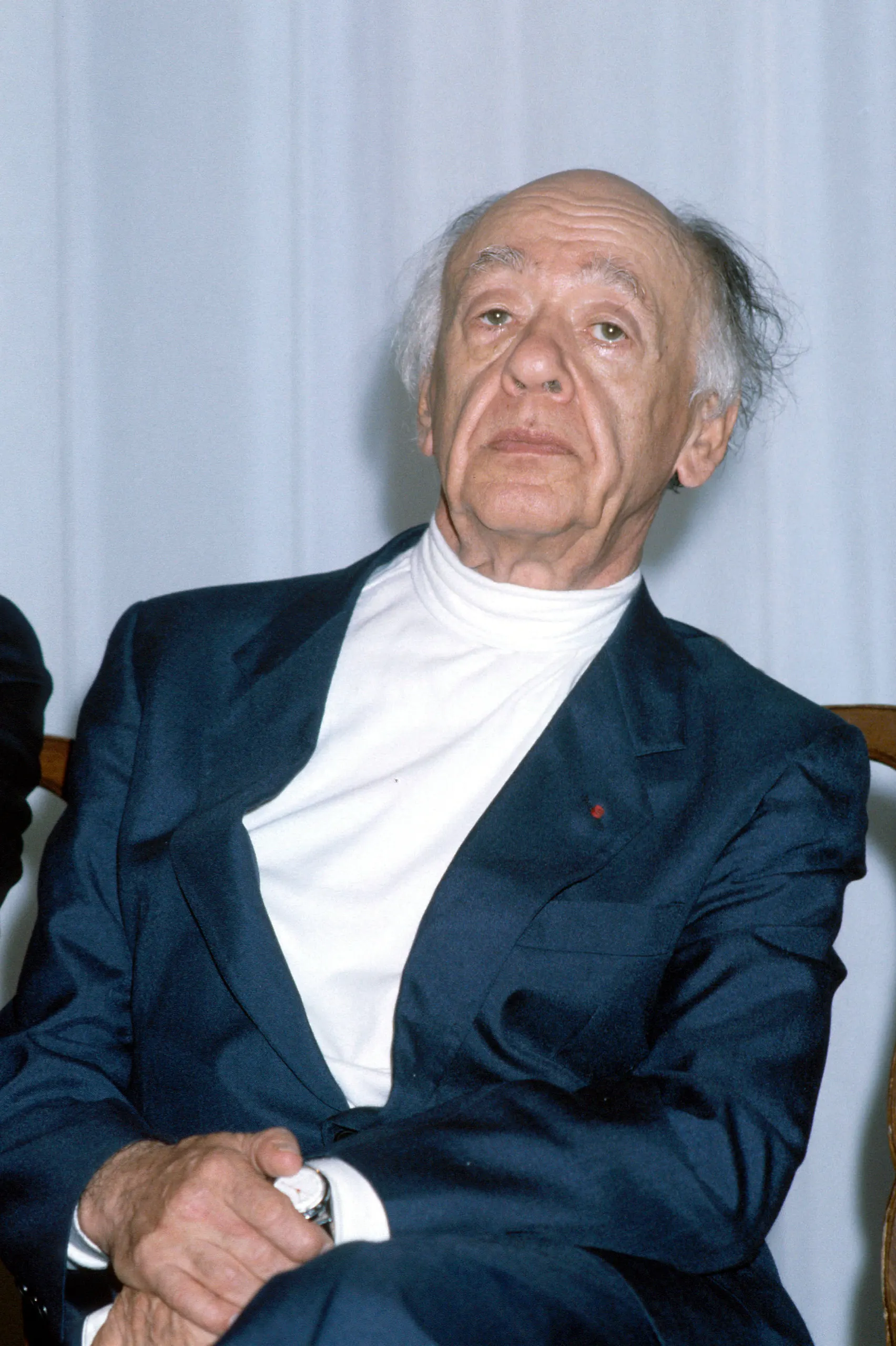
Eugène Ionesco
 France
playwright•poet•literary critic
Also known as: Eugen Ionescu, Eugene Ionesco
Birthday
November 26, 1909
Birth Sign
Sagittarius
Birthplace
Slatina, Romania
Age
Died at 84
About
Eugène Ionesco, born Eugen Ionescu in Slatina, Romania, on November 26, 1909, stands as a monumental figure in 20th-century literature and one of the founding fathers of the Theatre of the Absurd. Although Romanian by birth, he wrote almost exclusively in French, becoming a central pillar of French culture and eventually earning election to the prestigious Académie française. His work is defined by its rejection of traditional narrative structures, utilizing nonsensical dialogue, surreal imagery, and comic absurdity to explore the meaninglessness of human existence. From his early days studying at the University of Bucharest to his later years directing his own plays in Paris, Ionesco maintained a unique artistic voice that challenged audiences to confront the irrational nature of reality. He passed away on March 28, 1994, leaving behind a legacy that fundamentally reshaped modern drama and continues to influence contemporary theater practitioners worldwide.
Early Life & Background
Born into an upper-middle-class family in Slatina, Romania, Ionesco experienced a childhood marked by cultural duality following his parents' divorce. His father, Eugen Ionescu Sr., was a lawyer, while his mother, Thérèse Păun, possessed mixed Romanian and French heritage. The split upbringing saw him alternating between his grandmother's home in Slatina and time spent with his mother in France, instilling a profound sense of displacement that would later permeate his writing. He attended the University of Bucharest, where he studied French literature and earned a degree in 1936. During these formative university years, he began composing poetry and short stories in Romanian before shifting his focus entirely to French drama. After moving permanently to Paris in 1945, he struggled financially while working as a translator and teaching French at various institutions, including a stint at the University of Poitiers. In this period of obscurity, he developed his unique theatrical voice, rejecting conventional storytelling to explore the mundane and the irrational.
Career Growth
Ionesco's career trajectory shifted dramatically in the late 1940s with the premiere of The Bald Soprano (*La Cantatrice Chauve*) in 1950 at the Théâtre des Noctambules in Paris. Initially dismissed as a flop, it was revived to become a sensation, deconstructing logic to expose the absurdity of communication. This breakthrough established him as a leader of the Theatre of the Absurd, followed by seminal works like The Lesson (1951), The Chairs (1952), and Rhinoceros (1959), the latter serving as a powerful allegory for fascism. In 1962, he wrote Exit the King (*Le Roi se meurt*), exploring mortality and denial. His career milestones include election as a member of the Académie française in 1966, though he did not take his seat until 1970 due to a dispute over the oath. That same year, he was awarded the Austrian State Prize for European Literature. In 1973, he received the Jerusalem Prize for Freedom of the Individual in Society. Throughout the 1980s and 1990s, he continued writing and directing his own plays, maintaining international relevance until his death.
Career Timeline
Public Image & Style
Ionesco does not have a traditional fanbase in the pop-culture sense, such as organized fan clubs or social media followers. Instead, his admirers consist of theater practitioners, students, scholars, and critics who study and perform his works. His public image is that of an intellectual provocateur, a tragic clown who used humor to dissect the darkness of the human condition. His signature aesthetic involves surrealism, nonsensical dialogue, and visual metaphors like rhinoceroses transforming humans. Photographs from the mid-20th century depict him as an unassuming, middle-aged man with a distinctive mustache and glasses, often dressed in modest, dark clothing typical of the Parisian intellectual class. Critics often referred to him as the "Shakespeare of the Absurd," cementing his status as a serious literary figure rather than a celebrity.
Fame & Fandom
Eugène Ionesco commanded a global stage defined by intellectual resonance rather than mass celebrity, establishing a legacy that permeated academic circles and avant-garde theaters worldwide. His influence endures through the study of his plays, which remain central to discussions on existentialism and the Theatre of the Absurd. Despite this profound cultural impact, iFANN's Global Fame Engine has evaluated this person, but they do not currently hold a placement in the published rankings (Global Top 1,000 or a Top-100 scope list). Consequently, no specific ordinal rank or numerical score can be assigned to his current standing in the broader fame hierarchy. The absence of a formal ranking reflects a shift from contemporary viral attention to sustained scholarly engagement. Regarding his audience, there is no documented name for his fanbase; the community consists primarily of theater practitioners, students, critics, and scholars who engage with works such as Rhinoceros and The Bald Soprano. Unlike modern celebrities who cultivate organized groups with specific titles, Ionesco's admirers operate within institutional frameworks rather than informal clubs. No fan-funded projects, birthday billboards, or interactive rituals have been recorded in connection with his name. His following is characterized by the serious study of his texts and the performance of his plays in repertory companies globally. This lack of a formalized fandom structure aligns with his status as a mid-century intellectual figure whose work predates the era of digital fan campaigns and social media interaction. The enduring relevance of his writing ensures that his name remains prominent in literary history, even without the metrics of a ranked pop-culture icon.
Interesting Facts and Legends
Ionesco originally intended to become a writer in Romanian but switched to French because he felt the language offered him greater freedom from the constraints of his native tongue's traditions. He was a self-proclaimed anti-playwright, deliberately avoiding character development and logical plots to force audiences to confront the meaninglessness of existence. Despite his success, he remained relatively private and avoided the celebrity circuit, preferring to focus on his writing and small gatherings with fellow artists. He was a close friend of Samuel Beckett, and the two influenced each other's work significantly, though they maintained distinct styles. A widely retold story regarding his legacy involves the premiere of Rhinoceros, which served as a powerful allegory for fascism and the conformity of society. While no single night of crowd disruption is historically verified, the play's narrative of individuals transforming into rhinos became a cultural shorthand for mass hysteria and the loss of individuality. He also received the Order of Merit of the Federal Republic of Germany and honorary degrees from the University of Athens and the University of Geneva.
Notable Quotes
“I am not a dramatist; I am a poet who writes for the stage.”
“The absurd is not in the situation, but in the reaction to the situation.”
“I do not want to explain anything. I want to show things.”
Family & Personal Life
Eugène Ionesco was born into an upper-middle-class family; his father, Eugen Ionescu Sr., was a lawyer, and his mother, Thérèse Păun, had mixed Romanian and French heritage. His parents divorced when he was young, leading to a split upbringing where he alternated between his grandmother's home in Slatina and time spent with his mother in France. This bifurcated environment instilled a sense of displacement that would later permeate his writing. Ionesco attended the University of Bucharest, where he studied French literature and earned a degree in 1936. During these university years, he began writing poetry and short stories, initially composing them in Romanian before shifting his focus entirely to French drama. After moving permanently to Paris in 1945, he struggled financially while working as a translator and teaching French at various institutions, including a stint at the University of Poitiers. In this period of obscurity, he developed his unique theatrical voice, rejecting traditional narrative structures in favor of exploring the irrational and the mundane.
Notable Connections
Rodica Ionesco (wife), Samuel Beckett (friend and contemporary), Jean Genet (contemporary), Diane Paulus (director), John Turturro (actor), Paul Giamatti (actor).
Relationships & Dating History
Eugène Ionesco was married once. He wed Rodica Burileanu (later known as Rodica Ionesco) in 1945. Rodica was a former student and a close collaborator who managed his affairs and often served as a muse. The couple remained together until his death in 1994. There were no other public romantic relationships or divorces recorded during his lifetime. They had no children together. As of the date of his death in 1994, his marital status was widowed. There is no current dating history as the subject passed away decades ago.
- MarriedRodica Ionesco1945 - 1994Former student and lifelong collaborator; no children together.
Death & Aftermath
Died
March 28, 1994 (aged 84)
Death Place
14th arrondissement of Paris, France
Cause of Death
complications from a long illness
Eugène Ionesco spent his final years in Paris, maintaining his status as a central figure of the Theatre of the Absurd while managing the legacy of works like Rhinoceros and The Bald Soprano. On March 28, 1994, the playwright passed away at the age of 84 in the 14th arrondissement of Paris following a long illness consistent with natural causes associated with advanced age. Tributes poured in from the French literary establishment immediately upon his death, with peers recognizing him as the uncrowned king of absurd theatre alongside contemporaries such as Samuel Beckett and Jean Genet. The Los Angeles Times published an obituary the following day describing him as the godfather of the theater of the absurd and highlighting his seminal contributions to modern drama. Funeral arrangements were handled privately, though specific details regarding the service date or notable attendees were not made public. His remains rest in the Montparnasse Cemetery in Paris, joining many other prominent French artists and writers. Decades after his death, his plays continue to be performed globally, including recent high-profile productions of Rhinoceros at the American Repertory Theater starring John Turturro and Paul Giamatti. His estate manages the licensing of his works for stage, film, and academic study, ensuring his foundational voice in modern drama remains active.
Net Worth (Estate Value)
$5 Million
iFANN Editorial Team estimate
As Eugène Ionesco passed away in 1994, he does not have a current personal net worth. However, his estate continues to generate revenue through licensing fees for stage productions, film adaptations, and academic publications. While exact current valuation figures are not publicly disclosed in real-time financial reports, research by the iFANN Editorial Team puts the value of his estate at around $5 million. Posthumous earnings are derived primarily from the global popularity of Rhinoceros and The Bald Soprano, which remain staples in university curricula and professional theater repertoires. The estate is managed to preserve his legacy and fund ongoing theatrical rights, with income flowing steadily from international performances and translations. Recent high-profile productions, such as the 2026 American Repertory Theater staging of Rhinoceros, continue to drive significant licensing revenue, ensuring his foundational voice in modern drama remains active and financially viable.
Awards Won (4)
Ionesco received numerous accolades throughout his life, including election to the Académie française in 1970, the Austrian State Prize for European Literature in 1970, and the Jerusalem Prize for Freedom of the Individual in Society in 1973. He also received the Order of Merit of the Federal Republic of Germany and honorary degrees from the University of Athens and the University of Geneva.
1970 · Membership
1970 · Literature
Known For
Rhinoceros
1959 · Playwright
The Bald Soprano
1950 · Playwright
The Chairs
1952 · Playwright
Exit the King
1962 · Playwright
Keywords
Sources
Quick Facts
- Profession
- playwright, poet, literary critic
- Born
- November 26, 1909
- Birthplace
- Slatina, Romania
- Died
- March 28, 1994
- Death Place
- 14th arrondissement of Paris, France
- Gender
- Male
- Spouse
- Rodica Ionesco
- Birth Sign
- Sagittarius
Personal Details
- Full Name
- Eugen Ionescu
- Spouse
- Rodica Ionesco
- Children
- Education
- University of Bucharest (French Literature)
Frequently Asked Questions
What was Eugène Ionesco's most famous play?
Did Eugène Ionesco have any children?
Why did Eugène Ionesco write in French instead of Romanian?
When did Eugène Ionesco die?
Is Eugène Ionesco still alive in 2026?
Similar People
Join the community
fans discussing