ETH Zurich
 Switzerland
"Swiss Federal Institute of Technology Zurich"
About
ETH Zurich, officially the Swiss Federal Institute of Technology Zurich, is a public research university in the heart of Zurich, Switzerland. Founded in 1855 by the Swiss federal government, it was established as a polytechnic to train engineers and scientists for the industrial age. Today, it stands as one of the world's leading institutions for science and technology, consistently ranking among the top universities globally. Its campus hosts students and researchers from over 120 countries, all drawn by its reputation for rigorous inquiry and bold innovation.
The university focuses on STEM disciplines: science, technology, engineering, and mathematics. It operates within the Swiss Federal Institutes of Technology Domain, alongside its sister institution EPFL in Lausanne. Together, they form a powerhouse of research that drives much of Switzerland's technological advancement. ETH Zurich has produced 21 Nobel laureates, including Albert Einstein, who studied and later taught there. The university's alumni and faculty have shaped fields from quantum physics to architecture, and its spin-off companies, such as ZuriQ, translate academic research into commercial applications.
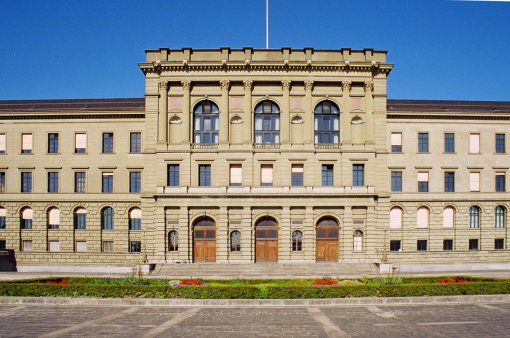
With an annual budget exceeding 1.8 billion Swiss francs and a faculty of over 500 professors, ETH Zurich maintains a strong public funding base from the Swiss government, supplemented by research grants and industry partnerships. Its main building, an iconic landmark in Zurich, houses the central administration, while the Hönggerberg campus and a research center in Basel expand its footprint. The university's tone is serious yet collaborative, fostering an environment where rigorous method meets bold ideas. It is not merely a school; it is a launchpad for the next generation of scientific leaders, dedicated to addressing global challenges through research and education.
Mission
ETH Zurich's mission is to advance science and technology for the benefit of society. The university aims to educate future leaders in engineering and science, promote cutting-edge research, and transfer knowledge to industry and the public. It places a strong emphasis on interdisciplinary collaboration and addressing global challenges such as climate change, sustainable energy, and health. By fostering an environment of intellectual freedom and rigorous inquiry, ETH Zurich seeks to inspire innovation and contribute to the prosperity of Switzerland and the world.
History
ETH Zurich opened its doors on October 16, 1855, as a federal polytechnic school. The Swiss government created it to meet the growing demand for technical expertise during the industrial revolution. The first classes were held in temporary buildings in Zurich, with just 32 students enrolled. Over the decades, the institution expanded its curriculum and reputation, moving into the iconic main building on Rämistrasse in 1864. By the turn of the century, ETH had become a leading center for engineering and science in Europe.
The university's early years were marked by the presence of notable professors such as Gottfried Semper, the architect who designed the main building. In the early 20th century, ETH gained international fame when Albert Einstein studied there and later returned to teach. The institution weathered two world wars, maintaining its research output and contributing to Switzerland's technological self-sufficiency. After 1945, ETH expanded rapidly, adding new departments and research centers. In 1960, the Hönggerberg campus was established to accommodate growing numbers of students and researchers.
In recent decades, ETH Zurich has solidified its position among the world's top universities. It has been a leader in fields such as quantum computing, artificial intelligence, and biomedical engineering. The university has also strengthened its ties with industry, fostering numerous spin-offs and collaborations. In 2026, ETH and IBM launched a 10-year initiative to advance algorithms for the AI and quantum era, and ETH spinout ZuriQ raised $25.5 million to develop quantum chip architectures. These milestones reflect the university's ongoing evolution from a regional polytechnic to a global research powerhouse.
Subdivisions
Department of Computer Science
Focuses on algorithms, data systems, and machine learning, among other areas.
Department of Physics
Conducts research in condensed matter, quantum optics, and particle physics.
Department of Biosystems Science and Engineering
Integrates biology, engineering, and computational science to understand and manipulate biological systems.
Institute for History and Theory of Architecture
Studies architectural history, theory, and criticism.
Notable People
Albert Einstein
Student and Professor · 1896-1900 (student), 1909-1911 (professor)
Developed the theory of relativity; Nobel Prize in Physics 1921
Mercouri Kanatzidis
Honorary Doctorate Recipient · 2026
Received honorary doctorate from ETH Zurich for contributions to materials science
Renato Renner
Professor
Led research demonstrating perfect randomness for the first time in 2026
Andreas Wallraff
Professor
Co-led research on perfect randomness and quantum computing
David Norris
Professor
Developed a new type of pixel for optical materials
Milestones
1855
ETH Zurich founded and opens its doors
1864
Main building on Rämistrasse inaugurated
1901
Albert Einstein enrolls as a student
1909
Einstein becomes a professor at ETH
1960
Hönggerberg campus established
2026
IBM and ETH launch 10-year research partnership
2026
ZuriQ spinout raises $25.5 million in seed funding
2026
Researchers demonstrate perfect randomness for the first time
Departments
Sources
Organization Info
- Founded
- 1855-10-16
- Headquarters
- ETH Zurich main building
- Country
- Switzerland
- President
- Joël Mesot
- Parent
- Swiss Federal Institutes of Technology Domain
- Type
- University
- Budget
- 1.8 billion CHF
- Nobel Laureates
- 21
- Departments
- 16
Financials
- Budget
- 1.8 billion CHF
Official Website
www.ethz.ch/
Join the community
fans discussing