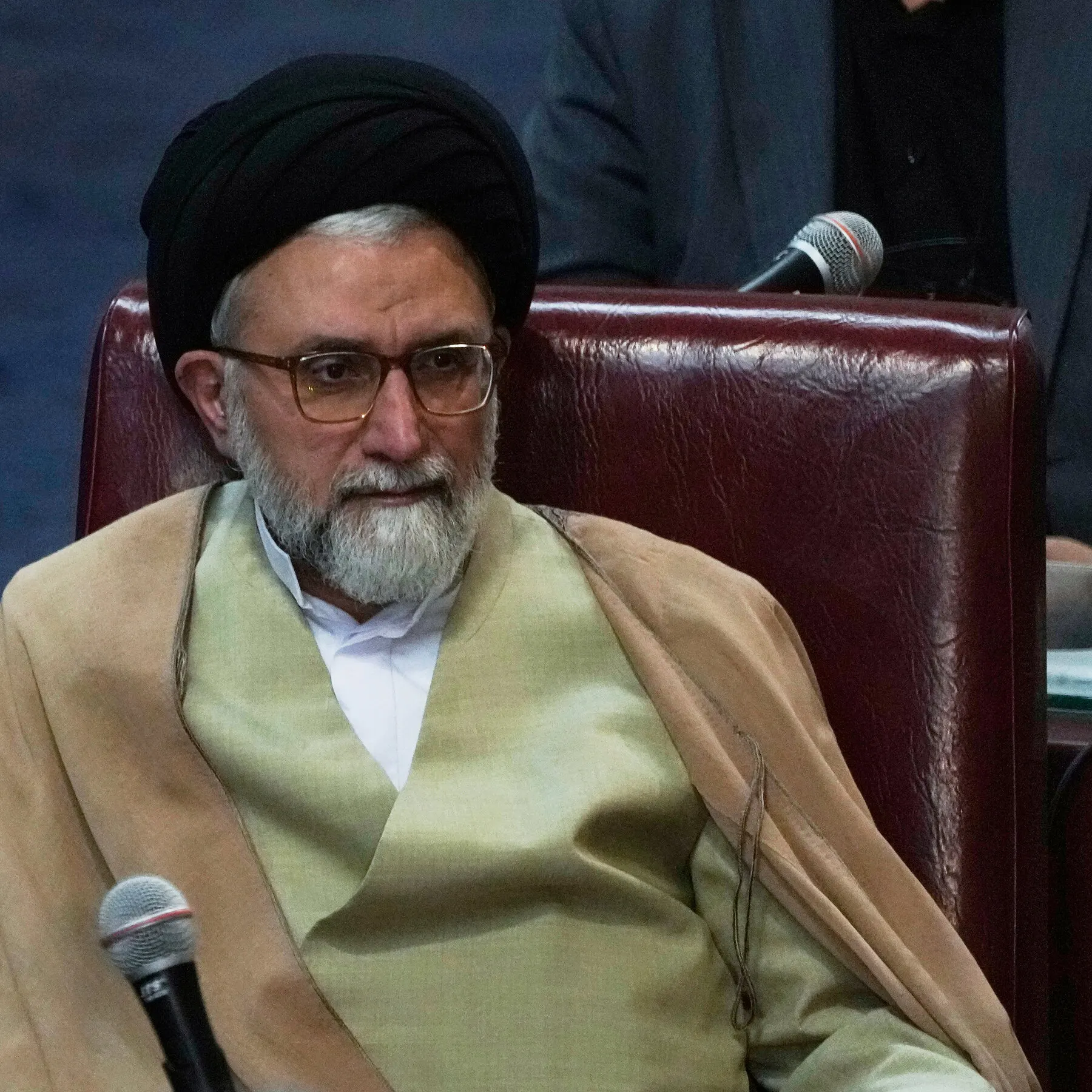
Esmaeil Khatib
 Iran
IranAlso known as: Esmail Khatib
Birthday
1961
Birth Sign
Capricorn
Birthplace
Qaen, South Khorasan Province, Iran
Age
Died at 65
About
Esmaeil Khatib was an Iranian Shia cleric and politician who served as the Minister of Intelligence of the Islamic Republic of Iran from August 25, 2021 until his death on March 18, 2026. He was the eighth person to hold that office, a position that placed him at the center of the state's security apparatus during a period of intense domestic unrest and regional conflict.
Khatib was killed in an Israeli airstrike in Tehran during the 2026 Iran war, a conflict that reshaped the region and cut short a career marked by quiet influence and hard-line loyalty. His death came as the war continued, with Israeli operations targeting Iranian infrastructure and leadership.
Early Life & Background
Khatib was born in 1961 in Qaen, a town in South Khorasan Province in eastern Iran. At around age fourteen or fifteen, he began seminary studies in Qom, the center of Shia learning in Iran. There he studied Islamic jurisprudence under several senior clerics, including the future Supreme Leader Ali Khamenei, Mohammad Fazel Lankarani, Naser Makarem Shirazi, and Grand Ayatollah Mojtaba Tehrani. He attained the clerical title of Hojjat ol-Eslam, meaning 'proof of Islam.' He was nineteen when the 1979 revolution toppled the Pahlavi dynasty.
When Iraq invaded Iran in September 1980, Khatib enlisted in the Islamic Revolutionary Guard Corps, joining its intelligence and operations unit under the direction of its founder, Hassan Baqeri. He was wounded in combat, an injury severe enough to end his deployment to the front. His brother and brother-in-law were both killed in the war. In 1985, Mohsen Rezaei, the first commander-in-chief of the IRGC, formally assigned Khatib to the IRGC intelligence unit, where he served until 1991. During this period he was involved in the arrest and execution of Mehdi Hashemi, a figure connected to the Iran-Contra affair.
Career Growth
After leaving the IRGC intelligence unit in 1991, Khatib was responsible for intelligence in Qom province. In November 1997, then-Minister of Intelligence Ali Fallahian appointed him head of the ministry's regional branch in Qom. He later moved into the Supreme Leader's protection orbit, heading the judiciary's protection and intelligence apparatus. He also served as Iran's chief warden for several years and worked directly in Ali Khamenei's administration. Before becoming minister, he headed the Security Department of Astan Quds Razavi, the trust managing the shrine of Imam Reza in Mashhad.
On August 25, 2021, the Islamic Consultative Assembly approved President Ebrahim Raisi's selection of Khatib as Minister of Intelligence and Security. He served under three presidents: Raisi, acting president Mohammad Mokhber, and Masoud Pezeshkian. He was retained in 2024, confirming his authority rested on trust from the system above elected government. During the Woman, Life, Freedom uprising, he laid out a framework that collapsed protest, foreign media, activism, and espionage into one threat map. He was killed in an Israeli airstrike on March 18, 2026.
Career Timeline
Public Image & Style
Khatib was portrayed in Western and opposition media as a hard-line security figure. Iran International described him as 'the man who turned dissent into espionage' and noted that he 'mattered not because he ran spies but because he helped redraw the line between politics and security.' The Besa Center described his appointment as coming 'at a time when the Islamic regime is being bombarded by one catastrophe after another.' He had no public fan culture.
Fame & Fandom
Esmaeil Khatib's public profile is that of a shadowy security figure, not a celebrity. He has no documented fandom, no fan clubs, no organized supporter communities, and no informal fanbase with a name. This absence is unsurprising: as Iran's Minister of Intelligence until his assassination in 2026, he was a spymaster and enforcer, a figure whose public reputation was defined by repression, not adoration.
iFANN's Global Fame Engine has evaluated Esmaeil Khatib, but he does not currently hold a placement in the published rankings, whether the Global Top 1,000 or any Top-100 scope list. His fame, such as it is, derives entirely from his role in the 2026 Iran war and his dramatic death, not from any cultural following.
What legends exist around Khatib are the lore of wartime assassination. The defining story, verified and widely retold, is his killing in an Israeli airstrike in Tehran on 18 March 2026, part of what Al Jazeera called the 'third assassination in two days' against Iranian leadership. Another recurring narrative casts him as the 'man who turned dissent into espionage,' a master of domestic surveillance and suppression. These stories, however, are the stuff of news cycles and geopolitical analysis, not fan mythology. His legacy, as told by the media, is one of 'blood on his hands' and a violent end, not of adoring crowds or viral moments.
Interesting Facts and Legends
Khatib was involved in the arrest and execution of Mehdi Hashemi, which intersected with the Iran-Contra affair. He served as Iran's chief warden for several years. He headed the Security Department of Astan Quds Razavi. He was a pupil of Ali Khamenei, establishing a close teacher-student relationship. He was subject to U.S. Department of the Treasury sanctions.
The defining legend of his life is his assassination on 18 March 2026, when an Israeli airstrike in Tehran killed him. The event was immediately framed as part of a stunning sequence: it was the third senior Iranian official eliminated within two days, a detail that Al Jazeera and others highlighted as a sign of a decapitation campaign. Israeli military sources publicly confirmed the strike, and Iran's president condemned it as cowardly. This story, repeated in obituaries and analyses, overshadows all else in his legacy.
Notable Quotes
“We will not allow the enemy to disturb the security of the Islamic Republic.”
Family & Personal Life
Notable Connections
Khatib's career was intertwined with key figures in Iran's security establishment. He studied under Supreme Leader Ali Khamenei and later worked in his administration. President Ebrahim Raisi appointed him as intelligence minister. He served under IRGC commanders Hassan Baqeri and Mohsen Rezaei. His predecessor as intelligence minister was Mahmoud Alavi.
Relationships & Dating History
Death & Aftermath
Died
March 18, 2026 (aged 65)
Death Place
Tehran, Iran
Cause of Death
Precision airstrike
Esmaeil Khatib, the Iranian cleric and Minister of Intelligence, was killed during an overnight Israeli airstrike targeting his residence or a secure facility in Tehran on March 18, 2026. The precision strike resulted in immediate fatalities, a fact confirmed by both the Israel Defense Forces and Iranian President Masoud Pezeshkian without dispute regarding the method of death. This event occurred as part of a broader conflict that saw Israeli operations intensify against Iranian infrastructure and leadership, marking the third high-ranking official eliminated in a span of two days. Reactions to the killing were immediate and polarized; while Iranian officials framed the act as aggression, security officials in Israel celebrated the decapitation of a figure described as a spymaster who had effectively mapped dissent into espionage.
The assassination triggered regional escalation with simultaneous strikes on Lebanon and Iran's South Pars gasfield, dominating global news cycles across major international outlets. Following his death, Khatib was recognized as a central figure in Iran's intelligence apparatus within the context of U.S.-Israeli campaigns, foundations, or dedicated works were established in his name.
Net Worth (Estate Value)
Awards & Accolades
Known For
Minister of Intelligence of Iran
2021-2026 · Minister
Keywords
Sources
Quick Facts
- Profession
- politician, ulema
- Born
- 1961
- Birthplace
- Qaen, South Khorasan Province, Iran
- Died
- March 18, 2026
- Death Place
- Tehran
- Gender
- Male
Personal Details
- Education
- Seminary studies in Qom
Frequently Asked Questions
How did Esmaeil Khatib die?
How old was Esmaeil Khatib when he died?
What was Esmaeil Khatib's role in the Iranian government?
Who was Esmaeil Khatib's predecessor as Intelligence Minister?
Was Esmaeil Khatib connected to the Supreme Leader?
Join the community
fans discussing