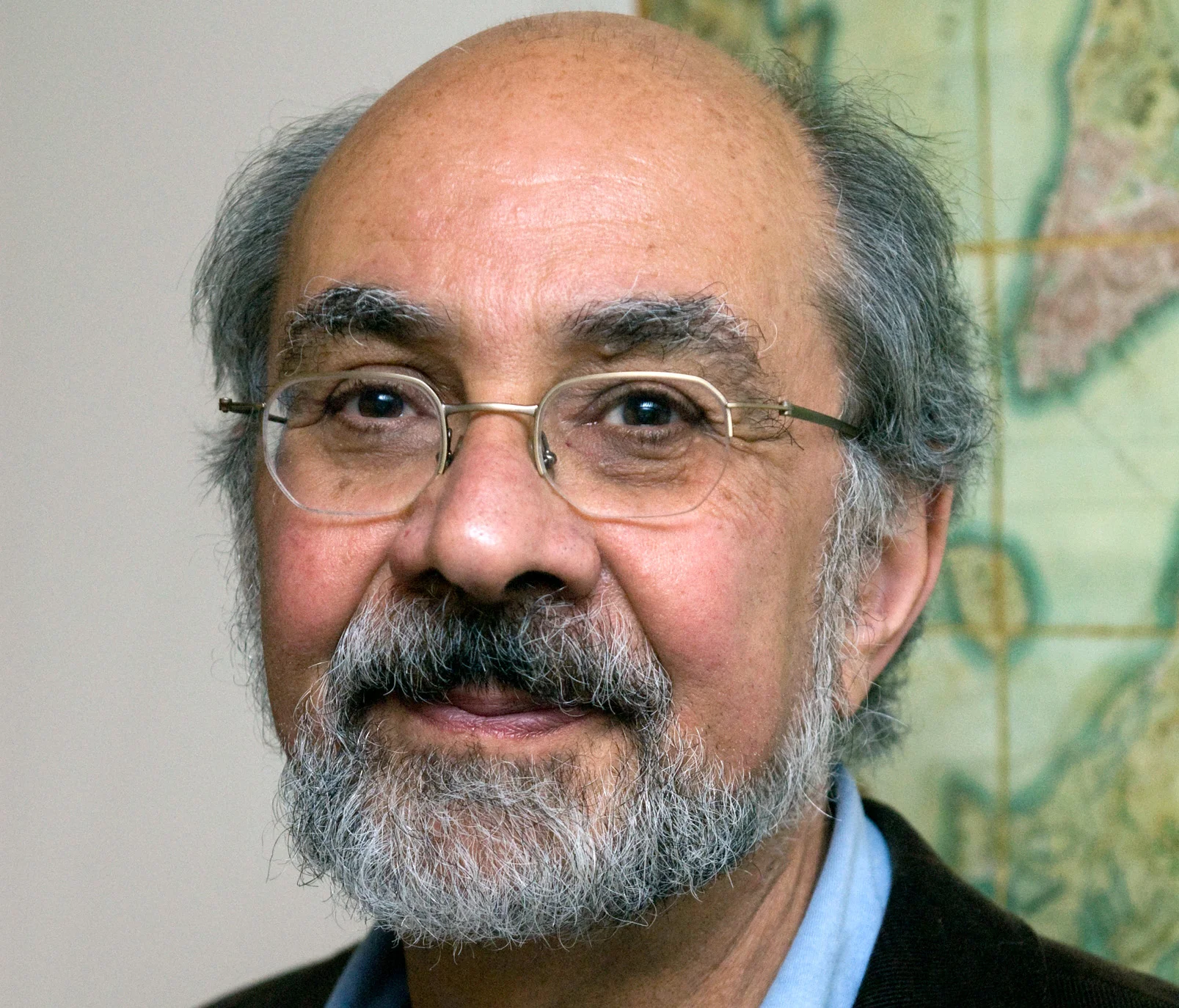
Ervand Abrahamian
 Iran
Birthday
January 1, 1940
Birth Sign
Capricorn
Birthplace
Tehran, Iran
Age
86 years old
About
Ervand Abrahamian is an Iranian-American historian and a leading scholar of modern Iranian history. As Distinguished Professor Emeritus at Baruch College and the Graduate Center of the City University of New York, he has spent decades examining the politics, society, and state repression that have shaped Iran.
His books, including Iran Between Two Revolutions, A History of Modern Iran, and Tortured Confessions, are standard references for anyone trying to understand the country. He has also written extensively on the 1953 CIA-backed coup that toppled Iran's democratically elected government, a topic he has revisited in public talks and forums.
Abrahamian's voice remains prominent in discussions about Iran's future. He has appeared on interviews and panels in 2026, offering analysis on protests, the regime's resilience, and the risks of collapse. His work consistently emphasizes the long arc of state control and resistance in Iran's modern experience.
Early Life & Background
Ervand Abrahamian was born in Tehran in 1940 into an Armenian family. His early years were spent in Iran before he was sent to England for his education, an experience that gave him a bicultural perspective from a young age.
He pursued his undergraduate and master's degrees at Oxford University, where he developed a deep interest in history and the Middle East. After Oxford, he moved to the United States to earn a PhD from Columbia University, focusing on Iranian history.
His doctoral research laid the groundwork for his first major work, Iran Between Two Revolutions, which would later establish his reputation. Before that book appeared in 1982, Abrahamian spent years in archives and interviews, piecing together the social and political forces that led to the 1979 revolution.
Career Growth
Abrahamian's breakthrough came with the 1982 publication of Iran Between Two Revolutions, a sweeping study that traced the country's transformation from the Constitutional Revolution through the Islamic Revolution. The book became a foundational text in Iranian studies.
He followed with Khomeinism in 1993, a sharp analysis of the ideology of the Islamic Republic's founder. In 1999, Tortured Confessions examined the use of prison and forced recantations as tools of political control, earning wide attention for its documentation of state violence.
His 2008 book, A History of Modern Iran, offered a concise yet comprehensive overview of the country's recent past, and has been translated into multiple languages. Abrahamian has also written about the 1953 coup, most notably in The Coup: 1953, the CIA, and the Roots of Modern U.S.-Iranian Relations, published in 2013.
In 2026, he remains active, participating in forums on Iran's future and commenting on the regime's stability. His analysis of the 1953 coup was the subject of a talk at the London School of Economics in May 2026.
Career Timeline
Public Image & Style
Abrahamian is known for his rigorous, accessible scholarship and his willingness to engage with contemporary political issues. He is frequently sought after by media outlets for his insights on Iran, appearing on programs like Democracy Now! and contributing to publications such as The Nation and MERIP.
His public persona is that of a clear-eyed analyst who does not shy away from criticizing both the Islamic Republic and U.S. policy. He is respected for his deep historical knowledge and his ability to connect past patterns to present events.
Fans of his work often cite his books as essential reading for understanding Iran, and his talks draw audiences interested in the region's politics.
Fame & Fandom (iFAMOUS Rankings)
Ervand Abrahamian's audience is not the stuff of fan clubs or billboards. It is built from seminar rooms, bookstore shelves, and the kind of readers who underline passages and pass dog-eared copies to friends. His following, students, scholars, journalists, and activists, has no formal name, no coordinated campaigns, no rituals. What it has is a shared respect for a historian who has spent five decades demystifying Iran's politics, from the 1953 coup to the Islamic Republic's internal power structures.
His "iconic moments" are intellectual. The most retold is his role in rewriting the history of the 1953 coup, showing it was not simply a CIA operation but a joint venture with domestic Iranian actors. His book The Coup: 1953, the CIA, and the Roots of Modern U.S.-Iranian Relations is the work most often cited. Another frequently quoted line, from the London Review of Books, notes that "Iran has a healthy respect for crowds, and for good reason." These are not viral legends but the currency of a serious public intellectual.
In 2026, as tensions between the U.S. and Iran escalated, Abrahamian became a go-to analyst on outlets like Democracy Now! and NY1, offering clear-eyed assessments of the regime's survival prospects and the risks of anarchy over democracy. His 2026 article "Iran Under Fire" in New Left Review provides a critical anatomy of the Islamic Republic's power structures. He has also signed petitions against repression in Iran.
Despite this visibility, iFANN's Global Fame Engine has evaluated Ervand Abrahamian but he does not currently hold a placement in the published rankings. He remains a figure of scholarly renown rather than global celebrity.
Interesting Facts and Legends
Ervand Abrahamian is of Armenian descent, born in Iran and raised in England, a background that has informed his cross-cultural perspective on Middle Eastern history. He has been a frequent contributor to the journal Middle East Report and has written for the New Left Review. In March 2026, he warned that the collapse of Iran's Islamic Republic could lead to anarchy rather than democracy, a view that sparked discussion among analysts. He has been interviewed on Democracy Now! in 2026, discussing the wave of protests that began in December 2025.
One of the most widely retold stories in his field is his role in debunking the myth that the 1953 coup was solely a CIA operation. His research, detailed in The Coup and Oil Crisis in Iran, emphasizes the domestic Iranian actors and the oil crisis context, a contribution that reshaped modern Iranian historiography. Another frequently cited piece of his analysis, published in the London Review of Books in 2009, is his argument that crowds have historically shaped Iranian politics, from the 1906 constitutional revolution onward, a line often quoted in discussions of Iranian political culture.
Abrahamian's expertise has made him a sought-after commentator during the 2026 U.S.-Iran crisis, with appearances on NY1 and CivilNet, where he offered assessments of the regime's resilience and the potential for post-theocracy anarchy.
Notable Quotes
“The 1953 coup was not just about oil; it was about who controls Iran's destiny.”
“The Islamic Republic has a long history of using state violence to maintain power.”
“If the regime falls, we could see chaos, not democracy.”
Family & Personal Life
Details about Ervand Abrahamian's family are not publicly documented. He was born to an Armenian family in Tehran, but information about his parents or siblings is not available.
He has not shared information about his personal household, marriage, or children in public sources. His academic work and public appearances have focused entirely on his scholarship and analysis of Iran.
Notable Connections
Relationships & Dating History
Salary, Net Worth In 2026
Awards & Accolades
Known For
Iran Between Two Revolutions
1982 · Author
A History of Modern Iran
2008 · Author
Tortured Confessions
1999 · Author
Keywords
Sources
Quick Facts
- Profession
- historian, professor
- Born
- +1940-01-01
- Birthplace
- Tehran, Iran
- Gender
- Male
- Birth Sign
- Capricorn
Personal Details
- Education
- Oxford University (BA, MA), Columbia University (PhD)
Frequently Asked Questions
Who is Ervand Abrahamian?
What is Ervand Abrahamian's net worth?
Is Ervand Abrahamian still active in 2026?
What is Ervand Abrahamian best known for?
Where was Ervand Abrahamian born?
Join the community
fans discussing