
Erri De Luca
 Italy
ItalyAlso known as: Enrico De Luca
Birthday
May 20, 1950
Birth Sign
Taurus
Birthplace
Naples, Italy
Age
76 years old
About
Erri De Luca is an Italian novelist, poet, translator, and essayist, born in Naples on May 20, 1950. With more than sixty books to his name, he stands as one of Italy's most distinctive literary voices, praised by critic Giorgio De Rienzo of Corriere della Sera as "the writer of the decade." His prose is known for its lyrical intensity and moral clarity, often drawing from his experiences as a manual laborer and political activist.
Today, De Luca continues to write and speak internationally, though his outspoken views on Israel and Gaza have made him a polarizing figure in some European literary circles. He remains deeply engaged with Hebrew language and culture, having produced one of the most respected Italian translations of the Hebrew Bible. Fans admire his uncompromising integrity, whether he is defending environmental causes or challenging what he sees as intellectual hypocrisy.
Early Life & Background
Erri De Luca grew up in a working-class neighborhood in Naples, where the rhythms of the city and its dialect left a lasting imprint on his language. His father was a railway worker, and the family lived modestly. De Luca has said that his education came more from the streets and the sea than from school, though he was an avid reader from an early age.
In the 1960s, he became involved with leftist movements, eventually leading a faction of the far-left group Lotta Continua. This period of political militancy took him away from Naples to Turin and other industrial cities, where he worked as a bricklayer and factory laborer. Those years of physical work and political struggle shaped his worldview and later became a wellspring for his writing. He did not publish his first book until he was in his thirties, having spent his twenties organizing workers and living a life far removed from literary circles.
Career Growth
De Luca's literary career took off in the early 1990s with the publication of Tu, mio (1998) and Montedidio (2001), the latter winning the Prix Femina étranger in 2002. His novel God's Mountain (2004) and The Day Before Happiness (2016) were translated into multiple languages, earning him an international readership. He also became known for his translations of the Hebrew Bible, which he rendered from the original text into Italian, a project that combined his linguistic skill with his deep interest in Jewish culture.
Beyond fiction, De Luca has been a vocal activist. In 2013, he faced trial for inciting criminal damage in connection with protests against the Lyon-Turin high-speed rail project. He was acquitted in 2015, a verdict he called "an injustice avoided." In 2026, he stirred controversy by publicly supporting Israel and criticizing the use of the word "genocide" in relation to Gaza, leading to his exclusion from the Salerno Literature Festival. He also participated in the Jerusalem International Writers Festival, where he defended Zionism, and contributed text to the film A Musical Imprinting.
Career Timeline
Public Image & Style
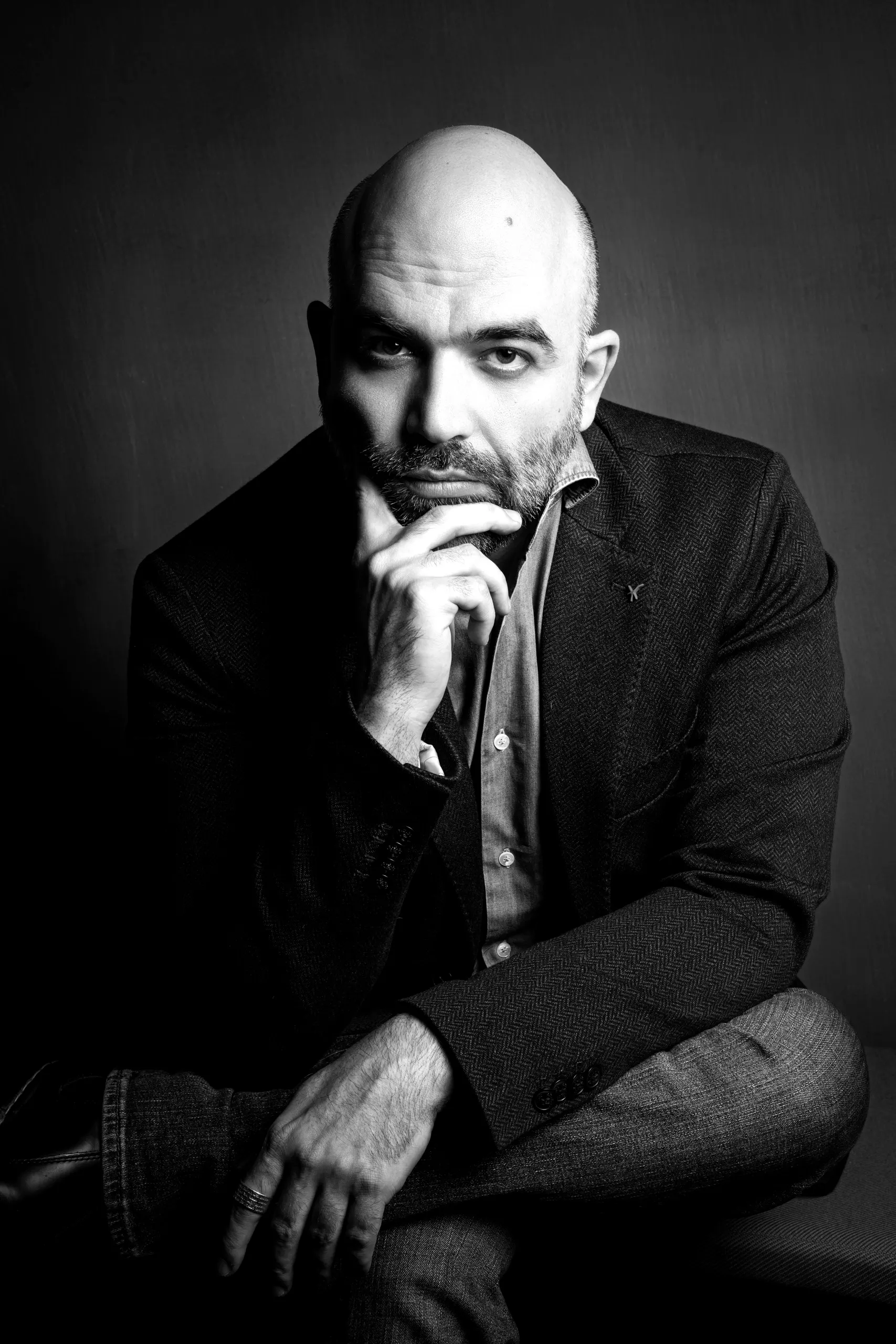
De Luca is often described as a writer's writer, respected for his stylistic precision and his willingness to take political risks. He presents himself as a man of simple habits, often photographed in work shirts or modest jackets, with a weathered face that reflects his years of manual labor. In interviews, he speaks with a calm intensity, choosing words carefully. His public image is that of a moral conscience, even when his positions are unpopular. Fans appreciate his refusal to conform to literary trends, and his lectures draw large crowds, especially in Italy and Israel.
Fame & Fandom (iFAMOUS Rankings)
Erri De Luca's name does not appear in the iFANN Global Top 1,000 or any Top-100 scope list as of the August 2026 evaluation. The Global Fame Engine has assessed his profile, but he currently holds no published ranking. That absence is telling: his fame is real, but it lives in literary circles, not in the broad metrics of global renown.
His audience is devoted but diffuse, with no formal fandom name, no equivalent of 'Swifties' here. They are readers of literary fiction, poetry, and biblical scholarship, spread across more than 30 languages. They gather at festivals and in bookshops, not on fan forums. There are no coordinated campaigns, no birthday billboards, no inside jokes. His following is built on the quiet currency of prose, not on viral moments.
What De Luca lacks in ranking, he makes up for in intensity. His readers are often scholars, activists, and fellow writers who see him as a moral compass, even when, especially when, his positions are unpopular. The absence of a fandom name is itself a statement: this is a writer's writer, whose influence is measured in translations, critical essays, and the fierce debates his political stances ignite.
Interesting Facts and Legends
De Luca taught comparative literature at Chapman University in California, where he directed the John Fowles Center for Creative Writing. He is fluent in Hebrew and has translated the Book of Exodus among other biblical texts. Despite his leftist political roots, he holds strong pro-Israel views, a stance that has put him at odds with many in the European literary world. He lives near Rome but often returns to Naples in his writing, and he is known to be an avid mountain climber, a passion that appears in several of his books.
In June 2026, the Salerno Literature Festival banned him from its opening event, citing his comments on Gaza. The decision, and De Luca's defiant response, became a culture war flashpoint, with supporters framing it as censorship and critics defending the festival's right to exclude him. The moment crystallized his reputation as a writer willing to face professional consequences for his convictions.
Earlier, in 2011, he was tried for 'instigating sabotage' after supporting direct action against the Turin–Lyon high-speed rail line. He was acquitted, and the trial became a cause célèbre for free expression. That episode, along with his leadership in the far-left movement Lotta Continua in his youth, is now part of his legend: the activist who became a master of Italian prose.
Notable Quotes
“An injustice has been avoided.”
“Anyone who recognizes Israel's right to exist here, anyone who sees two entities living side by side, is a Zionist by that very fact.”
“I am prepared to lose everything for backing Israel.”
Family & Personal Life
Erri De Luca was born to a railway worker father and a mother who stayed at home. He has mentioned a sister in interviews, though he keeps his family life largely private. He has never married and has no known children. He currently lives alone in a small apartment near Rome, surrounded by books and his notes. Despite his public persona, he guards his personal relationships fiercely, rarely discussing them in public.
Notable Connections
De Luca has collaborated with translators such as Michael F. Moore, who rendered several of his novels into English. He has also worked with the publisher Feltrinelli, which has released most of his Italian editions. His political past connects him to other former members of Lotta Continua, including Adriano Sofri, though they have diverged in later years.
Relationships & Dating History
Erri De Luca has kept his romantic life almost entirely out of the public eye. There are no confirmed reports of any long-term partner, marriage, or engagement. He has never been publicly linked with anyone, and he rarely discusses personal matters in interviews. As of 2026, he is reportedly single, and his relationships, if any, remain a private matter.
Salary, Net Worth In 2026
$1 Million
iFANN Editorial Team estimate
iFANN currently estimates Erri De Luca's net worth at $1 million. That figure reflects a career built on steady literary income rather than blockbuster sales. With over sixty books to his name, his backlist generates consistent royalties, and his works have been translated into seven languages, expanding his international reach.
Speaking engagements at festivals and universities add to his earnings, with fees typically ranging from $5,000 to $15,000 per event. He has also earned from occasional columns in publications like Il Manifesto and from teaching stints, including his time at Chapman University. De Luca has never pursued commercial ventures or endorsements, and his lifestyle remains modest. His real estate holdings are minimal, a small apartment near Rome.
His net worth has grown gradually, in line with his publishing output and international recognition. It is a figure that mirrors his public persona: respectable, unflashy, and grounded in the work itself.
Awards Won (3)
De Luca has received several major literary awards, including the Prix Femina étranger for Montedidio in 2002. He has also been honored with the Premio Strega Giovani and the Premio Campiello, among others. His work has been recognized internationally, with translations earning him a global readership.
2002 · Foreign Novel
Montedidio
2002 · Young Jury Prize
Montedidio
Known For
Montedidio
2001 · Author
God's Mountain
2004 · Author
The Day Before Happiness
2016 · Author
Hebrew Bible translations
2000 · Translator
Keywords
Sources
Quick Facts
- Profession
- writer, translator, poet
- Born
- May 20, 1950
- Birthplace
- Naples, Italy
- Gender
- Male
- Birth Sign
- Taurus
- Net Worth
- $1 Million
Personal Details
- Full Name
- Enrico De Luca
- Education
- Self-taught, no formal university degree
Filmography
1
Total
1
Film
0
TV
Frequently Asked Questions
How old is Erri De Luca?
Is Erri De Luca married?
What is Erri De Luca famous for?
Why was Erri De Luca banned from the Salerno Literature Festival?
Does Erri De Luca have children?
Social Media
Similar People
Join the community
fans discussing