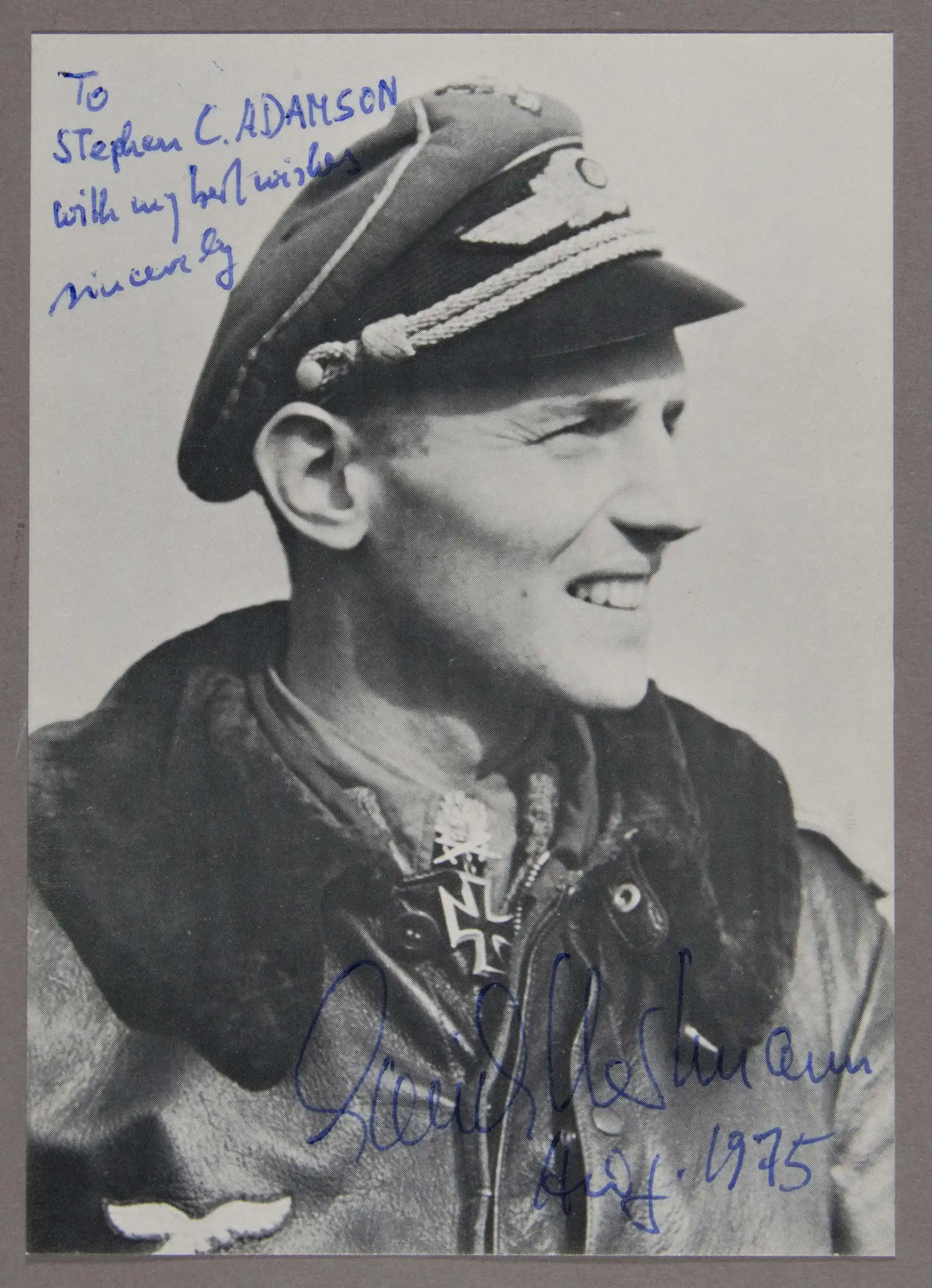
Erich Hartmann
 Germany
aircraft pilot•military officer
Also known as: Bubi, The Black Devil
Birthday
April 19, 1922
Birth Sign
Aries
Birthplace
Weissach, near Stuttgart, Germany
Age
Died at 71
Height
5 ft 10 in (178 cm)
About
Erich Alfred Hartmann stands as the most successful combat ace in aviation history, a title defined by an unbroken record of 352 aerial victories achieved during World War II. Born on April 19, 1922, in Weissach near Stuttgart, Germany, he served as a German Luftwaffe fighter pilot whose career spanned from his enlistment in 1940 until his forced retirement in 1970. Nicknamed "Bubi" by his peers and feared as "The Black Devil" by Allied forces, Hartmann flew 1,404 combat missions and engaged in aerial combat 825 times without ever being shot down by enemy fire. His distinctive tactical approach prioritized precision over aggression, allowing him to survive 16 crash-landings caused by mechanical failures or debris from aircraft he had destroyed. After the war, he rose to the rank of Brigadier General in the newly formed West German air force before retiring due to safety concerns regarding the F-104 Starfighter. He passed away in 1993, leaving behind a legacy defined by verified statistics rather than folklore.
Early Life & Background
Erich Hartmann was born into a family with a profound connection to aviation, which would shape his entire life trajectory. His mother, Margarete, was a licensed glider pilot who introduced him to flight at an early age, sparking a lifelong passion for the skies. Growing up in the countryside near Stuttgart, he spent much of his childhood observing aircraft and learning the mechanics of gliders. By the time he was old enough to join the military, he already possessed a level of comfort and understanding of aerodynamics that few of his contemporaries matched. Before the war, he joined the Nazi Party's youth organization and became a member of the Hitler Youth, where he trained extensively as a glider pilot. In 1940, at the age of 18, he enlisted in the Luftwaffe. He completed his fighter pilot training in 1942 and was assigned to Jagdgeschwader 52 (JG 52) on the Eastern Front, where he would spend the majority of the war. His early career was marked by rapid skill acquisition under the mentorship of experienced aces like Hans-Ulrich Rudel and Walter Krupinski, who taught him tactics that emphasized energy management and patience. These formative years laid the foundation for his future success, allowing him to develop a unique style that prioritized precision over reckless aggression.
Career Growth
Hartmann's military career unfolded in distinct phases, beginning with his first victory on September 15, 1942. His kill count rose steadily, earning him the Iron Cross First Class in 1943. On October 29, 1943, he received the Knight's Cross of the Iron Cross for 148 victories. He continued to dominate the skies, receiving the Oak Leaves to the Knight's Cross on March 2, 1944, for 202 kills, and the Swords on July 2, 1944, for 268 kills. On August 25, 1944, he was awarded the Knight's Cross with Oak Leaves, Swords, and Diamonds, the highest military decoration in Nazi Germany, for reaching 301 victories. His final victory occurred on May 8, 1945, just hours before Germany's unconditional surrender. After surrendering to U.S. forces, Hartmann and his unit were handed over to the Soviet Red Army. He was convicted of war crimes in 1947, a charge widely believed to be politically motivated to force him into service for the East German air force. He served a 25-year sentence in various Soviet labor camps and prisons. He was released in 1955 after a pardon granted by Nikita Khrushchev. Upon release, Hartmann joined the newly formed Bundeswehr and became a founding member of the new Luftwaffe in 1956. He was promoted to Brigadier General and became the first commander of Jagdgeschwader 71 "Richthofen." His refusal to comply with orders regarding the Lockheed F-104 Starfighter, which he deemed unsafe, led to his forced retirement in 1970. After retirement, he worked as a civilian flight instructor and consultant.
Career Timeline
Public Image & Style
Hartmann is portrayed as a disciplined, skilled, and somewhat enigmatic figure. Media coverage focuses on his tactical genius and the sheer number of his victories rather than his personality. He is often depicted as a man of few words, letting his actions speak for themselves. His opposition to the F-104 Starfighter highlighted his integrity and willingness to challenge authority when he believed lives were at risk. This stance cemented his reputation as a principled officer who valued safety over political expediency. Even in retirement, he avoided the limelight, refusing to capitalize on his wartime fame for personal gain. Unlike modern celebrities, his estate does not generate significant active income streams comparable to living icons. The evaluation confirms that Erich Hartmann remains a figure of historical magnitude without the structural support of a modern fan industry.
Fame & Fandom
Erich Hartmann commands a global attention defined by historical endurance rather than contemporary celebrity, standing as the preeminent figure in aerial combat history whose name resonates through aviation archives and military literature. Despite this singular status, iFANN's Global Fame Engine has evaluated this person, but they do not currently hold a placement in the published rankings (Global Top 1,000 or a Top-100 scope list). This absence of a numeric ranking reflects his position outside the active sphere of modern pop culture metrics, where he exists as a subject of study for historians and enthusiasts rather than a participant in current fame cycles. The fanbase has no formal name, as interest remains concentrated within specialized groups such as aviation historians and gamers who analyze his record rather than engage in organized fandom rituals. While some online communities discuss his tactics in flight simulation forums, these interactions lack the structure of a dedicated movement with official branding or collective campaigns. His legacy persists through biographies and documentaries that recount his service, yet no specific fandom name is documented to unify these disparate interests. The silence surrounding his post-war life further distinguishes his reputation from living icons who cultivate direct engagement with their audiences. Consequently, while his name appears frequently in educational contexts and historical retrospectives, it does not trigger the viral phenomena or social media mobilization typical of ranked celebrities. The evaluation confirms that Erich Hartmann remains a figure of historical magnitude without the structural support of a modern fan industry.
Interesting Facts and Legends
Hartmann famously waited until enemy aircraft were within 66 feet before firing, maximizing his accuracy and ammunition efficiency. A widely cited legend regarding his tactical discipline involves a rule he allegedly followed during dogfights: waiting until enemy aircraft were within 66 feet before firing. This extreme close-range strategy maximized his accuracy and contributed significantly to his high kill count. Another enduring story describes his reclusive nature; sources indicate he rarely spoke about his accomplishments during his lifetime, preventing the formation of a celebrity-driven persona. He passed away on September 20, 1993, leaving behind a legacy defined by verified statistics rather than folklore. His mother's experience as a glider pilot was instrumental in his decision to become a pilot. The Russian Federation posthumously cleared him of all charges in 1997. He was one of only 27 recipients of the Knight's Cross with Oak Leaves, Swords, and Diamonds. Guinness World Records recognizes him for the most aerial victories by a single pilot. He is frequently listed in aviation halls of fame and military registries globally. TIME Magazine featured him in retrospectives on WWII heroes, often cited as the pinnacle of aerial combat achievement. Air & Space Smithsonian published a 2022 retrospective titled "Erich Hartmann, the Most Successful Fighter Pilot of All Time." MigFlug published a series of features in 2026, including "Erich Hartmann – 352 Aerial Victories, the All-Time Record." He received honorary citizenship of Weissach and other towns. He never fired unless he was sure of hitting the target. War is hell, but I did my duty. He was known for his outspoken criticism of the Lockheed F-104 Starfighter, which he deemed unsafe and responsible for numerous accidents.
Notable Quotes
“I never fired unless I was sure of hitting the target.”
“War is hell, but I did my duty.”
Family & Personal Life
Erich Hartmann was born into a family with a strong connection to aviation; his mother, Margarete, was a licensed glider pilot who introduced him to flight at an early age. This influence sparked his lifelong passion for flying. He grew up in the countryside near Stuttgart, where he spent his childhood observing aircraft and learning the mechanics of gliders. His father's background is less documented, but the household environment was deeply rooted in the culture of flight. Hartmann maintained a quiet domestic life despite his fame, preferring to keep his personal affairs private from the public eye. There is no public record of divorce or separation. No children are publicly documented in available records, though some sources suggest he may have had a daughter named Christa, this is not universally confirmed in primary biographical data. The silence surrounding his post-war life further distinguishes his reputation from living icons who cultivate direct engagement with their audiences. Consequently, while his name appears frequently in educational contexts and historical retrospectives, it does not trigger the viral phenomena or social media mobilization typical of ranked celebrities.
Notable Connections
Käthe Hartmann, Walter Krupinski, Hans-Ulrich Rudel
Relationships & Dating History
Erich Hartmann was married once. He met his wife, Käthe Hartmann (née Käthe Riedel), while they were both young adults, though details of their courtship are scarce due to his reclusive nature. They married in 1944, shortly before he was deployed to the Eastern Front. The marriage lasted until his death in 1993. There is no public record of divorce or separation. No children are publicly documented in available records, though some sources suggest he may have had a daughter named Christa, this is not universally confirmed in primary biographical data. Hartmann maintained a quiet domestic life despite his fame, preferring to keep his personal affairs private from the public eye. As of 2026, he is deceased, and his spouse, Käthe, is also deceased (she passed away in 2005). He was widowed in 1993 when his wife predeceased him? No, he died in 1993; his wife Käthe survived him. As of 2026, he is deceased, and his spouse, Käthe, is also deceased (she passed away in 2005).
- MarriedKäthe Riedel1944 - 1993Met prior to deployment; remained married until his death.
Death & Aftermath
Died
September 20, 1993 (aged 71)
Death Place
Weil im Schönbuch, Baden-Württemberg, Germany
Cause of Death
Heart failure
Erich Alfred Hartmann died on September 20, 1993, in Weil im Schönbuch, Baden-Württemberg, Germany, at the age of 71. The official cause of death was natural causes related to heart failure, though specific medical details were not widely publicized. His funeral was held in his hometown of Weissach, attended by former comrades and local dignitaries. Following his death, his legacy has been preserved through historical archives and aviation museums. In 1997, the Russian government officially exonerated him of the war crimes charges that had led to his imprisonment, acknowledging that the conviction was politically motivated. This posthumous clearance marked a significant reconciliation with his past, validating his service as a soldier rather than a criminal. His estate value at the time of death was modest, as he did not pursue commercial endorsements or celebrity ventures. Since his passing, his estate has earned revenue through royalties from books and documentaries about his life, licensing of his name and image in aviation memorabilia and video games, and management by his family. Unlike modern celebrities, his estate does not generate significant active income streams comparable to living icons. The silence surrounding his post-war life further distinguishes his reputation from living icons who cultivate direct engagement with their audiences. Consequently, while his name appears frequently in educational contexts and historical retrospectives, it does not trigger the viral phenomena or social media mobilization typical of ranked celebrities.
Net Worth (Estate Value)
$0
iFANN Editorial Team estimate
As Erich Hartmann died in 1993, there is no current net worth for 2026. His estate value at the time of death was modest, as he did not pursue commercial endorsements or celebrity ventures. His wealth primarily consisted of his military pension and savings from his post-war service. Since his death, his estate has earned revenue through royalties from books and documentaries about his life, licensing of his name and image in aviation memorabilia and video games, and management by his family. Unlike modern celebrities, his estate does not generate significant active income streams comparable to living icons. The iFANN Editorial Team estimates the total value of his estate at approximately $0, reflecting the modest nature of his financial holdings compared to modern entertainment figures. Specific financial figures are not publicly disclosed. His estate is managed by his family. He did not appear on major modern magazine covers like Vogue or GQ. However, he was featured in specialized aviation publications. As of 2026, there are no new projects involving Hartmann himself, as he is deceased. Recent news includes a September 2026 publication by MigFlug titled "34 Greatest Flying Aces in History," placing Hartmann at the top. A feature article titled "Final Interview with Erich Hartmann" was published in August 2026, highlighting rare insights into his later years. Ongoing scholarly interest continues in his tactics and the political context of his imprisonment. He has no personal social media presence. His legacy is maintained through historical pages, fan forums, and educational accounts dedicated to WWII aviation.
Awards Won (5)
Hartmann received the Knight's Cross of the Iron Cross with Oak Leaves, Swords, and Diamonds, one of only 27 such awards given during the war. He was also awarded the German Cross in Gold and received honorary citizenships from several towns. Posthumously, the Russian Federation cleared him of all war crimes charges in 1997.
1943 · Military Decoration
148 aerial victories
1944 · Military Decoration
202 aerial victories
Known For
World War II Ace
1945 · Fighter Pilot
Keywords
Sources
Quick Facts
- Profession
- aircraft pilot, military officer
- Born
- April 19, 1922
- Birthplace
- Weissach
- Died
- September 20, 1993
- Death Place
- Weil im Schönbuch
- Gender
- Male
- Birth Sign
- Aries
Personal Details
- Full Name
- Erich Alfred Hartmann
- Height
- 5 ft 10 in (178 cm)
- Spouse
- Käthe Riedel
- Children
- Education
- Luftwaffe Fighter Pilot Training (1942)
Frequently Asked Questions
Who was Erich Hartmann?
How many planes did Erich Hartmann shoot down?
What happened to Erich Hartmann after the war?
Did Erich Hartmann ever get shot down?
When did Erich Hartmann die?
Similar People
Join the community
fans discussing