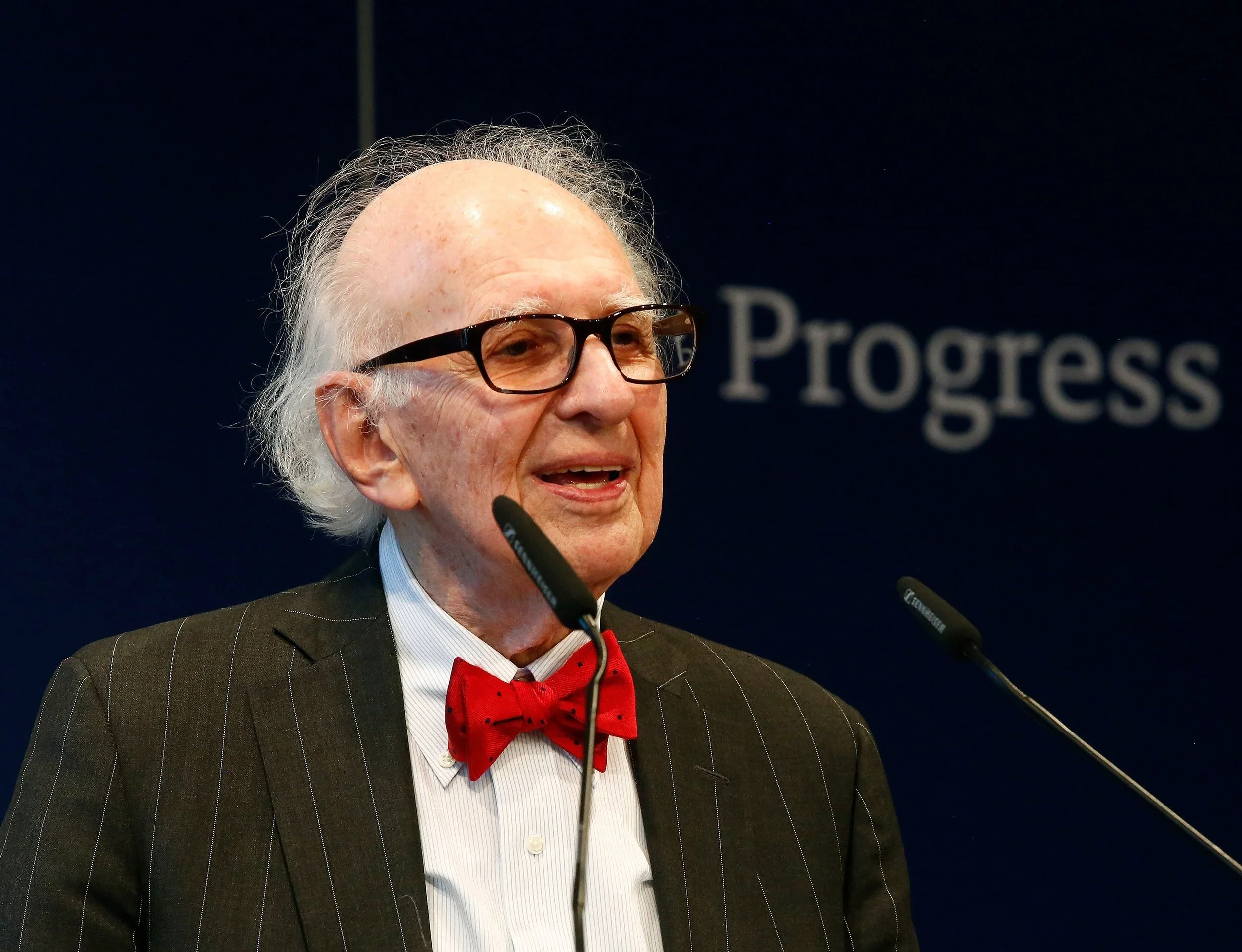
Eric Kandel
 Austria
Also known as: Eric R. Kandel, Erich Richard Kandel, Erich Kandel
Birthday
November 7, 1929
Birth Sign
Scorpio
Birthplace
Vienna, Austria
Age
96 years old
Height
5 ft 10 in (178 cm)
About
Eric Kandel is an Austrian-born American psychiatrist and neuroscientist who transformed our understanding of how memories are stored in the brain. A University Professor at Columbia University, he won the 2000 Nobel Prize in Physiology or Medicine for showing that learning alters synaptic connections, with long-term memory requiring new protein synthesis. His work on the sea slug Aplysia laid the foundation for modern memory research.
Beyond the lab, Kandel is a gifted communicator. His 2006 memoir In Search of Memory brought neuroscience to a wide audience. He continues to write and lecture, and in 2026 the Eric Kandel Institute opened in Vienna, cementing his legacy. Fans and colleagues admire his humility and his ability to bridge the humanities and sciences.
Early Life & Background
Eric Kandel was born Erich Richard Kandel on November 7, 1929, in Vienna, Austria. His family fled the Nazi annexation in 1939, settling in New York City when he was nine. The trauma of leaving his home and losing relatives in the Holocaust shaped his later interest in memory and the mind.
In Manhattan, he attended Stuyvesant High School, where he developed a passion for art and literature. He initially wanted to become a painter, but a psychology course at Harvard changed his path. He graduated with a degree in psychology in 1952, then earned his M.D. from Columbia University in 1956.
After medical school, Kandel trained in psychiatry, but grew frustrated with the lack of biological grounding in Freudian theory. He sought to understand the physical basis of mental processes, leading him to study biochemistry and molecular biology. In the early 1960s, he began researching the sea slug Aplysia californica at the National Institutes of Health, drawn by its simple nervous system and large neurons. This organism became the key to unlocking the cellular mechanics of learning and memory.
His early work at NIH and later at the Howard Hughes Medical Institute laid the groundwork for his groundbreaking discoveries. By the time he joined Columbia as a professor in 1974, he had already identified that synaptic strength changes with learning, setting the stage for his Nobel-winning research.
Career Growth
Eric Kandel's career breakthrough came with his research on Aplysia, demonstrating that learning alters synaptic connections and that long-term memory involves new protein synthesis. This work earned him the 2000 Nobel Prize in Physiology or Medicine, shared with Arvid Carlsson and Paul Greengard.
At Columbia, he founded the Center for Neurobiology and Behavior in 1975, which evolved into the Department of Neuroscience. He served as a Senior Investigator at the Howard Hughes Medical Institute from 1984 to 2022, and became University Professor and Kavli Professor. His 2006 memoir In Search of Memory won the Los Angeles Times Book Prize and became a bestseller.
Kandel has received numerous honors, including the National Medal of Science in 2003 and the Kyoto Prize in 2010. In 2026, the Eric Kandel Institute opened at the Medical University of Vienna, honoring his legacy. He remains active, mentoring young scientists and writing about the intersection of art and neuroscience.
Career Timeline
Public Image & Style
Eric Kandel is seen as a visionary thinker who bridges the humanities and hard sciences. Media portraits emphasize his humility, curiosity, and the profound impact of his work on understanding the human condition. He is a beloved figure among academics, students, and cognitive science enthusiasts, who revere his contributions to memory research. His public talks and writings are known for their clarity and warmth.
Fame & Fandom (iFAMOUS Rankings)
While Eric Kandel does not command the chaotic, red-carpet energy of a pop star, he commands a profound and devoted following among those who study the mind. His audience is less a mob and more a global community of neuroscientists, medical students, and curious readers who revere his ability to translate complex cellular processes into human stories. This isn't a fandom built on merchandise or chart positions, but on intellectual kinship with a man who proved that memory is physical. The respect he garners is absolute, turning his lectures into events where silence is often louder than applause. This unique standing places him firmly within the global consciousness of science and culture. According to the latest data from the iFANN Global Fame Rankings, this stature translates into specific, measurable influence across borders. He is currently ranked as the 23rd most famous person from Austria, a position he has held steady through recent cycles. These placements reflect a worldwide assessment of attention spanning media coverage, search activity, and cultural consumption signals globally. His legacy ensures he remains a constant reference point in discussions about the brain, securing his spot in the annals of modern fame without needing the noise of celebrity culture.
Interesting Facts and Legends
Eric Kandel initially pursued painting before fleeing Austria shifted his path entirely. During his service in the U.S. Army during the Korean War, he discovered psychology, setting the stage for his future career. He maintains a deep appreciation for classical music and literature, often weaving these artistic inspirations into his scientific theories. Colleagues and fans alike recognize his distinctive white hair and preference for casual academic attire. One of his favorite quotes, 'Memory is the thread that connects our past to our present and future,' perfectly encapsulates his life's work. Within the scientific community, several iconic moments define his legend. The 2000 Nobel Prize win stands as the pinnacle, awarded for using the sea slug Aplysia to map how learning alters synaptic connections. The story of his choice to study such a simple organism remains a central piece of scientific mythology, bridging the gap between behavior and molecules. His authorship of Principles of Neural Science, often called the bible of neuroscience, represents a monumental achievement used by students worldwide. Finally, his retirement from Columbia University in 2022 marked the end of a nearly five-decade tenure, followed by the opening of the Eric Kandel Institute in Vienna in 2026, cementing his enduring impact on precision medicine.
Notable Quotes
“The mind is what the brain does.”
“I wanted to write a book that would explain to the layperson how we know what we know.”
“Memory is the thread that connects our past to our present and future.”
Family & Personal Life
Eric Kandel married Denise Kandel, a fellow scientist and professor of epidemiology at Columbia University's Mailman School of Public Health. They met while both were pursuing advanced degrees at Columbia. The couple has two children, though they keep details of their family life private. They reside primarily in New York City, maintaining a low-profile personal life despite their high academic standing.
Notable Connections
Eric Kandel's wife Denise Kandel is a distinguished epidemiologist at Columbia. His Nobel co-recipients were Arvid Carlsson and Paul Greengard. He has collaborated with many students and postdocs who now lead their own labs. He worked closely with Mortimer Zuckerman, who funded the Zuckerman Institute, and has been associated with the Kavli Foundation.
Relationships & Dating History
Eric Kandel has been married to Denise Kandel (née O'Brien) for over six decades. They met at Columbia University while both were pursuing advanced degrees. Their partnership is marked by a shared commitment to science and public health. Denise is a professor of epidemiology at Columbia's Mailman School of Public Health. The couple has two children. There are no records of previous marriages or public relationships. As of 2026, Eric and Denise remain married, residing in New York City.
- MarriedDenise Kandel1960 - presentCurrentMet at Columbia University; married for over six decades.
Salary, Net Worth In 2026
$20 Million
iFANN Editorial Team estimate
iFANN currently estimates Eric Kandel's net worth at $20 million as of 2026. This financial standing reflects a lifetime dedicated to academia rather than commercial ventures. His wealth stems primarily from his long career as a University Professor and Senior Investigator at Columbia University, along with significant royalties from his memoir In Search of Memory and other scholarly publications. Speaking fees have also contributed to his assets over the years. Unlike many public figures, he has never pursued commercial endorsements, keeping his focus strictly on research and education. Real estate holdings in New York City form a substantial part of his portfolio, though exact valuations remain private. His intellectual property and estate holdings contribute to a figure that has grown steadily over the years, supported by the enduring value of his contributions to neuroscience.
Awards Won (5)
Eric Kandel's awards include the Nobel Prize in Physiology or Medicine (2000), the Albert Lasker Basic Medical Research Award (1998), the Gairdner Foundation International Award (1996), and the National Medal of Science (2003). He also received the Kyoto Prize in Basic Sciences (2010).
2000 · Physiology or Medicine
Discoveries concerning signal transduction in the nervous system
2003 · Science
For contributions to neuroscience
Known For
Nobel Prize in Physiology or Medicine
2000 · Co-recipient
In Search of Memory
2006 · Author
Keywords
Sources
Quick Facts
- Profession
- neuroscientist, psychiatrist
- Born
- November 7, 1929
- Birthplace
- Vienna, Austria
- Gender
- Male
- Spouse
- Denise Kandel
- Birth Sign
- Scorpio
Personal Details
- Full Name
- Erich Richard Kandel
- Height
- 5 ft 10 in (178 cm)
- Spouse
- Denise Kandel
- Children
- 2
- Education
- Harvard University (BA), Columbia University (MD)
Frequently Asked Questions
How old is Eric Kandel?
What did Eric Kandel discover?
Who is Eric Kandel married to?
Why did Eric Kandel win the Nobel Prize?
Where does Eric Kandel live?
Similar People
Join the community
fans discussing