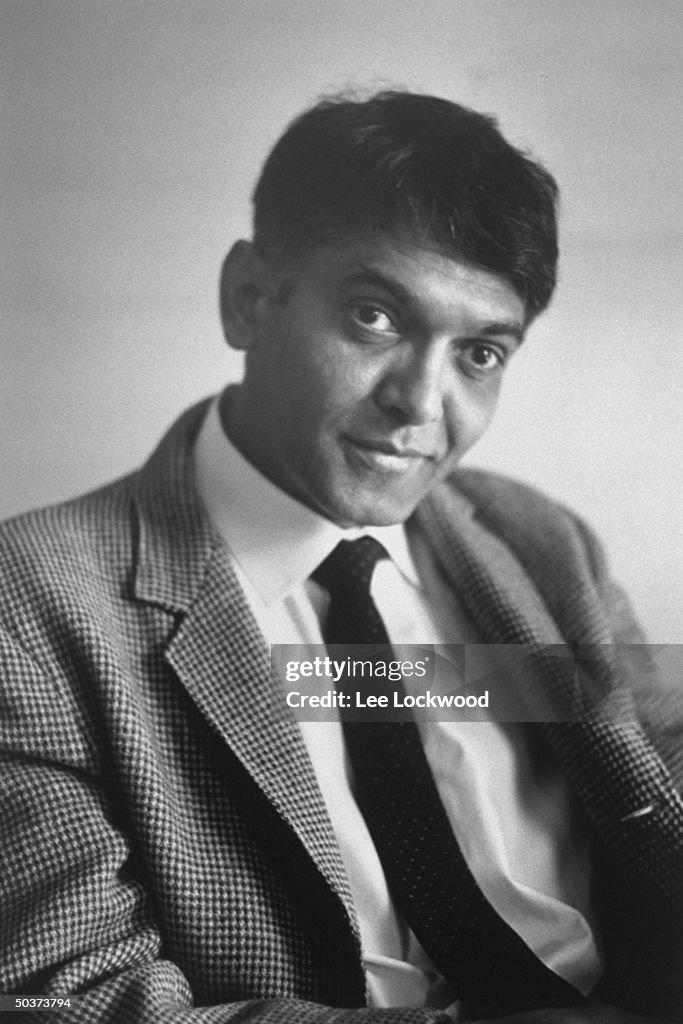
Eqbal Ahmad
 Pakistan
political scientist•journalist•peace activist
Birthday
January 1, 1933
Birth Sign
Capricorn
Birthplace
Bihar, British India
Age
Died at 66
About
Eqbal Ahmad was a Pakistani political scientist, journalist, and peace activist. He gained recognition for his staunch anti-war activism and strong support for global resistance movements. His intellectual contributions were particularly influential in the study of the Near East, and his analyses of 20th-century political events were lauded for their sharp perception and foresight. Ahmad was also the first director of the Transnational Institute. He passed away on May 11, 1999, in Islamabad, Pakistan, at the age of 66.
Early Life & Background
Eqbal Ahmad was born in 1933 in Bihar, British India, into an Indian Muslim landowning family. His early years were marked by significant upheaval, including the murder of his father and the tumultuous period leading up to the Partition of India. After the Partition, Ahmad migrated to the newly formed Pakistan, where he pursued studies in economics, laying the groundwork for his future intellectual pursuits.
A formative experience in his youth involved serving as an army officer, during which he was wounded in the First Kashmir War in 1948. This direct encounter with conflict deeply influenced his worldview. Later, his intellectual journey took a significant turn as he immersed himself in the Algerian Revolution and extensively studied the Vietnam War and American foreign policy. These experiences solidified his profound opposition to war and imperialism, shaping the core tenets of his activism and scholarship that would define his public life.
Career Growth
Returning to the United States in the mid-1960s, Eqbal Ahmad quickly became a prominent voice advocating for peace and human rights. His incisive critiques of foreign policy and global power structures resonated widely. He took on the role of the first director of the Transnational Institute (TNI), an international research and advocacy institute, further establishing his influence in global policy discussions.
Ahmad's career was characterized by significant academic contributions, especially in the study of the Near East. He maintained a steadfast commitment to supporting resistance movements across the world. While respected within radical and left-wing intellectual circles, his outspoken views often made him a controversial figure. He faced arrest warrants and even death sentences during Pakistan's martial law regimes. In 1971, he was notably indicted on charges of conspiring to kidnap Henry Kissinger, though the widely publicized case was ultimately dismissed. Edward Said, a renowned literary critic, acknowledged Ahmad as a profound influence on his own intellectual development.
Career Timeline
Public Image & Style
Eqbal Ahmad cultivated an image as a rigorous scholar and a passionate activist, deeply respected within radical and left-wing intellectual circles. He was seen as a fearless voice, unafraid to challenge established power structures and articulate strong opposition to war and imperialism. Audiences connected with his commitment to human rights and his ability to offer perceptive, often prescient, analyses of complex global political events.
His public persona was that of a thoughtful, intellectual journalist who grounded his arguments in historical context and critical theory. While his views were sometimes controversial to mainstream audiences, he maintained a loyal following among those seeking alternative perspectives on international relations and social justice. He was remembered for his integrity and his unwavering dedication to peace.
Fame & Fandom (iFAMOUS Rankings)
Eqbal Ahmad's global fame rests on his intellectual and political legacy rather than the metrics of celebrity. Evaluated by iFANN's Global Fame Engine in August 2026, he holds no placement in the published rankings, he is not among the Global Top 1,000, nor does he appear on any Top-100 scope list. This absence reflects the nature of his renown: his name circulates in academic, activist, and journalistic circles, but it does not register prominently in mainstream media or mass consumption signals. The scale of his attention is thus modest, concentrated among scholars of postcolonialism, anti-war movements, and the politics of the Near East.
His admirers constitute a loose intellectual following rather than a formal fandom. There is no documented fandom name, and no organized fanbase in the sense of fan clubs or online communities. Instead, his legacy is preserved through institutional channels: the Eqbal Ahmad Annual Lecture Series at Hampshire College, the Transnational Institute in Amsterdam (where he served as first director), and the Eqbal Ahmad Papers archived at the Five Colleges libraries. These venues function as the closest equivalents to fan gatherings, drawing academics, activists, and students who engage with his ideas. His audience interacted with him through public lectures, radio broadcasts, and writings, particularly his work with Alternative Radio. In the 1990s, he became Pakistan's most prominent anti-nuclear voice, delivering talks that faced official resistance. This following is built on his analyses and moral commitments, not on personality cult or fan rituals.
Interesting Facts and Legends
Eqbal Ahmad's most legendary episode is the Harrisburg Seven conspiracy trial of 1971–1972. Indicted alongside Catholic priest Philip Berrigan and five others on charges of conspiring to kidnap Henry Kissinger and blow up heating tunnels in Washington, D.C., Ahmad became a cause célèbre for the anti-war movement. All defendants were acquitted, and the trial cemented his reputation as a radical voice.
A widely retold story among those who study his legacy is his friendship with Edward Said, who dedicated his book Culture and Resistance to Ahmad. This dedication is a documented tribute that has become part of his lore, positioning him as a foundational figure in postcolonial thought.
Retrospectives often frame Ahmad as a prophetic intellectual. A 2015 article by Juan Cole titled “A Guru for Our Time: Eqbal Ahmad and the Life of Dissent from Empire” and a 2025 essay “Eqbal Ahmad for a Time of Monsters” both cast him as a visionary whose analyses of empire and terrorism proved prescient. His anti-nuclear campaign in Pakistan during the 1990s is another cornerstone of his legend, with stories of his courage in facing hostile authorities. The obituary in The Guardian called him “perhaps the shrewdest and most original anti-imperialist analyst of Asia and Africa,” a quote that has been repeated in subsequent tributes. The narrative of his being a “forgotten legend” itself has become a recurring theme in essays and YouTube tributes, framing his legacy as one of neglect and rediscovery.
Notable Quotes
“Vietnam is a unique case, culturally, historically and politically. I hope that the United States will not repeat its Vietnam blunders..." (1965)”
Family & Personal Life
Eqbal Ahmad grew up in Bihar, British India, part of an Indian Muslim landowning family. His early family life was marked by tragedy with the murder of his father when Ahmad was young, an event that undoubtedly left a lasting impact on him. The specifics of his mother or any siblings are not widely detailed in public records. He later migrated with his family after the Partition of India to Pakistan.
Public information regarding Ahmad's personal relationships, including marriage or children, is not extensively detailed. His life seemed primarily dedicated to his academic pursuits, journalism, and political activism, with his private life largely remaining out of the public eye. There are no known records of him having a spouse or children.
Notable Connections
Eqbal Ahmad had significant associations with several notable figures and organizations. Edward Said, the influential literary critic, publicly acknowledged Ahmad as a profound influence on his own intellectual development. Ahmad's anti-war activism notably brought him into conflict with figures like Henry Kissinger, leading to his indictment in the controversial Harrisburg Seven trial. He also shared intellectual ground with scholars of his generation, such as Aijaz Ahmad. His legacy continues through events like the annual Eqbal Ahmad Lecture at Hampshire College, which in 2023 featured Montana Rep. Zooey Zephyr as a speaker.
Relationships & Dating History
Details about Eqbal Ahmad's personal life, particularly his romantic relationships, are not widely documented in public records. His biographers and published works primarily focus on his extensive career as a political scientist, journalist, and peace activist, rather than his private affairs. There is no public information available regarding any marriages, long-term partners, or children.
For a figure so deeply engaged in global politics and intellectual discourse, it was not uncommon for aspects of personal life to remain private. His public identity was strongly tied to his work and advocacy. As such, at the time of his death in 1999, his relationship status was not publicly known or reported.
Death & Aftermath
Died
May 11, 1999 (aged 66)
Death Place
Islamabad, Pakistan
Cause of Death
Undisclosed natural causes
The Eqbal Ahmad Annual Lecture Series at Hampshire College in Amherst, Massachusetts, emerged shortly after his passing to sustain his intellectual legacy through annual discourses on democracy and resistance. Tributes from peers and institutions characterized him as a shrewd analyst of Asia and Africa, with The Guardian describing him as perhaps the most original anti-imperialist thinker of his generation. Statements from the War Resisters' International and the Transnational Institute commemorated his contributions to bridging India and Pakistan while warning against global conflicts and militant Islam. A memoir titled Munno Chacha published in Dawn in 2015 further reflected on his character decades later.
He died on May 11, 1999, in Islamabad, Pakistan, at the age of sixty-six. Contemporary records including an obituary in The Guardian noted his death without specifying an immediate medical event or pathology. His final days were spent in Pakistan following a long career that included tenure at the Transnational Institute in Amsterdam and professorship positions in the United States. His estate and works have been preserved through the publication of collections such as On Force and Statecraft by Columbia University Press.
Net Worth (Estate Value)
Specific details regarding Eqbal Ahmad's net worth during his lifetime or the value of his estate after his passing are not publicly available. As a political scientist, journalist, and peace activist, his income streams likely consisted of academic salaries from his teaching positions, fees from lecturing, and earnings from his published writings and journalistic contributions. Unlike public figures in more commercial fields, intellectuals and activists often do not have their financial details widely reported.
His role as the first director of the Transnational Institute would have provided a salary, and his work as a broadcaster for Alternative Radio also generated income. However, precise figures for these earnings or any investments he may have held are not disclosed in public records. Therefore, it is not possible to provide an estimated net worth for Eqbal Ahmad or his estate as of 2026.
Awards & Accolades
Known For
Anti-War Activism
1960 · Prominent voice against war and imperialism
Political Analysis
1965 · Insightful critiques of foreign policy and global power structures
Transnational Institute
1973 · First director of the international research and advocacy institute
Journalism and Broadcasting
1970 · Leftist broadcaster for Alternative Radio
Keywords
Sources
Quick Facts
- Profession
- political scientist, journalist, peace activist
- Born
- January 1, 1933
- Birthplace
- Bihar, British India
- Died
- May 11, 1999
- Death Place
- Islamabad, Pakistan
- Gender
- Male
- Birth Sign
- Capricorn
Personal Details
- Children
- Education
Frequently Asked Questions
Who was Eqbal Ahmad?
When and where was Eqbal Ahmad born?
What was Eqbal Ahmad known for?
When did Eqbal Ahmad pass away?
What was Eqbal Ahmad's involvement in the Harrisburg Seven trial?
Join the community
fans discussing