Overview
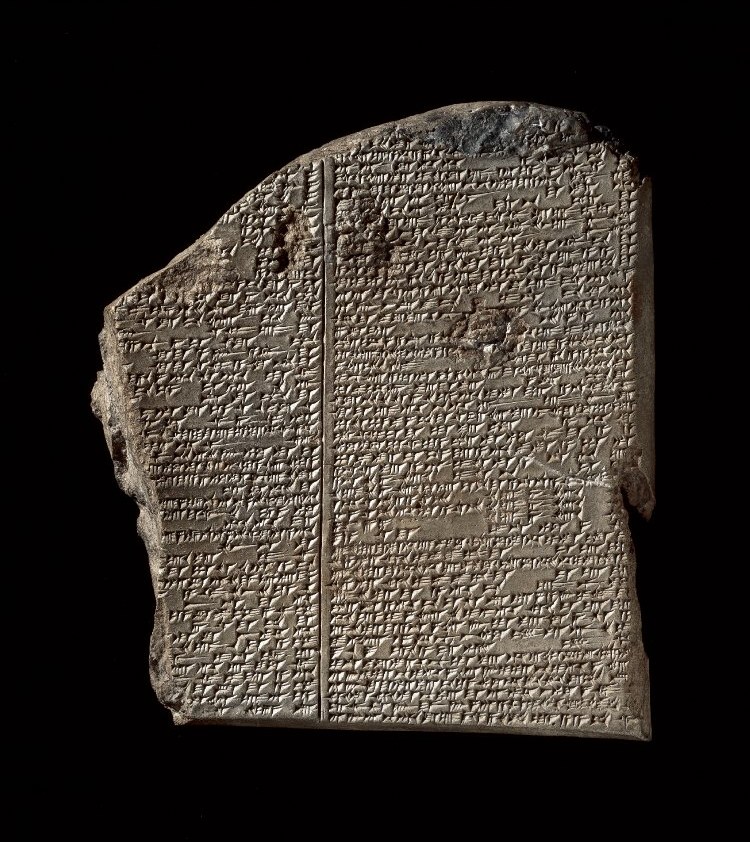
Five separate Sumerian poems about the ruler of Uruk merged into an Akkadian epic, with the oldest complete version emerging in the 18th century BCE under the title Shūtur eli sharrī. Later, a more polished Standard Babylonian edition compiled by Sîn-lēqi-unninni appeared between the 13th and 10th centuries BCE. Scholars recovered most of this twelve-tablet work from the library of King Ashurbanipal in the seventh century BCE.
Gilgamesh rules Uruk as a tyrant until the gods create Enkidu to challenge him. After their battle turns into friendship, the pair slays the monster Humbaba and the Bull of Heaven, actions that anger the divine council. The gods punish the duo by killing Enkidu, which sends Gilgamesh on a desperate quest for immortality. He seeks Utnapishtim, the sole survivor of the Great Flood, but fails the test of staying awake. A snake steals the plant of rejuvenation before Gilgamesh can use it, forcing him to return to Uruk and accept his mortality while finding pride in the city walls he built.
Keywords
Sources
Book Info
- Author
- Sîn-lēqi-unninni (Standard Version)
- Language
- Akkadian
- Original Language
- Akkadian
- Earliest Sumerian Poems Date
- c. 2100 BCE
- Oldest Complete Version Title
- Shūtur eli sharrī
- Oldest Complete Version Date
- 18th Century BCE
- Standard Edition Compiler
- Sîn-lēqi-unninni
- Discovery Location
- Library of Ashurbanipal, Nineveh
- Tablet Count
- 12
- Recent Opera Premiere
- Cerritos, California (March 2026)
- New Cuneiform Research
- April 2026
Join the community
fans discussing