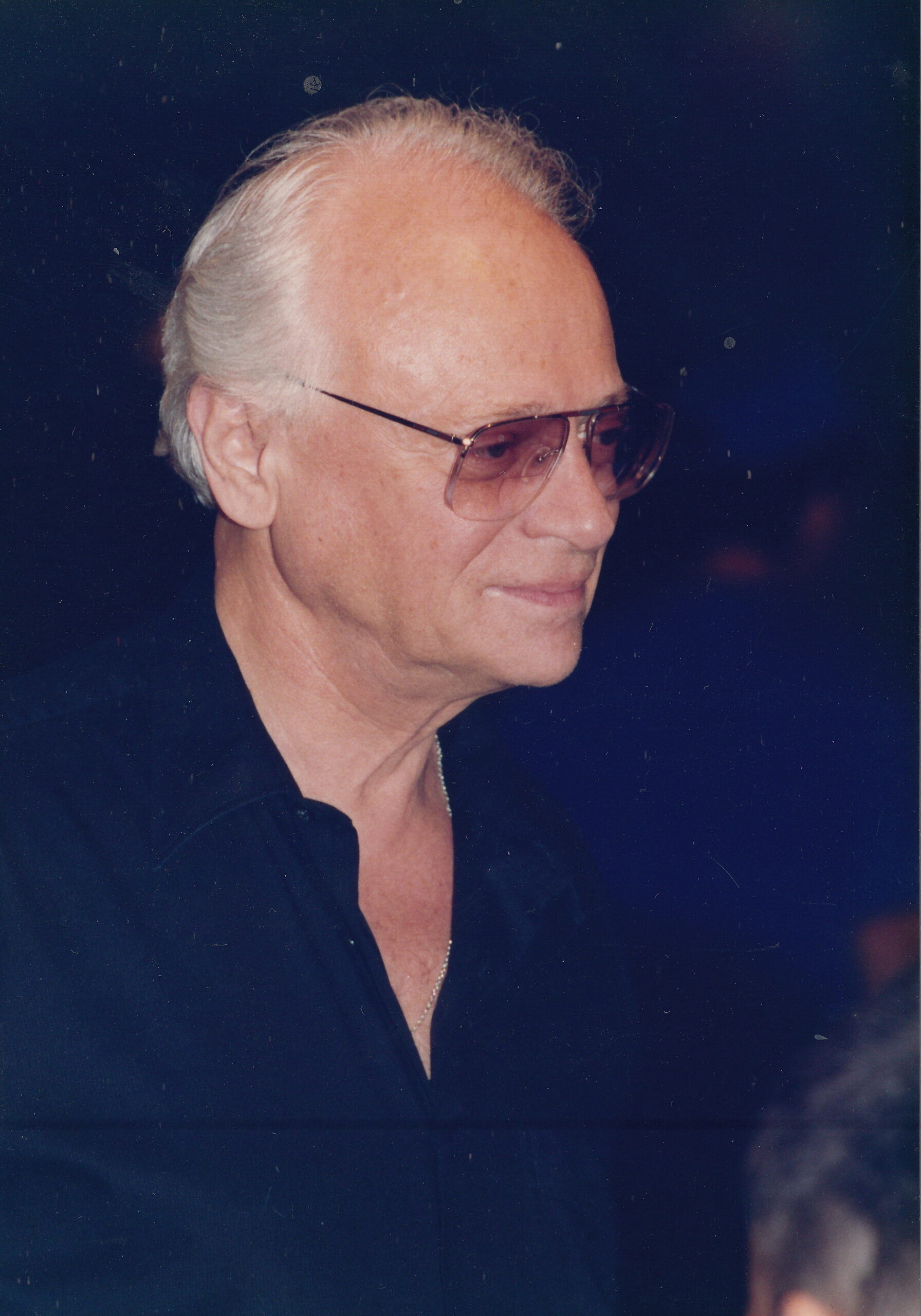
Ephraim Kishon
 Israel
writer•playwright•opinion journalist•filmmaker
Also known as: Ferenc Hoffmann
Birthday
August 23, 1924
Birth Sign
Virgo
Birthplace
Budapest, Hungary
Age
Died at 80
About
Ephraim Kishon was a Hungarian-born Israeli author, dramatist, screenwriter, and Oscar-nominated film director. He was one of the most widely read contemporary satirists in Israel and enjoyed remarkable popularity in German-speaking countries, where his collections of humorous essays became bestsellers.
Kishon's sharp, affectionate satire skewered Israeli bureaucracy, immigrant struggles, and social absurdities while maintaining a deep love for his adopted country. His work spanned newspaper columns, books, plays, and films, and he is remembered as Israel's greatest humorist and a cultural giant.
Early Life & Background
Born Ferenc Hoffmann in Budapest in 1924, Kishon grew up in a middle-class Jewish family. His father worked as a bank director. He attended a high school focused on metalwork before turning to art studies, but his real calling emerged in humor writing. In Hungary, he began writing satire for the humor magazine Ludas Matyi, which gave him early experience in political and social commentary.
After surviving the Holocaust in Hungary, Kishon immigrated to Israel in 1949, shortly after the state's founding. He Hebraized his name to Ephraim Kishon and soon began writing a regular satirical column for the daily newspaper Maariv. The column became one of the most widely read in the country, quickly establishing him as Israel's leading humorist, often dubbed the 'poet laureate' of Israeli humor.
Career Growth
Kishon's breakthrough came in 1964 with the film Sallah Shabati, which he wrote and directed. The comedy, lampooning the struggles of new immigrants in Israel, became a massive commercial and critical success. It won a Golden Globe and earned an Academy Award nomination for Best Foreign Language Film, the first for an Israeli film.
He followed with The Policeman (1971), which also received an Oscar nomination, making it the second Israeli film nominated and the second Kishon film to achieve that honor. His other films include The Fox in the Chicken Coop and The Big Dig, which remains a landmark of Israeli cinema. Over his career, Kishon wrote more than 40 books and 9 plays, including Haketuba, which continued to be performed for decades after its premiere, including a 2022 run at Haifa Theater. His satire remained celebrated posthumously, with tributes at the Israeli Comedy Festival in 2023 and a homage event in 2016.
Career Timeline
Public Image & Style
Kishon's signature style was sharp, affectionate satire that skewered Israeli bureaucracy and social absurdities while maintaining a deep love for his adopted country. His content spanned newspaper columns, books, plays, and films, all characterized by witty observation and gentle mockery. The media portrays him as Israel's greatest humorist and a cultural giant, with the National Library of Israel calling him 'the greatest humorist, satirist and social commentator in Israel's history.' His fan base in Israel and German-speaking countries remains active, with his books still in print and his plays regularly performed.
Fame & Fandom (iFAMOUS Rankings)
Ephraim Kishon's admirers form a diffuse, cross-generational community rather than a formal fan club. There is no documented fandom name; his following is bound by shared reverence for his satire, spanning Israel, Germany, Hungary, and beyond. His official website calls him one of the most widely read contemporary satirical authors, and the National Library of Israel acclaims him as the greatest humorist in Israel's history. Fans mark his birthday annually, and his centennial in 2024 sparked commemorations. His sketches, especially 'Jewish Poker,' are retold as cultural touchstones, and his plays, like 'Haketuba,' still draw audiences decades after his death.
As of August 2026, iFANN's Global Fame Engine has evaluated Ephraim Kishon, but he does not currently hold a placement in the published rankings, including the Global Top 1,000 or any Top-100 scope list. This means that while his cultural impact is undeniable, his measured fame does not currently place him among the world's most famous figures according to iFANN's comprehensive assessment of media coverage, search, and consumption signals worldwide. His legacy, however, remains vibrant, kept alive by devoted readers and theatergoers who continue to discover his work.
Interesting Facts and Legends
Born Ferenc Hoffmann, Kishon changed his name upon immigrating to Israel. He began his career writing for the Hungarian humor magazine Ludas Matyi. His film 'Sallah Shabati' was the first Israeli film ever nominated for an Oscar, and 'The Policeman' was the second, making Kishon the only Israeli filmmaker to achieve this twice. He was particularly popular in German-speaking countries, an unusual phenomenon for an Israeli satirist. A story involving 'Jewish poker' and a character named Ervinke is recounted in Tablet magazine. His satire was noted for being affected by Israel's 25 years of war and near-war as of 1973.
One of the most legendary tales fans tell is his incredible popularity in Germany, where his books sold millions and he was a beloved television guest, despite being a Holocaust survivor. Another iconic moment is the 'Jewish Poker' sketch, which has become a cultural touchstone for its dark humor set in a concentration camp. His Oscar nomination for 'Sallah Shabati' is often cited as his breakthrough, a film that satirized Israeli bureaucracy while earning international acclaim.
Family & Personal Life
Kishon was married twice. His first wife was Sara Kishon, with whom he had children. After Sara's death, he married Lisa Kishon, who survived him. Lisa was with him at the time of his death in Switzerland in 2005. The Kishon family has managed his estate, maintaining his official website and overseeing ongoing publications and performances of his works.
Notable Connections
Relationships & Dating History
Kishon was married twice. His first marriage was to Sara Kishon, with whom he had children. After Sara's death, he married Lisa Kishon, who was with him at the time of his passing in 2005. At the time of his death, Kishon was married to Lisa.
- MarriedSara KishonFirst wife; had children together.
- MarriedLisa Kishon? - 2005Second wife; survived him and was with him at his death.
Death & Aftermath
Died
January 29, 2005 (aged 80)
Death Place
Unknown
Cause of Death
Unknown
Net Worth (Estate Value)
$5 Million
iFANN Editorial Team estimate
As Kishon passed away in 2005, the focus is on his estate's value. iFANN's editorial research estimates the estate's current value at $5 million. This figure reflects ongoing revenue from book sales, theatrical productions of his plays such as 'Haketuba,' film licensing, and his official website. The estate is managed by his family, including his widow Lisa Kishon, ensuring his work continues to generate income. As of 2026, the estate remains a valuable cultural asset.
Awards Won (1)
Kishon won a Golden Globe for Sallah Shabati in 1964, and his films received two Academy Award nominations. He also received numerous Israeli honors throughout his career, though specific details are not widely documented.
1964 · Best Foreign Language Film
Sallah Shabati
Known For
Sallah Shabati
1964 · Director, Screenwriter
The Policeman
1971 · Director, Screenwriter
Haketuba
· Playwright
Keywords
Sources
Quick Facts
- Profession
- writer, playwright, opinion journalist, filmmaker
- Born
- August 23, 1924
- Birthplace
- Budapest, Hungary
- Died
- January 29, 2005
- Death Place
- Appenzell, Switzerland
- Gender
- Male
- Spouse
- Sara Kishon, Lisa Kishon
- Birth Sign
- Virgo
Personal Details
- Full Name
- Ferenc Hoffmann
- Spouse
- Sara Kishon, Lisa Kishon
Frequently Asked Questions
What was Ephraim Kishon's real name?
How did Ephraim Kishon die?
What is Ephraim Kishon famous for?
How many books did Ephraim Kishon write?
Was Ephraim Kishon married?
Join the community
fans discussing