“It's the television equivalent of cotton candy, sweet, airy, and utterly without substance.”
Tom Shales
The Washington Post
 United States
"Your daily dose of Hollywood, every night."
User Score
26 votes
On September 15, 1981, a new kind of television show flickered onto syndicated screens. Entertainment Tonight promised something no other program had tried: a nightly half-hour dedicated entirely to the business and pleasure of Hollywood. Creator Al Masini, who had already launched Solid Gold and Star Search, bet that viewers wanted a daily pipeline to the red carpets, soundstages, and living rooms of the famous. He was right. Four decades later, ET has logged 44 seasons and more than 7,000 episodes, making it the longest-running entertainment news program in American television.
The formula is deceptively simple. Each episode opens with a tease of the top stories, cuts to anchor-delivered news briefs, then unfolds into field reports and sit-down interviews. The tone is upbeat and fan-friendly, designed to inform without alienating. Over the years, the show has weathered industry earthquakes: the rise of cable, the internet, streaming, and the pandemic. Through it all, ET has remained a constant, adapting its production to remote interviews and social media integration while keeping its core promise intact.
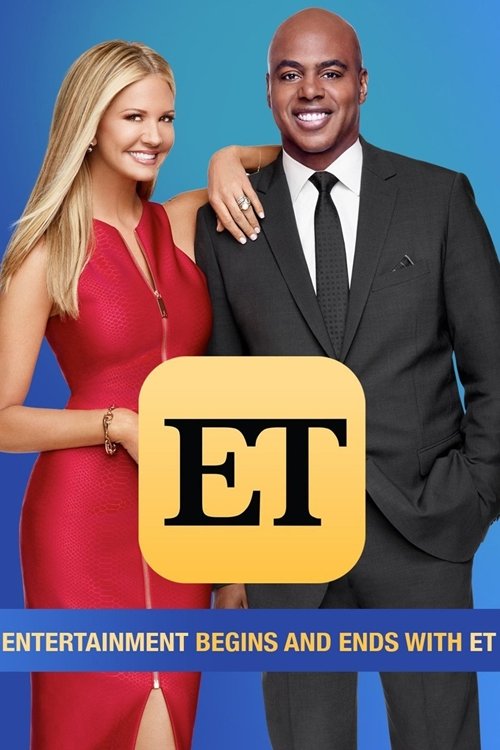
The on-air team has been the show's most visible asset. Mary Hart anchored from 1982 to 2011, becoming the face of the franchise. Current host Kevin Frazier, alongside Nischelle Turner, Cassie DiLaura, and Denny Directo, now guides viewers through the daily whirlwind. The show's archive holds over 70,000 hours of footage, capturing virtually every major star of the past forty years. Critics have often dismissed ET as superficial, but its cultural footprint is undeniable: it invented the celebrity news genre and turned gossip into a legitimate, lucrative beat.
Stream
Free with ads
Availability and pricing can change. Confirm on the provider's site before purchasing.
The world of Entertainment Tonight is the glittering surface of show business: red carpets, film premieres, award shows, and exclusive behind-the-scenes access. Each episode is a tightly produced blend of anchor-led segments, field reports, and pre-taped packages. The show opens with a tease of the top stories, moves through news briefs, a main interview or feature, and closes with a trending segment like "ET Now" or "The Buzz." The central drama, if any, is the race to secure exclusive content before competing outlets like Access Hollywood or Extra.
The main characters are the anchors and correspondents who guide the audience. Over 44 seasons, the team has evolved significantly. Mary Hart co-anchored from 1982 to 2011, becoming synonymous with the brand. John Tesh (1986–1996), Bob Goen (1996–2004), and Mark Steines (2004–2012) followed. The current anchor is Kevin Frazier, who joined in 2014. Nischelle Turner became the first African American female co-host of a syndicated entertainment news show in 2021. Correspondents like the late Steven "Coop" Cojocaru, known for his flamboyant fashion commentary, and Rob Marciano also became familiar faces.
The shape of each season follows the Hollywood calendar. Fall focuses on the Emmy Awards, film festivals, and the new TV season. Winter covers the Golden Globes, Oscars, and the Super Bowl's entertainment side. Spring brings the Grammys and summer blockbuster buildup. Summer includes Comic-Con, Emmy campaigning, and lighter features. There is no serialized narrative; the show's arc is defined by the industry's rhythms. Major shifts have included the rise of streaming, social media's impact on celebrity culture, and the COVID-19 pandemic, which temporarily moved interviews to stars' homes. The show has aired over 7,000 episodes, produced daily, five days a week, 52 weeks a year.
Critical Consensus
Entertainment Tonight is a durable, if lightweight, staple of American television. Critics acknowledge its commercial success and role in pioneering the celebrity news genre, but often find its content superficial, formulaic, and overly promotional. The show is praised for production value and access, but criticized for a lack of journalistic rigor.
“It's the television equivalent of cotton candy, sweet, airy, and utterly without substance.”
Tom Shales
The Washington Post
“There's no denying the show's influence: it turned celebrity gossip into a legitimate, and lucrative, form of journalism.”
Ken Tucker
Entertainment Weekly
“For all its slickness, ET has always had a slightly desperate quality, as if it's afraid you'll change the channel if it doesn't give you the next big thing, right now.”
James Poniewozik
Time
“The show is a marvel of efficient packaging, turning the messy business of Hollywood into a tidy, digestible product.”
Emily Nussbaum
The New Yorker
“It's the show that made celebrities into a daily news event, for better or worse. It's hard to imagine the modern entertainment landscape without it.”
Tim Goodman
The Hollywood Reporter
Kevin Frazier
Self
Nischelle Turner
Self
Cassie DiLaura
Self
Rachel Smith
Self
Denny Directo
Self
Mary Hart
Self
John Tesh
Self
Bob Goen
Self
Mark Steines
Self
Steven Cojocaru
Self
Rob Marciano
Self
Leeza Gibbons
Self
Composer
Michael Mark
Producers
Linda Bell Blue, Erin Johnson
Daytime Emmy Award (1995)
Outstanding Entertainment News Program: Won
Daytime Emmy Award (1996)
Outstanding Entertainment News Program: Won
Daytime Emmy Award (1997)
Outstanding Entertainment News Program: Won
Daytime Emmy Award (2000)
Outstanding Entertainment News Program: Won
People's Choice Award (1990)
Favorite Talk Show Host: Nominated
Join the community
fans discussing