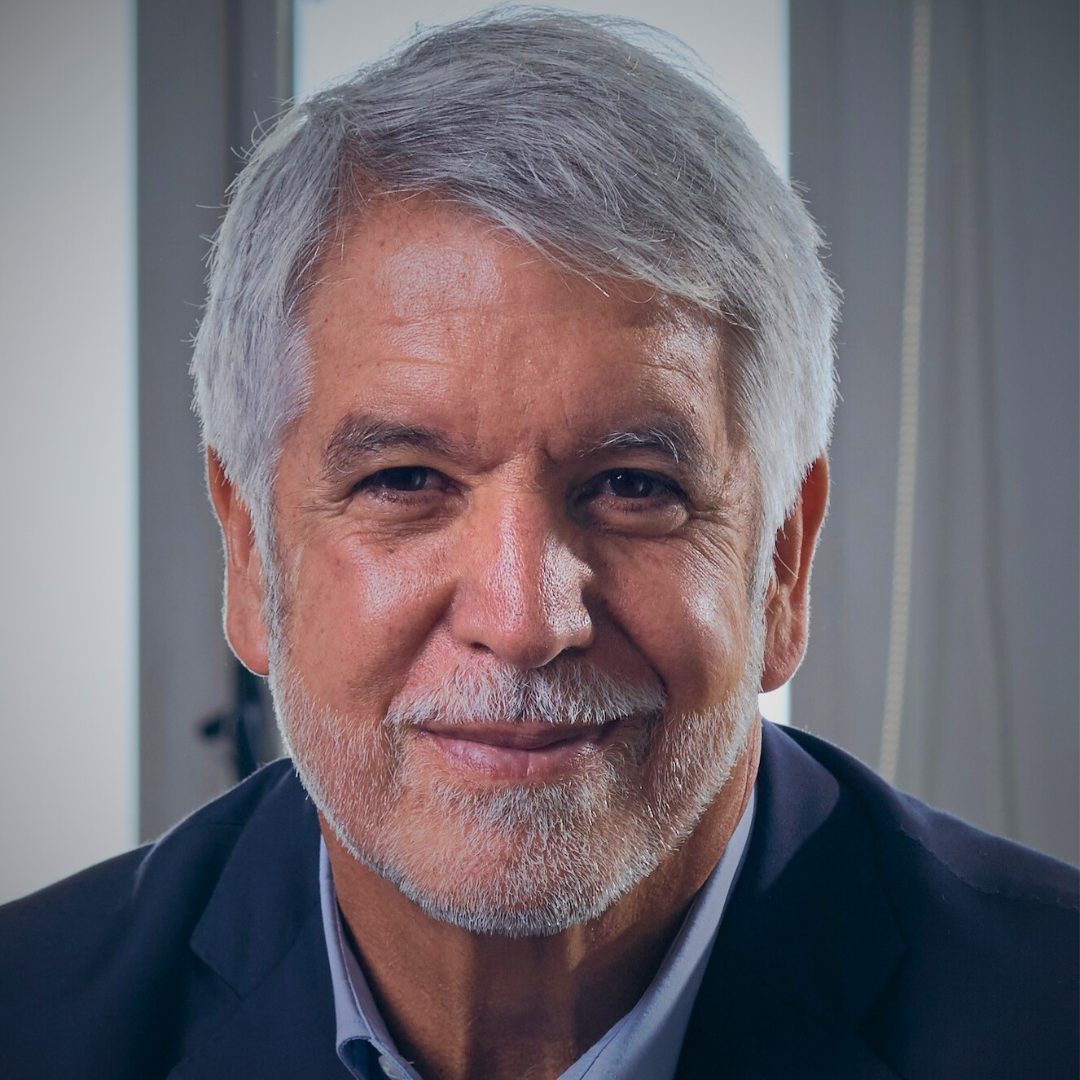
Enrique Peñalosa
 Colombia
politician•economist•urban planner
Also known as: Enrique Peñalosa Londoño, Enrique Peñaloza
Birthday
September 30, 1954
Birth Sign
Sagittarius
Birthplace
Washington, D.C., United States
Age
72 years old
About
Enrique Peñalosa is a Colombian politician and urban planner who has shaped how cities think about public space and mobility. He served two terms as mayor of Bogotá, first from 1998 to 2001 and again from 2016 to 2020, and his ideas have influenced urban policy far beyond Colombia. His work centers on the conviction that cities should prioritize people over cars, and that access to quality public space is a basic right of citizenship.
Internationally, Peñalosa is best known for creating TransMilenio, a bus rapid transit system that became a model for cities worldwide, and for expanding Bogotá's bicycle network to over 300 kilometers. He has advised governments across Latin America, Asia, and Africa, and his 2024 book Equality and the City distills his philosophy of urbanism as a tool for social equality.
Today, Peñalosa remains an active voice in urban planning debates, speaking at global conferences and commenting on policy in his native Colombia. His legacy is one of bold, sometimes controversial, interventions that have made Bogotá a laboratory for sustainable urban living.
Early Life & Background
Born in Washington, D.C., to a politically engaged Colombian family, Peñalosa grew up watching his father, Enrique Peñalosa Camargo, serve as mayor of Bogotá in the late 1960s. That early exposure to governance shaped his later ambitions. He studied economics at Duke University and earned a master's degree from Université Paris II, then pursued doctoral work at Berkeley before returning to Colombia.
In the 1980s, he worked as an economist and consultant, including stints with the United Nations and private firms. He also built a public profile as a columnist on economic and political affairs. His first formal role in urban policy came under President César Gaviria, when he directed the National Planning Department's housing and urban development division from 1990 to 1994. That position gave him hands-on experience with the levers of city-building, though his most famous work was still ahead.
During this period, he also served as a delegate to Colombia's National Constituent Assembly process, though he did not hold a formal seat. These years of analysis and advisory work positioned him as a thoughtful, if sometimes contrarian, voice on how cities should function.
Career Growth
Peñalosa's breakthrough came in 1998 when he was elected mayor of Bogotá. His first term (1998–2001) transformed the city. He created TransMilenio, a bus rapid transit system with dedicated lanes and pre-board fare collection, which now carries over two million passengers daily. He also expanded the bicycle network to more than 300 kilometers, institutionalized the weekly Ciclovía street-closure program, and built or renovated over 1,000 parks, including the Parque Tercer Milenio. His Pico y Placa license plate restriction cut peak-hour traffic significantly.
After leaving office, he became a sought-after international consultant, advising cities on transit and public space. He served as president of the Institute for Transportation and Development Policy and spoke at major urbanism conferences worldwide. In 2015, he was re-elected mayor, serving from 2016 to 2020. His second term focused on expanding TransMilenio and adding green spaces, though it was also marked by the contentious Bogotá Metro project, where he advocated an elevated system against critics who wanted a subterranean one.
Since 2020, Peñalosa has remained influential. His 2024 book Equality and the City has been discussed in international forums, and his cycling advocacy continues to inspire policy debates, including in Scotland where his work was cited as a model in 2026.
Career Timeline
Public Image & Style
Peñalosa's public image is that of an intellectual, data-driven urbanist who is unafraid to be provocative. He frames his arguments in economic terms, often comparing the injustice of car-centric cities to historical inequalities. He is known for his sharp quotes, such as his assertion that cycling is an equality issue before an environmental one.
Internationally, he is celebrated as a visionary who transformed Bogotá and inspired global movements for sustainable transport. In Colombia, his image is more contested, with critics pointing to his controversial second term and the metro project disputes. He maintains a modest social media presence, using platforms like Instagram and X to advocate for his policy ideas.
Among urban planners and cycling advocates, he is a revered figure, though he lacks the fan culture of entertainment celebrities. His influence is felt in the many cities that have adopted Bus Rapid Transit systems inspired by TransMilenio.
Fame & Fandom (iFAMOUS Rankings)
Enrique Peñalosa doesn't have a fan club. There are no fan cams, no birthday billboards, no coordinated charity drives in his name. His audience is not a fandom in the pop-culture sense; it's a coalition of urbanists, mayors, and civic activists who treat his keynote speeches like masterclasses. On Instagram, where he posts construction updates and cycling infrastructure wins, his followers engage like colleagues, not superfans. There's no documented name for this group, and that's fine, Peñalosa's influence runs through policy papers and transit maps, not hashtags.
What he has instead is legend, of a professional kind. The story of TransMilenio, a bus system that moves millions daily and inspired cities from Jakarta to Lagos, is told like a creation myth. The Ciclovía, that weekly closing of Bogotá's streets to cars, is a ritual that other cities now imitate. He survived two recall elections, a political battle that became part of his lore. And then there's that 2016 Guardian op-ed, where he compared a bus in traffic to denying women the vote, a line that still gets quoted at planning conferences.
In the world of fame, though, Peñalosa remains unranked. As of August 2026, iFANN's Global Fame Engine has evaluated him but he holds no placement in the published rankings, not in the Global Top 1,000, not in any Top-100 scope list. That's not a slight; it's a measure of where his renown lives. He's not famous for being famous. He's famous for being right about cities, and that's a different kind of currency.
Interesting Facts and Legends
Peñalosa has said that he considers a bus stuck in traffic to be as unjust as denying women the right to vote, a line he used to dramatic effect in a 2016 Guardian interview. His father, Enrique Peñalosa Camargo, also served as mayor of Bogotá from 1967 to 1969, making them one of the few father-son pairs to hold the office. Despite his prominence, Peñalosa has no formal awards in the traditional sense, but he was inducted into the Urbanism Hall of Fame by TheCityFix in 2014. He is known for his economical speaking style, often delivering sharp, quotable lines rather than lengthy speeches. He has survived two recall elections during his first mayoral term, a reflection of the political turbulence he faced.
One story that still circulates among urbanists is his transformation of Bogotá's infamous 'zebra crossings', he painted them with bold colors and patterns, turning a mundane traffic feature into a symbol of pedestrian dignity. Another iconic moment came in 2017 when he shut down the city's main avenue for a day to demonstrate the Ciclovía's potential, a move that drew international media attention. And his 2024 book, Equality and the City, has become a kind of bible for mayors, with its argument that public space is a right, not a luxury.
Notable Quotes
“Cycling is an issue of mobility, an issue of equality, and only third and last it became an environmental issue.”
“A bus in a traffic jam? It's as unjust as it once was not to allow women to vote.”
“The whole challenge of urban mobility is not an engineering challenge but a political one.”
Family & Personal Life
Peñalosa comes from a politically prominent Colombian family. His father, Enrique Peñalosa Camargo, served as mayor of Bogotá from 1967 to 1969, and his influence on his son's career is evident. The younger Peñalosa has children, but he keeps his family life private, rarely sharing details in public. He has been married, though his spouse's name is not widely documented. The family has a history of public service, and Peñalosa's own work in urban policy continues that tradition.
Notable Connections
Enrique Peñalosa's father, Enrique Peñalosa Camargo, was a former mayor of Bogotá. He has worked with numerous international organizations, including the Institute for Transportation and Development Policy, where he served as board president. His successor as mayor, Claudia López, was a vocal critic of his metro project. He has also appeared on Caracol Radio with former minister Germán Umaña to discuss economic policy.
Relationships & Dating History
Enrique Peñalosa has kept his personal life remarkably private, and public records of his romantic relationships are scarce. He has been married, but the identity of his spouse and the details of their relationship are not widely documented. He has children, though their names and ages are not public knowledge.
There are no reports of high-profile relationships, divorces, or scandals associated with him. As of 2026, he is believed to be married, but his current marital status is not confirmed by reliable sources. His focus has consistently been on his work, and he has managed to keep his family life out of the spotlight.
- MarriedCurrentSpouse's name and marriage details are not publicly documented.
Salary, Net Worth In 2026
$5 Million
iFANN Editorial Team estimate
Public financial information about Enrique Peñalosa is scarce, but iFANN currently estimates his net worth at $5 million. That figure reflects his earnings from government salaries, international consulting, speaking fees, and book royalties. During his mayoral terms, his salary was modest, likely in the range of $50,000 to $80,000 per year. His post-mayoral career has been more lucrative. He commands significant speaking fees at global urbanism conferences, often between $10,000 and $50,000 per engagement. His consulting work with cities worldwide and organizations like the ITDP and Bloomberg Philanthropies adds to his income. His 2024 book, Equality and the City, continues to generate royalties. Peñalosa has not been involved in major business ventures or real estate investments, so his wealth is primarily derived from his professional activities. His net worth has grown steadily over the past decade as his international reputation has expanded.
Awards Won (1)
Enrique Peñalosa's recognition comes primarily from professional institutions rather than traditional awards. In 2014, he was inducted into the Urbanism Hall of Fame by TheCityFix, a program of the World Resources Institute. He has also received honors from the Institute for Transportation and Development Policy and has held visiting fellowships at academic institutions like the University of Pennsylvania. These recognitions reflect his influence on sustainable urban development.
2014 · Lifetime Achievement
Urban Transformation of Bogotá
Known For
TransMilenio BRT
2000 · Creator
Bogotá's Ciclovía
1998 · Institutionalized
Bicycle Network Expansion
1998 · Mayor
Equality and the City
2024 · Author
Keywords
Sources
Quick Facts
- Profession
- politician, economist, urban planner
- Born
- September 30, 1954
- Birthplace
- Washington, D.C., United States
- Gender
- Male
- Birth Sign
- Sagittarius
- Nationality
- Colombian
- Education
- Duke University; Université Paris II
Personal Details
- Full Name
- Enrique Peñalosa Londoño
- Children
- Not publicly documented
- Education
- Duke University (BA Economics); Université Paris II (MA Economics); doctoral studies at University of California, Berkeley (incomplete)
Frequently Asked Questions
How old is Enrique Peñalosa?
What is Enrique Peñalosa's net worth in 2026?
What did Enrique Peñalosa do for Bogotá?
Is Enrique Peñalosa still active in 2026?
Why is Enrique Peñalosa famous?
Similar People
Join the community
fans discussing