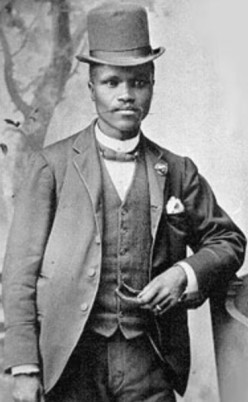
Enoch Sontonga
 South Africa
Birthday
+1873-01-01
Birth Sign
Capricorn
Birthplace
Uitenhage
Age
Died at 32
About
Enoch Mankayi Sontonga was a South African poet, composer, and songwriter, born around 1873 in Uitenhage. He is best known for composing the Xhosa hymn "Nkosi Sikelel' iAfrika" ("God Bless Africa"), a piece that would resonate far beyond his lifetime. Sontonga, who died on 18 April 1905 at just 32, likely never imagined the global reach his music would achieve. The hymn, first performed at a school in Johannesburg, became the official anthem of the African National Congress in 1925. After South Africa's transition to democracy, an abbreviated version was adopted as the country's national anthem in 1994, representing a profound legacy for a man who died in relative obscurity.
Fame & Fandom
Enoch Mankayi Sontonga commands a global attention defined by historical reverence rather than contemporary celebrity metrics. His work transcends the typical lifecycle of a musician, evolving into a foundational symbol for an entire continent and a specific nation. In August 2026, the iFANN Global Fame Engine evaluated his standing and determined that Enoch Sontonga is currently unranked in the published Global Top 1,000 or any Top-100 scope list. This absence from the rankings reflects his status as a figure whose fame operates outside the parameters of modern commercial circulation; he holds no placement in the current database of living or recently active personalities tracked by the system. The entity known as the South African nation and the broader Pan-African movement serves as his de facto fanbase, though this group possesses no formal name documented in official records. Unlike modern entertainers who cultivate organized communities with specific rituals or branded hashtags, Sontonga's audience engages through state-sanctioned commemorations and educational observances. There are no recorded fan campaigns, streaming initiatives, or grassroots projects dedicated solely to his person. His legacy is maintained by government bodies and cultural institutions rather than a self-organized fandom, distinguishing his posthumous influence from the active engagement seen with contemporary stars.
Interesting Facts and Legends
Born around 1873 in Uitenhage, Enoch Sontonga died on 18 April 1905 at the age of 32 in Pimville, Johannesburg. While he composed the hymn "Nkosi Sikelel' iAfrika" while working as a teacher at the Ohlange Institute around 1897, he likely never anticipated its future impact. A persistent legend surrounding his life involves the loss of his grave for many years, contributing to a mythos of death in obscurity. This mystery was only resolved after vandalism at Braamfontein Cemetery allowed authorities to locate his missing resting place. The song itself became the soundtrack of resistance during the apartheid era; despite being banned by the regime, it continued to be sung in townships and churches, serving as a dangerous act of defiance. In 1925, the African National Congress adopted the piece as its official anthem, and following the transition to democracy in 1994, an abbreviated version became the national anthem of South Africa. The biographical film *Sikelela: The Enoch Sontonga Story*, narrated by Lungile Themba, further cemented his place in public memory as a foundational struggle hero rather than merely a musical artist.
Death & Aftermath
Died
+1905-04-18 (aged 32)
Death Place
Pimville, Johannesburg, South Africa
Cause of Death
Unknown
Enoch Mankayi Sontonga died on April 18, 1905, in Pimville, Johannesburg, at the age of approximately thirty-two. His funeral occurred at Braamfontein Cemetery, yet the exact location of his grave remained unknown for many decades. Authorities eventually located the missing grave following an act of vandalism at the cemetery site.
The immediate aftermath of his death did not include widespread public tributes or vigils at the time. Decades later, his composition Nkosi Sikelel' iAfrika transformed into a unifying force and became part of the South African national anthem after the end of apartheid. Modern recognition includes a Google Doodle honoring him on April 18, 2017, and a posthumous honor from Rhodes University in 2018 alongside Mmakgamo Charlotte Maxeke and Robert Mangaliso Sobukwe.
In May 2022, Sontonga's family expressed feelings of exclusion when Cape Town held honors for him, highlighting a disconnect between institutional commemoration and family involvement. A short biographical film titled Sikelela: The Enoch Sontonga Story was promoted in late 2025 to educate the public about his life. Various media outlets commemorated the 120th anniversary of his hymn's influence in 2025, noting its role as a symbol across the continent while his estate remains handled privately with no public records of administration disputes.
Awards & Accolades
Keywords
Quick Facts
- Profession
- poet, composer, songwriter
- Born
- +1873-01-01
- Birthplace
- Uitenhage
- Died
- +1905-04-18
- Death Place
- Johannesburg
- Gender
- Male
- Birth Sign
- Capricorn
Join the community
fans discussing