 Italy
ItalyAbout
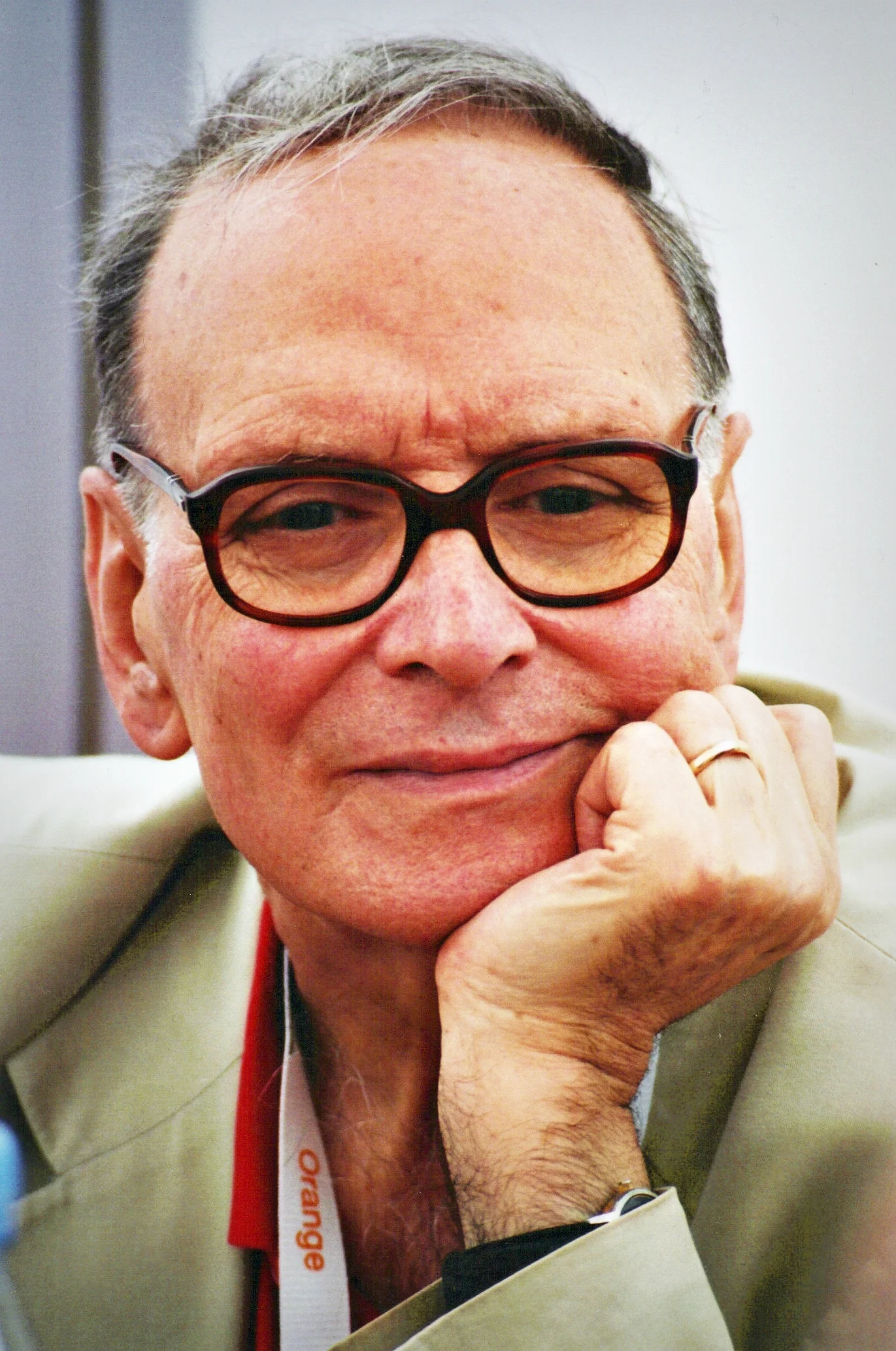
Ennio Morricone was an Italian composer, orchestrator, conductor, trumpeter, and pianist whose music spanned genres and defined cinema. Over a career stretching from the 1940s until his death on July 6, 2020 at age 91, he wrote more than 400 film and television scores and over 100 classical works. Often called one of the most prolific and greatest film composers ever, his trophy case includes two Academy Awards, three Grammys, three Golden Globes, six BAFTAs, ten David di Donatello, eleven Nastro d'Argento, two European Film Awards, the Golden Lion Honorary Award, and the Polar Music Prize. His signature style, blending orchestral arrangements with unconventional sounds like whistling, gunshots, and vocalizations, revolutionized the spaghetti western genre and influenced generations of musicians.
Early Life & Background
Morricone grew up in Rome as the eldest of five children. His father Mario, a professional trumpeter, taught him to play the trumpet at a young age. At 12, he entered the Conservatory of Santa Cecilia, studying trumpet, choral music, and composition. He graduated with a diploma in trumpet in 1946 and a diploma in composition in 1954. In the 1940s, he played trumpet in jazz bands and worked as a studio arranger for RCA Victor, arranging for pop artists like Paul Anka and Mina. A pivotal moment came in 1955 when he began ghostwriting film scores for other composers, learning the craft of cinema music from the inside.
Career Growth
Morricone's breakthrough came in 1964 when he scored Sergio Leone's A Fistful of Dollars, the first of the "Dollars Trilogy." Its innovative use of whistling, gunshots, and vocalizations redefined the spaghetti western. In 1966, The Good, the Bad and the Ugly made his main theme iconic. Once Upon a Time in the West (1968) sold an estimated 10 million copies. In 1969, he co-founded Forum Music Village, a prestigious recording studio in Rome. He earned his first Oscar nomination for Days of Heaven (1978). The Mission (1986) brought another nomination, and its "Gabriel's Oboe" became a classical standard. He received an Honorary Academy Award in 2007. At age 87, he won his first competitive Oscar for The Hateful Eight (2015). He continued composing until his death, including for The Eight Hundred (2020).
Career Timeline
Public Image & Style
Morricone cultivated the image of a dignified, reclusive genius, often seen in a black suit and dark glasses. His music is known for its dramatic, melodic, and experimental style, blending orchestral with unconventional sounds. Media portray him as the "godfather of film music." His global fandom has no official name, but fans often call themselves "Morricone enthusiasts." Fan rituals include attending tribute concerts and collecting vinyl soundtracks. His social media voice, managed by his estate, is formal and archival.
Fame & Fandom (iFAMOUS Rankings)
Ennio Morricone remains a towering figure in global culture, though iFANN's Global Fame Engine currently evaluates him as unranked in the published Top 1,000 or scope-specific lists. This absence of a numeric placement reflects his unique status as a composer whose influence transcends standard celebrity metrics; he is revered by cinephiles and musicians worldwide rather than tracked as a trending personality. While he never cultivated a formal fan club with a specific name, his audience manifests as a dedicated community of film music enthusiasts who gather for tribute concerts and collect vinyl soundtracks. The cultural mythology surrounding him is built on revolutionary moments, such as the initial shock audiences felt when hearing whistling and gunshots replace traditional orchestral scores in the Dollars Trilogy. A widely retold story from the 1966 premiere of The Good, the Bad and the Ugly describes the spiritual reaction to the Ecstasy of Gold scene, where the music elevated the visual narrative into a ritualistic experience. Another defining chapter involves his fifty-year wait for an Academy Award, culminating in a triumph at age 87 for The Hateful Eight after decades of being unknown to American mainstream audiences outside film circles. Following his passing in 2020, Italy has honored him with free concerts in five cities on the anniversary of his death, turning these events into modern pilgrimages for fans. His legacy continues to expand with posthumous releases like Morricone Segreto and the debut of his lost opera Partenope, ensuring that his vast output reveals new depths decades later.
Interesting Facts and Legends
Morricone was a member of the experimental group Il Gruppo from 1966 to 1980, blending avant-garde and pop styles. He composed the theme for the 1970 FIFA World Cup, and his score for The Thing (1982) was initially rejected by John Carpenter before becoming a cult favorite. A chess enthusiast, he often played matches with collaborators and never learned to drive, relying entirely on his wife for transportation. Beyond cinema, he composed for pop artists including Paul Anka, Mina, and Andrea Bocelli. Legends of his career include the verified historical fact that his use of non-traditional sounds in the Dollars Trilogy shocked critics and transformed spaghetti westerns from B-movie fare into high art. Fans still recount the sheer volume of emotional response during the premiere of The Good, the Bad and the Ugly, where the main theme became instantly recognizable. The narrative of the late bloomer who finally won an Oscar after fifty years of nominations stands as a central piece of modern lore, celebrating a lifetime of underappreciated genius.
Notable Quotes
“I consider music as a language that can express everything, even the unspeakable.”
“The music is not just an accompaniment; it is a character in the film.”
“I never wanted to be famous. I just wanted to write good music.”
Family & Personal Life
Morricone married Maria Travia on October 13, 1956. She was a homemaker, and the couple had four children: Marco, Alessandra, Andrea, and Giovanni. The marriage lasted until his death. His father Mario Morricone was a professional trumpeter who gave him his first trumpet lessons. His mother Libera Ridolfi was a homemaker. He was the eldest of five siblings. The family lived in Rome throughout his childhood.
Notable Connections
Morricone frequently collaborated with director Sergio Leone on the "Dollars Trilogy" and Once Upon a Time in the West. He scored all of Giuseppe Tornatore's films from Cinema Paradiso onward. He worked with Dario Argento on the "Animal Trilogy" and with Quentin Tarantino on The Hateful Eight. Joan Baez performed his song "Here's to You."
Relationships & Dating History
Morricone married Maria Travia on October 13, 1956. She was a homemaker, and the couple had four children. The marriage lasted until his death on July 6, 2020. There are no public records of any other romantic relationships, dating history, or divorces. As of 2026, Morricone is deceased; his marital status at death was married to Maria Travia.
- MarriedMaria Travia1956 - 2020Married on October 13, 1956; remained together until his death. They had four children.
Death & Aftermath
Died
July 6, 2020 (aged 91)
Death Place
Rome, Italy
Cause of Death
Complications from a fall
Tributes poured in from peers, institutions, and officials worldwide the moment news broke of Ennio Morricone's passing. The Academy of Motion Picture Arts and Sciences honored him with a moment of silence, while film festivals dedicated screenings to his work and fan vigils emerged in Rome and other cities. A significant surge in streaming and sales followed immediately, driven by iconic scores for Sergio Leone's spaghetti westerns like The Good, the Bad and the Ugly and Once Upon a Time in the West, alongside The Hateful Eight. The renowned composer died on July 6, 2020, at a hospital in Rome, Italy, at the age of 91. He passed away following complications from a fall he had suffered earlier that week.
His final days were spent recovering from this fall, and his last public appearance prior to death remains unrecorded in available reports. Morricone's funeral was a private ceremony held shortly after his death in Rome, attended by family members and close colleagues before he was cremated. His ashes were interred in the Cimitero del Verano in Rome. In the years since, his legacy has been celebrated through posthumous releases and honors, including the December 2025 premiere of his only opera, Partenope, in Naples. Plans are underway for a Cinque città per Morricone concert series in five Italian cities scheduled for July 6, 2026, to commemorate the sixth anniversary of his death.
Net Worth (Estate Value)
$27 Million
iFANN Editorial Team estimate
Per iFANN's editorial analysis, Ennio Morricone's estate is valued at an estimated $27 Million as of 2026. The estate is managed by his four children, Marco, Alessandra, Andrea, and Giovanni. Major revenue sources included posthumous releases, such as The Hateful Eight soundtrack, licensing deals for films, advertisements, and video games like Red Dead Redemption, as well as merchandise and royalties from his catalog of over 400 scores. Since his death in 2020, the estate earned an estimated $5 million from these streams. Real estate holdings included his Rome residence and the Forum Music Village recording studio.
Awards Won (67)
Morricone won two Academy Awards: an Honorary Award in 2007 and Best Original Score for The Hateful Eight (2016). He won three Golden Globes for The Mission (1987), The Legend of 1900 (2000), and The Hateful Eight (2016). He received six BAFTAs, including a BAFTA Fellowship in 2016. His three Grammys include Best Pop Instrumental Performance for The Good, the Bad and the Ugly (1968). He also won ten David di Donatello awards, eleven Nastro d'Argento, and two European Film Awards.
2016 · Best Original Score
The Hateful Eight
2007 · Honorary Academy Award
Lifetime Achievement
2016 · Best Original Score
The Hateful Eight
2000 · Best Original Score
The Legend of 1900
1987 · Best Original Score
The Mission
Known For
The Good, the Bad and the Ugly
1966 · Composer
Once Upon a Time in the West
1968 · Composer
The Mission
1986 · Composer
Cinema Paradiso
1988 · Composer
The Hateful Eight
2015 · Composer
Keywords
Quick Facts
- Profession
- composer, orchestrator, conductor, trumpeter, pianist
- Born
- +1928-11-10
- Birthplace
- Rome
- Died
- +2020-07-06
- Death Place
- Rome
- Gender
- Male
- Spouse
- Maria Travia
- Birth Sign
- Scorpio
Personal Details
- Full Name
- Ennio Morricone
- Height
- 5 ft 9 in (175 cm)
- Spouse
- Maria Travia
- Children
- Marco Morricone, Alessandra Morricone, Andrea Morricone, Giovanni Morricone
- Education
- Conservatory of Santa Cecilia, Rome (diploma in trumpet 1946, diploma in composition 1954)
Filmography
500
Total
400
Film
100
TV
Frequently Asked Questions
How old was Ennio Morricone when he died?
Who was Ennio Morricone married to?
What was Ennio Morricone's net worth in 2026?
How many Oscars did Ennio Morricone win?
What is Ennio Morricone best known for?
Social Media
Similar People
Join the community
fans discussing