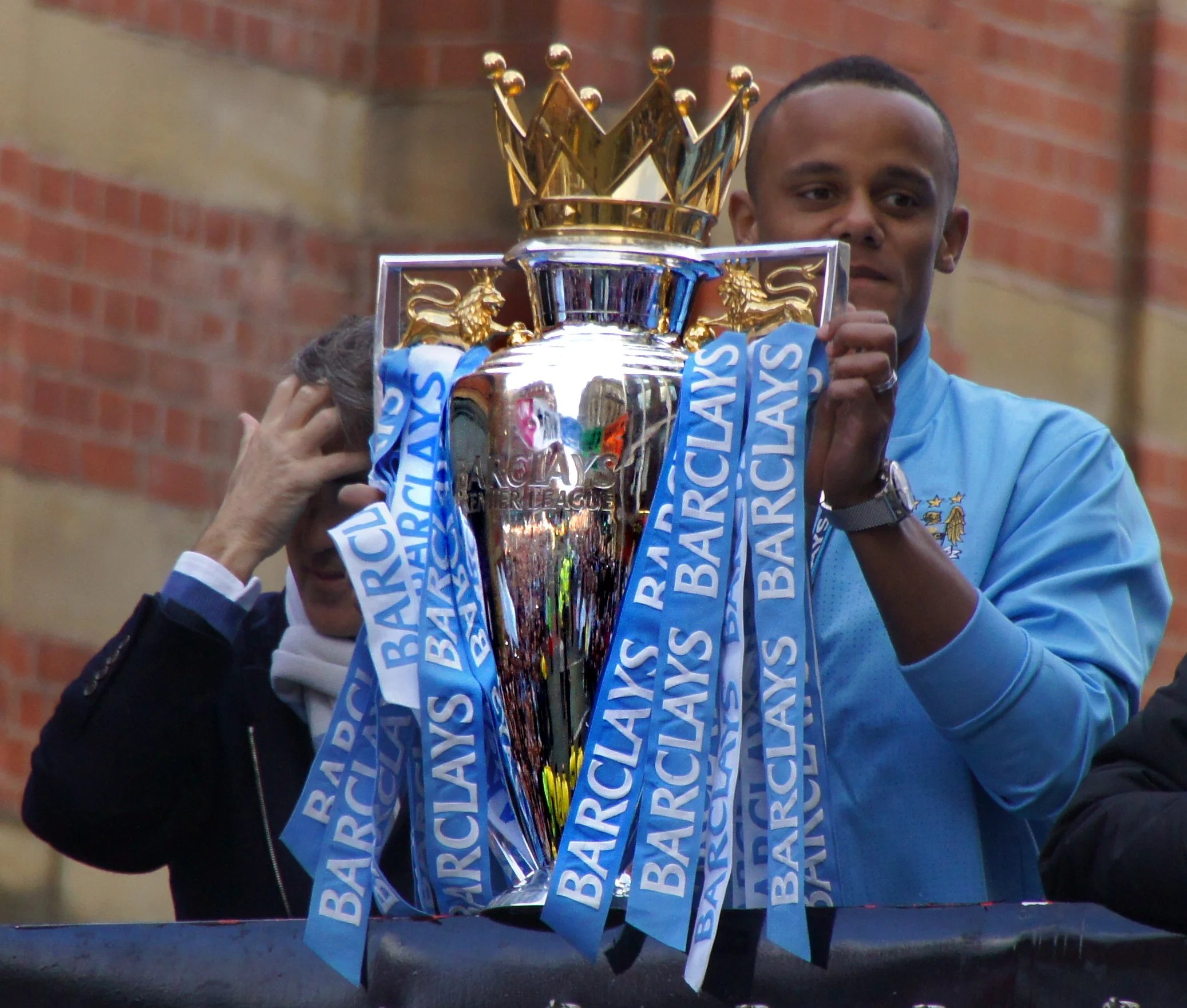
Premier League
 United Kingdom
"The top flight of English football"
8+
Editions
40400
Peak Attendance
About
The Premier League is the top division of English football and one of the most popular and lucrative sports competitions in the world. Contested by twenty clubs, it operates on a system of promotion and relegation with the divisions below it, with each team playing home and away across a season that runs from late summer to spring. Founded in the early 1990s when the country's leading clubs broke away from the established football league to capitalize on television revenue, it transformed the commercial landscape of the sport, growing into a global entertainment phenomenon broadcast to hundreds of millions of viewers across virtually every country.
Backed by enormous domestic and international media rights deals, the league has attracted many of the world's best players, managers and owners, and its biggest clubs rank among the most valuable and widely supported sporting institutions anywhere. Famous for its fast, physical and intensely competitive style of play, the Premier League is often celebrated for its unpredictability and the depth of quality across its teams. Its matches, packed stadiums and storied rivalries have made English club football a worldwide cultural export. From local roots in the long history of the English game, the Premier League has become a defining symbol of the modern, globalized era of football.
History
The Premier League was founded on 20 February 1992, when the 22 clubs of the Football League First Division resigned en masse from the Football League. The Founder Members Agreement had been signed on 17 July 1991, establishing the basic principles for the new league, which would have commercial independence from both the Football League and The FA. The Premier League was officially established as a limited company on 27 May 1992.
The creation was driven by top English clubs' belief that radical restructuring was needed for the sport to develop financially. Key figures included Arsenal's deputy chairman David Dein, who advocated for American-style commercialisation. The catalyst for change came after the tragedies of the 1980s: the 1985 Bradford fire (56 killed, 265 injured), the 1985 Heysel Stadium disaster (39 Juventus fans killed), and the 1989 Hillsborough disaster (96 Liverpool fans killed, 766 injured). The subsequent Taylor Report (1990) recommended all-seater stadiums and prompted football to move upmarket.
The inaugural season began on 15 August 1992 with 22 clubs: Arsenal, Aston Villa, Blackburn Rovers, Chelsea, Coventry City, Crystal Palace, Everton, Ipswich Town, Leeds United, Liverpool, Manchester City, Manchester United, Middlesbrough, Norwich City, Nottingham Forest, Oldham Athletic, Queens Park Rangers, Sheffield United, Sheffield Wednesday, Southampton, Tottenham Hotspur, and Wimbledon. Six clubs have been ever-present: Arsenal, Chelsea, Everton, Liverpool, Manchester United, and Tottenham Hotspur. The league reduced to 20 clubs after the 1994/95 season.
Notable Editions
1992/93: Manchester United
Inaugural season; Manchester United won the first Premier League title under Sir Alex Ferguson.
2003/04: Arsenal
Arsenal completed the entire season unbeaten (26 wins, 12 draws), earning the nickname 'The Invincibles.'
2011/12: Manchester City
Manchester City won the title on goal difference on the final day, with Sergio Aguero's stoppage-time goal against Queens Park Rangers securing the championship.
2015/16: Leicester City
Leicester City, 5000-1 preseason outsiders, won the title in one of sport's greatest upsets.
2017/18: Manchester City
Manchester City set records with 100 points, 32 wins, and 106 goals.
Past Champions
| Year | Name |
|---|---|
| 1992/93 | Manchester United |
| 1993/94 | Manchester United |
| 1994/95 | Blackburn Rovers |
| 1995/96 | Manchester United |
| 1996/97 | Manchester United |
| 1997/98 | Arsenal |
| 1998/99 | Manchester United |
| 1999/00 | Manchester United |
| 2000/01 | Manchester United |
| 2001/02 | Arsenal |
Notable Moments
1992
First match and first goal
The Premier League's first match was Sheffield United vs Manchester United on 15 August 1992. Brian Deane scored the first ever Premier League goal.
1996
Eric Cantona's return and goal
After an eight-month ban for kung-fu kicking a fan, Eric Cantona returned for Manchester United and scored a crucial goal against Liverpool in the FA Cup final, but his impact on the league remained immense.
2003
Beckham's halfway line goal
David Beckham scored a spectacular goal from the halfway line against Wimbledon in August 1996, but his 2003 free-kick against Everton was also memorable.
2012
Aguerooooo!
Sergio Aguero's stoppage-time goal against QPR on the final day of the 2011/12 season secured Manchester City's first title in 44 years, one of the most dramatic moments in league history.
2014
Gerrard slip
Liverpool captain Steven Gerrard slipped while receiving a pass in a crucial match against Chelsea, leading to a goal that effectively ended Liverpool's title hopes in the 2013/14 season.
2016
Leicester City clinch title
Leicester City were confirmed as champions on 2 May 2016 after Tottenham Hotspur drew with Chelsea, completing one of the greatest sporting upsets of all time.
2018
Manchester City reach 100 points
Manchester City became the first Premier League team to reach 100 points in a season, finishing with 32 wins and 106 goals in the 2017/18 campaign.
2022
Gundogan's winner on final day
Ilkay Gundogan scored twice, including a stunning volley, as Manchester City came from 2-0 down to beat Aston Villa 3-2 on the final day of the 2021/22 season, snatching the title from Liverpool.
Cultural Impact
The Premier League has transformed English football from a sport plagued by hooliganism and dilapidated stadiums in the 1980s into a global entertainment phenomenon. Its fast, physical style and competitive unpredictability have attracted a worldwide audience, making it the most-watched football league on the planet. The league has become a defining symbol of modern, globalized football, influencing how the sport is marketed and consumed. Its biggest clubs rank among the most valuable sporting institutions globally, and the league's broadcasting deals have set records, reshaping the economics of football. The Premier League has also had a significant cultural impact abroad, with dedicated fan bases in Asia, Africa, and the Americas, and its matches are often broadcast at times convenient for international viewers.
Controversies
The formation of the Premier League itself was controversial, with critics arguing that the breakaway from the Football League created a historic divide that concentrated wealth among the top clubs. Financial disparities between the Premier League and lower divisions remain a persistent source of tension. The introduction of Video Assistant Referee (VAR) in 2019 sparked ongoing debate, with fans and pundits questioning its impact on the flow of the game and consistency of decisions. Ownership issues have also been contentious, with takeovers by foreign investors raising concerns about the direction of clubs. Financial fair play regulations have led to disputes, including charges against Manchester City for alleged breaches, which the club has denied.
Broadcast Partners
Sponsors
Related Events
Keywords
Sources
Event Info
- Sport
- Football
- Frequency
- Annual
- Founded
- 1992-02-20
- Country
- United Kingdom
- Organizer
- Premier League
- Number of clubs
- 20
- All-time top scorer
- Alan Shearer (260 goals)
Social Media
Join the community
fans discussing