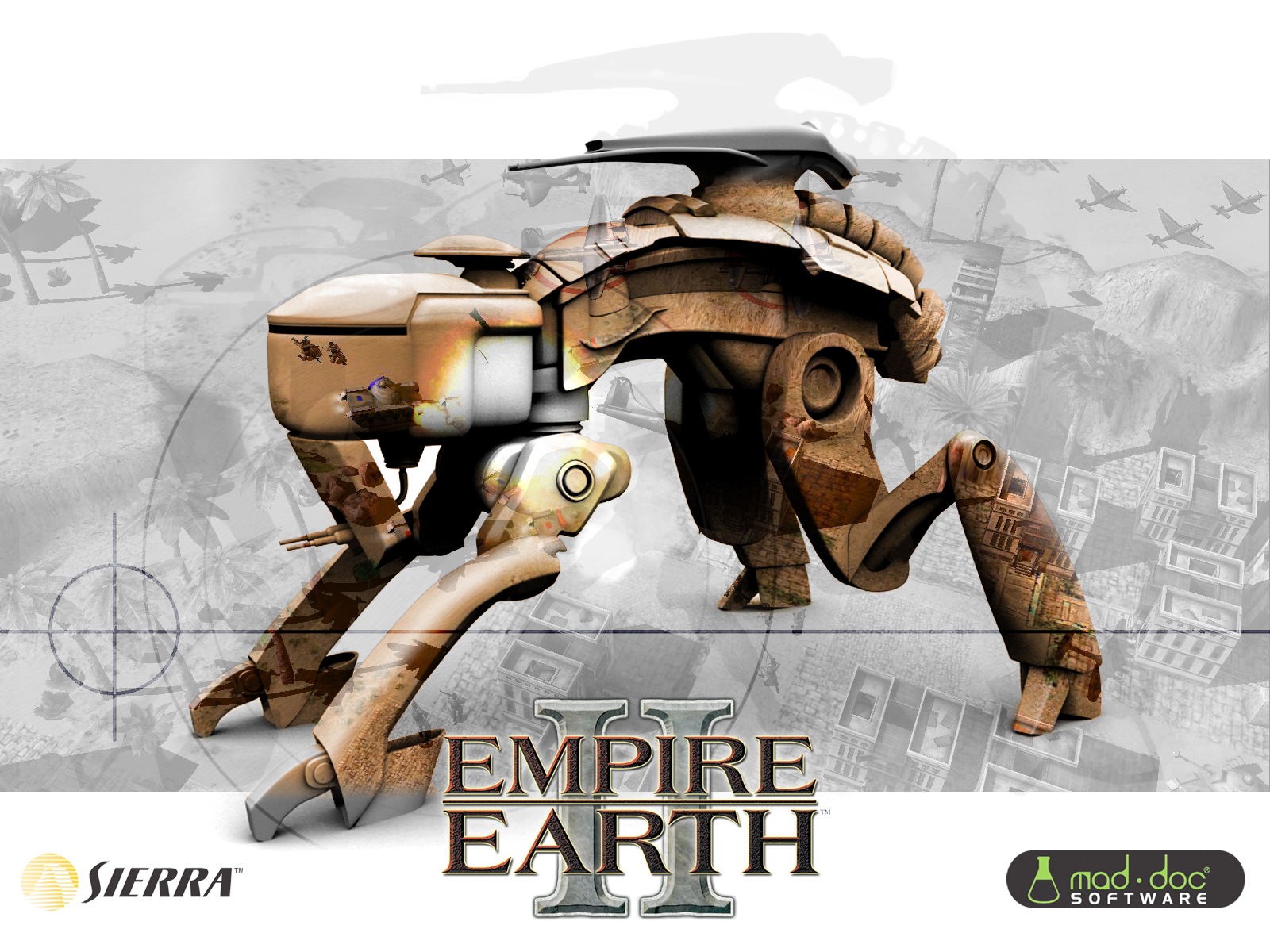
Empire Earth
"Command civilization across 500,000 years of human history"
Score
8.5/10
Overview
Stainless Steel Studios launched Empire Earth on November 13, 2001, establishing a new benchmark for the real-time strategy genre. Players command civilizations across 500,000 years of human history, navigating through 14 distinct epochs from the prehistoric age to the nano age. The core loop demands resource management and tactical expansion as you build structures, train units, and outmaneuver rivals. This expansive timeline allows for dramatic shifts in technology and warfare, letting armies evolve from stone clubs to laser cannons within a single match.
The game introduced an era advancement system that forced players to weigh the cost of upgrading their society against the need to expand territory or attack enemies. You could choose from historical nations like the Greeks, English, French, and Germans, or design your own custom civilization with unique bonuses. Unlike many contemporaries that stuck to one time period, this title demanded long-term strategic planning to survive the transition from primitive tools to futuristic weaponry while managing a complex economy.
Gameplay
Players start in the Stone Age with basic villagers and simple weapons, then gather wood, food, gold, and stone to construct buildings and research technologies. The progression moves through 14 eras including the Bronze Age, Iron Age, Middle Ages, Renaissance, Industrial Age, Modern Age, and finally the Nano Age. Each era unlocks new unit types and buildings while some older units remain usable, creating a layered army composition. Resource scarcity often dictates when a player advances to the next epoch, adding tension to the economic management phase.
Military tactics shift drastically as the game progresses. Early battles rely on massed infantry and archers, while late-game conflicts involve tanks, jets, and nuclear missiles. The map scale is large enough to support massive armies without significant performance drops, a technical feat praised at the time of release. Custom scenarios allow players to test specific strategies or recreate historical events with modified conditions.
Story
The single-player campaign guides users through a series of historical scenarios that span different continents and time periods. Missions range from defending early settlements against barbarian raids to leading modern coalitions in global conflicts. The narrative structure does not follow a single continuous plot but rather presents discrete challenges that illustrate key moments in human development. Victory conditions vary by mission, requiring total annihilation of enemies, capture of specific landmarks, or survival for a set duration.
Later missions introduce more complex objectives involving diplomatic alliances and technological races. Players must balance military aggression with infrastructure development to ensure their civilization can sustain prolonged wars. The campaign concludes with scenarios set in the future where advanced technology determines the outcome of global struggles.
Trailers

Awards & Acclaim
GameSpot: Best Strategy Game: (2001)
PC Gamer: Editor's Choice: (2001)
Keywords
Sources
Game Info
- Developer
- Stainless Steel Studios
- Publisher
- Sierra Entertainment
- Engine
- Proprietary Stainless Steel Engine
- Release Date
- November 13, 2001
- Age Rating
- T (Teen)
- Modes
- Single-player campaign, Skirmish, Multiplayer
- Platforms
- Microsoft Windows
- Epochs
- 14
- Time Span Covered
- 500,000 years
- Expansion Pack
- The Art of Supremacy
- Sequel Release
- 2005
- Steam Re-release
- May 2026
Join the community
fans discussing