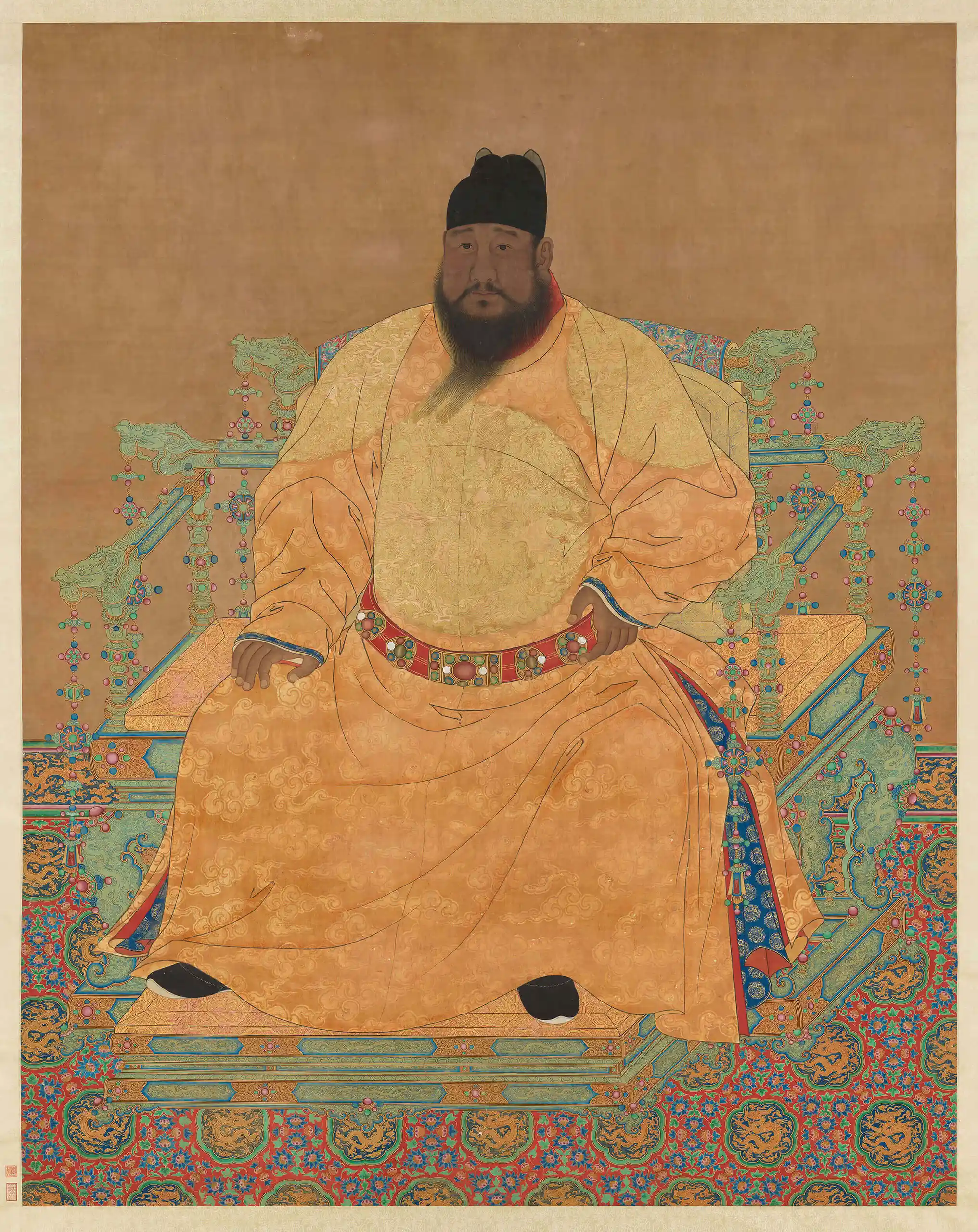
Emperor Chūai
 Japan
JapanAlso known as: Chūai-tennō, Tarashinakatsuhiko no Sumeramikoto, Emperor Chuai
Birthday
+0149-01-01
Birth Sign
Capricorn
Birthplace
Japan
Age
Died at 51
About
Emperor Chūai, born Tarashinakatsuhiko no Sumeramikoto, stands as the 14th legendary ruler of Japan within the traditional order of succession. His reign is conventionally dated from 192 AD to 200 AD, marking him as the final monarch of the Yayoi period and a pivotal transitional figure between myth and early recorded history. Unlike his predecessors who ruled from Yamato, Chūai established his capital in Kyushu, a significant deviation that signaled a shift in power dynamics toward the western provinces. He ascended to the throne not as the direct son of the previous emperor but because the prior monarch's only child had died young. This unique lineage allowed a regional chieftain to become the sovereign. While modern historians often view him as a composite of early tribal leaders rather than a verified historical figure, his legacy endures through the foundational myths of the Japanese imperial line. His story is defined by the divine command to invade Korea and the subsequent tragic events that led to his death.
Early Life & Background
Traditional chronicles state that Emperor Chūai was born in 149 AD in Japan. Specific details regarding his childhood and education are absent due to the legendary nature of his life, yet historical analysis suggests he was likely a regional chieftain or tribal leader from the Kyushu area before being elevated to the throne. The Kojiki and Nihon Shoki record his lineage but offer little biographical detail on his formative years, focusing instead on his divine right to rule and his interactions with the kami (spirits). Some sources suggest a connection to the legendary hero Yamato Takeru, though this remains a matter of genealogical tradition rather than verified fact. He was not born into the immediate imperial line as a direct successor. He became crown prince after the death of the only child of Emperor Seimu. This unique circumstance allowed a non-imperial son to ascend to the throne. Before his coronation, he likely managed local affairs in the western provinces, building the political base necessary to challenge the established Yamato power structure. His decision to move the court to Kyushu signaled a shift in power dynamics toward the western regions, setting the stage for his eventual reign.
Career Growth
Chūai's reign is defined entirely by his imperial tenure from 192 AD to 200 AD. His most notable political move was relocating the imperial court to Kyushu, signaling a shift in power dynamics toward the western provinces. This move distinguished him from earlier rulers who maintained their base in Yamato. His reign is characterized by a single major event: a military expedition to Kyushu intended to conquer the Korean peninsula, driven by divine command. According to the Kojiki, the sea deity Takeminakata ordered Chūai to invade Korea. When Chūai hesitated or scoffed at the request, the deity punished him. This led to his death during a hunting trip at Tsuruga Port in modern-day Wakasa Bay in 200 AD. Following his death, his wife, Empress Jingū, took command of the army, fulfilling the divine orders and securing the throne for their son, Emperor Ōjin. Historians generally regard these events as mythological narratives constructed centuries after the fact to legitimize the imperial line, particularly the claim of the empress's military prowess.
Career Timeline
Public Image & Style
Emperor Chūai is viewed as a tragic, mythical figure, a king who defied the gods and paid the ultimate price, setting the stage for the legendary exploits of his wife. His public image is that of a transitional ruler between myth and early recorded history. He is venerated at the Mausoleum of Emperor Chūai and at Hachiman shrines, where he is often worshipped alongside his wife and son. Modern historians consider him a legendary figure or a composite of early tribal leaders rather than a historically verified monarch. His legacy persists through the shrines dedicated to him and the enduring stories of his wife's vengeance. He represents the intersection of divine will and human frailty in Japanese cultural memory.
Fame & Fandom (iFAMOUS Rankings)
Emperor Chūai occupies a unique place in history as a figure of national myth rather than contemporary celebrity. His global attention is minimal, confined largely to scholarly interest and heritage tourism. As of September 2026, iFANN's Global Fame Engine has evaluated Emperor Chūai, but he does not currently hold a placement in the published rankings, neither in the Global Top 1,000 nor in any Top-100 scope list. This absence reflects his status as a legendary ancient monarch, not a living public figure with measurable modern fame. His fanbase, such as it exists, has no formal name. There is no evidence of organized fan communities, fan campaigns, or fan-funded projects associated with him. Instead, interest manifests through historical tourism and cultural appreciation. The Mausoleum of Emperor Chūai in Fujiidera, Osaka, part of the UNESCO World Heritage Mozu-Furuichi kofun group, attracts visitors interested in Japan's ancient past, but this constitutes heritage tourism rather than fandom. References to him appear on educational platforms and historical forums, but there are no official accounts or viral trends associated with his name in 2026.
Interesting Facts and Legends
Emperor Chūai is the only emperor in the traditional list who is explicitly linked to a "stingray" death, a unique element in global royal history. Another key legend involves his wife, Empress Jingū, who is depicted as a warrior queen who avenged his death and conquered Korea, a story that has inspired countless works of art, literature, and film over the centuries. In 2007, archaeologists were granted unprecedented access to certain sacred tombs within the Mozu-Furuichi group, sparking renewed interest in the potential verification of his existence, though no definitive physical evidence has emerged. Specific physical attributes such as height are not recorded in historical texts, as the figures of this era are described in mythological terms rather than biological ones. He is frequently cited in academic discussions regarding the transition from the Yayoi period to the Kofun period. His story serves as a foundational myth for the Japanese imperial line, emphasizing the divine origin of the monarchy. In 2025, cultural articles discussed the theme of "stingray wives" in Japanese folklore, revisiting the story of Empress Jingū and the divine punishment of Chūai, highlighting the enduring nature of these myths in modern art and literature.
Family & Personal Life
Emperor Chūai was married to Okinagatarashime-hime, who later became known as Empress Jingū. She is one of the most famous figures in Japanese mythology, celebrated for her leadership after Chūai's death. In addition to Empress Jingū, Chūai is recorded as having two other consorts. Together, they fathered four children, including the future Emperor Ōjin (also known as Kamuyaimimi-no-Mikoto). There are no records of other romantic relationships or dating history, as the concept of "dating" does not apply to ancient legendary monarchs; his unions were dynastic alliances typical of the era. As of the end of his life in 200 AD, he was widowed posthumously by Empress Jingū, who outlived him and ruled as regent until their son came of age. The family unit served as the foundation for the transition of power to the next generation, ensuring the continuity of the imperial line despite the violent end of Chūai's life.
Notable Connections
Relationships & Dating History
Emperor Chūai was married to Okinagatarashime-hime, who later became known as Empress Jingū. She is one of the most famous figures in Japanese mythology, celebrated for her leadership after Chūai's death. In addition to Empress Jingū, Chūai is recorded as having two other consorts. Together, they fathered four children, including the future Emperor Ōjin (also known as Kamuyaimimi-no-Mikoto). There are no records of other romantic relationships or dating history, as the concept of "dating" does not apply to ancient legendary monarchs; his unions were dynastic alliances typical of the era. At the time of his death in 200 AD, he was widowed posthumously by Empress Jingū, who outlived him and ruled as regent until their son came of age. His relationship with the sea deity Takeminakata was one of conflict, leading to his demise, while his bond with his predecessor, Emperor Seimu, facilitated his rise to the throne. These connections define his personal narrative within the broader context of Japanese mythology.
- MarriedOkinagatarashime-hime (Empress Jingū)192 - 200Mother of Emperor Ōjin; led the invasion of Korea after Chūai's death.
Death & Aftermath
Died
+0200-01-01 (aged 51)
Death Place
Tsuruga Port, Wakasa Bay
Cause of Death
Stingray attack attributed to sea deity Takeminakata
Emperor Chūai died in the year 200 AD during a hunting expedition at Tsuruga Port in modern-day Wakasa Bay. The ancient chronicles Kojiki and Nihon Shoki record that his death resulted from a stingray strike while he was on the coast. This event is described as divine retribution orchestrated by the sea deity Takeminakata, who appeared in the form of the fish after Chūai allegedly scoffed at the god's command to invade Korea. Modern historians view this narrative as a mythological construct designed to legitimize the imperial line rather than a factual medical report, possibly interpreting the stingray attack as a sudden illness or accident explained through a religious lens. The circumstances surrounding his death were viewed as divine retribution for his lack of faith in the gods' commands.
Following his sudden demise, Empress Jingū took immediate control of the military forces. She fulfilled the divine mandate her husband had rejected by leading an expedition to the Korean peninsula. This campaign secured the throne for their son, Emperor Ōjin, and established Jingū's reputation as a warrior queen in Japanese mythology. The succession proceeded without interruption despite the violent end of the previous reign. No legal proceedings or investigations occurred in the modern sense, as the event was treated as a spiritual mandate. His burial site remains unidentified, though tradition places it within the Mausoleum of Emperor Chūai in Fujiidera, Osaka. This mausoleum is part of the Mozu-Furuichi kofun group, which holds UNESCO World Heritage status. Although its exact location has never been archaeologically confirmed, the site remains a focal point for those seeking to connect with Japan's ancient past. His legacy persists through the shrines dedicated to him and the enduring stories of his wife's vengeance, cementing his place in the collective consciousness of the nation.
Net Worth (Estate Value)
$0
iFANN Editorial Team estimate
As a legendary ruler from the 2nd century AD, Emperor Chūai has no net worth. Economic concepts like salary, investments, or business ventures did not apply to his time or status. His "estate" was the imperial domain, which passed to his wife and son, but no financial valuation exists for his lifetime or estate. The iFANN Editorial Team estimates his net worth at $0 based on the lack of economic data from the era. He does not appear on modern "Greatest of All Time" lists for celebrities, musicians, or athletes. He is occasionally listed in historical rankings of Japanese Emperors, typically noted as the 14th in the traditional order, but these are genealogical listings rather than popularity rankings.
Awards & Accolades
View 2 records, honours and achievementsKnown For
Emperor of Japan
192 · 14th Legendary Ruler
Keywords
Sources
Quick Facts
- Profession
- ruler
- Born
- +0149-01-01
- Birthplace
- Japan
- Died
- +0200-01-01
- Death Place
- Tsukushi Province
- Gender
- Male
- Spouse
- Empress Jingū
- Birth Sign
- Capricorn
Personal Details
- Full Name
- Tarashinakatsuhiko no Sumeramikoto
- Spouse
- Empress Jingū
- Children
- Emperor Ōjin
Frequently Asked Questions
Who was Emperor Chūai?
How did Emperor Chūai die?
Was Emperor Chūai a real person?
What happened to Emperor Chūai's wife?
Where is Emperor Chūai buried?
Similar People
Join the community
fans discussing