Emmys
"The foremost awards celebrating excellence in television"
7+
Editions
21800000
Peak Viewership
About
The Emmy Awards are the television industry's highest honors, presented annually by the Academy of Television Arts and Sciences and the National Academy of Television Arts and Sciences. Established in 1949, the Emmys recognize outstanding achievement in a wide range of television genres, from primetime dramas and comedies to daytime programming, sports, news, documentaries, and children's content. The awards have grown from a small local ceremony in Los Angeles into a sprawling franchise that includes multiple ceremonies throughout the year, each with its own set of categories and voting procedures.
The most prominent of these is the Primetime Emmy Awards, typically held in September and broadcast on a rotating basis among ABC, CBS, NBC, and Fox. Other major ceremonies include the Daytime Emmy Awards, the Sports Emmy Awards, the News and Documentary Emmy Awards, the Children's and Family Emmy Awards, and the International Emmy Awards, which honor programs produced outside the United States. The various academies that govern the Emmys collectively represent tens of thousands of television professionals, ensuring that winners are chosen by their peers.
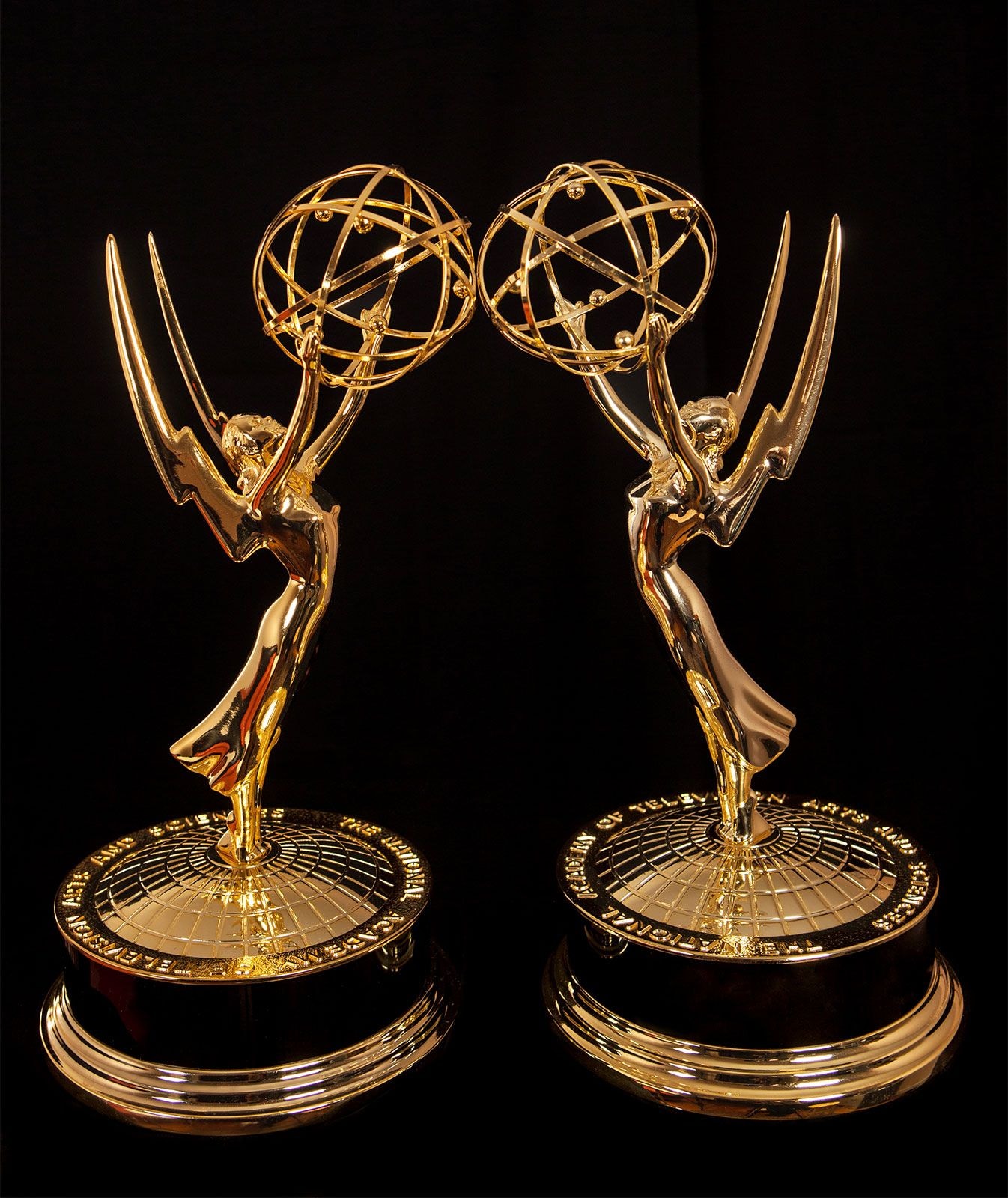
The Emmy statuette, a winged woman holding an atom, was designed by television engineer Louis McManus and modeled after his wife. The wings symbolize the muse of art, while the atom represents the science of television. The name Emmy itself derives from "Immy," a nickname for the image orthicon camera tube, the state-of-the-art technology of early television. Over the decades, the Emmys have become a cultural barometer, reflecting shifts in television's creative and commercial landscape while maintaining their prestige as the industry's definitive accolade.
History
The Emmy Awards were conceived in 1946 when Syd Cassyd, an entertainment industry reporter, founded the Academy of Television Arts and Sciences in Los Angeles. Cassyd initially envisioned the academy as a cultural and educational organization, but he soon recognized that a high-profile awards ceremony would raise the academy's visibility. The first president was radio personality Edgar Bergen, and the academy's early members included television pioneers such as Harry Lubcke, who suggested the name "Emmy." Other proposed names included "Iconoscope" (shortened to "Ike," but that was reserved for Dwight Eisenhower) and "Tilly" (for television).
The inaugural ceremony took place on January 25, 1949, at the Hollywood Athletic Club, hosted by Walter O'Keefe. It honored only local Los Angeles programming and presented six awards. The first Emmy went to Shirley Dinsdale, a 20-year-old ventriloquist from UCLA who starred in the children's show Judy Splinters on KTLA. The Most Popular Program award went to the game show Pantomime Quiz Time. A special tribute was given to Louis McManus for his statuette design, which had been selected from 118 submitted sketches.
In 1955, the ceremony was first televised nationally, bridging the rivalry between Los Angeles and New York television production centers. The National Academy of Television Arts and Sciences was formed that same year under Ed Sullivan's leadership, and by 1977 the Los Angeles and New York groups had formally separated while continuing to share the Emmy trademark. Color broadcasts began in 1957. Over the following decades, the Emmys expanded to include daytime, sports, news, and international categories, with the International Emmy Awards established in the early 1970s. The 53rd Primetime Emmy Awards, originally scheduled for September 16, 2001, were postponed to November 4 due to the September 11 attacks.
Notable Editions
1949: Shirley Dinsdale wins first Emmy for Outstanding Personality
0First-ever Emmy ceremony, held at the Hollywood Athletic Club
1955: Ceremony bridges Los Angeles-New York rivalry
0First nationally televised Emmy broadcast
1957: Color television introduced to the awards
0First color broadcast of the Emmys
2001: 53rd Primetime Emmys delayed by two months
0Postponed to November 4 due to the September 11 attacks
2016: Game of Thrones dominates with 12 awards
0Jimmy Kimmel hosts; Game of Thrones wins Outstanding Drama Series for second time
Past Winners / Headliners
| Year | Name |
|---|---|
| 1949 | Shirley Dinsdale |
| 1971 | The Mary Tyler Moore Show |
| 1972 | All in the Family |
| 1994 | Frasier |
| 2000 | The West Wing |
| 2003 | The Sopranos |
| 2003 | Everybody Loves Raymond |
| 2019 | Game of Thrones |
| 2024 | Succession |
| 2024 | The Bear |
Notable Moments
1949
First Emmy Award Presented
Shirley Dinsdale receives the first Emmy for Outstanding Personality at the Hollywood Athletic Club.
1955
First National Telecast
The Emmys are broadcast live across the United States for the first time, uniting the Los Angeles and New York television communities.
1974
Daytime Emmys Established
The first Daytime Emmy Awards ceremony is held, recognizing excellence in daytime television programming.
2001
Postponement After 9/11
The 53rd Primetime Emmy Awards are postponed from September 16 to November 4 due to the September 11 terrorist attacks.
2020
Virtual Ceremony During Pandemic
The 72nd Primetime Emmy Awards are held virtually with nominees appearing via video link, hosted by Jimmy Kimmel from an empty Staples Center.
2024
Strike-Delayed Ceremony
The 75th Primetime Emmy Awards are held in January 2024 after being postponed from September 2023 due to the WGA and SAG-AFTRA strikes.
Cultural Impact
The Emmy Awards have played a central role in elevating television from a disposable medium to an art form worthy of serious critical attention. By establishing a formal system of peer recognition, the Emmys helped legitimize television as a creative industry alongside film and theater. The awards have also served as a cultural mirror, reflecting changing social values through the programs they honor. Early winners like Judy Splinters represented the novelty of local children's programming, while later winners such as All in the Family, The Mary Tyler Moore Show, and The Sopranos tackled controversial social issues and pushed narrative boundaries. The Emmys have also been a platform for political statements, from acceptance speeches addressing civil rights and gender equality to more recent calls for diversity and inclusion. The statuette itself has become an instantly recognizable symbol of television excellence, appearing in countless parodies, homages, and cultural references.
Controversies
The early rivalry between Los Angeles and New York television production centers led to tensions that were only partially resolved by the first national telecast in 1955 and the formation of the National Academy. The formal separation of the Los Angeles and New York organizations in 1977, while they continued to share the Emmy trademark, created a unique dual-governance structure that has occasionally led to disputes over category jurisdiction and voting procedures. In 2021, the Television Academy faced criticism for its handling of the 73rd Primetime Emmy Awards, which were held in a scaled-back format due to the pandemic, with some nominees and attendees questioning the safety protocols. More recently, the expansion of categories and the introduction of the Children's and Family Emmy Awards in 2022 sparked debate about whether the Emmys were diluting their brand by creating too many separate ceremonies.
Broadcast Partners
Related Events
Keywords
Sources
Event Info
- First Ceremony
- January 25, 1949
- Number of Ceremonies
- Over 75 Primetime Emmy ceremonies
- Statuette Designer
- Louis McManus
- Name Origin
- Derived from 'Immy,' nickname for the image orthicon camera tube
- Governing Bodies
- Television Academy, NATAS, International Academy
Join the community
fans discussing