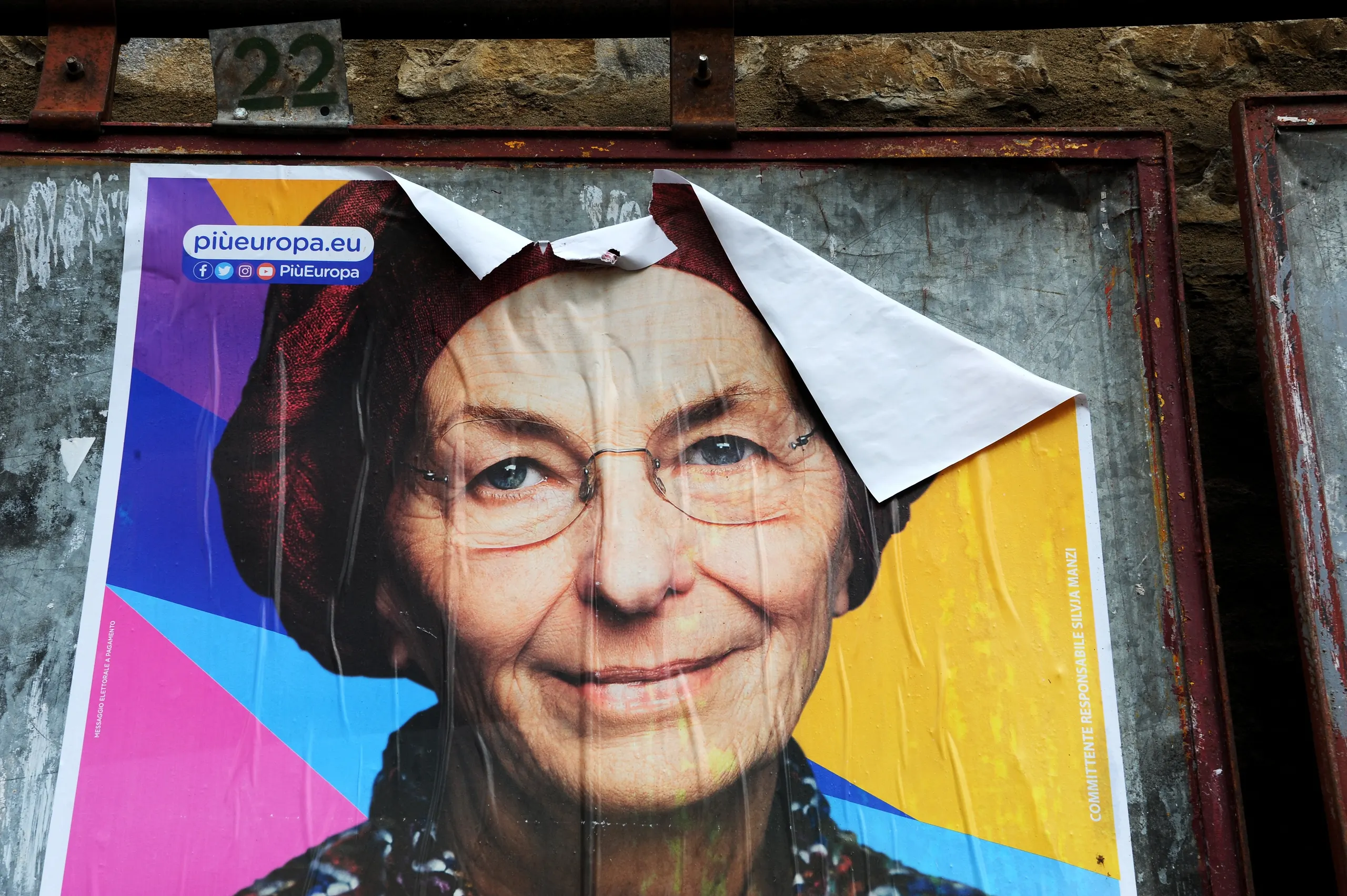
Emma Bonino
 Brazil
Politician•human rights activist•former European Commissioner
Also known as: Emma Bonino, la radicale
Birthday
March 9, 1948
Birth Sign
Pisces
Birthplace
Bra, Piedmont, Italy
Age
Died at 78
About
Emma Bonino was an Italian politician, feminist and human rights campaigner whose career stretched from the underground Radical Party of the 1970s to the office of Italy's foreign minister. She was the first woman to hold that post, serving from 2013 to 2014 in the Letta government, and earlier spent four years as European Commissioner for Health and Consumer Protection. Across six terms in the Chamber of Deputies and two in the Senate, plus seats in the European Parliament, she built a reputation as one of the most stubborn and effective civil liberties advocates in Europe.
She is best known for the campaign that legalized abortion in Italy, won in 1978 after years of civil disobedience, and for her later push for European federalism through the party she co-founded, +Europa. She died in Rome on September 11, 2026, at 78, and was given a state funeral attended by Italy's president and prime minister. For supporters, she was never a conventional politician: she was the woman who took on the Vatican, the parties and the bureaucracy, and usually made them move.
Early Life & Background
Emma Bonino was born on March 9, 1948, in Bra, a small town in Piedmont known more for its cheese and wine than its politics. She studied at Bocconi University in Milan, graduating in 1972 with a degree in modern languages and literature. Politics was not the plan. She has said she entered it almost by chance, drawn in by the radical circles around the Italian Radical Party and its founder Marco Pannella, whose mix of civil liberties, anti-prohibitionism and theatrical protest gave her a vocabulary for everything she believed.
Her first job in the movement was as a journalist and radio broadcaster for Radio Radicale, the party's station, where she learned to argue a case in minutes and to use media as a weapon. That training shaped everything that followed. When the Radicals decided to force the abortion issue onto the national agenda in the mid-1970s, Bonino was one of the organizers of the campaign, and in 1974 she traveled to London for an abortion that was then illegal at home. She spoke about it publicly, turning a private act into a political fact. The strategy worked: after years of pressure and a referendum, Italy passed Law 194 in 1978, legalizing abortion.
By then she was already a member of the Chamber of Deputies, elected in 1976, and one of the most recognizable faces of a party that never had many seats but often set the terms of debate.
Career Growth
Bonino's breakthrough was the abortion campaign, but her career ran through almost every level of Italian and European government. Elected to the Chamber of Deputies in 1976, she was returned repeatedly through 1994, and also served in the European Parliament during the 1980s. In 1995 she was appointed European Commissioner for Health and Consumer Protection under Jacques Santer, a post she held until 1999. There she pushed EU rules on food safety, animal welfare and consumer rights, and became one of the Commission's most quoted members.
Back in Italy, she served as Minister of International Trade from 2006 to 2008 in Romano Prodi's second government, arguing for open markets and deregulation. In 2008 she was elected senator for Rome. Her highest office came in 2013, when Enrico Letta made her Minister of Foreign Affairs, the first woman to hold the job. Her tenure was short, ending in 2014, but it focused on Mediterranean diplomacy, migration and human rights, including strong support for Kosovo, a cause she had championed since the 1990s.
In December 2017 she launched Più Europa, a liberal, explicitly pro-European list, ahead of the 2018 election. She returned to the Senate from 2018 to 2022 and remained the party's most prominent figure. In later years she also sat on the board of the Open Society Foundations and kept campaigning on civil liberties, assisted dying and the rule of law until her final months.
Career Timeline
Public Image & Style
Bonino's public image was built on three things: the cigarette, the plain clothes and the refusal to soften an argument. She dressed practically, usually in simple jackets and trousers, and rarely played the part of the ceremonial minister. Her voice was dry and precise, and she was known for answering questions with a fact rather than a slogan. In Italy she was often portrayed as the country's conscience on civil rights, a figure the right attacked and the left sometimes found inconvenient, because she was as willing to criticize progressive sacred cows as conservative ones.
She used media skillfully, from Radio Radicale to television talk shows, and she understood that a well-timed provocation could move a debate further than a white paper. Her later years added a new layer to the image: the elder stateswoman who could still fill a piazza and who was treated with respect across the political spectrum, even by those who had spent decades opposing her.
Fame & Fandom (iFAMOUS Rankings)
Bonino's fame was never the pop-culture kind, but within Italian and European politics she was one of the most recognized figures of her generation. iFANN's Global Fame Engine has evaluated her and she does not currently hold a placement in the published rankings, a reflection of how attention works for politicians rather than entertainers. She is not on the September 2026 iFAMOUS Rankings flagship list.
What she had instead of a fandom was a following: activists, feminists, secularists and European federalists who treated her as a reference point rather than a celebrity. There is no formal fandom name, and no fan clubs in the usual sense. Her supporters organized around causes, not around her persona: referendum campaigns, abortion rights marches, +Europa membership drives, and later, petitions on assisted dying and the rule of law. In the days after her death, that network turned into something closer to a mass audience. The public vigil at the Campidoglio drew thousands, and Italian Wikipedia traffic for her page jumped sharply in September 2026, with Italian readers alone accounting for more than 61,000 views in a month. The tributes came from people who had never met her but had used a service, won a right or changed a law because of a campaign she led.
Interesting Facts and Legends
Bonino's nickname in Italian politics was la radicale, but colleagues also called her the troublemaker of Montecitorio, a label she wore without complaint. She was famous for a stubbornness Italians call tigna, a word usually reserved for the most obstinate people in public life.
She never married and had no children, and often said the struggle was her husband. She smoked for much of her life, a habit that became relevant to her final illness, and she was known for a dry, cutting sense of humor in interviews. In 2013, as foreign minister, she was one of the few Italian officials publicly critical of Egypt's crackdown after the Rabaa dispersal, a stance that cost her goodwill in some capitals. A widely retold story has her marching into a Vatican-adjacent debate and telling clerics that the right to choose is the foundation of all other freedoms, a line that became something of a slogan for Italian secularists.
Notable Quotes
“The right to choose is the foundation of all other freedoms.”
“I dream of a United States of Europe, not just a market, but a community of values.”
Family & Personal Life
Bonino grew up in Bra, in the Piedmont region, in a household that valued education and civic duty, though she rarely spoke about her parents in interviews. She had no spouse and no children, a choice she framed as inseparable from her political life. She lived for decades in Rome, close to the Radical Party's headquarters and to the network of activists she considered her real family. Friends and colleagues were the people she spent holidays with, and the tributes after her death came mostly from that circle: Pannella's old lieutenants, European officials, and the younger activists she mentored in +Europa and the Open Society Foundations.
Notable Connections
Relationships & Dating History
Emma Bonino never married and had no children. She kept her private life almost entirely out of public view, and there are no credible records of a long-term partner, engagement or marriage at any point in her life. Colleagues and obituaries consistently described her as someone whose personal life was subordinated to her political work, and the phrase that followed her for decades was that the struggle was her husband.
She had close, lasting friendships within the Radical Party, above all with Marco Pannella, her mentor and ally from the early 1970s until his death in 2016. That relationship was political and personal at once, and it shaped her career more than any other. She also had a wide circle of allies and friends across Italian and European institutions, including Romano Prodi and Enrico Letta, and younger activists in +Europa whom she treated as political heirs.
At the time of her death in September 2026, Bonino was single and had no surviving spouse or partner. Her estate and legacy were handled by her family and the organizations she had supported, including +Europa and the Open Society Foundations.
Death & Aftermath
Died
September 11, 2026 (aged 78)
Death Place
Rome, Italy
Cause of Death
Complications from a microcytoma, a rare smoking-related lung cancer
Bonino died in Rome on September 11, 2026, at 78, after a long illness. The reported cause was complications from a microcytoma, a rare smoking-related form of lung cancer. The day before, on September 10, Italian outlets reported she had left intensive care and been moved to a private clinic in critical condition.
The response was immediate. The International Criminal Court, where she had long been a familiar voice on justice issues, issued a statement of condolence. Prime Minister Giorgia Meloni, an ideological opponent, led the political tributes and confirmed a state funeral. President Sergio Mattarella said she had left a mark on the Republic. Tributes came from across the spectrum, including from European Parliament President Roberta Metsola and former premier Romano Prodi, who called her a woman of great intelligence. Pope Francis, who had met her on a Roman terrace in a much-shared photograph, also spoke warmly of her.
A public vigil was held at the Campidoglio, where her coffin lay with the European flag draped over it. The state funeral took place at Rome City Hall on September 14, 2026, with Mattarella, Meloni, European officials and thousands of citizens present. Colleagues and friends gathered afterwards in a ceremony remembered for its mix of grief and irreverent Radical Party spirit.
Her death prompted renewed attention to the causes she had carried for fifty years. +Europa, the party she co-founded, and the Open Society Foundations, where she served on the board, both pledged to continue her work on civil liberties and European integration. She never married and had no children, and no disputes over her estate surfaced publicly.
Net Worth (Estate Value)
$2 Million
iFANN Editorial Team estimate
Bonino never accumulated the kind of fortune that comes with private-sector politics. Her income came almost entirely from public office: parliamentary salaries and allowances across six terms in the Chamber of Deputies and two in the Senate, her salary as European Commissioner from 1995 to 1999, and ministerial pay during her years at International Trade and the Foreign Ministry. Italian parliamentarians earn well by national standards but nothing close to executive-level wealth, and her long career was marked by a deliberate lack of commercial entanglements.
She held no significant business interests, no major private investments that have been reported, and no property portfolio beyond her home in Rome. In her later years she drew income from Senate service, from her role on the board of the Open Society Foundations, and from speaking and advisory work connected to European institutions. Her estate is modest by the standards of senior European politicians, and no major posthumous commercial deals, catalog sales or licensing arrangements have been announced.
The iFANN Editorial Team's analysis of her public salaries, institutional roles and known assets points to a total estate of roughly $2 million as of 2026. That figure reflects decades of public-sector pay, modest savings and the absence of the private income streams that inflate the net worth of many of her contemporaries.
Awards Won (2)
Bonino received honorary doctorates from several universities for her work on human rights and democracy, and was recognized by European institutions for her service as Commissioner and her advocacy for federalism. International human rights organizations honored her as a leading campaigner, and Italy granted her a state funeral, a distinction reserved for the country's most significant public figures.
2026 · National Honour
Lifetime of public service
2000 · Honorary Degree
Human rights and democracy
Known For
Campaign to legalize abortion in Italy
1978 · Campaign leader
European Commissioner for Health and Consumer Protection
1995 · Commissioner
Minister of Foreign Affairs of Italy
2013 · Minister
Più Europa / +Europa
2017 · Co-founder
Keywords
Sources
Quick Facts
- Profession
- Politician, human rights activist
- Born
- March 9, 1948
- Birthplace
- Bra, Piedmont, Italy
- Died
- September 11, 2026
- Place of Death
- Rome, Italy
- Cause of Death
- Complications from a microcytoma
- Gender
- Female
- Birth Sign
- Pisces
- Education
- Bocconi University, Milan
- Marital Status
- Single, never married
Personal Details
- Full Name
- Emma Bonino
- Education
- Bocconi University, Milan (degree in modern languages and literature, 1972)
Frequently Asked Questions
How did Emma Bonino die?
Was Emma Bonino married?
What was Emma Bonino most famous for?
What was Emma Bonino's net worth in 2026?
Did Emma Bonino receive a state funeral?
Similar People

Join the community
fans discussing