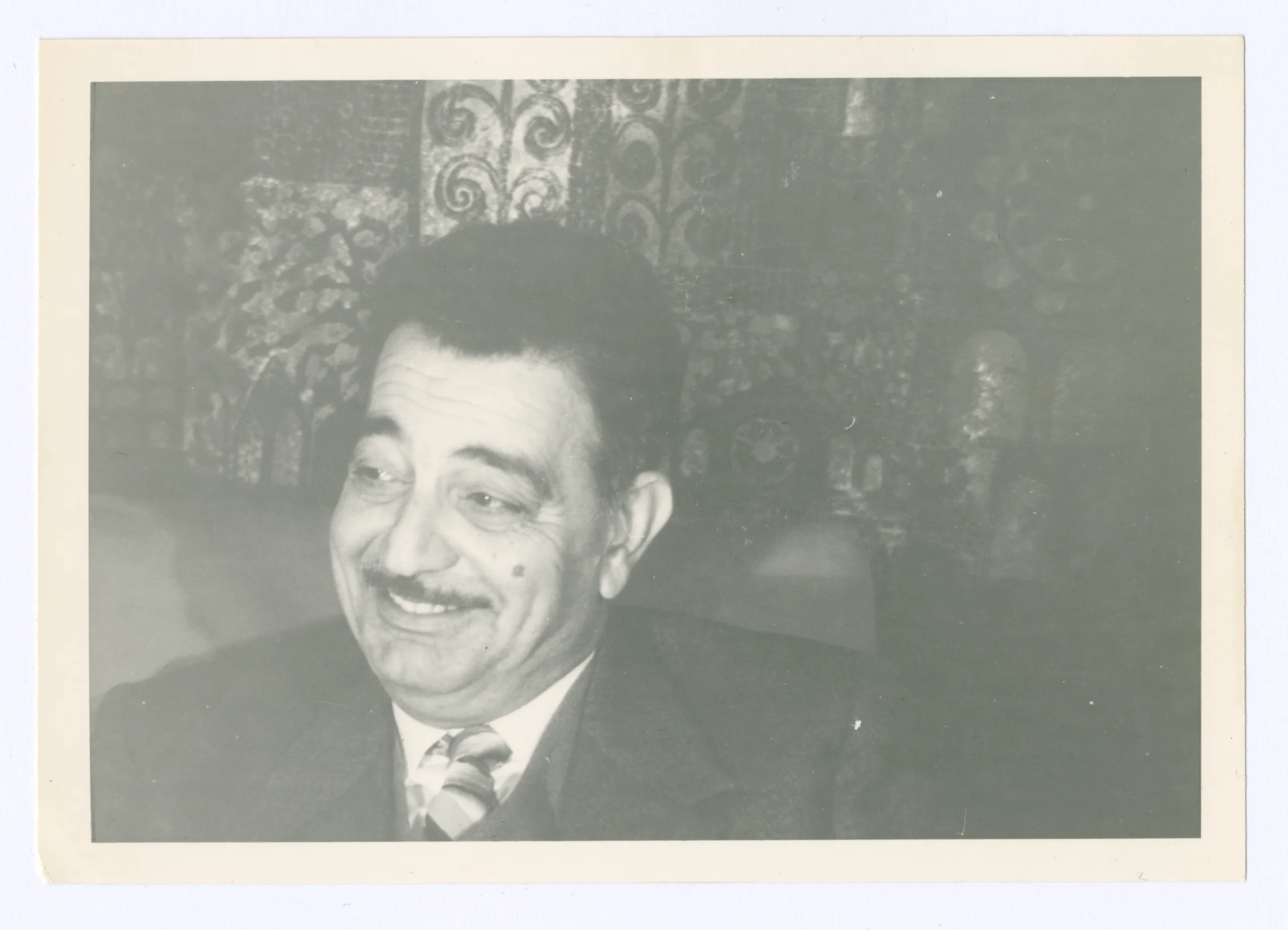
Emile Habibi
 Israel
Also known as: Imil (Emile) Shukri Habiby, Emile Shukri Habibi, Emille Habibi, Emil Habibi
Birthday
January 28, 1922
Birth Sign
Aquarius
Birthplace
Haifa, Palestine
Age
Died at 74
About
Emile Shukri Habibi was a Palestinian writer, journalist, and politician with Israeli citizenship. He is best known for his 1974 novel The Pessoptimist, a satirical tragicomedy about the Palestinian experience inside Israel that became a landmark of modern Arabic literature. Habibi's work blends absurdist humor with sharp political critique, earning him a reputation as one of the most distinctive voices in Palestinian letters.
Born in Haifa in 1922, Habibi stayed in his hometown during the 1948 Nakba, becoming one of the few Palestinian intellectuals to remain and take Israeli citizenship. He later served as a member of the Knesset for the communist parties Maki and Rakah from 1953 to 1972, advocating for Arab citizens' rights. His literary legacy, anchored by The Pessoptimist, continues to influence writers and readers worldwide, and his coinage of the term 'pessoptimist' has entered the lexicon of Palestinian cultural discourse.
Early Life & Background
Emile Habibi grew up in Haifa during the British Mandate era, in a Protestant Christian Arab family. He attended the Bishop Gobat School and later the Terra Santa College, where he received a solid education that would serve him in his future careers. From his teenage years, he was drawn to politics and joined the Palestine Communist Party, a decision that shaped his life's path. He began working as a journalist for party-affiliated newspapers, honing the writing skills that would later define his literary voice.
When the 1948 Arab-Israeli War broke out, Habibi made the fateful choice to remain in Haifa. While many Palestinian intellectuals fled or were expelled, he stayed, becoming a citizen of the newly established State of Israel. This experience of being an insider-outsider, a Palestinian in the Jewish state, became the raw material for his later fiction. The war and its aftermath left an indelible mark on him, and he would spend the rest of his life grappling with the contradictions of his position through his writing and political activism.
Career Growth
Habibi's political career took off in the early 1950s when he was elected to the Knesset as a member of Maki, the Israeli Communist Party. He served from 1953 to 1972, making him one of the longest-serving Arab parliamentarians in Israeli history. During his tenure, he was a vocal advocate for Arab citizens' rights and a sharp critic of government policies toward the Palestinian minority. He also edited the party newspaper Al-Ittihad, using journalism as a platform for his political views.
The turning point in his literary career came in 1974 with the publication of The Pessoptimist. The novel, whose full title translates to The Strange Events Surrounding the Disappearance of Sa'id Abi al-Nahs the Pessoptimist, tells the story of Sa'id, a Palestinian who remains in Israel and becomes a collaborator, only to find himself caught between two worlds. The book was an instant success, praised for its blend of absurdist humor and political tragedy. It has been translated into numerous languages, including English, Hebrew, French, and German, and is considered a masterpiece of modern Arabic literature.
In the 1980s, Habibi founded and edited the literary magazine Masharif, which became a crucial outlet for Palestinian writers in Israel. His other notable works include the play Kafr Qasim, about the 1956 massacre, and the novels Khatti al-Nas and Sakhr wa al-'Ayn. His collected works have been republished multiple times, and his influence on younger Palestinian writers, including Elias Khoury, is widely acknowledged.
Career Timeline
Public Image & Style
Emile Habibi is remembered as a pioneering figure in Palestinian literature, celebrated for his unique blend of satire, irony, and political insight. Critics often describe his tone as 'sarcastic irony,' a style that captures the absurdity of the Palestinian condition inside Israel. His work is frequently labeled 'pessoptimistic,' simultaneously despairing and hopeful, a reflection of his own worldview.
In Palestinian cultural circles, he is revered as a literary giant, and The Pessoptimist is considered required reading for students of Middle Eastern literature. His public image is that of a principled intellectual who used humor and wordplay to critique political realities, bridging the worlds of Arab and Hebrew literature. He is also remembered for his political integrity, having spent nearly two decades in the Knesset advocating for Arab citizens' rights.
Fame & Fandom (iFAMOUS Rankings)
Emile Habibi's readership is not a fanbase in the modern sense, there are no fan clubs, no coordinated campaigns, no nickname for his admirers. His audience is diffuse, intellectual, and commemorative: scholars, students of Arabic literature, and political historians who engage with his work through academic study and cultural remembrance. On the thirtieth anniversary of his death in 2026, individual tributes appeared on social media, but these are acts of personal homage, not the rituals of an organized fandom. His legacy is that of a writer and politician, not a performer, so the stories told about him are not of crowds or viral moments but of literary brilliance and political courage.
That legacy, however, has not translated into a prominent placement in iFANN's Global Fame Engine. As of August 2026, Emile Habibi is evaluated but unranked, he does not hold a position in the published Global Top 1,000 or any Top-100 scope list. This absence is itself telling: his fame is real but niche, rooted in the enduring power of The Pessoptimist rather than in broad contemporary recognition. For those who know his work, he remains a giant of Arabic literature; for the wider world, he is a name that surfaces in academic syllabi and literary retrospectives, not in the daily churn of global celebrity. The rankings, in his case, reflect a quiet, deep influence rather than a loud, wide one.
Interesting Facts and Legends
Habibi's novel The Pessoptimist features a protagonist named Sa'id, which means 'happy' in Arabic, a deliberate irony given his tragicomic fate. The term 'pessoptimist' itself, a blend of pessimist and optimist, was coined by Habibi and has become a shorthand for the Palestinian condition. He was one of the few Palestinian intellectuals who stayed in Haifa after 1948, an experience that set him apart from his contemporaries. Habibi founded the literary magazine Masharif, which served as a vital platform for Palestinian writers in Israel. He served in the Knesset for nearly two decades, a record for an Arab member at the time. His 1992 Israel Prize win sparked controversy, with some right-wing Israelis objecting to honoring a communist and Palestinian nationalist. Despite this, the prize recognized his significant contribution to Arabic literature. A story often retold by his admirers is his refusal to accept the Israel Prize, a decision widely seen as a political statement, though the exact circumstances remain part of his legend. Another iconic element is his dual role as a communist politician and novelist, a life that bridged politics and literature, as noted in his obituary. His use of Arab folktales and sarcastic irony in his writing is frequently highlighted as defining features, making him a unique voice in Arabic literature.
Family & Personal Life
Emile Habibi was married to his wife, Najla, and together they had several children. He was known to be a devoted family man who balanced his demanding political and literary careers with his home life. Details about his family are scarce, as he was a private person who rarely discussed his personal life publicly. However, his family remained close to him throughout his life, and they continue to manage his literary estate.
After his death, his family ensured his burial in Haifa, as he had wished. His funeral was attended by thousands of mourners, reflecting the deep respect he commanded in both Palestinian and Israeli communities.
Notable Connections
Emile Habibi was deeply connected to the Palestinian communist movement and worked alongside fellow Arab writers and intellectuals in Israel. He was a contemporary and colleague of Sami Michael, another prominent Israeli-Arab writer, and his work influenced younger Palestinian novelists like Elias Khoury. In the Knesset, he collaborated with other communist politicians, part of a generation of Palestinian intellectuals who remained in Israel after 1948.
Relationships & Dating History
Emile Habibi was married to his wife, Najla, and they had several children together. Details about their relationship are scarce, as Habibi was a private individual who rarely spoke about his personal life in public. However, it is known that he was a devoted family man who balanced his political and literary careers with his responsibilities at home.
His marriage to Najla lasted until his death in 1996. She was a supportive partner throughout his life, and after his passing, she and their children continued to manage his literary estate. As of 2026, his widow Najla is deceased as well, and the estate is managed by their descendants.
- MarriedNajla? - 1996Married until Habibi's death in 1996; they had several children together.
Death & Aftermath
Died
May 2, 1996 (aged 74)
Death Place
Haifa, Israel
Cause of Death
Unknown
Emile Habibi died on May 2, 1996, in Haifa, the city where he was born and spent most of his life. He passed away at age 74 without a specific medical cause ever being officially recorded or announced by family members. Public reaction focused immediately on his dual legacy as a founding figure in Israeli Arab politics and a master of modern Arabic literature. Tributes poured in from political peers and literary institutions who honored his unique blend of absurdist humor and sharp political critique. His funeral took place shortly after his death in Haifa, serving as a significant gathering for the local Palestinian-Israeli community and the broader literary world.
Posthumously, Habibi's influence continued to grow through the steady publication of his collected works. The city of Haifa eventually dedicated a plaza in his honor in May 2013, nearly two decades after his passing, cementing his status as one of Israel's most important writers in Arabic. This dedication followed his receipt of the prestigious Israel Prize in 1992, an award that recognized his enduring contribution to Arab heritage and identity. Statements by his family regarding the estate or posthumous releases are not publicly documented in the provided sources.
Net Worth (Estate Value)
$1 Million
iFANN Editorial Team estimate
Emile Habibi passed away in 1996, and his estate continues to generate income through royalties from his literary works. His most famous novel, The Pessoptimist, remains in print in multiple languages, including Arabic, English, Hebrew, French, and German. The book continues to sell steadily, particularly in Arabic-speaking markets, and his collected works have been republished several times. The estate is managed by his family, who hold the rights to his works. While the exact value of the estate is not publicly documented, the enduring popularity of his major works suggests it generates modest but consistent royalty income. As of 2026, iFANN's editorial analysis estimates the estate's value at around $1 million, based on the ongoing sales and licensing of his literary output.
Awards Won (3)
Emile Habibi received the Israel Prize in 1992, one of Israel's highest civilian honors, for his contribution to Arabic literature. He also won the Al-Quds Prize for Culture and Creativity from the Palestine Liberation Organization and the Medal of Merit from the Palestinian Authority. These awards reflect his significant literary achievements and his impact on Palestinian culture.
1992 · Arabic Literature
Overall contribution to Arabic literature
Culture and Creativity
Overall contribution to Palestinian culture
Known For
The Pessoptimist
1974 · Author
Keywords
Sources
Quick Facts
- Profession
- writer, journalist, politician
- Born
- January 28, 1922
- Birthplace
- Haifa, Palestine
- Died
- May 2, 1996
- Death Place
- Nazareth
- Gender
- Male
- Birth Sign
- Aquarius
- Nationality
- Palestinian, Israeli
- Notable Work
- The Pessoptimist
- Knesset Years
- 1953–1972
Personal Details
- Full Name
- Emile Shukri Habibi
- Spouse
- Najla
- Children
- Several
- Education
- Bishop Gobat School, Terra Santa College
Frequently Asked Questions
What is Emile Habibi famous for?
Was Emile Habibi a member of the Knesset?
Did Emile Habibi win the Israel Prize?
Where was Emile Habibi born?
When did Emile Habibi die?
Similar People
Join the community
fans discussing