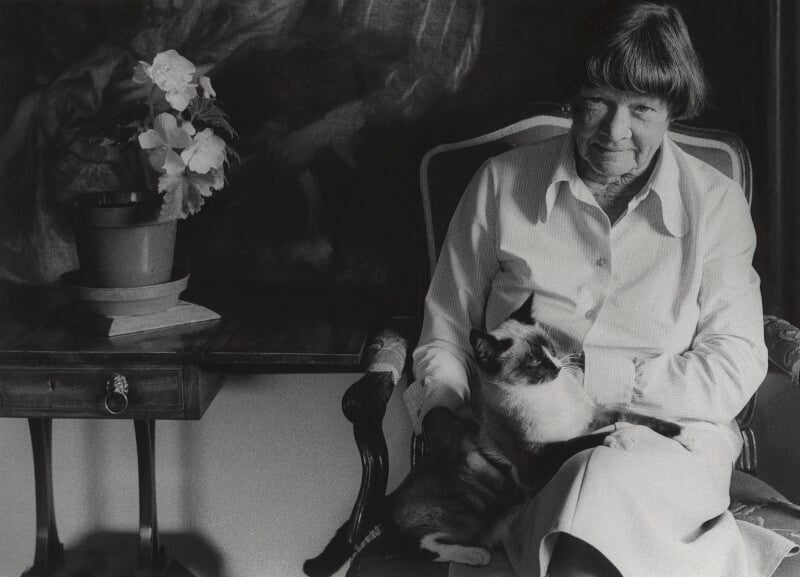
Elspeth Huxley
 Kenya
KenyaAlso known as: Elspeth Joscelin Grant
Birthday
July 23, 1907
Birth Sign
Leo
Birthplace
London, England
Age
Died at 89
About
Elspeth Huxley was an English writer, journalist, and broadcaster whose work captured the fading world of colonial East Africa with rare intimacy. Born in London in 1907, she spent her childhood on a coffee farm in British Kenya, an experience that became the bedrock of her most beloved books. Over a career that stretched into the 1990s, she published more than forty works, including novels, biographies, and travel writing.
Her best-known books, The Flame Trees of Thika and The Mottled Lizard, are still read today for their lyrical, unsentimental portraits of settler life. Huxley was also a magistrate, a government adviser on African affairs, and a passionate advocate for wildlife and agriculture. She died in 1997, leaving behind a body of work that continues to shape how we see Kenya's past.
Early Life & Background
Elspeth Joscelin Grant was born in London, but her family moved to British East Africa when she was just two years old. Her parents, David and Nellie Grant, were among the first wave of European settlers trying to make a living from coffee farming in the highlands near Thika. Their farm, called Njoro, was remote and often harsh, and young Elspeth grew up surrounded by Kikuyu children, learning their language and customs in a way that would later set her writing apart.
She was mostly educated at home by her mother and a series of governesses, with occasional trips back to England. Her early years were a patchwork of adventure and isolation, riding horses across the savannah, helping with the harvest, and watching the complex relationships between settlers, colonial officials, and the local African population unfold. These experiences gave her an outsider's eye and an insider's knowledge, a combination that would define her voice.
At sixteen, she was sent to England to complete her schooling, first at a boarding school and then at the London School of Economics, where she studied agriculture. But Kenya never left her. When she returned as a young woman, she found the country changed, and the tension between her two worlds became the engine of her writing.
Career Growth
Huxley's first book, White Man's Country: Lord Delamere and the Making of Kenya, appeared in 1935 and established her as a sharp, fair-minded chronicler of the settler experiment. She followed it with a string of novels and non-fiction works, but it was her memoir The Flame Trees of Thika, published in 1959, that brought her lasting fame. The book, told through the eyes of her younger self, became a bestseller and was later adapted into a popular television series in 1981.
Her sequel, The Mottled Lizard, continued the story of her adolescence and was equally praised. Throughout the 1960s and 70s, Huxley wrote prolifically, producing biographies, detective novels under the pen name of a male author, and works on African wildlife and agriculture. She also served on government commissions and advised on colonial policy, a role that sometimes put her at odds with her own literary circle.
In her later years, Huxley returned to themes of environmental loss and rural change, writing with the same clear-eyed passion that marked her early work. She remained active until her death, a writer who never stopped observing and questioning.
Career Timeline
Public Image & Style
Huxley was known for her clear, unpretentious prose and her ability to see both sides of the colonial question. She was admired by critics for her honesty and by readers for her warmth. In person, she was described as sharp-witted and slightly formidable, with a dry sense of humour that could catch people off guard.
Her public persona was that of a woman who had lived a life of adventure but remained grounded in common sense. She wrote for a general audience, avoiding academic jargon, and her journalism often tackled controversial topics with a calm, reasoned tone. Fans of her memoirs felt they knew her personally, and she received letters from readers well into her old age.
Fame & Fandom (iFAMOUS Rankings)
Elspeth Huxley never had a fandom in the modern sense, no fan clubs, no coordinated campaigns, no hashtags. Her readers were scattered, devoted, and largely solitary, drawn to her memoirs of a vanished colonial Kenya. The closest thing to a fanbase is the institutional network that preserves her legacy: Bristol Museums catalogued her 12,000-image photographic archive in 2017, and the Bodleian Libraries placed her papers online in March 2024. These are archival acts, not fan rituals.
In the iFANN Global Fame Engine's August 2026 evaluation, Huxley is assessed but holds no placement in the published rankings, neither the Global Top 1,000 nor any Top-100 scope list. This is not a slight; her fame is literary, historical, and quiet, the kind that accrues over decades rather than erupts in a season. Her name appears in academic syllabi and on library shelves, not in trending feeds.
The legends surrounding her are equally understated. There is no story of a crowd fainting at her reading or a street shut down for her arrival. Instead, the most retold moment is her 1959 memoir The Flame Trees of Thika, which became a 1981 television series, a cultural artifact that introduced her to a generation who never knew the colony she described. On Desert Island Discs, she asked not to be typecast as a chronicler of colonial Africa, a wish that critics have honored even as they call her 'unsurpassed' in that role. Her fame is that of a witness, not a celebrity.
Interesting Facts and Legends
Huxley served as a magistrate in her later years, a role she approached with dry humour and a sense of duty. She was an accomplished horsewoman, a skill honed during her Kenyan childhood and maintained throughout her life. Her husband Gervas was a grandson of Thomas Henry Huxley, the biologist known as 'Darwin's Bulldog,' and a cousin of Aldous Huxley, author of Brave New World. Despite the literary pedigree, Elspeth joked that she was the only writer in the family who actually made money from it. She found refuge in her Wiltshire garden, and in her eighties, she learned to drive a tractor to manage her small farm efficiently.
One of the most iconic moments of her career was the 1981 television adaptation of The Flame Trees of Thika, which brought her story to a broad audience and cemented her place in popular culture. Another defining moment came on the BBC program Desert Island Discs, where she expressed her wish not to be typecast as a chronicler of colonial Africa, a request that has been both honored and complicated by critical reassessments. A 2020 article in Kenya's Daily Nation noted the 'hatred' directed at white expatriate writers like Huxley who 'put Kenya on the world map,' a reflection of the complex legacy she left behind.
Family & Personal Life
Elspeth married Gervas Huxley in 1931, and the couple had one child, a son named Charles. Gervas, a journalist and civil servant, was a supportive partner who shared her interest in Africa. The family split their time between England and Kenya for many years, a juggling act that shaped their domestic life.
Her parents, David and Nellie Grant, remained in Kenya, and her mother's letters and diaries were a rich source for her memoirs. Elspeth often wrote about her mother's resilience and her father's impractical idealism, painting a vivid picture of their struggles as settlers. After her parents' deaths, she inherited their papers, which she later donated to the Bodleian Library.
Notable Connections
Elspeth Huxley was married to Gervas Huxley, a grandson of Thomas Henry Huxley and a cousin of Aldous Huxley. Her biographer, C.S. Nicholls, wrote a detailed account of her life. She corresponded with many leading writers of her time, including her friend and fellow settler, Karen Blixen, author of Out of Africa.
Relationships & Dating History
Elspeth met Gervas Huxley in London in the early 1930s, through mutual friends in the intellectual circles that orbited the Huxley family. They married in 1931, and their partnership was both personal and professional, with Gervas supporting her writing career while pursuing his own work as a journalist and civil servant.
The couple shared a deep love of Africa, and they spent many years shuttling between England and Kenya. Their marriage was marked by mutual respect and a shared sense of adventure, though it was not without its strains, as Elspeth's career often took her away from home. They remained married until Gervas's death in 1971.
After Gervas died, Elspeth never remarried. She continued to live in their Wiltshire home, where she focused on her writing and her garden. She was married to Gervas Huxley at the time of her death in 1997.
- MarriedGervas Huxley1931 - 1971Married until his death in 1971; they had one son, Charles.
Death & Aftermath
Died
January 10, 1997 (aged 89)
Death Place
London, England
Cause of Death
Reported natural causes consistent with advanced age
The final days of Elspeth Huxley unfolded quietly in London, where the chronicler of colonial Kenya passed away on January 10, 1997. At 89 years old, she died, though the specific medical cause was not detailed in available records. Contemporary reporting confirmed the date and age but offered no clinical details regarding any illness preceding her passing or the specific circumstances of her last hours. Public reaction to her death was characterized by respectful tributes acknowledging her role as a definitive voice on East Africa and colonial history. The New York Times published an obituary highlighting her status as a "chronicler of colonial Kenya" and noting her prolific output of books inspired by her childhood there.
Details regarding her funeral or memorial service remain unreported in available records, though her status as a Commander of the Order of the British Empire suggests a formal occasion likely took place within British literary circles. Posthumously, her estate has been managed through the continued publication and re-evaluation of her works, including a major biography by C.S. Nicholls and ongoing interest in adaptations of her classic memoirs. Her photographic archive remains a significant collection at Bristol Museums, ensuring her visual history survives alongside her written word.
Net Worth (Estate Value)
$10 Million
iFANN Editorial Team estimate
iFANN's editorial research currently estimates Elspeth Huxley's estate at $10 million, a figure that reflects the enduring sales of her books and the continued interest in her work. The estate, managed by her descendants, has overseen new editions of her memoirs and the digitization of her personal papers. Her literary legacy generates steady income from royalties, particularly from The Flame Trees of Thika, which has never been out of print. The 1981 television adaptation brought a significant lump sum, and the estate has since licensed excerpts for anthologies and educational materials. Beyond book royalties, the estate earns from the sale of her archives to the Bodleian Library, a deal that secured her papers for future scholars. The estate's value has grown modestly over the years, buoyed by renewed academic interest in colonial literature and the ongoing popularity of her memoirs among readers.
Awards Won (1)
Elspeth Huxley was appointed Commander of the Order of the British Empire (CBE) in 1990, recognizing her contributions to literature and public service. She also received an honorary doctorate from the University of East Anglia in 1977.
1990 · National Honour
Services to literature
Known For
The Flame Trees of Thika
1959 · Author
The Mottled Lizard
1962 · Author
White Man's Country
1935 · Author
Keywords
Sources
Quick Facts
- Profession
- Writer, Journalist, Broadcaster
- Born
- July 23, 1907
- Birthplace
- London, England
- Died
- January 10, 1997
- Death Place
- Tetbury, England
- Gender
- Female
- Spouse
- Gervas Huxley
- Birth Sign
- Leo
Personal Details
- Full Name
- Elspeth Joscelin Grant
- Spouse
- Gervas Huxley
Frequently Asked Questions
Who was Elspeth Huxley?
What are Elspeth Huxley's most famous books?
When was Elspeth Huxley born and when did she die?
What was Elspeth Huxley's connection to Kenya?
What other roles did Elspeth Huxley have besides being a writer?
Similar People
Join the community
fans discussing