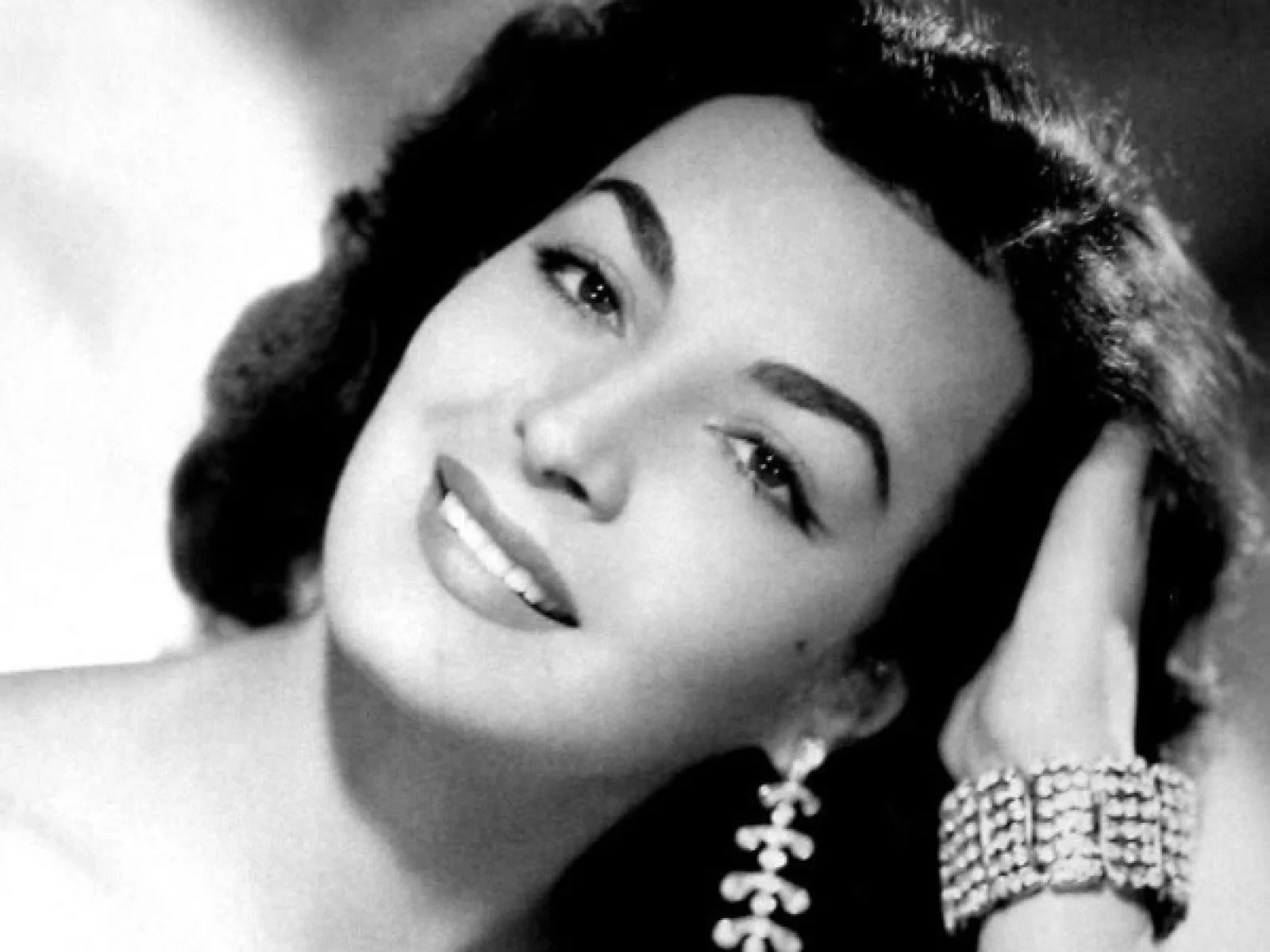
Elsa Aguirre
 Mexico
Also known as: Elsa Irma Aguirre Juárez
Birthday
September 25, 1930
Birth Sign
Libra
Birthplace
Chihuahua City, Chihuahua, Mexico
Age
Died at 95
About
Elsa Irma Aguirre Juárez, known to audiences as Elsa Aguirre, was a Mexican actress who became one of the defining faces of Mexico's Golden Age of cinema. Over a career that stretched from 1946 to the early 2000s, she appeared in more than forty films, numerous telenovelas, and stage productions, earning a reputation for both her striking beauty and her dramatic versatility.
She rose to prominence in the late 1940s and 1950s with leading roles in films like Lluvia roja (1950), La mujer que yo amé (1950), and Cuidado con el amor (1954), often starring opposite the era's biggest male stars, including Pedro Infante, Jorge Negrete, and Arturo de Córdova. Her ability to shift between ingénue parts and more complex, mature characters kept her in demand long after the Golden Age faded.
In her later years, Aguirre found a new audience through television, with recurring parts in 1990s telenovelas such as Acapulco, cuerpo y alma and Mujeres engañadas. She remained a beloved and respected figure in Mexican entertainment until her death on July 14, 2026, at the age of 95, remembered as one of the last icons of a storied era.
Early Life & Background
Elsa Aguirre was born in Chihuahua City, Mexico, on September 25, 1930, to Emma Juárez and Jesús Aguirre Castillo. She was one of five children, and her sister Alma Rosa Aguirre would also go on to become an actress. The family eventually moved to Mexico City, where the young Elsa grew up surrounded by the buzz of the capital's entertainment scene.
Her entry into acting came almost by accident. At age 14, she won a beauty contest organized by Clasa Films Mundiales, a major production company of the era. That victory opened the door to a screen test and, soon after, her first film role. She made her debut in El sexo fuerte (1946), appearing alongside her sister Alma Rosa. It was a modest start, but it put her in front of the cameras and inside the studio system that would shape her career.
Over the next few years, Aguirre took small parts and learned the craft on the job. Her first substantial role came in Ojos de juventud (1948), a film that signaled she was more than just a pretty face. The training ground of early B-movies and melodramas gave her the discipline and range that would later define her performances in the Golden Age classics.
Career Growth
Elsa Aguirre's breakthrough came in the early 1950s, when she landed leading roles in a string of high-profile films. Lluvia roja (1950) and La mujer que yo amé (1950) established her as a leading lady, and she followed with Cuatro noches contigo (1952) and the romantic drama Cuidado con el amor (1954). Her performance in Vainilla, bronce y morir (1957), a noir-tinged story, showed her ability to handle darker material.
She worked with the biggest names of Mexican cinema, including Pedro Infante, Jorge Negrete, Pedro Armendáriz, and Mario Moreno "Cantinflas," holding her own in their company. By the 1960s, she was still a bankable star, appearing in Sólo de noche vienes (1965), Casa de mujeres (1966), and El día de la boda (1968). Her last major film role came in the comedy El cuerpazo del delito (1970).
Aguirre transitioned to television in the following decades, finding a new generation of fans. She had recurring roles in the 1990s telenovelas Acapulco, cuerpo y alma and Mujeres engañadas, and made her final film appearance in 1980's Albur de amor. She retired from acting in the early 2000s, closing a career that spanned nearly six decades.
Career Timeline
Public Image & Style
Elsa Aguirre was celebrated as one of the "belle divas" of Mexican cinema, a label that captured both her physical beauty and her on-screen elegance. She was known for her natural, understated glamour, which set her apart in an era of exaggerated Hollywood-style looks.
Critics and audiences alike praised her versatility, noting her ability to move from innocent ingénues to complex, world-weary characters with equal conviction. Her work alongside stars like Pedro Infante and Jorge Negrete made her a familiar and beloved presence in Mexican households.
In her later years, Aguirre's public image shifted to that of a revered elder of the industry. Her death in 2026 prompted tributes from fans and officials alike, with President Claudia Sheinbaum calling her a "symbol" of Mexico, a testament to the lasting affection the public held for her.
Fame & Fandom
Elsa Aguirre, whose career defined an era of Mexican cinema, remains a figure of enduring fame. In the iFANN Global Fame Rankings, she is recognized as the 91st most famous person in Mexico, a position that has held steady from the previous cycle. The rankings, which track global attention across media coverage, search, and consumption signals worldwide, place her among the most recognized figures from the Golden Age of Mexican cinema.
Her fanbase has no formal name, but it is a devoted community of classic cinema enthusiasts concentrated in Mexico and Latin America, with a notable diaspora presence in the United States. Her official Instagram account, maintained into her nineties, served as a direct link to her admirers, offering a glimpse into her legacy. Fans engage primarily through social media, sharing her films and photographs, celebrating her as a symbol of retro glamour.
Aguirre's legend is built on her striking beauty and dramatic versatility, with her performances in films such as La mujer que yo amé and Cantando nace el amor remaining touchstones of her career. Her death in 2026 at age 95 was widely covered, with outlets describing her as one of the last icons of the Golden Age, a narrative that cements her place in film history.
Interesting Facts and Legends
Elsa Aguirre adopted a vegetarian diet at age 33 and became a dedicated practitioner of yoga, a routine she maintained into her nineties. She credited both with keeping her healthy and energetic. The song "Flor de azalea," written by Zacarías Gómez Urquiza and Manuel Esperón, was inspired by Aguirre and written specifically for her to sing. It became one of her signature pieces. She was one of five children, and her sister Alma Rosa Aguirre also became an actress, making them one of the few sibling pairs in Golden Age cinema. In 2023, at age 92, Aguirre recovered from bronchopneumonia, and afterward reported improved health, maintaining a daily walking routine.
A story fans still retell is that of her being one of the last surviving links to the Golden Age, a status that made her death a moment of national mourning. Her role in Pancho Villa y la Valentina is often cited as among her most culturally significant performances, cementing her legendary status.
Family & Personal Life
Elsa Aguirre was born to Emma Juárez and Jesús Aguirre Castillo, and grew up with four siblings, including her sister Alma Rosa Aguirre, who also pursued acting. The two sisters appeared together in Aguirre's debut film, El sexo fuerte (1946).
Aguirre had one son, Hugo, who passed away in 1996. She was married three times: to Armando Rodríguez Morado (married 1959, divorced), José Bolaños (married circa 1965, divorced), and José Rafael Estrada Valero (married circa 1970s, divorced). In her later years, she lived quietly in Cuernavaca, Morelos, away from the public eye.
Notable Connections
Elsa Aguirre was closely associated with her sister Alma Rosa Aguirre, also an actress, and frequently co-starred with leading men of the Golden Age, including Pedro Infante, Jorge Negrete, and Arturo de Córdova. She was also linked romantically to Jorge Negrete in the early 1950s. Her three husbands were Armando Rodríguez Morado, José Bolaños, and José Rafael Estrada Valero.
Relationships & Dating History
Elsa Aguirre's personal life was as eventful as her career. In the early 1950s, she had a brief public romance with singer-actor Jorge Negrete, one of the biggest stars of the era, though the relationship ended amicably. She later married Armando Rodríguez Morado in 1959, but the marriage ended in divorce.
Her second marriage was to José Bolaños, a screenwriter and director, around 1965, which also ended in divorce. She married for the third time to José Rafael Estrada Valero in the 1970s, but that union too ended in divorce. Throughout her marriages, she had one son, Hugo, who passed away in 1996.
In her later years, Aguirre remained single and lived quietly in Cuernavaca. At the time of her death, she was not in a relationship, having been divorced for many years.
- RumouredJorge Negrete1952 - 1952Brief public romance during the early 1950s.
- MarriedArmando Rodríguez Morado1959 - presentFirst marriage, ended in divorce.
- MarriedJosé Bolaños1965 - presentSecond marriage, ended in divorce.
- MarriedJosé Rafael Estrada Valero1970 - presentThird marriage, ended in divorce.
Death & Aftermath
Died
July 14, 2026 (aged 95)
Death Place
Cuernavaca, Morelos, Mexico
Cause of Death
Unknown
Elsa Irma Aguirre Juárez died on Wednesday, July 14, 2026, in Cuernavaca, Morelos, Mexico. The Mexican National Association of Performers (ANDI) confirmed the passing the following day, describing her as one of the most iconic and versatile actresses of her era while noting that no specific medical cause or official statement regarding her final days was released by family or medical authorities. Tributes arrived swiftly from cultural institutions and peers, with major news outlets such as Latin Times and Mexico News Daily publishing obituaries that highlighted her contributions to over forty films and telenovelas, specifically recalling classics like Pancho Villa y la Valentina and La mujer que yo amé.
Streaming platforms including Apple TV and Prime Video updated their profiles to reflect her status as a deceased legend, and social media tributes flooded Instagram where her official account had accumulated 58,000 followers. Posthumously, Elsa Aguirre's filmography continues to be featured on major streaming services, and her legacy is cemented as one of the last surviving stars of the Golden Age.
Information regarding the funeral or memorial service remains private and unspecified in the available search results. Details concerning burial or cremation are not publicly documented in the sources provided.
Net Worth (Estate Value)
$5 Million
iFANN Editorial Team estimate
Elsa Aguirre's net worth at the time of her death in 2026 is estimated at $5 million, reflecting a career that spanned nearly six decades in film, television, and stage. Her income came primarily from her many acting roles, with her most productive years in the 1950s and 1960s when she was a top star in Mexican cinema. After her retirement in the early 2000s, Aguirre's income was supplemented by residuals from her extensive filmography and television appearances. She also earned from personal appearances and tributes. In her later years, she lived modestly in Cuernavaca, and her estate continues to benefit from royalties and licensing of her classic films. As of 2026, iFANN's editorial analysis puts the estate's value at $5 million, a figure that includes her film and television residuals, along with any personal assets. The estate is managed by her family, and her legacy as a Golden Age icon ensures continued interest in her work.
Awards Won (2)
Elsa Aguirre's contributions to Mexican cinema were honored with a Golden Ariel Award for her cinematographic career, a lifetime achievement recognition from the Mexican Academy of Film. She also received a Luna del Auditorio for her life in entertainment. These awards celebrated her enduring impact on the industry.
2004 · Career Achievement
Lifetime Achievement
2003 · Life in Entertainment
Career
Known For
Lluvia roja
1950 · Actress
La mujer que yo amé
1950 · Actress
Cuidado con el amor
1954 · Actress
Vainilla, bronce y morir
1957 · Actress
Sólo de noche vienes
1965 · Actress
Keywords
Sources
Quick Facts
- Profession
- Actress
- Born
- September 25, 1930
- Birthplace
- Chihuahua City, Chihuahua, Mexico
- Died
- July 14, 2026
- Death Place
- Cuernavaca, Morelos, Mexico
- Gender
- Female
- Birth Sign
- Libra
- Years Active
- 1946–2004
Personal Details
- Full Name
- Elsa Irma Aguirre Juárez
- Spouse
- Armando Rodríguez Morado, José Bolaños, José Rafael Estrada Valero
- Children
- 1
Filmography
45
Total
40
Film
5
TV
Frequently Asked Questions
Who was Elsa Aguirre?
When and where was Elsa Aguirre born?
When did Elsa Aguirre die and what was the cause of death?
What were Elsa Aguirre's most famous films?
Did Elsa Aguirre have any family?
Similar People
Join the community
fans discussing