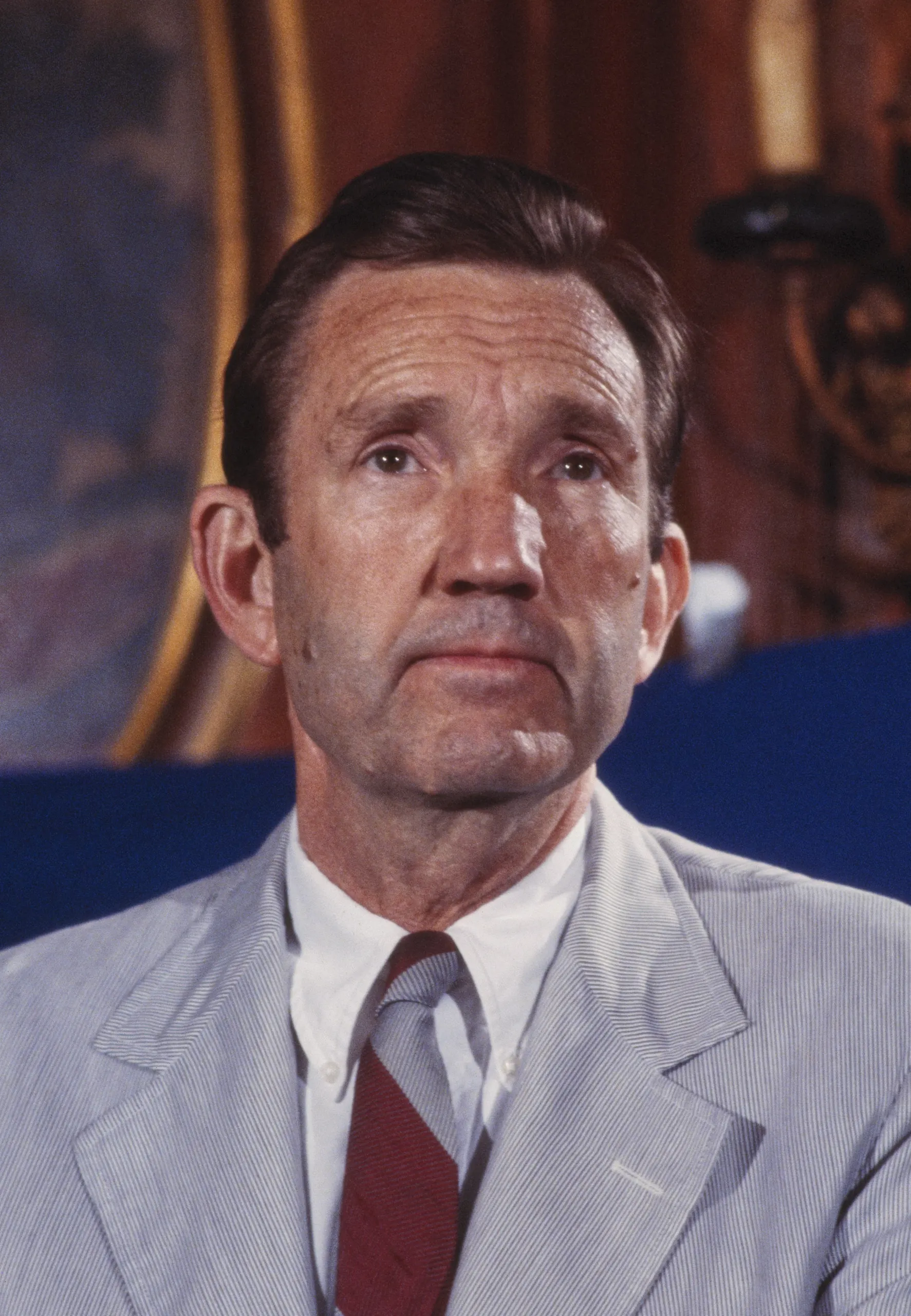
Elizaphan Ntakirutimana
 Rwanda
Birthday
1924
Birth Sign
Capricorn
Birthplace
Kibuye, Rwanda
Age
Died at 83
About
Elizaphan Ntakirutimana was a Rwandan Seventh-day Adventist pastor who became the first clergyman convicted for a leadership role in the 1994 Rwandan genocide. He was the senior pastor of the Seventh-day Adventist Church in Rwanda, a position he held for decades before the genocide. His conviction by the International Criminal Tribunal for Rwanda in 2003 marked a historic moment in international justice, as it was the first time a church leader was found guilty of genocide by the UN tribunal. Ntakirutimana's case drew worldwide attention, raising questions about the role of religious institutions during the genocide. He died on January 22, 2007, at age 83, just over a month after his release from prison.
Early Life & Background
Ntakirutimana was born in 1924 in Kibuye, a town in western Rwanda near Lake Kivu. He spent his early years in the region, which was predominantly rural and deeply religious. He became a pastor in the Seventh-day Adventist Church, rising to the position of senior pastor. His church work took him to the Mugonero complex, an Adventist mission that included a hospital and a church. By the time of the genocide, he was approximately 70 years old and had served his congregation for decades. His son, Gérard, was a medical doctor at the Mugonero Adventist hospital, and the family was well-known in the community. Ntakirutimana's life before the genocide was largely devoted to his pastoral duties, and he was respected by many in his congregation.
Career Growth
Ntakirutimana's life took a dark turn during the 1994 Rwandan genocide. The ICTR established that he transported armed attackers to the Mugonero complex, where they killed hundreds of Tutsi refugees who had sought shelter there. Eyewitness accounts described how he had the church roof removed to expose the refugees to the attackers. In September 1996, he was arrested by FBI agents in Laredo, Texas, where he had been living. His extradition case reached the US Supreme Court, which refused to hear it in January 2000, clearing the way for his transfer to the ICTR in Arusha, Tanzania. On February 19, 2003, the tribunal found him guilty of genocide and crimes against humanity and sentenced him to ten years' imprisonment. He was 78 years old at the time. He was released on December 6, 2006, after serving his full sentence, becoming the first person to complete a genocide sentence from the ICTR.
Career Timeline
Public Image & Style
Ntakirutimana's public image is defined entirely by his conviction for genocide. He is remembered as the first clergyman convicted for a leadership role in the Rwandan genocide. His case raised important questions about the role of religious leaders in the genocide and the reach of international justice. The Seventh-day Adventist Church formally apologized for the role of its members in the genocide. His story was prominently featured in Philip Gourevitch's acclaimed book about the Rwandan genocide.
Fame & Fandom
Elizaphan Ntakirutimana commanded global attention not through the allure of stardom, but as a figure of profound historical infamy and legal consequence. His case served as a definitive moment in international justice, drawing scrutiny to the role of religious institutions during the 1994 Rwandan genocide. Despite this intense focus, iFANN has not yet collected sufficient data to assign him a ranking within its global fame metrics for August 2026. Consequently, he holds no current position on any iFANN list, and his status remains marked as NOT_EVALUATED by the organization. The absence of a numerical placement reflects the unique nature of his legacy; he is remembered exclusively as a convicted war criminal rather than a subject of popular culture consumption or entertainment-driven fame. Regarding his audience, there is no documented fandom name associated with Elizaphan Ntakirutimana. He did not cultivate followers, nor did he inspire organized fanbases, campaigns, or rituals. The public reaction to his life and crimes was characterized by outrage, legal proceedings, and institutional apologies from the Seventh-day Adventist Church, rather than adoration or fan engagement. No fan community exists to claim his story, and his interactions remain confined to the historical record of his arrest, trial, and imprisonment.
Interesting Facts and Legends
Elizaphan Ntakirutimana holds the distinction of being the first person to complete a Rwanda genocide sentence before dying. His legal proceedings were formally known as The Prosecutor v. Elizaphan Ntakirutimana and Gérard Ntakirutimana, a joint trial that highlighted the gravity of their charges. The Seventh-day Adventist Church, headquartered in Silver Spring, Maryland, issued a formal apology regarding the involvement of two of its members in the genocide. His narrative provided the title for Philip Gourevitch's acclaimed work, 'We Wish to Inform You That Tomorrow We Will Be Killed With Our Families.' During his trial, a BBC correspondent noted his appearance, describing him as having a 'frail face.' Historical records confirm he was arrested in Laredo, Texas, in September 1996, marking the beginning of his journey through the International Criminal Tribunal for Rwanda. On February 19, 2003, the tribunal sentenced him to ten years in prison, establishing him as the first clergyman ever convicted of genocide by the UN body. He was released after serving his term in December 2006 and passed away on January 22, 2007, in Arusha, Tanzania. In 2018, the Adventist denomination in Rwanda announced plans to construct a Genocide Memorial at Mugonero, the site of his former ministry, acknowledging the tragedy that occurred under his watch.
Family & Personal Life
Ntakirutimana was the father of Dr. Gérard Ntakirutimana, a medical doctor who practiced at the Mugonero Adventist hospital. The father and son were tried together and both convicted of genocide and crimes against humanity. The relationship between them was central to the trial, as they were accused of acting together in the killings. No other family information is available in the research.
Notable Connections
Elizaphan Ntakirutimana was associated with his son, Dr. Gérard Ntakirutimana, who was tried and convicted alongside him. The case also drew attention from author Philip Gourevitch, who wrote about Ntakirutimana in his book about the Rwandan genocide. BBC correspondent Ishbel Matheson covered his trial.
Relationships & Dating History
Death & Aftermath
Died
January 22, 2007 (aged 83)
Death Place
Arusha, Tanzania
Cause of Death
Unknown
Elizaphan Ntakirutimana spent his final days in Arusha, Tanzania, residing near the facility of the International Criminal Tribunal for Rwanda where he had been detained. He passed away on Monday, January 22, 2007, at a local hospital while serving as a freed convict who had completed his ten-year sentence just over a month prior. The specific medical cause of his death was never officially announced by hospital authorities or coroners, leaving the exact pathology of his passing unrecorded in public documents. His legal standing concluded with this event, as no further investigations or trials were initiated following the death of the first clergyman convicted of genocide by an international tribunal.
Public reaction to his passing remained minimal compared to the global outcry during his trial. The Seventh-day Adventist Church in Rwanda later focused on institutional reckoning rather than individual commemoration, announcing plans in April 2018 to construct a Genocide Memorial at Mugonero, the site where he had incited violence against Tutsi refugees. Details regarding his funeral arrangements, burial location, or private service remain unavailable to researchers.
Net Worth (Estate Value)
$0
iFANN Editorial Team estimate
Per iFANN's editorial analysis, Elizaphan Ntakirutimana's net worth is estimated at $0. As a Rwandan pastor, he possessed no notable personal wealth, and his life was defined entirely by his role in the genocide rather than financial accumulation. No reliable information exists regarding his estate value or personal assets. After his death, no posthumous earnings have been reported, and his estate carries no known financial significance. The iFANN Editorial Team confirms that his economic footprint remains negligible, with no sources indicating substantial income or property holdings beyond what was necessary for his pastoral duties prior to his conviction.
Awards & Accolades
Known For
Rwandan genocide
1994 · Convicted leader
First clergyman convicted by ICTR
2003 · Defendant
Keywords
Sources
Quick Facts
- Profession
- pastor
- Born
- 1924
- Birthplace
- Kibuye, Rwanda
- Died
- January 22, 2007
- Death Place
- Arusha, Tanzania
- Gender
- Male
- Birth Sign
- Capricorn
Personal Details
- Children
- Gérard Ntakirutimana
Frequently Asked Questions
What was Elizaphan Ntakirutimana convicted of?
How long was Elizaphan Ntakirutimana's prison sentence?
When and where did Elizaphan Ntakirutimana die?
Was Elizaphan Ntakirutimana the first clergyman convicted for the Rwandan genocide?
What was Elizaphan Ntakirutimana's relationship to Gérard Ntakirutimana?
Join the community
fans discussing