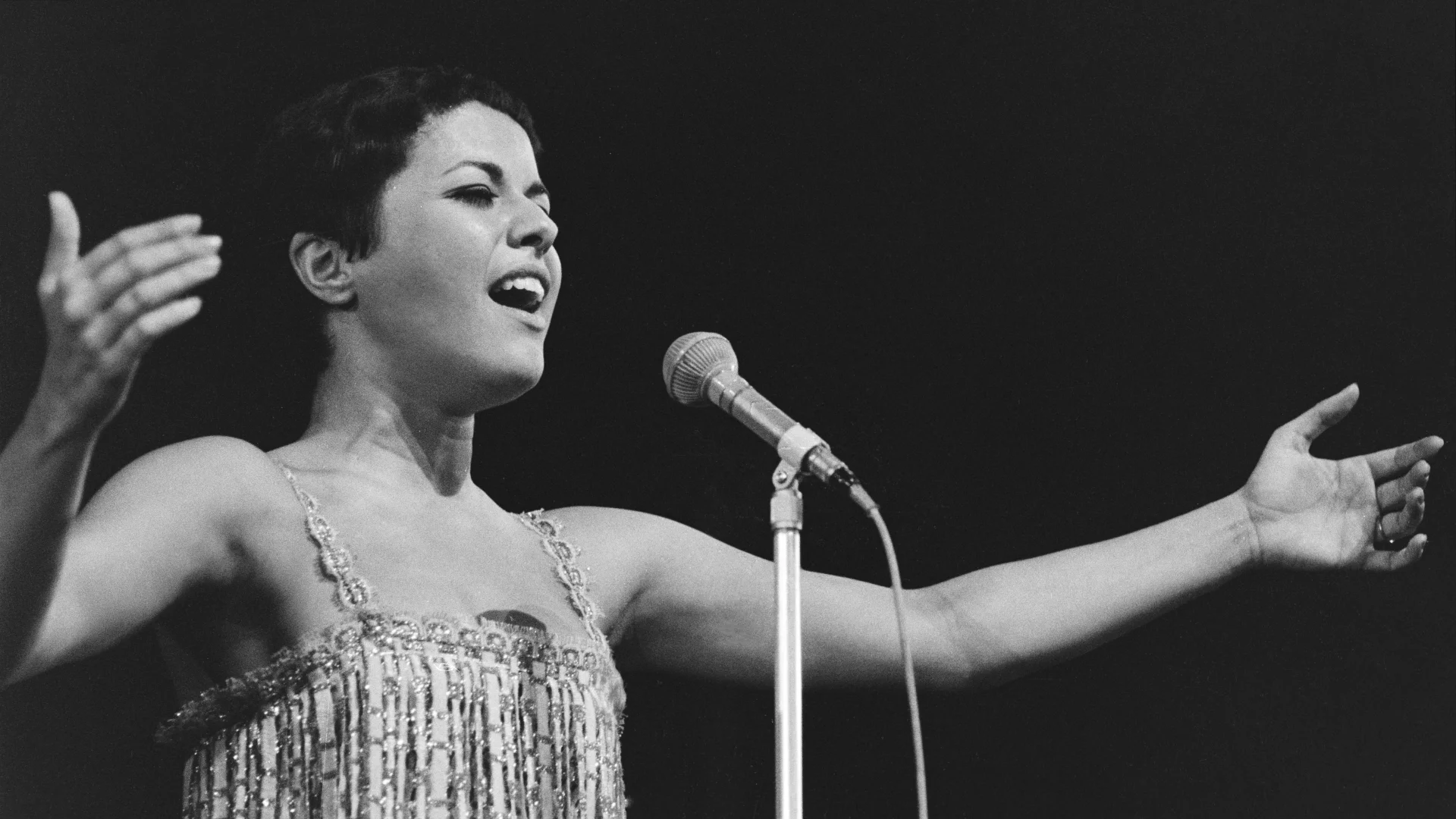
Elis Regina
 Brazil
Also known as: Pimentinha, Furacão
Birthday
March 17, 1945
Birth Sign
Pisces
Birthplace
Porto Alegre, Rio Grande do Sul, Brazil
Age
Died at 36
About
Elis Regina Carvalho Costa was a Brazilian singer who reshaped the sound of popular music in her country. Born in Porto Alegre in 1945, she became the defining voice of MPB (Música Popular Brasileira), blending bossa nova, samba, and jazz with a raw emotional intensity that still moves listeners today. Her 1965 performance of "Arrastão" on a televised song festival turned her into a national star, and she never looked back, recording a string of classics that remain benchmarks in Brazilian music.
Regina's legacy rests on her extraordinary interpretive gift. She could take a song by Milton Nascimento or Chico Buarque and make it her own, infusing it with a depth that few could match. Her duet with Antonio Carlos Jobim on "Águas de Março" is considered one of the greatest recordings in Brazilian history. She also championed the tropicalismo movement, giving a platform to young songwriters like Caetano Veloso and Gilberto Gil.
Her life was cut short in 1982 when she died of a drug overdose at age 36, but her influence endures. She is remembered as the best Brazilian singer of all time by many critics and musicians, and her recordings continue to inspire new generations. Her children, Maria Rita and Pedro Mariano, have followed her into music, carrying on a remarkable artistic lineage.
Early Life & Background
Elis Regina grew up in a poor household in Porto Alegre, the eldest child of a Portuguese housewife and a Brazilian father who struggled to hold steady work. From an early age, she showed a precocious talent, singing along to Argentinean radio stations in both Spanish and Portuguese. At seven, she tried to perform on a local children's show, "Clube do Guri," but froze at the microphone.
She was a bright child, reading and writing before she started school, and at nine she took piano lessons, showing such promise that her family wanted to buy her a piano they couldn't afford. So she turned to singing. At twelve, she returned to "Clube do Guri," won the prize, and became a regular on the show for two years. Before she turned fourteen, she had signed her first professional contract with Rádio Gaúcha, earning more than her father.
At fifteen, she traveled to Rio de Janeiro to record her first album, released in 1961, and decided to stay there with her father. By 1962, she had already won two awards, including Queen of the Disco Club. Her early years were marked by a ferocious determination to break free from poverty, a drive that would later earn her the nickname "Furacão" (Hurricane).
Career Growth
Elis Regina's breakthrough came in 1965 when she performed "Arrastão" by Edu Lobo and Vinícius de Moraes at the first TV Excelsior song festival. The performance, broadcast on television and radio, made her an overnight national star and established her as the biggest-selling Brazilian recording artist since Carmen Miranda. Her second album, Dois na Bossa with Jair Rodrigues, became the first Brazilian album to sell over one million copies.
She joined the television program O Fino da Bossa on TV Record, where her intense interpretations and dynamic stage presence captivated audiences. In the late 1960s and early 1970s, she helped popularize tropicalismo alongside Gal Costa, Gilberto Gil, and Caetano Veloso, championing young songwriters who integrated rock elements into Brazilian music. Her rendition of Milton Nascimento's "Nada Será Como Antes" brought attention to the movement.
One of her career highlights was the intimate duo recording with Antonio Carlos Jobim, Elis and Tom, in the early 1970s. In 1974, she and Jobim recorded "Águas de Março" together in Los Angeles, a song that became Brazil's most beloved single. Her discography includes definitive versions of "Como Nossos Pais," "Upa Neguinho," "Madalena," "Casa no Campo," "Atrás da Porta," "O Bêbado e a Equilibrista," and "Alô, Alô Marciano."
Public Image & Style
Elis Regina's public image was one of fierce intensity and uncompromising artistry. On stage, she was a whirlwind of emotion, gesticulating wildly and pouring herself into every lyric, earning her the nickname "Furacão" (Hurricane). In the studio, she was known as "Pimentinha" (Little Pepper) for her demanding, perfectionist ways. Her recordings, however, reveal a calm, pensive side, attending to musical details with precision.
She was a pioneer for women in Brazil's music industry, using her platform to champion new songwriters and even underwriting the feminist newspaper Nós Mulheres in the mid-1970s. Her style blended a jazz singer's adventurousness with a mischievous streak, reimagining samba and bossa nova classics while pushing the boundaries of MPB. Fans and critics alike compare her to icons like Janis Joplin and Billie Holiday, singers whose recordings define not just a style but a way of being.
Her legacy is such that young performers still talk about being intimidated when attempting songs she made famous. She carried her talent like an open book, propelling great emotion into her music as if every song was part of her own life story.
Fame & Fandom (iFAMOUS Rankings)
Elis Regina commands a presence that transcends her era, with global attention sustained through decades of cultural resonance and archival preservation. According to the iFANN Global Fame Rankings for August 2026, she is currently the 64th most famous person in Brazil, holding steady from the previous cycle. Within her specific domain, she ranks as the 66th most famous person in Latin Music, also holding steady from the previous cycle. Her fanbase does not operate under a formal collective name; instead, reverence for the singer manifests as a widespread national phenomenon where the entire population acts as a custodian of her legacy rather than an organized group. This universal veneration replaces modern fandom structures, with engagement driven by enduring cultural rituals such as spontaneous performances of her repertoire at public gatherings and deep-seated emotional connections to her recorded history. The absence of a specific moniker reflects the nature of her status as a mythic figure whose influence permeates Brazilian identity without needing the organization typical of contemporary pop stars.
Interesting Facts and Legends
The central tragedy defining her legend is her death on January 19, 1982, at age 36 in São Paulo, a verified event supported by autopsy reports that has generated folklore regarding the pressures of fame and dictatorship. A pivotal moment in her career occurred in 1965 when she sang "Arrastão" at the first edition of the TV Record festival, a performance that launched her to national stardom overnight by shocking conservative judges with her powerful vocal style. The 1974 live album *Elis & Tom*, recorded at the Canecão club in Rio de Janeiro, stands as perhaps the most iconic moment in her career, widely considered one of the greatest live recordings in Latin American music history due to the energy captured between Elis and composer Antônio Carlos Jobim. In July 2023, a modern controversy emerged when Volkswagen used AI to create a duet between Elis and her daughter Cássia Eller, sparking a nationwide conversation about the ethics of reviving deceased artists' voices. While anecdotes of fans fainting or streets shutting down during concerts are part of oral tradition rather than strictly documented news events, her reputation as an explosive performer suggests her live shows were high-energy events where her vocal power could overwhelm audiences.
Relationships & Dating History
Elis Regina's personal life was as intense as her music. She married composer and producer Ronaldo Bôscoli in 1967, and they had a son, João Marcelo, in 1970. The marriage was turbulent and ended in divorce in 1972.
In 1973, she married pianist César Camargo Mariano, who became her musical partner as well. They had two children, Pedro Mariano and Maria Rita, both of whom became singers. The couple divorced in 1981, after eight years of collaboration and family life.
At the time of her death in 1982, Elis was single, having been divorced from Mariano for about a year. She had been battling depression and drug addiction, which ultimately led to her fatal overdose.
- MarriedRonaldo Bôscoli1967 - 1972Composer and producer; had one son, João Marcelo.
- MarriedCésar Camargo Mariano1973 - 1981Pianist and musical partner; had two children, Pedro and Maria Rita.
Death & Aftermath
Died
January 19, 1982 (aged 36)
Death Place
São Paulo, Brazil
Cause of Death
Reported accidental drug overdose involving alcohol and sedatives
The news of Elis Regina's passing stunned Brazil, prompting spontaneous vigils where fans gathered outside her home in São Paulo and at performance venues to leave flowers and sing her songs. Peers including Chico Buarque, Caetano Veloso, and Gal Costa publicly mourned the loss, hailing her as the greatest interpreter of Brazilian music while institutions declared moments of silence to honor her contributions. The scale of the mourning was such that her funeral became a public event attended by thousands of mourners who lined the streets to pay their respects. Elis Regina died on January 19, 1982, in her bedroom within the Jardins district of São Paulo at the age of 36.
Her boyfriend, lawyer Samuel MacDowell, discovered her unconscious that morning after she had consumed a mixture of alcohol and sedatives identified as chloral hydrate or similar barbiturates. Authorities ruled the cause as an accidental overdose resulting from the interaction of these substances. Her final days were marked by exhaustion following intense work schedules, though she had recently completed recording the live album Transversal do Tempo. The service took place the following day, January 20, 1982, at the Cemitério da Consolação in São Paulo, where her body was interred in the family plot according to Catholic rites.
Notable attendees included her daughter Lena Machado and her husband Paulo Sérgio Valle, who delivered eulogies praising her artistic genius. Following her death, sales of her existing discography surged immediately as albums re-entered the charts, and posthumous releases like Transversal do Tempo were issued to critical acclaim. Her estate remains under the management of her daughter, who oversees licensing and archival releases while a foundation bearing her name supports young musical talent in Brazil.
Net Worth (Estate Value)
$5 Million
iFANN Editorial Team estimate
Per iFANN's editorial analysis, Elis Regina's net worth in 2026 is estimated at $5 Million, a figure that reflects the enduring value of her music catalog and the continued interest in her work. During her lifetime, she was one of Brazil's best-selling artists, with albums like Dois na Bossa selling over a million copies. Her recordings under labels like Philips and CBS generated substantial royalties. Since her death in 1982, her estate has earned income from record sales, streaming, and licensing of her songs in films, commercials, and tribute projects. Posthumous releases, such as the celebrated Elis and Tom album, have kept her music in the public eye. The estate is managed by her children, who have overseen reissues and documentaries that have introduced her to new audiences. Her legacy has also been boosted by tributes from artists like Maria Rita, who has performed her mother's songs to sold-out crowds. While exact financial figures are not publicly disclosed.
Awards Won (1)
Elis Regina won numerous awards throughout her career, though detailed records of Brazilian music ceremonies in her era are limited. She won the Queen of the Disco Club in 1962 and triumphed at the 1965 TV Excelsior festival with "Arrastão." Her album Dois na Bossa set a national sales record, a commercial milestone that stands as a testament to her popularity.
1965 · Song Contest
Arrastão
Known For
Arrastão
1965 · Performer
Dois na Bossa
1965 · Album with Jair Rodrigues
Elis and Tom
1974 · Album with Antonio Carlos Jobim
Águas de Março
1974 · Single with Tom Jobim
Como Nossos Pais
1976 · Song recording
Keywords
Sources
Quick Facts
- Profession
- singer
- Born
- March 17, 1945
- Birthplace
- Porto Alegre, Rio Grande do Sul, Brazil
- Died
- January 19, 1982
- Death Place
- São Paulo, Brazil
- Gender
- Female
- Spouse
- César Camargo Mariano
- Children
- João Marcelo Bôscoli, Pedro Mariano, Maria Rita
- Nicknames
- Pimentinha, Furacão
Personal Details
- Full Name
- Elis Regina Carvalho Costa
- Spouse
- César Camargo Mariano
- Children
- João Marcelo Bôscoli, Pedro Mariano, Maria Rita
Frequently Asked Questions
How did Elis Regina die?
Who are Elis Regina's children?
What is Elis Regina's most famous song?
Who was Elis Regina married to?
Why is Elis Regina so important to Brazilian music?
Social Media
Similar People


Join the community
fans discussing