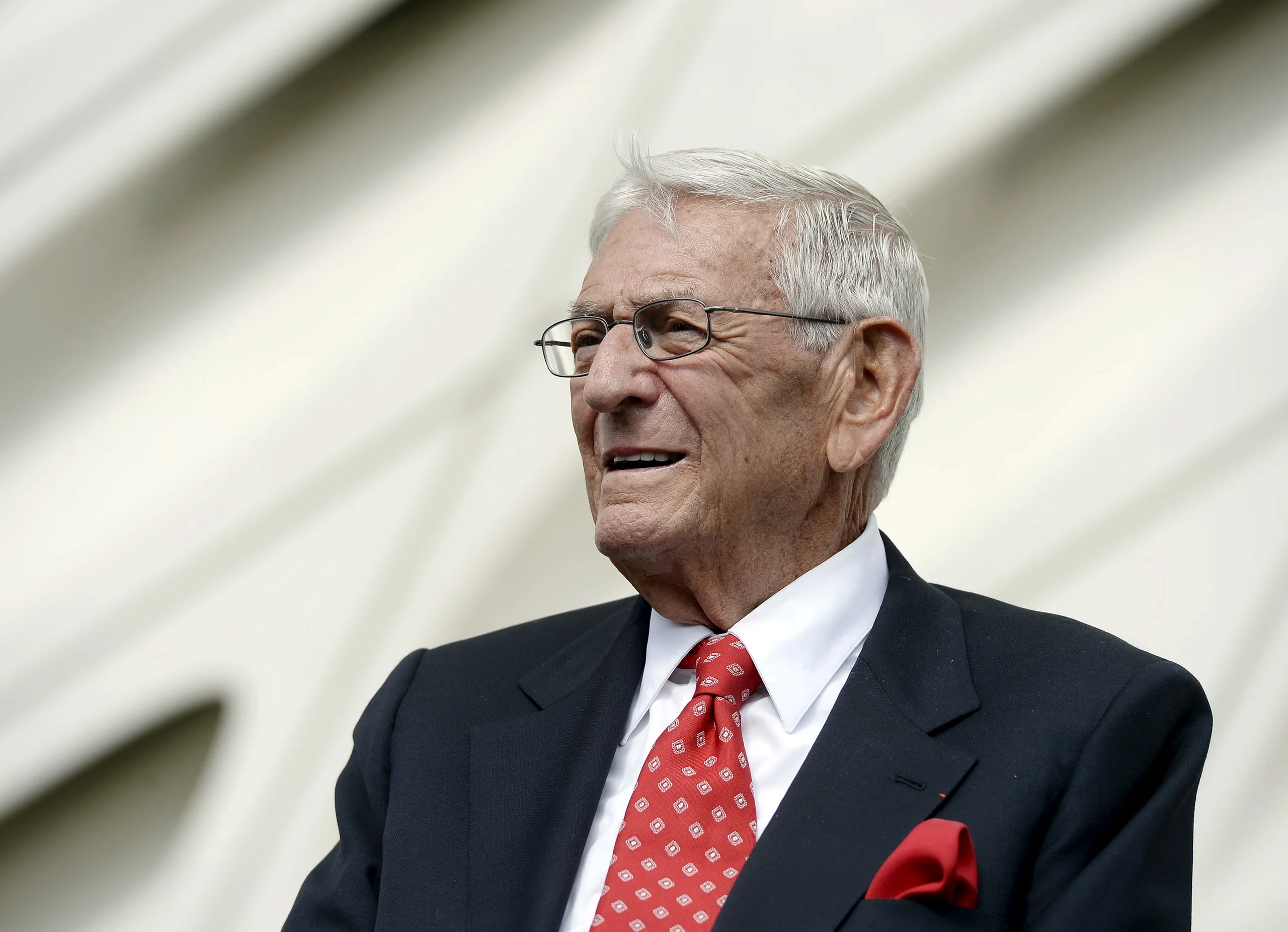
Eli Broad
businessman•financier•real estate developer•art collector•philanthropist
Birthday
June 6, 1933
Birth Sign
Gemini
Birthplace
The Bronx, New York
Age
Died at 87
About
Eli Broad was a distinguished American businessman, financier, real estate developer, and art collector, renowned for his dual success in founding two Fortune 500 companies: Kaufman & Broad (later KB Home) in homebuilding and SunAmerica Inc. in financial services. Born on June 6, 1933, in The Bronx, New York, he passed away on April 30, 2021, at the age of 87, leaving an indelible legacy. Broad was the only person to achieve the distinction of founding two Fortune 500 companies in separate industries. Along with his wife, Edythe, he became a pivotal patron of the arts, education, and scientific research, donating over $2 billion to various causes. Their philanthropic vision led to the establishment of significant institutions, including The Broad museum in Los Angeles and the Broad Institute of MIT and Harvard, dedicated to genomic medicine. His approach to philanthropy was characterized by large, transformative gifts aimed at fostering civic improvement and building lasting institutions. Broad's distinctive, sometimes contrarian, approach to both business and philanthropy, preferring to challenge conventional wisdom, shaped his unique impact on American commerce and culture.
Early Life & Background
Eli Broad was born in The Bronx, New York, on June 6, 1933. His parents, Leon and Rita Broad, were Lithuanian Jewish immigrants who instilled in Eli an early understanding of commerce and thrift through his father's work as a small business owner operating a five-and-dime store. Seeking better opportunities, the family relocated to Detroit, Michigan, when Eli was a young boy, immersing him in a growing industrial city where he observed various business activities. Broad attended Michigan State University, where he graduated in 1954 with a degree in accounting. His academic focus was practical, cultivating the financial skills that would later form the bedrock of his business acumen. During his time at Michigan State, he met Edythe Lawson, who would become his lifelong partner. After completing his degree, Broad honed his skills by working as a bookkeeper and then as a certified public accountant for two years. This foundational experience in finance and business operations proved invaluable as he prepared to launch his own enterprises, providing him with insights into tax codes, corporate structures, and the broader economic landscape. The burgeoning post-war housing boom and his early professional roles sparked his interest in real estate development, recognizing a significant opportunity in the growing demand for affordable, well-designed homes. This formative period was characterized by a burgeoning entrepreneurial spirit and a profound desire to build something substantial from the ground up, setting the stage for his eventual breakthrough into the homebuilding industry.
Career Growth
Eli Broad's entrepreneurial journey commenced in 1957 when he co-founded Kaufman & Broad with Donald Kaufman, initially focusing on homebuilding in the Detroit suburbs and pioneering affordable housing designs. The company, under Broad's leadership, expanded significantly, eventually becoming KB Home, a major national homebuilder. Kaufman & Broad achieved a significant milestone by going public in 1971. Broad then strategically diversified his interests by acquiring SunLife Insurance Company of America in 1985, which he successfully rebranded as SunAmerica. He transformed SunAmerica into a financial services powerhouse, specializing in retirement savings and annuities, and dramatically grew its assets. This venture culminated in its sale to AIG in 1999 for $1.7 billion, solidifying Broad's reputation as a shrewd financier. Following these substantial business successes, Broad redirected his focus toward philanthropy, establishing The Broad Foundation in 2000 with his wife, Edythe. Their philanthropic initiatives centered on education, scientific research, and the arts, leading to the creation of prominent institutions such as The Broad contemporary art museum in Los Angeles, which opened in 2010 and became a significant cultural landmark. The foundation also provided crucial support for the Broad Institute of MIT and Harvard, dedicated to advancing genomic medicine, and endowed the Eli Broad College of Business at Michigan State University. In a testament to the foundation's enduring impact, a $1.1 million grant was awarded to College of the Canyons in 2026 to support its Advanced Technology Center, demonstrating the ongoing reach of his philanthropic vision.
Career Timeline
Public Image & Style
Eli Broad cultivated a public image as a shrewd, determined businessman and an equally ambitious philanthropist, often perceived as a visionary who applied the same strategic intensity to his charitable giving as he did to his business ventures. Media portrayals frequently highlighted his role as a significant civic leader in Los Angeles, particularly his transformative efforts in shaping the city's cultural landscape through major art institutions. His profound passion for contemporary art became a defining aspect of his public persona, transitioning him from a real estate and finance mogul into a prominent and influential cultural patron. He was widely recognized as a benefactor who not only provided substantial funding but also actively engaged in the development and direction of the projects he supported, reflecting a characteristic hands-on approach to building his legacy. This proactive involvement extended to his strong advocacy for urban revitalization and public art initiatives, aiming to significantly enhance the quality of life within the communities he championed. Broad was also known for his direct and often demanding management style, a trait that underscored his commitment to achieving ambitious goals. He was a co-founder of the Los Angeles Museum of Contemporary Art (MOCA) and, in 2008, co-authored the book The Art of Being Unreasonable: Lessons in Unconventional Thinking, further cementing his reputation for challenging conventional wisdom.
Fame & Fandom
Eli Broad currently holds no placement in the iFANN Global Top 1,000 or any Top-100 scope list. The iFANN Global Fame Engine has evaluated his standing and determined he does not currently secure a published ranking among the world's most famous figures. While he commanded immense attention during his lifetime as a titan of industry, the metrics that drive current fame charts have not placed him within the official scope of this evaluation. His audience consists not of a fanbase with a formal name, but rather of historians, philanthropy scholars, and civic observers who track his enduring institutional impact. There are no organized fan campaigns, birthday billboards, or ritualistic gatherings dedicated to him, as his legacy is mediated through museums and educational foundations rather than celebrity worship. The public interaction he cultivated was strictly professional, channeled through the erection of cultural landmarks like The Broad museum and the funding of scientific research. Unlike pop stars whose names become hashtags, Broad's name appears in financial reports and architectural blueprints. His absence from the rankings reflects a shift from immediate global celebrity to a static, monumental status where influence persists without generating the volatile search signals required for chart inclusion. He remains a figure of profound historical weight, yet one who exists outside the dynamic churn of contemporary fame metrics.
Interesting Facts and Legends
Eli Broad was known for his distinctive, sometimes contrarian approach to both business and philanthropy, often preferring to challenge conventional wisdom and established norms. He co-founded the Los Angeles Museum of Contemporary Art (MOCA) and authored the 2008 book The Art of Being Unreasonable: Lessons in Unconventional Thinking. A passionate advocate for urban revitalization, his efforts significantly contributed to the development of Downtown Los Angeles. The Broad's $100 million expansion in Downtown Los Angeles topped out in August 2026, demonstrating the ongoing physical manifestation of his vision. Legends surrounding his life focus on his unique status as the only person to found two Fortune 500 companies in separate industries: homebuilding and financial services. This feat is consistently cited as the defining characteristic of his career. Another pillar of his mythology involves his transformative role in reshaping Los Angeles through art; he founded the Broad Art Foundation and donated his extensive collection to create The Broad museum, which became a cultural icon. His influence on K-12 education in Los Angeles also forms a major part of his posthumous narrative, with the foundation continuing to evolve its funding strategies following his death.
Family & Personal Life
Eli Broad's parents, Leon and Rita Broad, were Lithuanian Jewish immigrants. His father's work as a small business owner, operating a five-and-dime store, provided Eli with an early, direct exposure to commerce. The family relocated to Detroit, Michigan, during Eli's childhood. He married Edythe L. Broad in 1954, and she became his steadfast partner in both personal and extensive philanthropic endeavors. The couple resided in Los Angeles, establishing their primary home and developing their renowned art collection. They did not have children.
Notable Connections
Eli Broad was closely associated with his wife, Edythe L. Broad, who was his lifelong partner in both personal life and philanthropic ventures, co-founding The Broad Foundation with him. He also had a significant business association with Donald Kaufman, with whom he co-founded Kaufman & Broad, his first major enterprise.
Relationships & Dating History
Eli Broad's personal life was defined by a long and enduring marriage to Edythe L. Broad. Their connection began while he was a student at Michigan State University, blossoming into a lifelong partnership that spanned more than 66 years until his passing in 2021. Edythe was more than a spouse; she was an active collaborator in their extensive philanthropic endeavors, particularly in the arts, and served as a co-founder of The Broad Foundation. Their marriage was a constant throughout his rise in business and his expansive philanthropic career, with Edythe frequently appearing alongside him at public events, museum openings, and foundation announcements. They shared a deep passion for collecting contemporary art, which became a significant element of their joint identity and legacy, culminating in the establishment of The Broad museum. This shared interest and commitment to cultural enrichment profoundly deepened their bond and amplified their collective impact. Their relationship was characterized by mutual support and a unified vision for their charitable work, forging a powerful philanthropic force that left a lasting mark. They remained married until his death on April 30, 2021.
- MarriedEdythe L. Broad1954 - 2021They were married for over 66 years until his death and were lifelong partners in philanthropy.
Death & Aftermath
Died
April 30, 2021 (aged 87)
Death Place
Los Angeles, California, USA
Cause of Death
Natural causes
The Eli and Edythe Broad Foundation issued a formal announcement confirming the passing of its namesake, honoring him as the only individual to found two Fortune 500 companies in separate industries. Tributes flowed from major institutions he reshaped, including the New York Times, which published an obituary detailing how his vast fortune and zeal for civic improvement helped transform Los Angeles. The Broad Institute, UCLA Stem Cell Center, and Michigan State University all released statements remembering him as a champion of science, education, and the arts. These declarations underscored the depth of his influence across the fields he funded.
Eli Broad died on April 30, 2021, at the age of 87. While the specific location of his death was not explicitly detailed beyond the general context of his life in Los Angeles, public reports indicated he passed away at home or in a medical setting consistent with his age and status. No hospital transfer was highlighted in available accounts. Official statements from the foundation confirmed that he died of natural causes. His final days were not publicly documented in detail, though he remained active in philanthropy and business leadership up until his death.
Details regarding a funeral or memorial service are not explicitly provided in the record. Given the nature of high-profile philanthropists' funerals, such events are often private, but without explicit confirmation, these specifics remain unreported. Posthumously, the Eli and Edythe Broad Foundation continued its operations, evolving its approach to K-12 education funding to focus more specifically on Los Angeles. His widow, Edythe Broad, remains active in philanthropy and continues to lead the foundation's efforts in education, scientific research, and the arts.
Net Worth (Estate Value)
$8 Billion
iFANN Editorial Team estimate
Eli Broad's substantial wealth was primarily accumulated through his entrepreneurial successes in homebuilding and financial services. He co-founded Kaufman & Broad in 1957, which evolved into a major national homebuilder, generating significant income over several decades. Furthermore, he built SunAmerica Inc. into a formidable financial services company, specializing in retirement savings and annuities, ultimately selling it to AIG in 1999 for $1.7 billion. These ventures formed the core of his personal fortune, complemented by subsequent investments and an extensive art collection valued in the hundreds of millions of dollars. In June 2019, Forbes reported his net worth at $6.7 billion, ranking him as the 233rd wealthiest person globally. Following his death in April 2021, his estate continued to manage these significant assets and his extensive philanthropic foundations. The Eli and Edythe Broad Foundation, which he co-founded, possesses a substantial endowment that continues to fund its diverse initiatives in education, science, and the arts. Posthumous financial activity for the estate includes returns from investments and the ongoing valuation of intellectual property and assets. While specific post-mortem earnings are not publicly detailed, the foundation's substantial grants, such as the $1.1 million awarded to College of the Canyons for its Advanced Technology Center in 2026, indicate continued financial management and deployment of philanthropic assets. Based on reported figures and the ongoing operations of his philanthropic entities, iFANN currently estimates the estate's total value at $8 Billion.
Awards & Accolades
View 1 records, honours and achievementsKeywords
Sources
Quick Facts
- Profession
- Businessman, financier, real estate developer, art collector, philanthropist
- Born
- June 6, 1933
- Birthplace
- The Bronx, New York
- Died
- April 30, 2021
- Gender
- Male
- Spouse
- Edythe L. Broad
- Birth Sign
- Gemini
- Education
- Michigan State University
Personal Details
- Spouse
- Edythe L. Broad
- Children
- Education
- Michigan State University
Frequently Asked Questions
Who was Eli Broad?
Eli Broad was an American businessman and philanthropist. He famously founded two Fortune 500 companies, Kaufman & Broad (later KB Home) and SunAmerica Inc. With his wife Edythe, he also established The Broad Foundation, dedicating billions to arts, education, and scientific research. He passed away in 2021.
When did Eli Broad die?
Eli Broad passed away on April 30, 2021, at the age of 87. He died in Los Angeles, leaving behind a significant legacy in both the business world and the philanthropic community, particularly through his contributions to art and education.
What was Eli Broad known for?
Eli Broad was known for his dual success in building major companies in homebuilding and financial services. Beyond business, he gained recognition as a prominent art collector and a transformative philanthropist, notably establishing The Broad museum and supporting various scientific and educational initiatives.
What companies did Eli Broad found?
Eli Broad co-founded Kaufman & Broad in 1957, which evolved into KB Home, a major residential construction company. He later founded SunAmerica Inc., a financial services company specializing in retirement savings, which he sold to AIG in 1999. Both became Fortune 500 entities.
What is The Broad Foundation?
The Broad Foundation is a philanthropic organization established by Eli and Edythe Broad in 2000. It focuses on advancing public education, scientific and medical research, and the arts. The foundation continues to make significant grants, such as a $1.1 million award to College of the Canyons in 2026.
Join the community
fans discussing