
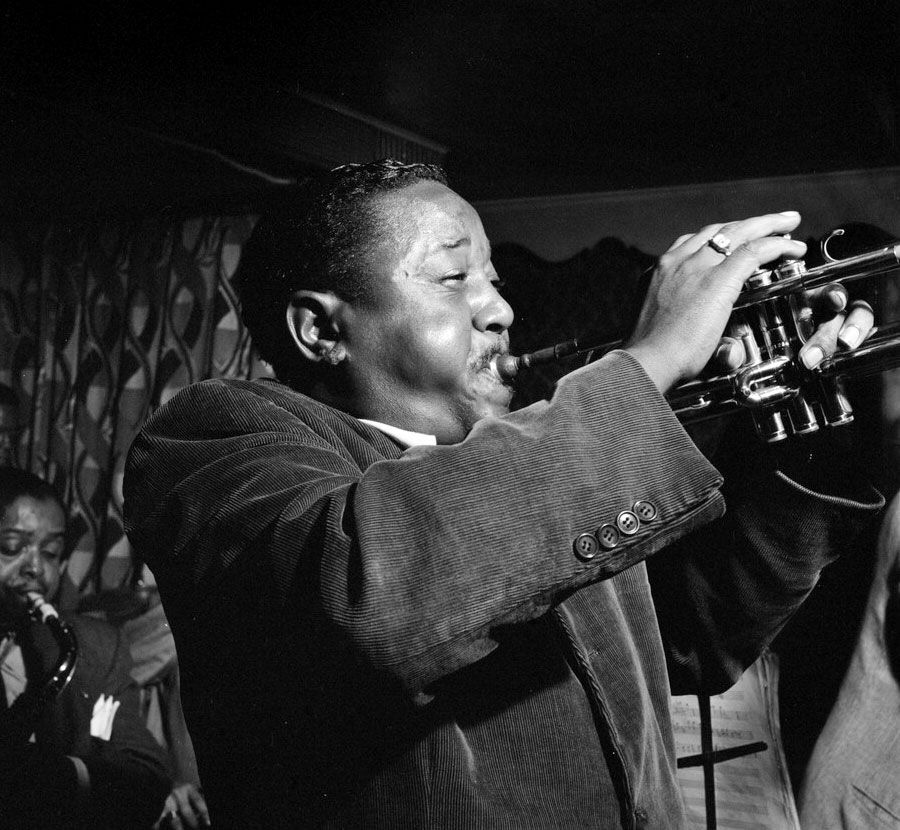
Eldridge
 United States
Activist•Writer•Political Leader
Also known as: Leroy Eldridge Cleaver
Birthday
August 31, 1935
Birth Sign
Virgo
Birthplace
Wabbaseka, Arkansas, USA
Age
Died at 62
Height
6 ft 2 in (1.88 m)
About
Eldridge Cleaver was an African American writer, political activist, and a leading figure in the Black Panther Party. He is most famous for his memoir Soul on Ice, published in 1968, which became a national bestseller and a foundational text of the Black Power movement. The book blended his prison experiences with searing critiques of racism and American society. Cleaver's life was marked by dramatic transformations, including a period of exile and a later ideological reversal where he embraced conservative politics. His legacy continues to be studied as a complex chapter in American radical history.
Early Life & Background
Leroy Eldridge Cleaver was born on August 31, 1935, in Wabbaseka, Arkansas, USA. His family subsequently moved from Arkansas, and he spent the majority of his childhood in Los Angeles. His early home life was marked by significant turbulence, as he frequently witnessed his father physically abusing his mother. From a young age, Cleaver found himself entangled with the legal system, experiencing repeated stints in reform schools for various petty offenses, including bicycle theft and the sale of marijuana. By the age of 18, his legal troubles escalated when he was sentenced to Soledad Prison for marijuana possession.
After his release from Soledad in 1957, Cleaver's criminal activities continued. He committed a series of rapes, acts he would later controversially describe in his memoir Soul on Ice as politically motivated against white supremacy. In 1958, at the age of 22, he was convicted of rape and assault with intent to murder, leading to a significant sentence that saw him incarcerated in Folsom and San Quentin prisons. It was during these nearly nine years of continuous incarceration that a profound transformation began to unfold within him. Despite having no formal education beyond high school equivalency, which he achieved while imprisoned, Cleaver immersed himself deeply in the writings of influential radical thinkers such as Malcolm X and Karl Marx.
This period of intense self-study and reflection spurred him to begin writing essays of his own. These powerful works soon found an audience, being published in the prominent Ramparts magazine. The raw honesty and potent ideas expressed in his writings quickly garnered significant attention from both the literary world and the burgeoning Black Panther Party. This recognition proved to be a pivotal moment, setting the stage for his parole in 1966 and his immediate emergence as a compelling revolutionary leader.
Career Growth
Cleaver's breakthrough came in 1966 when he joined the Black Panther Party in Oakland, becoming its first Minister of Information and editor of The Black Panther newspaper. His influence rivaled that of founders Huey Newton and Bobby Seale. In 1968, he published Soul on Ice, which sold over 500,000 copies and cemented his status as a radical icon. That same year, he ran for U.S. president on the Peace and Freedom Party ticket.
In April 1968, Cleaver led an armed ambush on Oakland police following the assassination of Martin Luther King Jr., resulting in a shootout that left a 17-year-old Panther dead and Cleaver wounded. Charged with attempted murder, he fled to exile in Algeria, where he established the Black Panther Party's International Section. After a rift with Newton in 1971, Cleaver's influence waned. He returned to the U.S. in 1975, later shifting to conservatism, designing a clothing line, and becoming a Mormon. His career reflected the arc of Black radicalism from revolution to reaction.
Career Timeline
Public Image & Style
Eldridge Cleaver is remembered as a fiery orator and prose stylist whose work helped define the Black Power era. His writing style is intense, confessional, and polemical, blending prison experiences with searing critiques of racism and American society. Media portrayals emphasize his dramatic transformation from prison-born radical to conservative critic. In his prime, Cleaver was known for his sharp suits, Afro hairstyle, and commanding presence at rallies and press conferences. He was a polarizing figure—admired for his intellectual fire and unflinching honesty, but also criticized for his past crimes and later political reversals. There is no single organized fandom with a name; scholarly interest and occasional activist references persist in Black studies, prison literature, and political history circles. His image is frequently used in documentaries and on protest-related merchandise. In the 2020s, renewed attention has come from films like Judas and the Black Messiah, which feature archival footage of Cleaver, sparking conversations about his legacy among younger generations.
Fame & Fandom (iFAMOUS Rankings)
Eldridge Cleaver's audience was never a fandom in the conventional sense. He was a revolutionary intellectual and activist, not a pop culture figure, and there is no documented fandom name, no fan clubs, no organized campaigns, and no fan-funded projects associated with him. His followers were readers, political supporters, and students of Black radical history. Contemporary engagement with his legacy is largely scholarly and archival, with ongoing interest in his dramatic life story and his role in the Black Panther Party.
As of August 2026, iFANN's Global Fame Engine has evaluated Eldridge Cleaver, but he does not currently hold a placement in the published rankings, including the Global Top 1,000 or any Top-100 scope list. His fame, while significant in historical and cultural terms, is not currently quantified by iFANN's ranking system.
Interesting Facts and Legends
Cleaver designed a line of denim clothing called "Cleaver Crusaders" while in exile in Algeria in the 1970s, sold through mail order. He ran for the U.S. Senate as a Republican in 1980 but lost. In his final years, he worked as a house painter and gave an interview in 1997 predicting the decline of the Black liberation movement. He was excommunicated from the Mormon Church in 1985 for continuing to advocate for Black liberation theology.
A widely retold story from his later years is his dramatic transformation from Black revolutionary to conservative Republican, a shift that became a cultural touchstone and was often framed as a cautionary tale. Another legend involves his 1968 presidential run on the Peace and Freedom Party ticket and subsequent flight into exile, a period that solidified his mythic status. His 1968 memoir Soul on Ice, written in prison, remains a foundational text and a key artifact of the Black Power era.
Notable Quotes
“I’m perfectly aware that I’m in prison, that I’m a Negro, that I’ve been a rapist, and that I have a Higher Uneducation.”
“The price of hating other human beings is loving oneself less.”
Family & Personal Life
Cleaver's father, Leroy Cleaver Sr., died in 1967; his mother, Thelma Gradney Cleaver, raised him and his five younger siblings. He married Kathleen Neal on December 31, 1967; she served as the Black Panther Party's communications secretary. They had two children: Jojuandrea "Jodo" and Ahmad. The couple divorced in 1987 due to Cleaver's conservative shift and the strains of exile. Kathleen later became a law professor at Emory University.
Notable Connections
Cleaver's most significant collaborator was Huey Newton, co-founder of the Black Panther Party, though they later split over ideological differences. He was also closely associated with Bobby Seale and Malcolm X, whose writings deeply influenced him. His wife Kathleen Neal Cleaver was both a partner and fellow activist. The writer and lawyer Beverly Axelrod helped secure his parole and championed his early essays.
Relationships & Dating History
Cleaver's public dating history is limited. In Soul on Ice, he described raping multiple unnamed women in 1957–1958, which he later called predatory acts, not romantic relationships. No early partners are recorded. His only confirmed romantic relationship was with Kathleen Neal. They began dating in 1967 and married on December 31, 1967. The couple had two children and worked together in the Black Panther Party. Their marriage ended in divorce in 1987, largely due to Cleaver's shift to conservatism and the strain of his exile. Kathleen pursued a career in law and academia. Cleaver did not remarry or have any other publicly known relationships after the divorce. As of 2026, he is deceased.
- MarriedKathleen Neal Cleaver1967 - 1987Met through Black Panther Party; married December 31, 1967; divorced due to ideological differences and exile strains; two children.
Death & Aftermath
Died
May 1, 1998 (aged 62)
Death Place
Unknown
Cause of Death
Unknown
By the mid-1990s, Eldridge Cleaver had largely receded from public life following his excommunication from the Mormon Church and a period of quiet reflection on the decline of the Black liberation movement. In early May 1998, the former Minister of Information for the Black Panther Party passed away at the age of 62 after years of declining health. The New York Times confirmed he was 62 years old at the time of his death but did not elaborate on the cause in the snippet provided. Public reaction to his death included tributes from peers and institutions recognizing his role as a symbol of Black rebellion and internationalism, though specific details such as fan vigils, moments of silence, memorial murals, or chart surges following his death are not documented in the provided snippets.
Similarly, while his papers and those of his wife Kathleen Cleaver have been acquired by institutions like Emory University, this acquisition occurred in 2020 and relates to historical preservation rather than an immediate reaction to his death in 1998. Details concerning the funeral or memorial service, including the date, location, whether it was public or private, notable attendees, performances, and the final disposition of his remains (burial or cremation), are absent from the provided search results. In terms of posthumous releases and honors, the provided text notes that his autobiographical volume Soul on Ice remains a classic statement of Black alienation.
However, the search results do not list specific posthumous books, films released after 1998, awards, hall-of-fame inductions, dedications, or foundations created in his name immediately following his death.
Net Worth (Estate Value)
$500,000 - $1 Million
iFANN Editorial Team estimate
iFANN currently estimates Eldridge Cleaver's estate to be valued at approximately $500,000 to $1 million. Cleaver died with minimal personal assets in 1998, but his literary estate continues to generate income. The primary revenue source is ongoing royalties from Soul on Ice, which still sells roughly 10,000 copies per year and is used in college curricula. Licensing fees for the use of his writings and image in documentaries, films like Judas and the Black Messiah (2021), and merchandise such as T-shirts and posters also contribute. His heirs, children Jodo and Ahmad Cleaver, manage the estate. There is no real estate or significant investment portfolio. The estate's value has grown modestly since his death due to renewed interest in Black Panther history and the Black Lives Matter movement.
Awards & Accolades
View 2 records, honours and achievementsKnown For
Soul on Ice
1968 · Author
Black Panther Party
1966 · Minister of Information
Keywords
Sources
Quick Facts
- Birthplace
- Wabbaseka, Arkansas
- Height
- 6 ft 2 in (1.88 m)
Personal Details
- Full Name
- Leroy Eldridge Cleaver
- Height
- 6 ft 2 in (1.88 m)
- Spouse
- Kathleen Neal Cleaver (1967–1987)
- Children
- Jojuandrea "Jodo" Cleaver, Ahmad Cleaver
- Education
- No formal education beyond high school equivalency in prison
Frequently Asked Questions
Who was Eldridge Cleaver?
What is Eldridge Cleaver's net worth in 2026?
Was Eldridge Cleaver a rapist?
Why did Eldridge Cleaver leave the Black Panthers?
How did Eldridge Cleaver die?
Similar People
Join the community
fans discussing