 Mexico
“A cinematic acid trip.”
Roger Ebert
Chicago Sun-Times
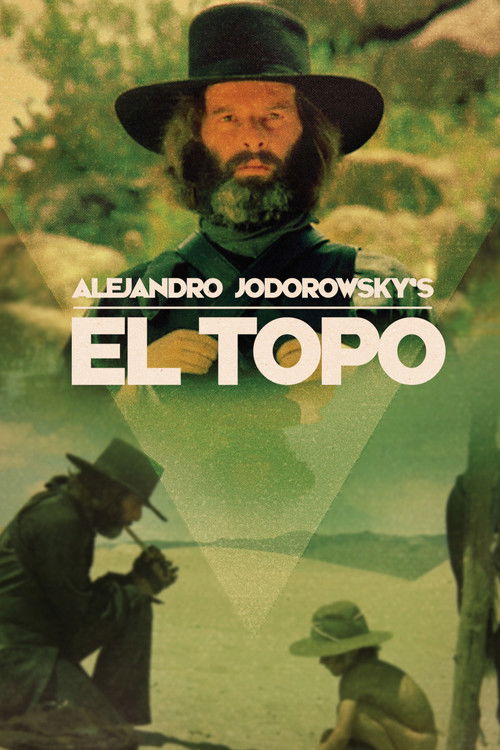
Alejandro Jodorowsky's El Topo is a surrealist western that defies easy categorization. The film follows a black-clad gunslinger, El Topo, who embarks on a quest across a barren desert with his young son. Their journey is a strange, violent pilgrimage that mixes biblical allegory, Eastern philosophy, and spaghetti western tropes. Jodorowsky himself stars as the titular character, while his real-life son Brontis plays the boy. Shot on a modest budget of $400,000 in the Mexican desert, the film's hallucinatory imagery and unconventional narrative made it a midnight movie sensation. It premiered in 1970 and quickly became a cult favorite, earning a reputation as a touchstone of underground cinema. The film's rating of 7.064 out of 10 from over 665 votes reflects its enduring, if niche, appeal.
The narrative, co-written by Jodorowsky, unfolds as a symbolic exploration of sin, redemption, and spiritual enlightenment. El Topo, a master of violence, seeks to transcend his worldly existence by confronting four corrupt 'Masters'. These encounters are not mere duels but allegorical battles against greed, dogma, and spiritual emptiness. As El Topo progresses, his son grows increasingly distant, questioning the path of violence his father embodies. The film's visual language is as potent as its themes, employing striking, often disturbing, imagery to convey a deeply personal and esoteric vision. It is a work that demands interpretation, rewarding patient viewers with a profound, albeit challenging, cinematic experience.
Availability and pricing can change. Confirm on the provider's site before purchasing.
The film opens with a stark depiction of violence in a small desert village, where outlaws have brutally murdered the inhabitants. Into this devastation rides El Topo, a figure clad entirely in black, accompanied by his young son. El Topo is a legendary marksman, capable of dispatching multiple opponents with chilling efficiency. His son, raised from birth to be a warrior, questions his father's violent path and the purpose behind their nomadic existence. They are on a mission, seemingly driven by El Topo's need to confront the men responsible for the village's destruction.
El Topo systematically hunts down and eliminates the outlaws, each confrontation more stylized and brutal than the last. These acts of vengeance, while presented as righteous, also reveal El Topo's own capacity for extreme violence. Following this initial quest, El Topo and his son encounter Marah, a woman living in the desert who becomes fascinated by El Topo's intense presence. She joins them, drawn into their increasingly bizarre and symbolic journey. El Topo, driven by a desire for spiritual transcendence, decides he must become a master himself. To achieve this, he believes he must defeat four corrupt 'Masters' who represent the world's decay and spiritual corruption.
The bulk of the film follows El Topo as he seeks out these four figures. Each Master represents a different vice or failing: one is a wealthy collector, another a seemingly enlightened guru, and so forth. The challenges El Topo faces are not just physical duels but symbolic tests. He navigates treacherous landscapes, confronts cult-like followers, and engages in increasingly surreal battles. Throughout these encounters, El Topo's son grows more disillusioned with his father's methods, yearning for a path that offers peace rather than destruction. The film becomes a deep dive into the human psyche, exploring themes of sin, redemption, and the cyclical nature of violence, all rendered in Jodorowsky's signature dreamlike and often disturbing visual style. The journey is as much internal as it is external, pushing El Topo towards an ultimate confrontation with himself and the spiritual void he seeks to fill.
El Topo - Official 4K Trailer | Alejandro Jodorowsky
Critical Consensus
A surreal, violent, and deeply symbolic Western, El Topo is a hallucinatory journey into spiritual quest and self-destruction. Alejandro Jodorowsky's magnum opus remains a landmark of midnight cinema, challenging viewers with its enigmatic narrative and unforgettable imagery.
“A cinematic acid trip.”
Roger Ebert
Chicago Sun-Times
“A bizarre, challenging, and ultimately rewarding experience.”
Variety Staff
Variety
“Jodorowsky's masterpiece is a spiritual odyssey disguised as a Western.”
IndieWire Staff
IndieWire
Alejandro Jodorowsky
El Topo
Brontis Jodorowsky
Son of El Topo
Mara Lorenzio
Marah / The Woman
David Silva
The Colonel
Paula Romo
Desconocida
Jacqueline Luis
Mujercita
Robert John
Adult Son of El Topo
Héctor Martínez
Maestro 1
Juan José Gurrola
Maestro 2
Víctor Fosado
Maestro 3
Agustín Isunza
Maestro 4
José Legarreta
Dying Man
Director
Alejandro Jodorowsky
Writer
Alejandro Jodorowsky
Composer
Alejandro Jodorowsky
Cinematographer
Rafael Corkidi
Producer
Mick Gochanour
Grand Prize (1971)
Film: Won
Join the community
fans discussing