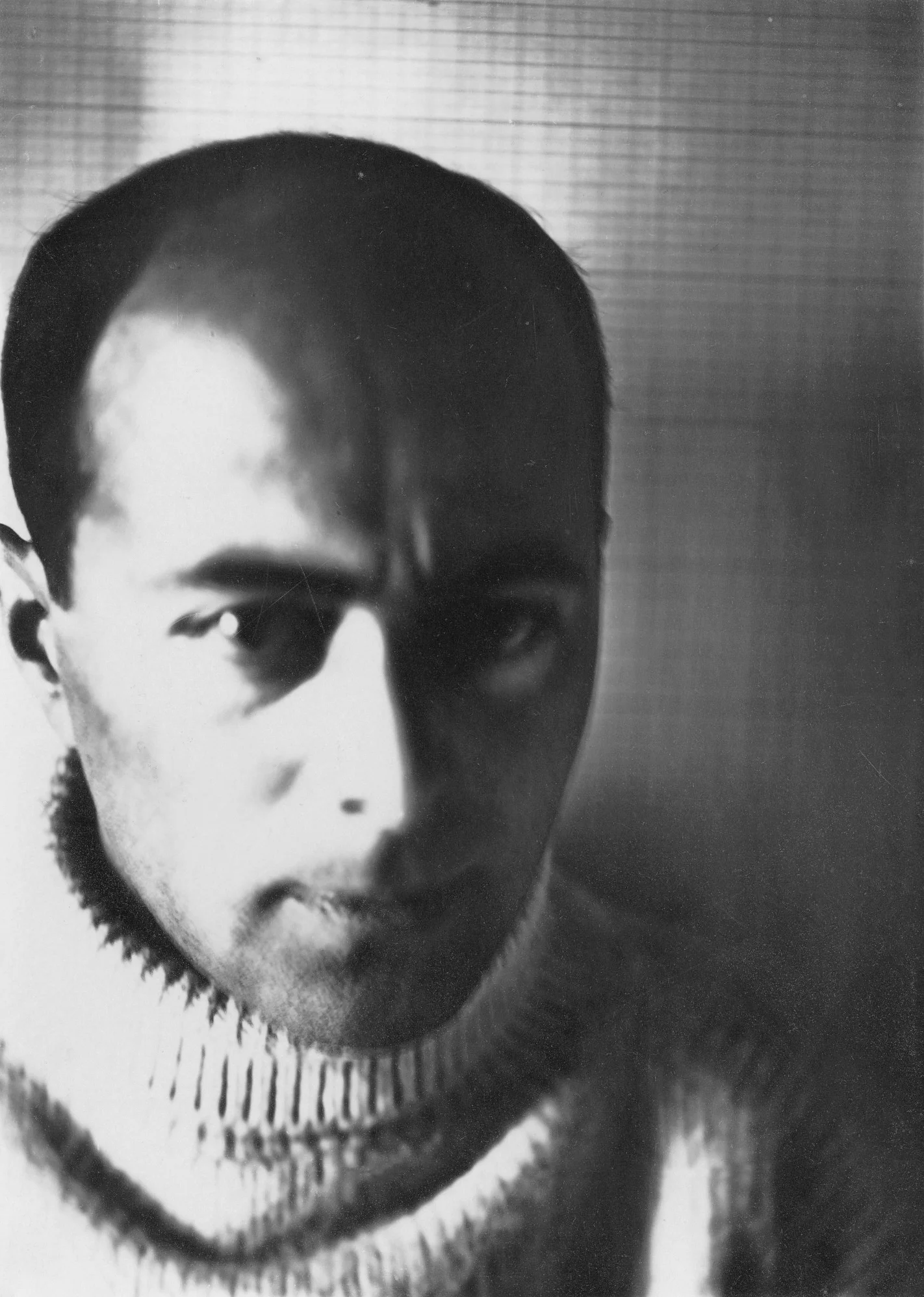
El Lissitzky
 Russia
painter•architect•graphic designer
Also known as: Lazar Markovich Lissitzky
Birthday
November 23, 1890
Birth Sign
Scorpio
Birthplace
Pochinok, Russian Empire
Age
Died at 51
About
El Lissitzky was a Russian and Soviet artist whose work reshaped the visual language of the early twentieth century. A painter, architect, graphic designer, and photographer, he is best remembered for his Proun series, a body of abstract geometric compositions that blurred the line between painting and architecture. He also created one of the most iconic propaganda posters of the Russian Civil War, Beat the Whites with the Red Wedge, and his typographic and exhibition designs influenced generations of designers.
Lissitzky's influence reached far beyond the Soviet Union. After moving to Germany in 1921, he worked alongside the Bauhaus and helped transmit avant-garde ideas to Western Europe. His principles of three-dimensional construction, developed with Kazimir Malevich, passed through the Bauhaus into the International Style of architecture that dominated the mid-century. Even today, his work is studied in design schools worldwide, and his posters and Prouns command six-figure prices at auction.
He died in Moscow on December 30, 1941, at the age of 51, after a long battle with tuberculosis.
Early Life & Background
Lazar Markovich Lissitzky was born on November 23, 1890, in the small Jewish community of Pochinok, about fifty kilometers southeast of Smolensk. His father, Mordukh Zalmanovich Lissitzky, was a well-educated travel agent who spoke English and German and translated Heine and Shakespeare in his spare time. His mother, Sarah, strictly observed Jewish religious traditions. The family lived in Vitebsk from 1891 to 1898, where his brother and sister were born, then moved to Smolensk, where he spent ten years with his grandparents and attended secondary school.
Lissitzky showed artistic talent early and by age thirteen had become a skilled draughtsman. The Jewish artist Yehuda Pen, founder of the School of Drawing and Painting in Vitebsk, noticed his work and began mentoring him. At just fifteen, Lissitzky started teaching, a profession he maintained for most of his life. Rejected from the Petrograd Academy of Arts due to antisemitic laws, he left for Germany in 1909 to study architectural engineering at the Technische Hochschule in Darmstadt. In the summer of 1912 he wandered through Europe, spending time in Paris and walking 1,200 kilometers across Italy on foot, sketching architecture and landscapes. That same year, his pieces were included for the first time in an exhibition by the St. Petersburg Artists Union.
His early artistic work focused on illustrating Yiddish children's books, a deliberate effort to promote Jewish culture after the repeal of antisemitic laws. Notable works from this period include the 1919 illustrated suite Had Gadya (Tale of a Little Goat), a series of eleven lithographs published by Kultur-Lige in Kiev.
Career Growth
In May 1919, Marc Chagall invited Lissitzky to teach graphic arts, printing, and architecture at the newly formed People's Art School in Vitebsk. He designed and printed propaganda posters for a local newspaper, though he later never mentioned these works, likely because they portrayed Leon Trotsky and other revolutionaries who later became enemies of the Soviet state. That year he also created his most famous propaganda poster, Beat the Whites with the Red Wedge, a response to the Russian Civil War.
The pivotal moment came through his encounter with Kazimir Malevich's Suprematism. Together they co-founded UNOVIS (Exponents of the New Art) to promote Suprematist ideology. The group, which disbanded in 1922, was crucial in disseminating Suprematist ideas in Russia and abroad. The earliest appearance of the signature El Lissitzky emerged in the handmade UNOVIS Miscellany, issued in two copies in March-April 1920. During this period, Lissitzky developed his own variant Suprematist series called Proun, abstract geometric paintings that combined graphic arts, architectural forms, photography, and painting. Unlike Malevich's purely non-objective art, Lissitzky's work carried political symbolism.
In 1921, Lissitzky moved to the Weimar Republic as the Russian cultural ambassador to Germany. He worked with the Bauhaus, contributing significantly to typography, exhibition design, photomontage, and book design. His work greatly influenced the Bauhaus and Constructivist movements. In 1924 he created The Constructor (also known as The Self-Portrait), a photomontage considered among his best works. After being diagnosed with pulmonary tuberculosis, he spent time in a Swiss sanatorium but continued producing propaganda posters, books, buildings, and exhibitions for the Soviet Union. When Stalin demanded artists conform to stricter guidelines in 1932, Lissitzky managed to retain his position as head of exhibitions. His final work was a 1941 Soviet propaganda poster urging citizens to build more tanks for the war effort against Nazi Germany.
Career Timeline
Public Image & Style
Lissitzky is known for his geometric abstract compositions using primary colors and basic shapes, his innovative typography, photomontage techniques, and his Proun series that bridged painting and architecture. His work reflects his belief that artists can be agents of social change. He is consistently portrayed as a pioneer of nonrepresentational art and a key figure in the Russian avant-garde, with his influence on modern graphic design widely acknowledged. No official fandom name exists, but his admirers include art historians, graphic designers, typography enthusiasts, and collectors of Russian avant-garde art. His work is studied in design schools worldwide.
Fame & Fandom (iFAMOUS Rankings)
El Lissitzky's fanbase is not a fandom in the pop-culture sense. There are no Swifties or ARMYs here, no formal name, no coordinated campaigns, no birthday billboards. Instead, his devotees are scholars, curators, and design students who engage with his work in quiet museum galleries and academic journals. The institutions that steward his legacy, the Tate, the Guggenheim, MoMA, function as his de facto fan clubs, staging retrospectives and publishing monographs that keep his Prouns and typography in the public eye.
In the iFANN Global Fame Engine's August 2026 evaluation, Lissitzky has been evaluated but does not currently hold a placement in the published rankings. He is neither in the Global Top 1,000 nor on any Top-100 scope list. That absence speaks less to his historical weight and more to the nature of his fame, it is deep, not wide, concentrated among those who study the avant-garde rather than the masses who scroll social media.
His legendary moments are the stuff of art-history lore, not fan conventions. The Proun series, his 'waystation' between painting and architecture, remains his most retold story, a blueprint for a new socialist world that never quite materialized. The Wolkenbügel, his horizontal skyscrapers proposed for Moscow, were rejected as 'formalist' and exist only as drawings. And his 1923 designs for an 'electro-mechanical show' of Victory over the Sun were never staged, a paper project that nonetheless prefigured multimedia art. These stories circulate not through fan forums but through exhibitions and auction catalogs, where his works fetch six-figure sums at Christie's and Sotheby's. The irony is not lost: a fervent Soviet propagandist has become a darling of Western capitalism.
Interesting Facts and Legends
Lissitzky began teaching at age fifteen and never really stopped. The origin of his adopted name 'El' is uncertain, it may come from a nonsense line in Malevich's On New Systems in Art: 'U-el-el'-ul-el-te-ka.' In the summer of 1912, he walked 1,200 kilometers across Italy to study art and architecture. His father translated Heine and Shakespeare in his spare time. He was rejected from the Petrograd Academy of Arts due to antisemitic laws. He never mentioned his early propaganda posters portraying Leon Trotsky, likely because Trotsky later became an enemy of the Soviet state. He continued working productively even while undergoing treatment for tuberculosis in Swiss sanatoriums. His final work was a 1941 Soviet propaganda poster urging citizens to build more tanks against Nazi Germany.
One legend that persists: his 1919 Had Gadya illustrations, made for a Jewish cultural organization, are often framed as a heroic act of cultural preservation during revolutionary upheaval. The story is romanticized, it was a commission, not a resistance, but Frank Stella's later series based on the work keeps the tale alive. Another iconic moment: the Wolkenbügel, his 'cloud hangers,' horizontal skyscrapers proposed for Moscow in the 1920s, rejected as formalist. The myth says this broke his spirit; in truth, it was part of a systemic Soviet shift against the avant-garde.
Notable Quotes
“das zielbewußte Schaffen (goal-oriented creation)”
“I wandered through Europe.”
Family & Personal Life
Lissitzky was born to Mordukh Zalmanovich (Mark Solomonovich) Lissitzky, a travel agent who spoke English and German and translated Heine and Shakespeare in his spare time, and Sarah, who strictly observed Jewish religious traditions. The family lived in Vitebsk from 1891 to 1898, where his brother and sister were born. He later spent ten years with his grandparents in Smolensk. In 1927 he married Sophie Lissitzky-Küppers, a German art historian and collector. The couple had one son, Jen Lissitzky, born in 1928, who later became an engineer and helped manage his father's artistic legacy. Sophie was a devoted partner who supported his work despite his chronic tuberculosis. After his death, she dedicated herself to preserving his artistic legacy, publishing his writings and organizing exhibitions of his work.
Notable Connections
El Lissitzky collaborated closely with Kazimir Malevich, co-founding UNOVIS, and was mentored early on by Yehuda Pen. Marc Chagall invited him to teach in Vitebsk. He maintained a lifelong friendship with sculptor Ossip Zadkine. His wife, Sophie Lissitzky-Küppers, managed his estate after his death.
Relationships & Dating History
El Lissitzky's documented romantic history is limited, reflecting the scarcity of personal records from his era. He married Sophie Lissitzky-Küppers, a German art historian and collector, in 1927. She was a significant figure in the German art world who had collected avant-garde art. The couple had one son, Jen Lissitzky, born in 1928. Sophie was a devoted partner who supported his work despite his chronic tuberculosis. After his death, she dedicated herself to preserving his artistic legacy, publishing his writings and organizing exhibitions of his work. She was the only documented spouse of Lissitzky. At the time of his death, he was married to Sophie, who survived him and managed his estate until her own death.
- MarriedSophie Lissitzky-Küppers1927 - 1941CurrentMarried in 1927; she supported his work and managed his estate after his death.
Death & Aftermath
Died
December 30, 1941 (aged 51)
Death Place
Moscow, Russian SFSR, Soviet Union
Cause of Death
Unknown
El Lissitzky died on December 30, 1941, in Moscow, Russian SFSR. He was fifty-one years old at the time of his death. The historical record confirms his passing but offers no specific details regarding the official cause of death, nor does it document an autopsy or legal inquest into the circumstances. Tributes did not erupt immediately upon his death. Unlike contemporaries who received state-sponsored memorials, Lissitzky's recognition grew slowly over decades rather than through immediate public mourning events or large-scale gatherings. The funeral arrangements remain undocumented in available sources, suggesting a low-profile service consistent with the difficult political climate of the era.
He was likely buried in Moscow at a cemetery such as Vagankovskoye or Novodevichy. Posthumously, the artist achieved immense recognition as a pioneer of nonrepresentational art and typography. Institutions like the Guggenheim and MoMA have since dedicated significant resources to his work, cementing his legacy through retrospective exhibitions and academic study. A major book titled El Lissitzky on Paper: Print Culture, Architecture, Politics, 1919, 1933 appeared in 2024, while his estate continues to be managed by foundations and museums.
Net Worth (Estate Value)
$1 Million
iFANN Editorial Team estimate
El Lissitzky died in 1941, and no reliable records of his personal wealth from his lifetime survive. As a Soviet artist working under state patronage, he did not accumulate personal wealth in the manner of Western artists. The value of his estate today is realized primarily through artwork sales, museum acquisitions, and licensing of his iconic designs. Original Prouns, posters, and illustrated books appear at major auction houses, with individual works fetching six-figure prices at Sotheby's and Christie's. His estate is managed by his descendants, and the exact financial structure is not publicly documented. As of 2026, iFANN's editorial analysis estimates the estate's value at $1 million, based on the continued sale and licensing of his works.
Awards & Accolades
View 4 records, honours and achievementsKnown For
Proun series
1919 · Creator
Beat the Whites with the Red Wedge
1919 · Creator
The Constructor
1924 · Creator
Keywords
Sources
Quick Facts
- Profession
- painter, architect, graphic designer
- Born
- November 23, 1890
- Birthplace
- Pochinok, Russian Empire
- Died
- December 30, 1941
- Death Place
- Moscow
- Gender
- Male
- Spouse
- Sophie Lissitzky-Küppers
- Birth Sign
- Scorpio
Personal Details
- Full Name
- Lazar Markovich Lissitzky
- Spouse
- Sophie Lissitzky-Küppers
- Children
- Jen Lissitzky
- Education
- Technische Hochschule Darmstadt
Frequently Asked Questions
What is El Lissitzky known for?
Was El Lissitzky a Constructivist or Suprematist?
What is a Proun in El Lissitzky's work?
How did El Lissitzky die?
Was El Lissitzky married?
Similar People
Join the community
fans discussing