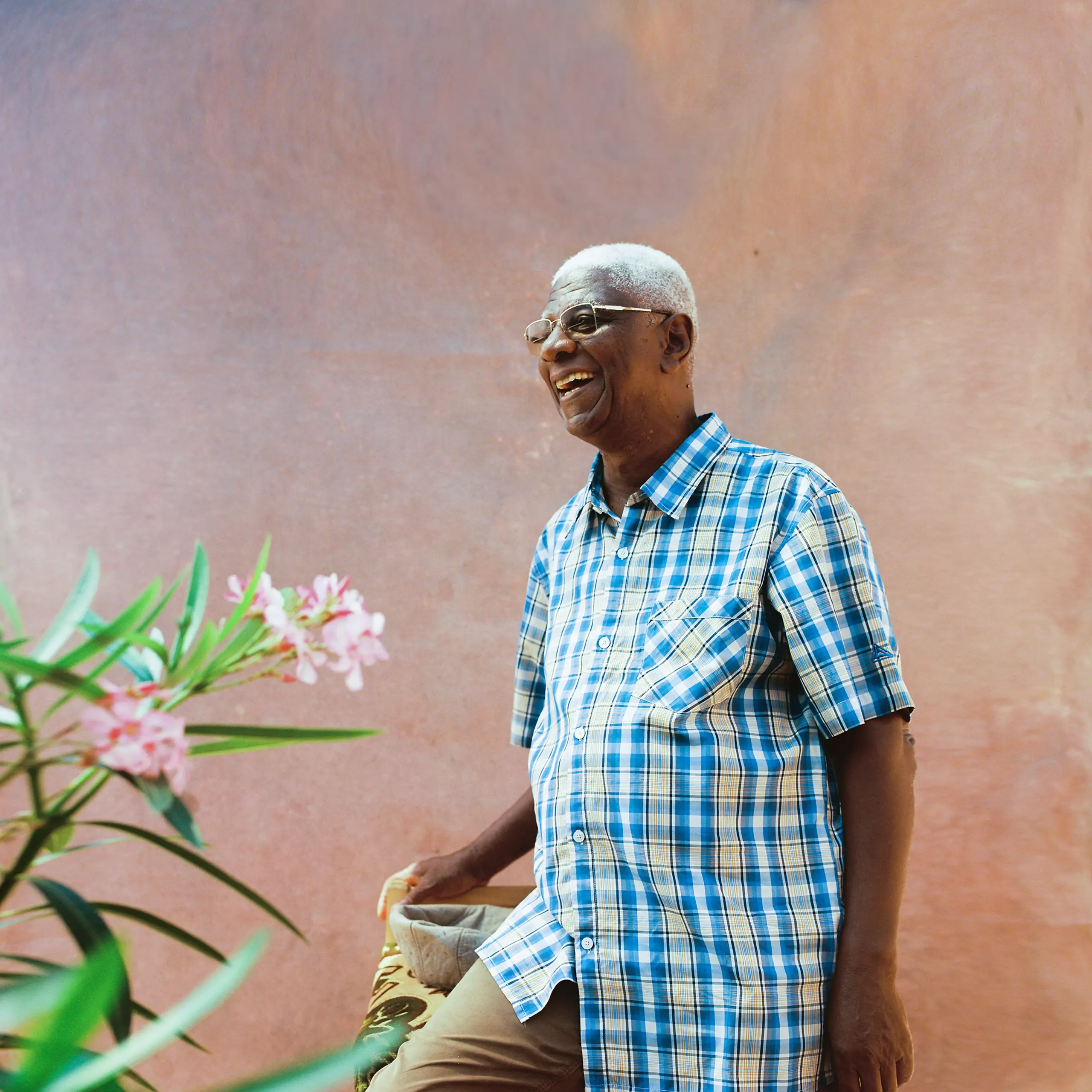
El Anatsui
 Nigeria
Also known as: El Anatsui (artist)
Birthday
January 1, 1944
Birth Sign
Capricorn
Birthplace
Anyako, Ghana
Age
82 years old
About
El Anatsui is a Ghanaian sculptor whose monumental installations, woven from thousands of discarded aluminum bottle tops, have made him one of the most celebrated living African artists. Born in 1944 in Anyako, Ghana, he has been based in Nsukka, Nigeria, for most of his career, where he taught at the University of Nigeria for five decades. His shimmering, tapestry-like works blur the line between painting, sculpture, and textile, and have been exhibited at the Tate Modern, the Brooklyn Museum, and the Venice Biennale.
Anatsui's practice transforms waste into grandeur, addressing themes of consumption, globalization, and the legacies of the transatlantic slave trade. In 2023, he was named to the Time 100 list of the world's most influential people. His works command prices in the millions, and in 2026, a piece sold for $2.2 million at Frieze New York, cementing his status as a market force. He remains deeply connected to his Ewe heritage, often titling works in his native language.
Early Life & Background
El Anatsui was born in 1944 in Anyako, a small fishing village in Ghana's Volta Region, into the Ewe ethnic group. Growing up during Ghana's independence movement, he witnessed the broader decolonization of Africa, themes that would later infuse his art. He studied at the College of Art, Kwame Nkrumah University of Science and Technology in Kumasi, where he initially trained as a painter before gravitating toward sculpture. Traditional Ewe textiles, especially kente cloth, left a lasting impression, their woven patterns foreshadowing his later bottle-top installations.
In 1975, Anatsui joined the faculty of the University of Nigeria, Nsukka, where he became part of the Nsukka school, an artistic movement that fused indigenous African traditions with contemporary practice. During the 1980s, he experimented with wood, carving Adinkra symbols and other Ghanaian motifs. The turning point came in the late 1990s when he stumbled upon a bag of discarded aluminum bottle caps near the campus. He later described the discovery as a revelation, recognizing the material's potential to speak to African consumption of imported goods and the continent's complex trade histories.
Career Growth
Anatsui's breakthrough came with his bottle-top installations, which he began creating in the late 1990s. In 2004, the Brooklyn Museum mounted "Gravity and Grace: Monumental Works by El Anatsui," his first solo museum show in New York, featuring over 30 works. In 2015, Tate Modern exhibited his monumental "Behind the Red Moon," a sprawling installation of metal fragments that drew international acclaim.
In 2017, he co-authored El Anatsui: The Reinvention of Sculpture with art historians Chika Okeke-Agulu and Okwui Enwezor. The 2020s brought heightened commercial success. In 2023, he was named to the Time 100. In March 2026, he presented new double-sided works at Art Basel Hong Kong and White Cube Hong Kong's "MivEvi" exhibition. At Frieze New York in May 2026, a $2.2 million work led the fair's sales, with multiple outlets reporting that Anatsui dominated the event. His driftwood series "Akua's children," depicting survivors of the transatlantic slave trade, was exhibited in Denmark in June 2026.
Career Timeline
Public Image & Style
Anatsui is widely regarded as one of the most significant living African sculptors, celebrated for transforming humble bottle caps into vast, shimmering tapestries that challenge artistic categories. His work is praised for its disciplined experimentation and sheer creative insight, as noted by art historian Chika Okeke-Agulu. Critics and collectors alike admire his ability to address weighty themes like consumption, globalization, and the slave trade through materials that are both everyday and extraordinary. He is known for his humility and preference for letting his art speak, rarely engaging in public self-promotion. His following is primarily within the contemporary art world, including collectors, curators, and enthusiasts, rather than a mass fanbase.
Fame & Fandom (iFAMOUS Rankings)
El Anatsui's admirers form a devoted but informal global community, art collectors, curators, scholars, and students of contemporary African art, who share a deep reverence for his transformative practice. Unlike pop culture fandoms, this group has no formal name, no organized fan clubs, and no coordinated campaigns. Instead, their passion manifests through institutional channels: museum acquisitions, gallery attendance, and market support. At Frieze New York 2026, Anatsui's work led sales at $2.2 million, a reflection of the sustained demand from this influential network. Fans engage with his art through its very mutability, each installation is reconfigured, offering a fresh dialogue with the work. His Instagram, managed by his gallery, serves as an announcement platform rather than a fan hub.
In the realm of fame, the iFANN Global Fame Engine has evaluated El Anatsui but currently does not place him in its published rankings, including the Global Top 1,000 or any Top-100 scope list. This means he is not among the top 1,000 most famous people globally, nor does he hold a spot in any specific Top-100 category. His renown, while significant in the art world, does not yet translate into the broader fame metrics tracked by iFANN. His status is simply evaluated but unranked, a neutral position that reflects his niche yet influential standing.
Interesting Facts and Legends
Anatsui's bottle-top installations are designed to be flexible, allowing them to be reshaped during installation, so each exhibition presents the work differently. His March 2026 exhibition title "MivEvi" reflects his Ewe heritage. He discovered the bottle caps that became his signature material in a bag outside the university campus in Nsukka. The authoritative monograph on his work is El Anatsui: The Reinvention of Sculpture, co-authored by Chika Okeke-Agulu and Okwui Enwezor. His driftwood series "Akua's children" transforms washed-up wood into figures representing survivors of the transatlantic slave trade. He maintains ties to both Ghana and Nigeria, dividing his time between Nsukka and Tema.
Among the legends fans retell, the origin story of the bottle caps is the most cherished: a discarded bag of liquor bottle tops found near his Nsukka home sparked his signature medium. The tale, though romanticized, underscores his alchemical gift. Another iconic moment came with his 2023 Brooklyn Museum exhibition "Gravity and Grace," where over 30 monumental works in metal and wood left visitors awestruck. His 2024 Tate Modern installation "Behind the Red Moon" filled the Turbine Hall, drawing massive crowds and cementing his global stature. More recently, his 2026 driftwood series "Akuas' Surviving Children," presented in Denmark, revealed a haunting return to wood, deepening his legend as an artist who continually reinvents himself.
Family & Personal Life
Anatsui keeps his family life intensely private, rarely discussing personal matters in interviews. He was born into the Ewe community in Anyako, Ghana, and has maintained family connections in both Ghana and Nigeria. No public records detail his parents, siblings, or children. He is known to have lived in Nsukka, Nigeria, for most of his professional life, while also maintaining a residence in Tema, Ghana. His artistic community, including colleagues at the University of Nigeria, has often served as a surrogate family, with students and fellow artists describing him as a mentor figure.
Notable Connections
Anatsui's collaborators and supporters include art historian Chika Okeke-Agulu, who co-authored his monograph, and the late curator Okwui Enwezor. He has worked closely with gallerist Jack Shainman, whose gallery represents him, and White Cube, which hosted his 2026 Hong Kong exhibition. Fellow artists Nick Cave and Radcliffe Bailey appeared alongside him in the 2026 group show "Modus Operandi" at The School in Kinderhook. Curator Zoé Whitley interviewed him for the Brooklyn Rail in 2025.
Relationships & Dating History
El Anatsui has maintained a notably private personal life, and no public information exists about his romantic relationships, marriages, or children. He has never discussed a partner in interviews, and credible sources have not reported on his dating history. As of 2026, his relationship status remains unknown, consistent with his lifelong preference for keeping personal matters out of the public eye.
Salary, Net Worth In 2026
$10 Million
iFANN Editorial Team estimate
iFANN currently estimates El Anatsui's net worth at $10 million. His primary income streams are gallery sales and major museum commissions. Represented by Jack Shainman Gallery and White Cube, his works command prices in the millions; a piece sold for $2.2 million at Frieze New York in 2026. He also earns from exhibition fees and royalties from reproductions. Over his five-decade academic career, he received a professor's salary at the University of Nigeria.
Awards Won (1)
El Anatsui's honors reflect his global impact. In 2023, he was named to the Time 100 list of the world's most influential people. He has received major museum retrospectives at the Brooklyn Museum and Tate Modern, cementing his reputation as a leading contemporary artist. While specific award rosters are not fully public, his inclusion in such prestigious contexts underscores his significance.
2023 · Influential People
Lifetime achievement
Known For
Bottle-top installations
1990s · Pioneer
Behind the Red Moon
2015 · Artist
Gravity and Grace
2004 · Exhibited artist
Keywords
Sources
Quick Facts
- Profession
- sculptor, university teacher
- Born
- January 1, 1944
- Birthplace
- Anyako, Ghana
- Gender
- Male
- Birth Sign
- Capricorn
- Nationality
- Ghanaian
Personal Details
- Education
- College of Art, Kwame Nkrumah University of Science and Technology, Kumasi
Frequently Asked Questions
What is El Anatsui known for?
Where is El Anatsui from?
How old is El Anatsui?
What is El Anatsui's net worth?
Is El Anatsui married?
Social Media
Similar People
Join the community
fans discussing