 Israel
About
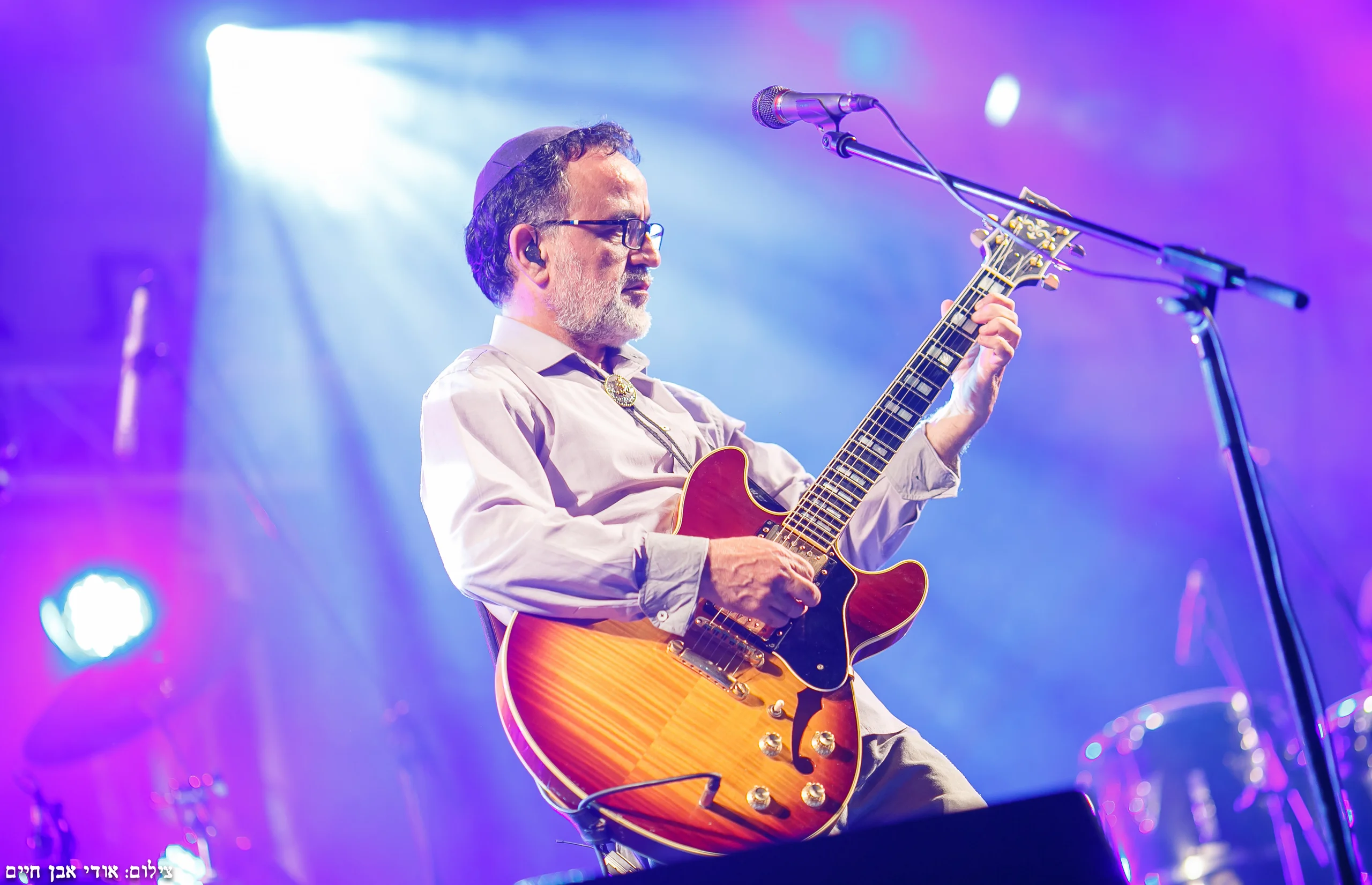
Ehud Banai is an Israeli musician, singer-songwriter, and author, widely regarded as one of the most important figures in Israeli rock and folk music. Born in Jerusalem in 1953, he has spent over four decades crafting a body of work that blends rock, folk, blues, and Middle Eastern influences, all anchored by introspective, poetic lyrics that explore identity, spirituality, and the human condition.
Banai's career, which began professionally in the late 1980s, has produced a string of acclaimed albums, including Ulayla Shel Yare'ach (1988) and Ha'im Ani Shachachti (1993), and he has contributed to more than twenty films and numerous television productions. His music is celebrated for its literary depth and emotional resonance, and he continues to perform and release new material, with recent work addressing the spiritual and social anxieties of contemporary Israeli life.
Early Life & Background
Ehud Banai was born into the Banai family, a Persian Jewish dynasty that has been called "the royal family of Israeli culture" for its outsized influence on Jerusalem's artistic scene. Growing up surrounded by actors, musicians, and theater figures, he absorbed a rich cultural heritage that would later infuse his music with Middle Eastern motifs and a deep sense of storytelling.
Before his professional debut, Banai spent years traveling, soaking up diverse musical traditions from rock and folk to blues and Eastern sounds. This period of exploration and personal growth delayed his entry into the music industry until the relatively late age of 34, but it also gave his songwriting a maturity and breadth that set him apart from his peers. His debut album arrived in 1987, marking the start of a career that would parallel the evolution of contemporary Israeli music itself.
Career Growth
Banai's breakthrough came in 1987 with the release of his debut album at age 34, a late start that proved the depth of his craft. The following year, Ulayla Shel Yare'ach (1988) cemented his reputation, and by 1993, Ha'im Ani Shachachti had established him as one of Israel's most successful singer-songwriters. The 2008 release Shma Israel further solidified his standing.
Over the decades, Banai has remained remarkably active, releasing new music into the 2020s. His 2024 song, responding to the October 7 attacks, drew a parallel between the Israelites' anxiety at Mount Sinai and the spiritual state of contemporary Israeli society, with Banai noting that "something dormant is beginning to wake up." He has also participated in major cultural events, including the Sderot resilience festival in December 2025 and the Canaanite Blues Festival in June 2026. In 2026, the immersive exhibition Eighth Sound opened at the Bell Caves in Beit Guvrin National Park, pairing his songs with AI-driven video art by Ronen Tanchum.
Career Timeline
Public Image & Style
Banai is regarded as "one of Israel's most successful singer-songwriters" and "a rare" talent, with a public persona that is introspective and poetic. His music is characterized by a blend of rock, folk, blues, and Middle Eastern influences, with lyrics that explore themes of identity, spirituality, and the human condition. His work is often described as paralleling "the tale of contemporary Israeli music" itself.
His recent Eighth Sound exhibition at Beit Guvrin demonstrates how his songs are treated as cultural treasures, worthy of immersive museum treatment. Fans connect with his literary depth and emotional honesty, though no official fandom name or documented fan rituals have been identified.
Fame & Fandom (iFAMOUS Rankings)
Ehud Banai commands a steady presence within the global cultural landscape, his influence measured by consistent engagement across media and consumption signals worldwide. Current data places him as the 62nd most famous person in Israel, a standing confirmed by the 62nd most famous person in Israel which has held steady from the previous cycle. This positioning reflects his enduring status as a primary voice in Israeli rock and folk music, where his work is often viewed as paralleling the tale of contemporary national sound. While he maintains a significant following through digital platforms, his audience does not coalesce around a formalized organization or a specific collective name; rather, his fanbase remains an organic, generational community that interacts primarily through official channels without the structured campaigns seen in modern pop culture. His reputation rests on artistic integrity and a career spanning over four decades, securing his place in the iFANN Global Fame Rankings as a figure of lasting significance.
Interesting Facts and Legends
Ehud Banai made his professional debut at age 34, an unusually late start for a musician that testifies to years of travel and artistic maturation prior to mainstream entry. He belongs to the Banai family, a Persian Jewish dynasty described as having reshaped Jerusalem's culture, and his cousin Eviatar Banai is also a prominent musician. In 2013, Banai found himself in a political crossfire when left-wing activists urged him to cancel a West Bank settlement concert, while right-wing comments ultimately led to its cancellation. A widely retold story from this period frames the event as a moment where he prioritized democratic values over commercial opportunity, reinforcing his image as an artist with strong moral convictions. His song Odeh L'... draws a direct parallel between the Israelites' anxiety during Moses' absence and contemporary Israeli society's spiritual state. Beyond music, Banai is an author who has published written works alongside his discography. Recent lore highlights his role as a cultural pillar during national crises, such as the release of a new song in April 2024 described as something dormant beginning to wake up, and his continued participation in festivals like the Sderot Music, Soul, Cinema and Resilience Festival in October 2025.
Notable Quotes
“Something dormant is beginning to wake up.”
Family & Personal Life
Ehud Banai is a member of the Banai family, a Persian Jewish dynasty of actors, musicians, and artists that has been described as having "reshaped Jerusalem's culture." His cousin Eviatar Banai is also a well-known musician, and the family's influence extends across Israeli arts. Specific details about his parents, siblings, and his own household are not publicly documented, as he has kept his personal life largely private.
Notable Connections
Relationships & Dating History
Salary, Net Worth In 2026
$10 Million
iFANN Editorial Team estimate
Per iFANN's editorial analysis, Ehud Banai's net worth stands at $10 million as of 2026. This financial standing is built upon a diverse portfolio of income streams including album sales, live concert performances, streaming royalties, and publishing rights as both a songwriter and author. His substantial online footprint, comprising over 223,000 monthly listeners on Spotify and more than 30,000 YouTube subscribers, generates a consistent flow of digital revenue. The foundation of his wealth lies in a long career spanning over four decades, characterized by extensive touring and a prolific discography that continues to yield returns.
Awards & Accolades
Known For
Ulayla Shel Yare'ach
1988 · Album
Ha'im Ani Shachachti
1993 · Album
Shma Israel
2008 · Album
Keywords
Sources
Quick Facts
- Profession
- singer, composer, musician
- Born
- March 31, 1953
- Birthplace
- Jerusalem, Israel
- Gender
- Male
- Birth Sign
- Aries
- Genres
- Rock, folk, blues, Middle Eastern
- Years Active
- 1980s–present
Filmography
20
Total
20
Film
0
TV
Frequently Asked Questions
How old is Ehud Banai?
What is Ehud Banai's net worth in 2026?
Is Ehud Banai related to other Banai family members in Israeli entertainment?
What are Ehud Banai's most famous songs or albums?
What is the Eighth Sound exhibition?
Similar People
Join the community
fans discussing