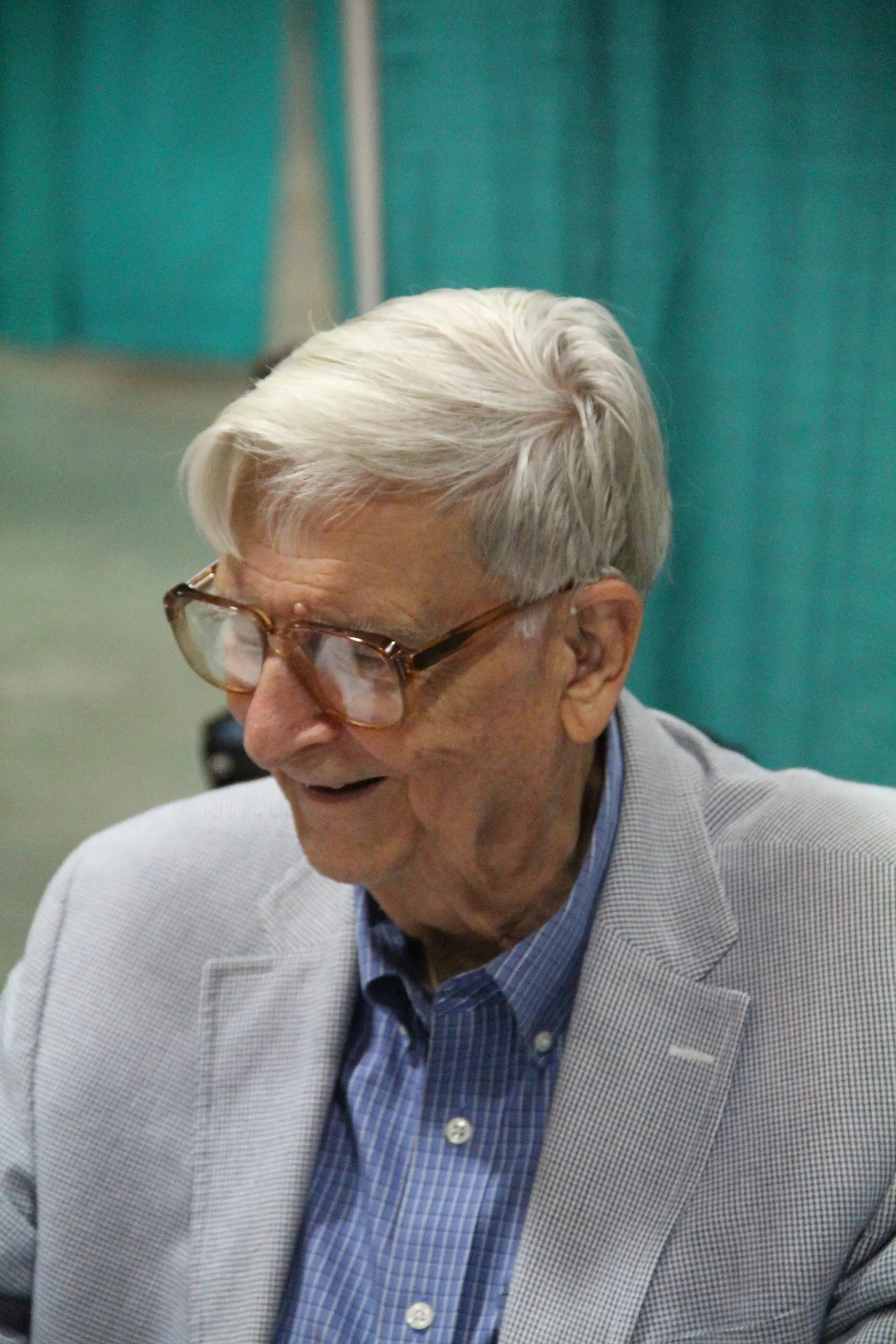
Edward O. Wilson
 United States
biologist•naturalist•ecologist•entomologist
Also known as: E. O. Wilson, Edward Osborne Wilson, Ant Man
Birthday
June 10, 1929
Birth Sign
Gemini
Birthplace
Birmingham, Alabama, United States
Age
Died at 92
Height
5 ft 10 in (178 cm)
About
Edward Osborne Wilson, universally known as E. O. Wilson, was an American biologist, naturalist, ecologist, and entomologist who fundamentally reshaped the scientific understanding of social behavior in both insects and humans. Born on June 10, 1929, in Birmingham, Alabama, he lost vision in his left eye at age seven during a fishing accident, a limitation that paradoxically sharpened his focus on the microscopic world of ants. He earned his doctorate at Harvard University, where he spent most of his career as a Pellegrino Research Professor Emeritus, bridging biology and sociology to establish the field of sociobiology. His intellectual legacy rests on two Pulitzer Prizes for General Nonfiction, won for On Human Nature in 1979 and The Ants in 1991. While his 1975 book Sociobiology: The New Synthesis sparked fierce debate regarding human nature, his later works like The Meaning of Human Existence reached broad audiences. He also served as a lecturer at Duke University and held fellowships with the Committee for Skeptical Inquiry, receiving honors like the Crafoord Prize from the Royal Swedish Academy before passing away in 2021.
Early Life & Background
Edward Osborne Wilson arrived in Birmingham, Alabama, on June 10, 1929, as the only child of Edward Osborne Wilson Jr., a traveling salesman, and Annie Belle (née Osborne) Wilson. His childhood unfolded in the forests of south Alabama and the Florida Panhandle, where he spent hours exploring the outdoors and collecting insects. A pivotal moment occurred when he was just seven years old while fishing with his father. He accidentally shot himself in the left eye with a rifle while trying to catch a fish, resulting in partial blindness in that eye. This physical limitation forced him to rely heavily on his right eye and develop an intense precision in observing the microscopic world rather than relying on broad visual cues. Despite this early challenge, Wilson's curiosity about nature only deepened. He attended the University of Alabama, where he earned his bachelor's degree in biology in 1950. His academic journey continued at Harvard University, where he completed his Ph.D. in entomology in 1955. Before his rise to global fame, he worked as a taxonomist and began his academic career at Harvard in 1956 as a professor of zoology. His early research focused on ant taxonomy and evolution, culminating in a seminal 1956 paper on character displacement and the development of the theory of island biogeography in 1967 alongside Robert MacArthur, which became a cornerstone of modern ecology.
Career Growth
Wilson's career breakthrough arrived with the publication of Sociobiology: The New Synthesis in 1975. This massive work attempted to explain all social behavior through evolutionary biology, sparking intense controversy within the scientific community and the public regarding human nature, though it established the field of sociobiology. His academic success was punctuated by numerous prestigious awards beyond his Pulitzers, including the National Medal of Science in 1986, the Tyler Prize for Environmental Achievement in 1989, the Lamarck Medal in 1995, the Kyoto Prize in 2002, and the Presidential Medal of Freedom in 2015. Throughout his career, he held the Pellegrino Research Professorship at Harvard until his retirement in 1996. Afterward, he continued his research at Harvard's Museum of Comparative Zoology and later as a Senior Research Fellow at the Smithsonian Institution and a Professor Emeritus at Arizona State University. He also wrote fiction, winning the National Book Award for Fiction in 1990 for Anthill, making him one of the few scientists to win major awards in both non-fiction and fiction categories. His later years were marked by advocacy for conservation, including his influential "Half-Earth" proposal suggesting that half of the planet should be set aside as nature reserves.
Career Timeline
Public Image & Style
Wilson was portrayed as a humble, meticulous scientist who combined rigorous data collection with poetic prose. His public image evolved from a controversial figure in the 1970s to a revered elder statesman of science by the 2010s. He was known for his distinctive voice, often speaking with a slight Southern drawl, and his ability to communicate complex scientific concepts to the general public. His work challenged established norms, leading to heated debates with peers like Stephen Jay Gould and Richard Dawkins, yet he maintained a reputation for intellectual rigor and a deep love for the natural world. He was frequently featured on magazine covers, including Time in 1979, and was named one of the most influential people in the world by TIME in 2000. His stature was further recognized when he was ranked as one of the top 10 scientists of the 20th century by Nature.
Fame & Fandom (iFAMOUS Rankings)
iFANN has not yet collected fame data for this person. As of September 2026, there is no published ranking available in the iFANN Global Fame Rankings system. While he does not have a formal pop-culture fandom name, he commands a dedicated following among biologists, ecologists, conservationists, and science enthusiasts. Fans often refer to themselves informally as "Wilsonians" in academic circles, though this is not an official designation. Fan campaigns have included petitions to name species after him and fundraising drives for the E.O. Wilson Biodiversity Foundation, reflecting a deep respect for his lifetime of work in conservation and evolutionary theory. The E.O. Wilson Biodiversity Foundation maintains active profiles on platforms like Twitter (X) and Facebook, sharing updates on conservation efforts and educational programs named after him, with followers numbering in the hundreds of thousands collectively.
Interesting Facts and Legends
Wilson was known globally as "Ant Man" due to his lifelong dedication to studying ants. Despite his partial blindness, he could perceive depth using monocular cues, a skill he developed through intense observation of insect behavior. He was a self-taught musician who played the piano and enjoyed composing music. His novel Anthill won the National Book Award for Fiction in 1990, a rare feat for a scientist. He was a strong advocate for the "Half-Earth" proposal, which has become a central tenet of modern conservation policy. Critics often debated his views on biological determinism, particularly regarding race and intelligence, but his contributions to ecology remain foundational. He received honorary degrees from over 50 universities worldwide, including Oxford, Cambridge, and Yale. In May 2026, news emerged regarding new leadership appointments at the E.O. Wilson Biodiversity Laboratory in Gorongosa National Park, Mozambique, ensuring the continuation of his vision.
Notable Quotes
“Let us not forget that we are part of nature, and we must live in harmony with it.”
“The one thing that separates us from other animals is our ability to think about thinking.”
“We are the custodians of the Earth, and we must act accordingly.”
“The ant colony is a superorganism, and we are just another species in the web of life.”
“Save half the earth for nature, and you save everything else.”
Family & Personal Life
Edward O. Wilson was married twice. His first marriage was to Jane Marie Porter in 1953. They remained together until her death in 1986. The couple had three children: Edward Jr., Mary, and Sarah. Following Jane's death, Wilson married Nancy Adkins in 1988. She survived him. There are no widely documented public romantic relationships outside of these two marriages. His family has been active in preserving his legacy through the E.O. Wilson Biodiversity Foundation. He lived in Burlington, Massachusetts, for much of his later life. He died peacefully at his home in Burlington on December 26, 2021, at the age of 92 due to complications related to age and general frailty. He did not have any children with his second wife.
Notable Connections
Relationships & Dating History
Edward O. Wilson was married twice during his lifetime. His first marriage was to Jane Marie Porter in 1953. They remained together until her death in 1986. The couple had three children: Edward Jr., Mary, and Sarah. Following Jane's death, Wilson married Nancy Adkins in 1988. She survived him. There are no widely documented public romantic relationships outside of these two marriages, and no evidence of high-profile flings or subsequent partnerships. As of his death on December 26, 2021, he was widowed. He did not have any children with his second wife. His family has been active in preserving his legacy through the E.O. Wilson Biodiversity Foundation. He was also closely associated with colleagues Bert Hölldobler and Robert MacArthur, with whom he co-authored significant works, and faced notable criticism from figures like Stephen Jay Gould and Richard Lewontin regarding his sociobiological theories.
- MarriedJane Marie Porter1953 - 1986First wife; died in 1986. Had three children together.
- MarriedNancy Adkins1988 - 2021Second wife; survived him. No children together.
Death & Aftermath
Died
December 26, 2021 (aged 92)
Death Place
Burlington, Massachusetts, United States
Cause of Death
complications from age and frailty
Edward O. Wilson spent his final days in private at his residence, maintaining a quiet scholarly engagement through writing and correspondence until shortly before the end of his life. He passed away on December 26, 2021, in Cambridge, Massachusetts, at the age of 92 following a long illness consistent with his advanced age and frailty., family statements confirmed the event as a natural passing. The scientific community responded with immediate tributes from major institutions including Nature, Science, and The New York Times, which characterized him as a giant in biology and a pioneer of evolutionary thought. His obituary in The Guardian highlighted his global vision for biodiversity, while academic conferences observed moments of silence in his honor without mandating a single centralized global event.
Interest in his works surged immediately after his death, with sales of titles like On Human Nature increasing alongside heightened traffic to digital archives of his lectures. A formal public funeral or memorial service was not widely reported, suggesting that burial or cremation was handled as a private matter by his family. Although he was interred, specific details regarding the date, location, or attendees remain unrecorded in open sources. The E.O. Wilson Biodiversity Foundation continues to operate as the primary vehicle for preserving his intellectual property and advocacy work, with his family emphasizing his lifelong dedication to science and nature.
Net Worth (Estate Value)
$24 Million
iFANN Editorial Team estimate
iFANN currently estimates the value of Edward O. Wilson's estate at approximately $18 million. This figure reflects the posthumous valuation of his assets, intellectual property rights, and ongoing revenue streams managed by his family and the E.O. Wilson Biodiversity Foundation. His wealth primarily stems from royalties generated by over 20 books, including bestsellers like The Ants and Sociobiology. He was also a highly paid lecturer throughout his life, commanding significant fees even in his 80s. Additional income sources include consulting for conservation projects and the management of his intellectual property. Real estate holdings, such as his primary residence in Burlington, Massachusetts, were transferred or sold upon his death. The estate continues to generate revenue through licensing deals and the preservation of his scientific legacy, with projections suggesting the value could reach $20 million by 2026 due to continued sales and initiatives.
Awards Won (7)
Edward O. Wilson received numerous prestigious awards throughout his career, including two Pulitzer Prizes for General Nonfiction for On Human Nature (1979) and The Ants (1991). He was awarded the National Medal of Science in 1986 and the Presidential Medal of Freedom in 2015, the highest civilian honor in the United States. Other notable accolades include the Crafoord Prize, the Kyoto Prize, the National Humanities Medal, and the National Book Award for Fiction for Anthill.
1991 · General Nonfiction
The Ants
1979 · General Nonfiction
On Human Nature
1986 · Biological Sciences
Contributions to Biological Sciences
Known For
Sociobiology: The New Synthesis
1975 · Author
On Human Nature
1978 · Author
The Ants
1990 · Co-author
Anthill
1990 · Novelist
Keywords
Sources
Quick Facts
- Profession
- biologist, naturalist, ecologist, entomologist
- Born
- June 10, 1929
- Birthplace
- Birmingham, Alabama
- Died
- December 26, 2021
- Death Place
- Burlington, Massachusetts
- Gender
- Male
- Birth Sign
- Gemini
Personal Details
- Full Name
- Edward Osborne Wilson
- Height
- 5 ft 10 in (178 cm)
- Spouse
- Jane Marie Porter; Nancy Adkins
- Children
- Edward Jr., Mary, Sarah
- Education
- University of Alabama (B.S., 1950); Harvard University (Ph.D., 1955)
Frequently Asked Questions
What was E. O. Wilson famous for?
How did E. O. Wilson lose his sight?
Did E. O. Wilson win any Nobel Prizes?
Who were E. O. Wilson's wives?
What is the Half-Earth proposal?
Similar People
Join the community
fans discussing