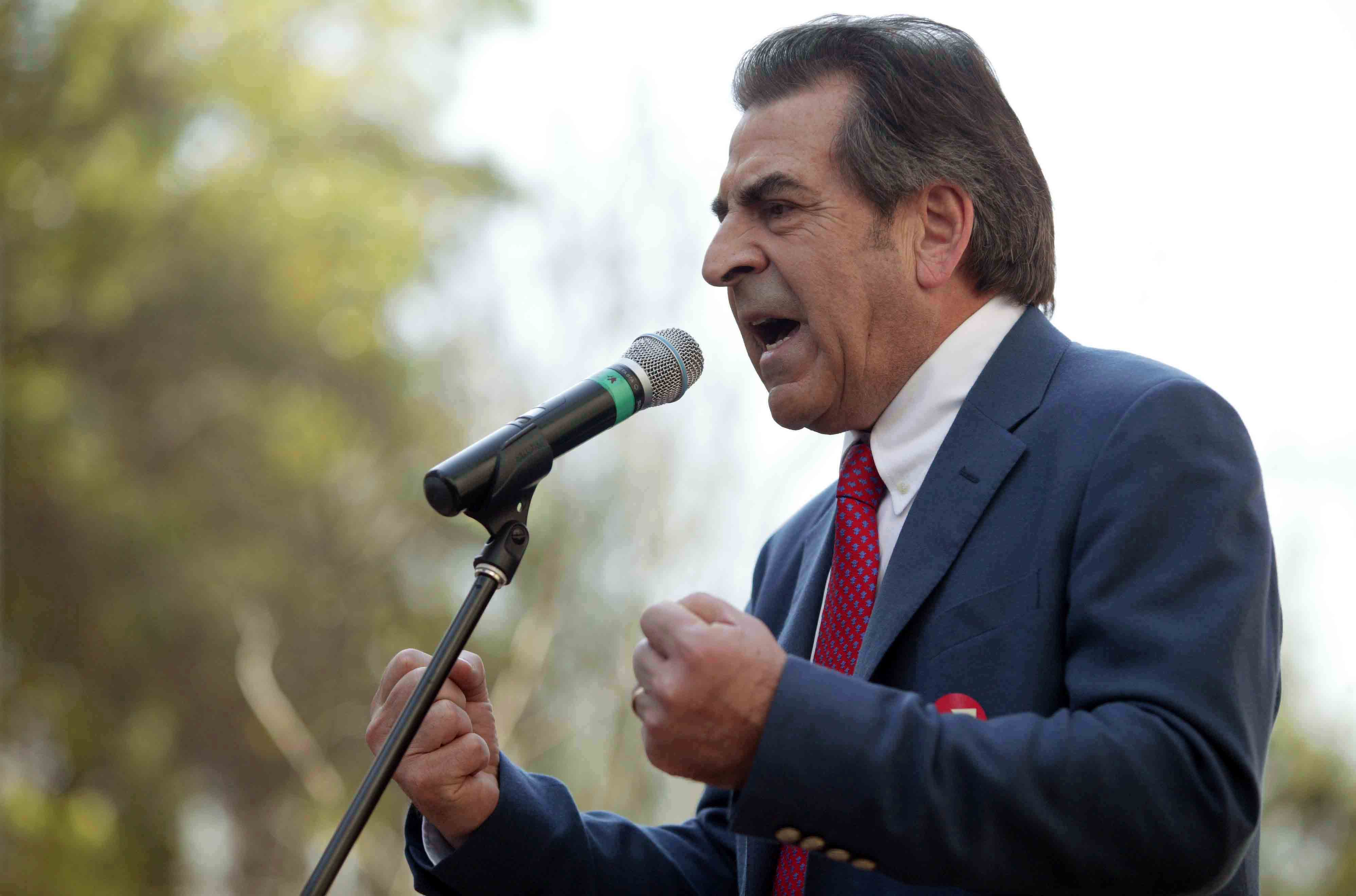
Eduardo Frei Ruiz-Tagle
 Chile
Also known as: Eduardo Alfredo Juan Bernardo Frei Ruiz-Tagle, Edi Frei
Birthday
June 24, 1942
Birth Sign
Sagittarius
Birthplace
Santiago, Chile
Age
84 years old
About
Eduardo Alfredo Juan Bernardo Frei Ruiz-Tagle is a distinguished Chilean civil engineer and politician who served as the 31st President of Chile from March 1994 to March 2000. Born in Santiago on June 24, 1942, he holds the unique distinction of being one of the few individuals in global history to succeed his father, Eduardo Frei Montalva, who also held the presidency from 1964 to 1970. As of 2026, he remains an active elder statesman, currently serving as a Special Ambassador appointed by President José Antonio Kast. His legacy is defined by his role in consolidating Chilean democracy after the military dictatorship, overseeing robust economic expansion despite the 1997 Asian financial crisis, and navigating complex international legal challenges. He is recognized for a technocratic approach to governance that blended infrastructure development with social policy, leaving a mark as a moderate centrist with deep institutional roots within the Christian Democratic Party.
Early Life & Background
Eduardo Frei Ruiz-Tagle was born into a prominent political family during a turbulent era in Chilean history, growing up under the shadow of his father's influential leadership in the Christian Democratic Party. He completed his primary and secondary education at the Instituto Luis Campino in Santiago, where he received a rigorous academic foundation before pursuing higher studies. At the Pontifical Catholic University of Chile, he earned a degree in Civil Engineering, a choice that reflected a focus on technical mastery rather than immediate political ambition. Before entering the national spotlight, he worked as a practicing engineer and engaged deeply with rural development projects. These early years were defined by a commitment to agrarian reform and infrastructure, aligning closely with the "Revolution in Liberty" platform championed by his father. During the late 1950s and early 1960s, he held leadership positions within the Christian Democratic Party, laying the organizational groundwork for a career that would eventually lead him to the presidency. His formative experiences in engineering and party organization shaped his distinctive technocratic approach to future governance.
Career Growth
The turning point for Frei came after the return to democracy in 1990, when he was elected to the Chamber of Deputies and later served as a Senator, establishing himself as a key player in the new democratic order. In 1993, he won the presidential election with 57.98% of the vote, becoming the last president elected before the turn of the millennium and the first to succeed his father in office. His administration from 1994 to 2000 is remembered for robust economic expansion and the strengthening of democratic institutions. A defining moment of his tenure occurred in October 1998 when former dictator Augusto Pinochet was arrested in London, an event that significantly raised the political temperature but solidified the rule of law in post-dictatorship Chile. After leaving office, he returned to the Senate, serving as its President from 2006 to 2008. In 2009, he attempted a political comeback as the candidate for the Concertación coalition but was narrowly defeated by Sebastián Piñera. More recently, he accepted an appointment as Special Ambassador in 2026 under President José Antonio Kast, demonstrating his continued relevance in Chilean politics. In July 2026, he highlighted the role of private investment in the renewal of Chilean port concessions, showing his ongoing engagement in economic policy discussions.
Career Timeline
Public Image & Style
Frei Ruiz-Tagle is viewed as a moderate centrist with deep institutional roots, projecting an image of a dignified statesman rather than a populist. In recent years, he has taken stances that diverge from the traditional left-leaning line of the Christian Democratic Party, aligning more with centrist and right-wing perspectives, particularly during the constitutional referendums of 2022 and 2023. His comment that the 2019 social uprising "destroyed something that Chile had built for years" highlighted his defense of the pre-uprising order and drew criticism from progressive sectors. In September 2023, he joined four other Chilean presidents, including Gabriel Boric and Michelle Bachelet, to sign a joint commitment for democracy on the 50th anniversary of the military coup, a rare display of unity across the political spectrum. His acceptance of the Special Ambassador role in 2026 further underscores his evolving political alignment and continued influence in Chilean public life.
Fame & Fandom (iFAMOUS Rankings)
Eduardo Frei Ruiz-Tagle does not have a fandom in the way pop stars do, with fan cams and birthday hashtags. His supporters are organized through Chile's Christian Democratic Party, not fan clubs. There is no documented fandom name, no viral moments, and no street-shutting-down crowds. He is a former president, a statesman in his mid-80s, and his public interactions are the careful ones of official events and measured tweets. But fame in the iFANN sense isn't just about screaming fans. It is about global recognition, the kind that comes from leading a nation through a delicate transition. As of September 2026, the Global Fame Engine has evaluated Frei Ruiz-Tagle, but he does not currently hold a placement in the published rankings, neither the Global Top 1,000 nor any Top-100 scope list. That is a neutral statement, not a judgment. His fame is real, but it is the quiet, institutional kind, built on a presidential legacy and a father-son political dynasty that is unique in Chilean history. His iconic moments are political milestones: winning the presidency in 1994, signing the democracy commitment on the 50th anniversary of the coup in 2023, even his controversial appointment as Special Ambassador in 2026. These are the things that keep him in the public eye, but they do not translate into the kind of mass enthusiasm that drives ranking engines. He is a figure of respect, not obsession.
Interesting Facts and Legends
Eduardo Frei Ruiz-Tagle holds a rare distinction in global political history: he is one of the few presidents whose father also served as president of the same country. His father, Eduardo Frei Montalva, led Chile from 1964 to 1970, creating a unique father-son dynasty that has been studied extensively. A 2000 article in the Cape Cod Times titled "My father, the president" highlighted this unusual familial connection. He is a current Full Member of the Club de Madrid, an organization of democratically elected former presidents and heads of government. While specific national honours like knighthoods are not explicitly detailed, his role as a pivotal figure in Chile's democratic transition has earned him widespread institutional respect. He maintains a presence on X (formerly Twitter) under the handle @EduardoFrei_, though his activity is limited to official statements and political commentary. His full name is Eduardo Alfredo Juan Bernardo Frei Ruiz-Tagle, and he was born on June 24, 1942, in Santiago, Chile.
Notable Quotes
“The protests destroyed something that Chile had built for years.”
“We must defend the achievements of our democracy.”
Family & Personal Life
Eduardo Frei Ruiz-Tagle has been married to Marta Larraechea since their wedding in 1969. The couple met during their university years or through shared political circles in the late 1960s, a trajectory common for members of the Chilean political elite at the time. They have remained together throughout his entire political career, raising four children: Eduardo, Alejandro, Patricio, and María José. There are no public records of prior engagements, divorces, or other romantic relationships; his marriage to Larraechea is his only documented long-term partnership. As of 2026, he remains married to Marta Larraechea, and the couple continues to be a stable presence in Chilean high society. His upbringing was steeped in the ideals of the Christian Democratic Party, which his father helped found, creating a unique family dynamic that made him one of the few individuals in history to succeed his father in the nation's highest office.
Notable Connections
Relationships & Dating History
Eduardo Frei Ruiz-Tagle's romantic life has been characterized by a single, enduring partnership. He married Marta Larraechea in 1969, shortly after completing his university studies. The couple met during their time at the Pontifical Catholic University of Chile or through their shared connections in the Christian Democratic Party, a common trajectory for the Chilean political elite of that era. Their union has lasted over five decades, weathering the turbulence of Chilean politics, the rise and fall of his father's legacy, and his own ascent to the presidency. Together, they raised four children: Eduardo, Alejandro, Patricio, and María José. There are no public records of prior engagements, divorces, or other romantic relationships; his marriage to Larraechea is his only documented long-term partnership. As of 2026, he remains married to Marta Larraechea, and the couple continues to be a stable presence in Chilean high society.
- MarriedMarta Larraechea1969 - presentCurrentMet at university; married for over 50 years; four children together.
Salary, Net Worth In 2026
$5 Million
iFANN Editorial Team estimate
iFANN currently estimates Eduardo Frei Ruiz-Tagle's net worth at approximately $5 million. While specific financial disclosures for Chilean politicians are rarely detailed, his wealth is presumed to be derived from a combination of his long career in public service, investments made during and after his presidency, and the substantial family assets inherited from the Frei political dynasty. As a former head of state and a member of one of Chile's most prominent families, his financial standing reflects decades of accumulation in real estate, business interests, and professional earnings. The estate of his father, Eduardo Frei Montalva, also contributed to the family's enduring financial stability. Unlike entertainment figures whose fortunes fluctuate wildly with box office returns, Frei's wealth has likely grown steadily through prudent management of family holdings and his own professional activities. As of 2026, there are no major public reports of significant asset sales or legal settlements affecting his current valuation. No credible 2026-specific financial breakdown is available in public sources, but his status as a wealthy political dynast is well-established.
Awards & Accolades
View 3 records, honours and achievementsKnown For
President of Chile
1994 · 31st President
Son of a President
1964 · Political Legacy
Keywords
Sources
Quick Facts
- Profession
- civil engineer, politician
- Born
- June 24, 1942
- Birthplace
- Santiago, Chile
- Gender
- Male
- Spouse
- Marta Larraechea
- Birth Sign
- Sagittarius
Personal Details
- Full Name
- Eduardo Alfredo Juan Bernardo Frei Ruiz-Tagle
- Spouse
- Marta Larraechea
- Children
- Eduardo Frei Larraechea · Alejandro Frei Larraechea · Patricio Frei Larraechea · María José Frei Larraechea
- Education
- Pontifical Catholic University of Chile (Civil Engineering)
Frequently Asked Questions
Who is Eduardo Frei Ruiz-Tagle?
Is Eduardo Frei Ruiz-Tagle still alive?
Who is Eduardo Frei Ruiz-Tagle married to?
Did Eduardo Frei Ruiz-Tagle run for president again?
What is notable about his father?
Social Media
Similar People
Join the community
fans discussing