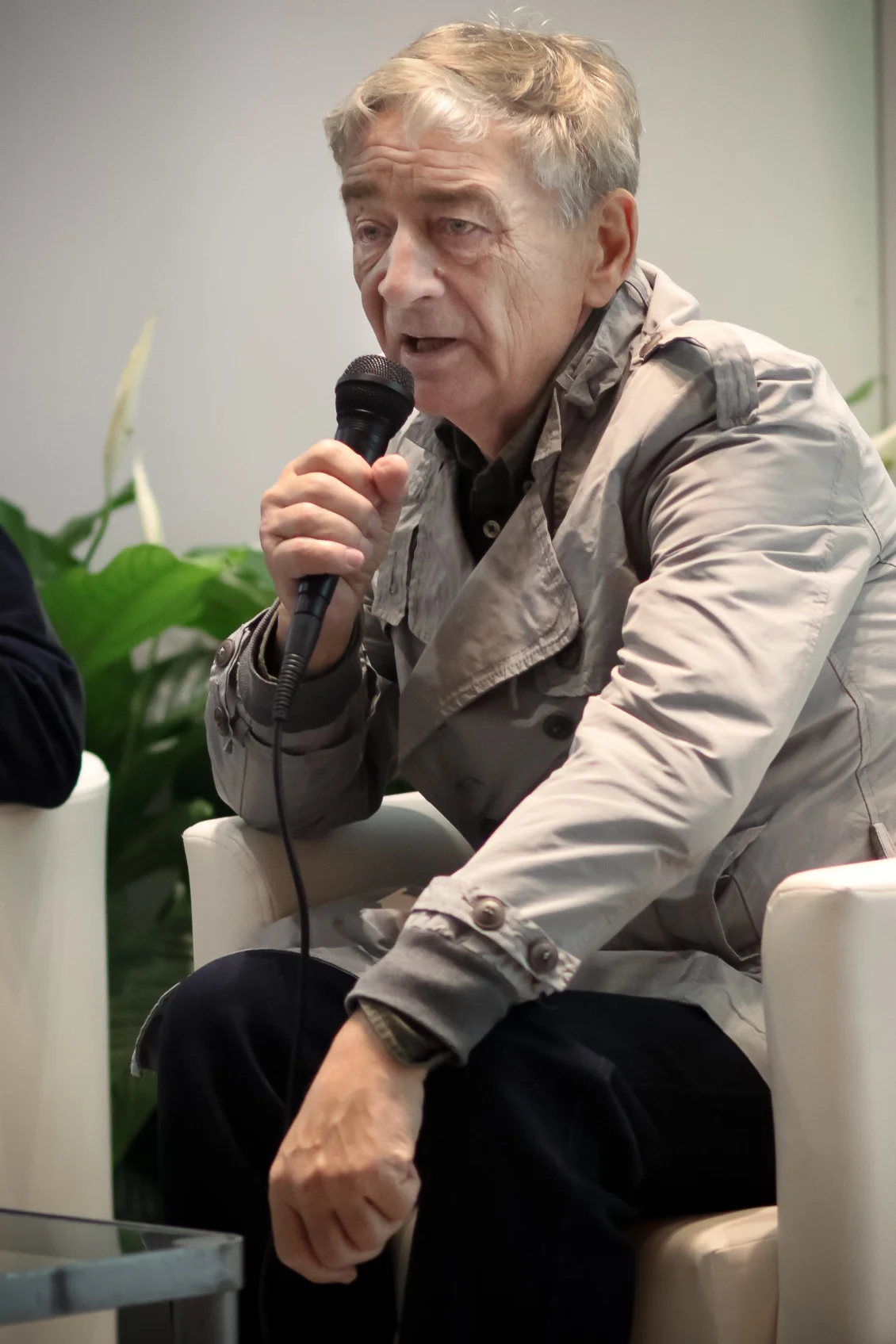
Eduard Uspensky
 Russia
Children's writer•poet•screenwriter•television presenter
Also known as: Eduard Nikolayevich Uspensky
Birthday
December 22, 1937
Birth Sign
Sagittarius
Birthplace
Yegoryevsk, Moscow Oblast, Soviet Union
Age
Died at 80
About
Eduard Uspensky was a Soviet and Russian children's writer, poet, and screenwriter whose creations became cultural landmarks across the former Soviet Union. He is best remembered as the author of over seventy books, including the stories that introduced Cheburashka, Gena the Crocodile, and the residents of Prostokvashino. His works have been translated into 25 languages and adapted into roughly sixty animated films, making him one of the most widely read children's authors in the Russian-speaking world.
Uspensky's stories combined humor, warmth, and a gentle absurdity that appealed equally to children and adults. His characters, such as the mournful Cheburashka and the practical cat Matroskin, have become enduring figures in Russian popular culture, appearing in films, merchandise, and even Olympic mascots. He also worked as a television presenter and playwright, and his influence on Russian children's entertainment was recognized with the Order "For Merit to the Fatherland" in 1997.
He passed away in 2018 after a long illness, leaving behind a legacy that continues to entertain new generations.
Early Life & Background
Eduard Nikolayevich Uspensky was born on December 22, 1937, in the town of Yegoryevsk, southeast of Moscow. His father, Nikolai, was a high-ranking official in the Communist Party, and his mother, Valentina, was an engineering technologist with Polish ancestry. When World War II broke out, the family was evacuated to Siberia, where they spent two years before returning to the capital.
As a schoolboy, Uspensky excelled in mathematics, often being regarded as the best mathematician in his class. Despite a natural aptitude for numbers, he also displayed a creative streak and a talent for humor. He later enrolled at the Moscow Aviation Institute, where he studied engineering. During his time there, he became active in the student theatre, which sparked his interest in writing and performance.
After graduating, Uspensky took a job at a military plant, but he quickly realized that engineering was not his calling. He left the plant in 1964, later joking that his poor knowledge of the profession had contributed to peace. He began writing humorous stories for newspapers and magazines, and by 1965 he had found his voice as a children's poet.
Career Growth
Uspensky's breakthrough came in 1966 with the publication of Crocodile Gena and His Friends, a story that introduced two of the most beloved characters in Russian children's literature: the gentle crocodile Gena and the strange, big-eared creature Cheburashka. The book was an instant success, and the characters were soon adapted into a series of animated films by director Roman Kachanov. Cheburashka's popularity eventually spread to Japan, where the character gained a devoted following.
Building on this success, Uspensky created another set of iconic characters: Uncle Fyodor, a young boy who runs away from home with his talking cat Matroskin and dog Sharik. The resulting book, Uncle Fyodor, His Dog, and His Cat (1973), spawned the Prostokvashino series, which was adapted into three highly popular animated films in the 1970s and 1980s. These films remain a staple of Russian television, watched by children and adults alike.
Over his career, Uspensky wrote more than seventy books, including collections of poetry, plays, and screenplays. He also worked as a television presenter, hosting children's programs. His contributions to culture were recognized in 1997 with the Order "For Merit to the Fatherland," 4th class.
Career Timeline
Public Image & Style
Uspensky was regarded as one of Russia's most beloved children's authors, known for his wit and ability to capture the imagination of young readers. His characters, particularly Cheburashka and Matroskin, have become national icons, their images appearing on stamps, toys, and even in the opening ceremony of the 2014 Sochi Olympics. Fans appreciated his playful language and the subtle moral lessons woven into his stories. His public persona was that of a kindly storyteller, though he could be sharp-tongued in interviews.
Fame & Fandom
Eduard Uspensky's fans are not a single, named tribe. Unlike Western franchises with codified identities, his audience is diffuse, multi-generational, and utterly woven into the fabric of post-Soviet life. There is no 'Uspensky fandom' so much as overlapping circles of devotion for his creations: Cheburashka, the mournful, big-eared creature dubbed the 'Soviet Mickey Mouse'; the pragmatic cat Matroskin and his Prostokvashino pals; and the ever-optimistic Gena the Crocodile. These characters have been national icons for decades, appearing on stamps, toys, and even as the mascot for the Russian Olympic team in 2004. After his death in 2018, tributes poured in from around the world, and the 2023 live-action/CGI Cheburashka film became one of the highest-grossing Russian films ever, proving his creations' cross-generational staying power. Fans still share stories of how Cheburashka shaped their family histories, and debates over the character's nationality continue to spark discussion.
As of August 2026, iFANN's Global Fame Engine has evaluated Eduard Uspensky, but he does not currently hold a placement in the published rankings, neither the Global Top 1,000 nor any Top-100 scope list. His fanbase has no formal name, and his enduring legacy is measured not by a rank but by the millions who grew up with his stories.
Interesting Facts and Legends
Uspensky was considered the best mathematician in his school, a skill he later said helped him structure his stories. He once humorously attributed his departure from a military plant to his 'poor knowledge of the profession,' which he felt contributed to peace. The song 'Goluboi Vagon' (The Blue Carriage), with lyrics by Uspensky, became a popular children's tune. He was a distant relative of composer Tikhon Khrennikov. Cheburashka's name was suggested by Uspensky's friend, who jokingly used a word for a falling toy.
A legend fans still retell is the creation of Cheburashka: Uspensky claimed he saw a chameleon at a zoo, or alternatively, a defective toy with big ears and button eyes. The name comes from the verb 'cheburakhat'sya,' meaning 'to tumble down,' because the toy kept falling over. Another iconic moment was the 2023 Cheburashka film, which shattered box-office records and reignited nationwide mania, followed by a 2025 sequel. The character's international fame is also legendary: in Japan, Cheburashka achieved cult status, and he served as the Russian Olympic mascot in 2004.
Notable Quotes
“As the minutes slowly are passing by, don't expect to meet with them again. Surely, we're sad about the past, and yet, all the best is certainly ahead!…”
“A child should be happy, and if he is not, then something is wrong with the adults.”
Family & Personal Life
Eduard Uspensky was born to Nikolai and Valentina Uspensky. His father worked as a Communist Party official, while his mother was an engineering technologist with Polish roots. During the war, the family was evacuated to Siberia. Uspensky was married and had a daughter, Tatyana, but details about his wife and children remain largely private. He lived in Moscow for most of his later life.
Notable Connections
Relationships & Dating History
Eduard Uspensky was married to a woman named Rimma, with whom he had a daughter, Tatyana. The couple later divorced. He then married Yelena, who survived him. Details about his relationships were kept largely out of the public eye, and he rarely discussed his personal life in interviews.
- MarriedRimma1960 - 1980First wife, mother of his daughter Tatyana.
- MarriedYelena1985 - 2018Second wife, survived him.
Death & Aftermath
Died
August 14, 2018 (aged 80)
Death Place
Moscow, Russia
Cause of Death
Long illness
Eduard Uspensky died on August 14, 2018, in Moscow, Russia, at the age of 80 following a long illness. The circumstances surrounding his final days involved a period of recovery from this prolonged health issue. His passing triggered an immediate outpouring of grief across the former Soviet Union, with tributes pouring in from high-ranking officials including the President of Russia and the Mayor of Moscow, who honored him as a beloved figure who spoke the same language as children. Peers in the literary and animation communities mourned the loss of the creator of iconic characters like Cheburashka and Crocodile Gena, with media outlets describing him as the "Soviet Mickey Mouse" during a national mourning period.
Specific details regarding the exact date or location of his funeral service remain unconfirmed in available records, though the scale of official tributes suggests a significant memorial took place in the capital. Following his death, the handling of his estate became the subject of intense legal and public debate regarding the rights to his characters, particularly Cheburashka and the Prostokvashino series. In May 2020, two years after his passing, his daughter Tatyana Uspenskaya publicly accused him of domestic violence and described him as having "subtly turned into a tyrant," initiating a broader dispute over intellectual property rights that led to legal battles between the estate and various production companies.
Net Worth (Estate Value)
$5 Million
iFANN Editorial Team estimate
Eduard Uspensky's net worth at the time of his death in 2018 was estimated at around $5 million, a figure iFANN's editorial team has researched and currently stands by. His wealth was derived primarily from book royalties, screenwriting fees, and adaptation rights. His works have been continuously in print and adapted for television and film, providing a steady income stream. Posthumously, his estate continues to earn royalties from the sale of his books and licensing of his characters, which are used in merchandise, commercials, and even the 2014 Sochi Olympics mascot. As of 2026, the estate is managed by his heirs, and the annual earnings from these sources are estimated in the hundreds of thousands of dollars.
Awards Won (1)
Eduard Uspensky received the Order "For Merit to the Fatherland," 4th class, in 1997, recognizing his contributions to Russian culture.
1997 · State Award
Lifetime achievement in children's literature
Known For
Cheburashka
1966 · Creator
Uncle Fyodor, His Dog, and His Cat
1973 · Creator
Keywords
Sources
Quick Facts
- Profession
- Children's writer, poet, screenwriter, television presenter
- Born
- December 22, 1937
- Birthplace
- Yegoryevsk, Moscow Oblast, Soviet Union
- Died
- August 14, 2018
- Death Place
- Moscow, Russia
- Gender
- Male
- Birth Sign
- Sagittarius
- Number of books
- Over 70
- Languages translated
- 25
- Animated adaptations
- Approximately 60
Personal Details
- Full Name
- Eduard Nikolayevich Uspensky
- Children
- Education
- Moscow Aviation Institute (engineering)
Filmography
60
Total
60
Film
0
TV
Frequently Asked Questions
Who was Eduard Uspensky?
What is Eduard Uspensky's net worth?
When did Eduard Uspensky die?
What are Eduard Uspensky's most famous works?
Why is Cheburashka so popular in Japan?
Similar People
Join the community
fans discussing