Overview
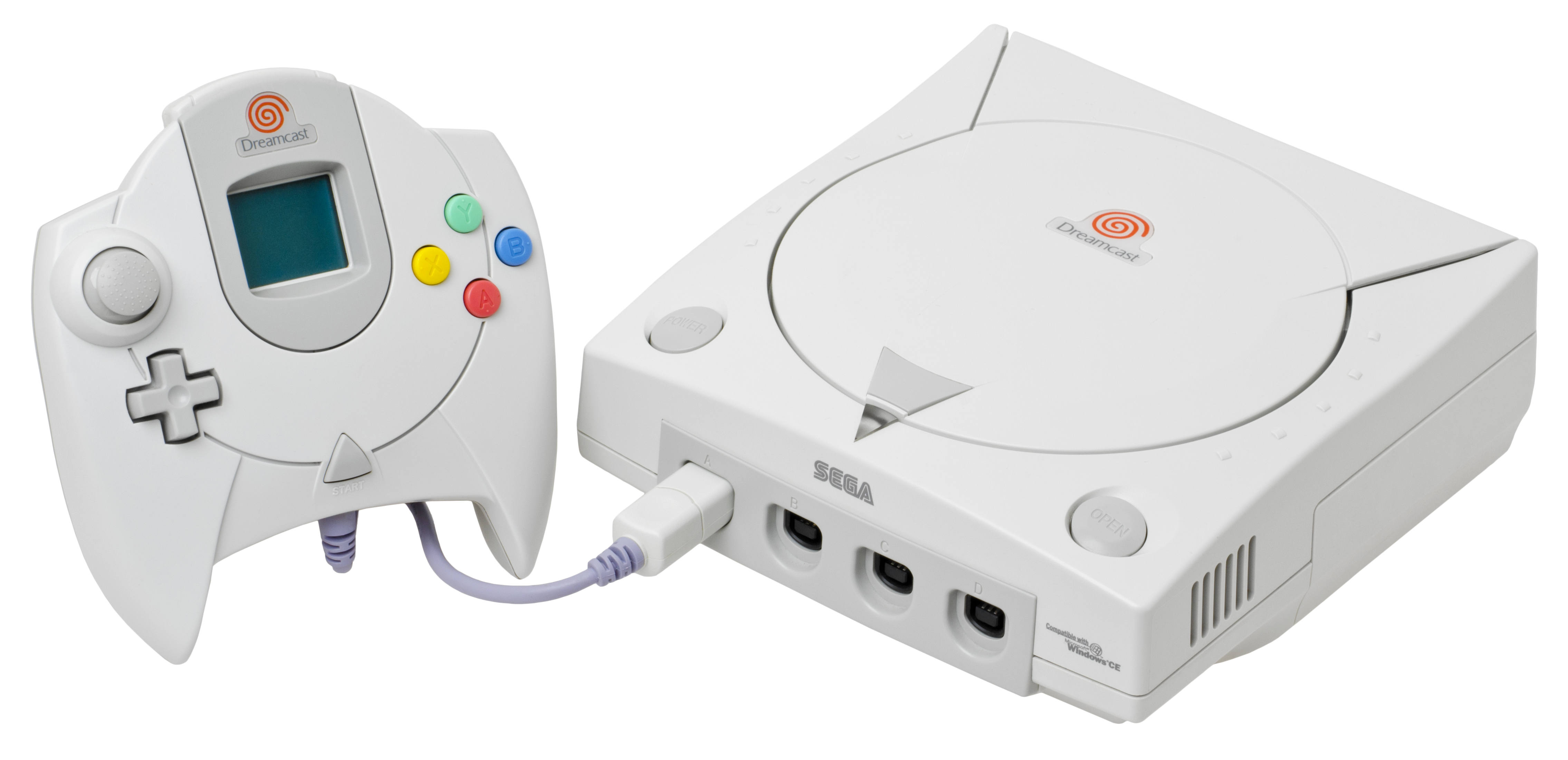
Sega launched the Dreamcast in Japan on November 27, 1998, beating competitors by nearly a year. Hideki Sato led an internal team that prioritized cost efficiency after the Saturn struggled financially. They built the system using off-the-shelf components like the Hitachi SH-4 processor running at 200 MHz and an NEC PowerVR2 graphics chip. This architecture matched the Sega NAOMI arcade board, allowing developers to port titles like Crazy Taxi and Virtua Tennis with minimal changes.
The hardware included a built-in 56k modem, making it the first home console capable of native online play via SegaNet. Users could compete in real-time matches or download content without extra peripherals. The system also shipped with a custom Windows CE environment to help PC ports run smoothly and used GD-ROM discs to bypass DVD licensing fees while offering more storage than standard CDs.
American sales surged following the September 9, 1999 launch, driven by strong marketing and a lineup featuring Sonic Adventure. Sony's announcement of the PlayStation 2 shifted consumer attention, and price cuts drained Sega's resources. Production ended on March 31, 2001, leaving behind 9.13 million units sold and a library of over 600 games that critics now celebrate for its innovation.
Gameplay
Players navigated open worlds in Shenmue, experiencing dynamic time cycles and non-linear storytelling that predated modern RPG standards. Jet Set Radio let users skate through cities as graffiti artists evading police forces. Phantasy Star Online introduced Massively Multiplayer Online gameplay where groups formed parties to tackle quests over the internet. Fighting fans enjoyed Soulcalibur and Marvel vs. Capcom with tight controls and complex move sets.
The system supported up to four controllers simultaneously for local multiplayer sessions. Titles like Powerstone and Sega Rally 2 utilized split-screen modes or online connectivity for competitive racing and battle royale style matches. Downloadable content appeared early in titles like Sonic Adventure, adding levels and characters to existing campaigns.
Story
Ryo Hazuki searches for his father's killer in Shenmue, blending beat-'em-up combat with deep role-playing elements across a sprawling interactive world. Sonic and friends race against Dr. Eggman in Sonic Adventure to stop plans involving Chaos Emeralds, mixing speed-based platforming with character-driven narratives. The GGs gang fights the oppressive Rokkaku Group in Jet Set Radio, reclaiming their city from censorship and control through inline skating and spray paint.
Trailers

Awards & Acclaim
Game of the Year: Best Console Game: (1999)
Soulcalibur: Best Action Game: (1999)
Shenmue: Innovation in Gaming: (2000)
Keywords
Sources
Game Info
- Developer
- Sega Enterprises, Ltd.
- Publisher
- Sega Enterprises, Ltd.
- Engine
- Custom Sega Hardware (Hitachi SH-4 CPU, NEC PowerVR2 GPU)
- Release Date
- November 27, 1998
- Age Rating
- PEGI 3 / ESRB E
- Modes
- Single-player, Multiplayer, Online Multiplayer
- Platforms
- Dreamcast
- Japan Release Date
- November 27, 1998
- North America Release Date
- September 9, 1999
- Europe Release Date
- October 14, 1999
- Production End Date
- March 31, 2001
- Total Units Sold
- 9.13 million
- Processor
- Hitachi SH-4 @ 200 MHz
- Graphics Chip
- NEC PowerVR2
- Main RAM
- 4 MB
- Video RAM
- 8 MB
- Storage Format
- GD-ROM
- Online Service
- SegaNet
- New Games in 2026
- White Creek
Join the community
fans discussing