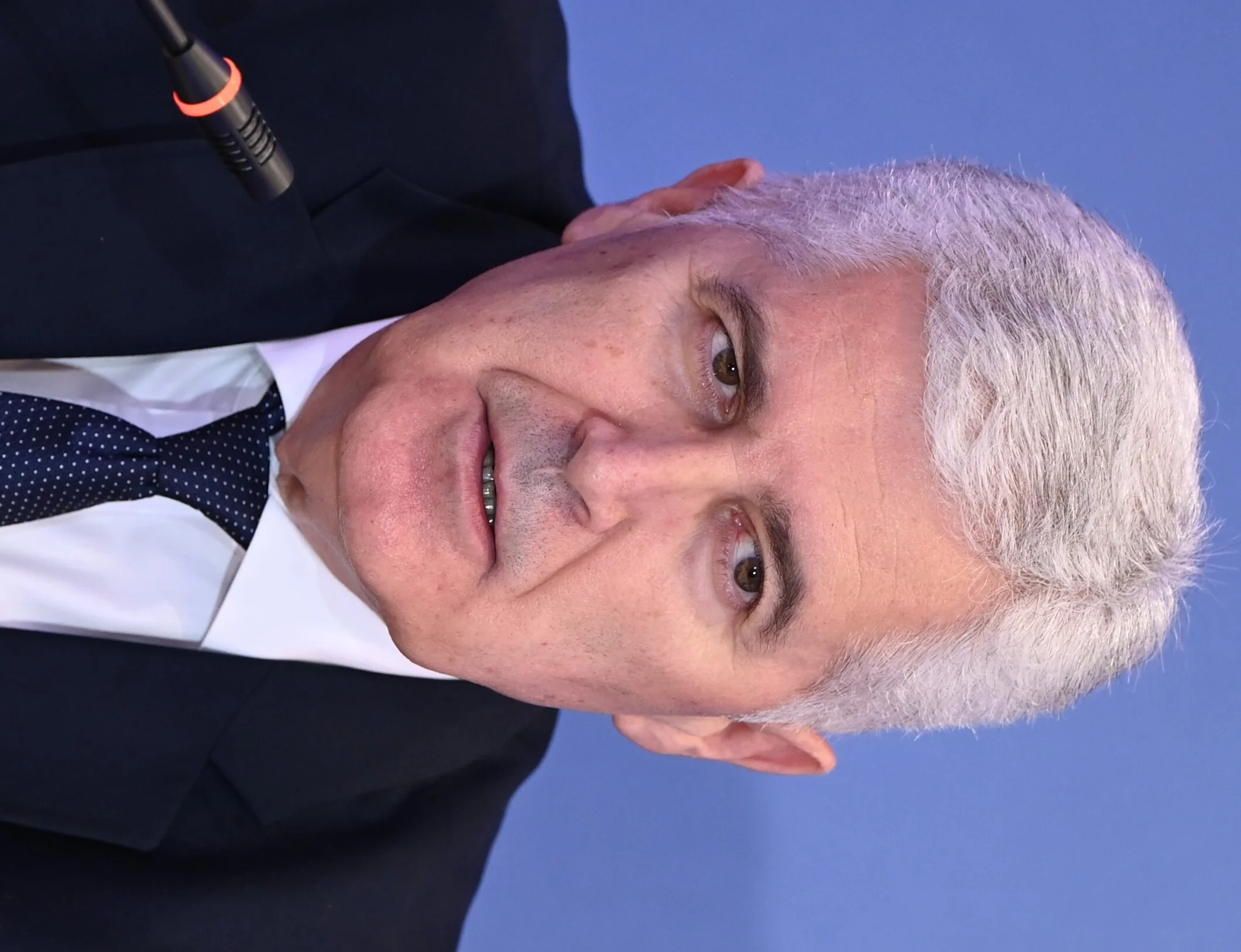
Dragan Kićanović
 Serbia
Also known as: Kića
Birthday
August 17, 1953
Birth Sign
Leo
Birthplace
Čačak, Yugoslavia (now Serbia)
Age
73 years old
Height
6 ft 4 in (193 cm)
About
Dragan Kićanović is a retired Serbian professional basketball player and diplomat. Born on August 17, 1953, in Čačak, he is celebrated as one of the greatest European shooting guards and scorers in the sport's history. Standing 1.92 meters tall, Kićanović possessed a rare combination of ball-handling skill, court vision, and scoring ability that made him a nightmare for defenders. His career highlights include winning an Olympic gold medal with Yugoslavia in 1980 and being named European Player of the Year by both Mr. Europa and Euroscar in 1981 and 1982.
In 1991, Kićanović was selected among FIBA's 50 Greatest Players, and in 2010 he was inducted into the FIBA Hall of Fame. After retiring from basketball, he transitioned into sports administration and diplomacy. Since September 2013, he has served as the Consul General of Serbia in Trieste, Italy, and he also holds the position of President of the Olympic Committee of Serbia and Montenegro. Kićanović's legacy endures as a symbol of Yugoslav basketball excellence and a bridge between athletic and public service.
Early Life & Background
Kicanovic grew up in Čačak, a city in western Serbia known for producing basketball talent. He started playing for the local club Borac Čačak, where his natural scoring instincts and dribbling skills quickly stood out. Coaches noted his high basketball IQ, which allowed him to excel as both a point guard and a shooting guard. Even as a teenager, he could control the tempo of a game and read defenses with remarkable precision.
His performances for Borac caught the attention of Partizan Belgrade, one of Yugoslavia's top clubs, and he joined them in the early 1970s. At Partizan, he developed under experienced mentors and alongside future national team stars. The daily competition in the Yugoslav league, widely considered one of the strongest in Europe at the time, sharpened his abilities. By the mid-1970s, he had earned a spot on the Yugoslav national team, where he would soon form a legendary backcourt with Dražen Dalipović and Zoran Slavnić. His first major international breakthrough came at the 1978 FIBA World Championship, where Yugoslavia won the gold medal, and Kićanović showcased his scoring talent on a global stage.
Career Growth
Kicanovic's breakthrough on the club level came in 1978 when he led Partizan Belgrade to the FIBA Korać Cup title, their first major European trophy. That same year, he helped Yugoslavia win the FIBA World Championship in Manila. The 1980 Moscow Olympics brought the pinnacle of his international career: a gold medal, as Yugoslavia defeated Italy in the final. Kićanović's scoring and leadership were crucial throughout the tournament.
In 1981 and 1982, he was voted European Player of the Year by both Mr. Europa and Euroscar, becoming the first guard to win the latter award. He also earned the title of Best Athlete of Yugoslavia in 1982. After leaving Partizan, he played in Italy for Benetton Treviso and Virtus Bologna, where he continued to score prolifically and helped his teams compete for domestic and European honors. He retired from professional basketball in the late 1980s, but his impact on the sport was recognized in 1991 when he was named one of FIBA's 50 Greatest Players. In 2010, he received the ultimate honor: induction into the FIBA Hall of Fame.
Career Timeline
Public Image & Style
Kicanovic's public image is that of a composed, cerebral competitor. On the court, he was celebrated for his smooth scoring and clutch play, earning nicknames like "Kića" among fans. In the media, he is often described as a gentleman of the sport, gracious in victory and defeat. His diplomatic career has reinforced this image, presenting him as a cultured ambassador for Serbian basketball. Fans from his era remember him as a symbol of Yugoslav basketball's golden age. He rarely gives interviews, but when he does, he speaks with measured wisdom about the game and its history. His legacy is that of a player who combined European finesse with fierce determination.
Fame & Fandom (iFAMOUS Rankings)
Dragan Kićanović commands a fanbase defined by reverence rather than organized mobilization. There is no formal, officially designated name for his supporters; instead, his audience consists of basketball historians, Serbian sports enthusiasts, and older generations who view him as a national icon from the Yugoslav golden age. His influence remains institutional, anchored in his role as President of the Olympic Committee of Serbia and Montenegro, where he interacts with admirers through administrative leadership rather than modern social media engagement or viral campaigns. The legacy of this era is maintained through historical retrospectives and his inclusion in the FIBA Hall of Fame, serving as the primary form of tribute without the ritualistic structures seen in contemporary pop culture. Within the broader scope of global recognition, Dragan Kićanović holds a distinct position among notable figures from his region. According to the iFANN Global Fame Rankings, he is the 54th most famous person from Serbia, a placement that has held steady across recent cycles. This standing reflects a consistent level of attention tracked through global media coverage, search activity, and consumption signals worldwide. While his active playing days have long concluded, his stature as a diplomatic figure and sporting legend ensures his continued presence in public consciousness.
Interesting Facts and Legends
Kićanović was renowned for an extraordinary one-on-one game, often described as unstoppable in isolation situations. He possessed the rare versatility to play both guard positions at an elite level during an era when such flexibility was uncommon. Off the court, he executed a smooth transition into diplomacy, a career path rarely taken by athletes of his caliber. He maintains a deep appreciation for classical music and enjoys reading history books, interests cultivated after retirement. A persistent quirk of his early career involved wearing his socks inside out during games, a superstition he retained for years. He also holds the record for the most points scored in a single game for Partizan Belgrade in the Korać Cup, a mark that stood for over two decades. Historical accounts frequently cite his technical mastery as a defining trait, with observers noting his impressive dribbling ability which became a teaching tool for future generations. A widely retold story in basketball lore highlights his mentorship lineage to Željko Obradović, suggesting Kićanović laid the groundwork for the coaching dynasty that followed. Additionally, a specific moment of reflection remains documented in his career, where he expressed regret regarding a medal at the European Championships rather than his retirement, underscoring the depth of his competitive psyche.
Notable Quotes
“I regret the medal at the European Championships, not the retirement.”
“Basketball is a game of mistakes, and the team that makes fewer wins.”
“Playing for Yugoslavia was always an honor, not a burden.”
“The Korać Cup in 1978 was the moment I knew we could compete with anyone.”
Family & Personal Life
Kicanovic keeps his family life intensely private. He is married, but his wife's name and details about their relationship are not public. He has two children, a son and a daughter, who have stayed out of the spotlight. The family splits time between Belgrade and Trieste, where his diplomatic post is based. Kićanović has mentioned in rare interviews that his family has been a source of stability throughout his career, especially during his sports administration years. He is known to enjoy quiet weekends at home, often cooking traditional Serbian dishes for his family.
Notable Connections
Kicanovic's career is closely tied to his Yugoslav national team teammates, including Dražen Dalipović and Zoran Slavnić, with whom he formed one of the most potent backcourts in international basketball. He also played alongside Krešimir Ćosić, a fellow Hall of Famer. In Italy, he was coached by the legendary Aza Nikolić at Virtus Bologna. His diplomatic career has brought him into contact with political figures, but he maintains that basketball remains his primary identity.
Relationships & Dating History
Dragan Kićanović has kept his romantic life remarkably private throughout his career. Unlike many athletes of his era, he rarely appeared in tabloids, and there are no documented public relationships before his marriage. He married his wife in the early 1980s, but her name and their wedding date have never been officially revealed. The couple has two children, a son and a daughter. As of 2026, Kićanović remains married, though he and his wife maintain a low profile, rarely appearing together at public events. Their marriage has endured for over four decades, a testament to his preference for stability and privacy.
- Married1982 - presentCurrentWife's name not publicly disclosed; they have two children.
Salary, Net Worth In 2026
$5 Million
iFANN Editorial Team estimate
As of 2026, Dragan Kićanović's net worth is estimated at $5 Million per iFANN's editorial analysis. The bulk of his wealth originates from his professional basketball career, which spanned from the early 1970s to the late 1980s. While salaries in European basketball during that era were modest compared to today's standards, he earned well through contracts with Partizan Belgrade and later with Italian clubs Benetton Treviso and Virtus Bologna, which were among the top-paying teams in Europe at the time. Since retiring, Kićanović has drawn a government salary as a diplomat. His role as Consul General in Trieste provides a stable income, though diplomatic pay is not comparable to top executive salaries. He has also likely made prudent investments in real estate, both in Serbia and Italy, given his long-term residence in Trieste. His net worth has remained relatively steady over the past decade, with no major windfalls or public financial ventures.
Awards Won (7)
Dragan Kićanović's trophy cabinet is a reflection of his dominance. He won an Olympic gold medal in 1980 and a FIBA World Championship in 1978. Individually, he captured the Mr. Europa and Euroscar awards twice each, in 1981 and 1982, making him the first guard to earn the Euroscar. He was also named the Best Athlete of Yugoslavia in 1982 and the Best Basketball Player of Yugoslavia for the 20th century. His crowning recognition came in 2010 with induction into the FIBA Hall of Fame.
1982 · European Player of the Year
Career
1981 · European Player of the Year
Career
1980 · Basketball
Yugoslav national team
Known For
Yugoslav national basketball team
1980 · Shooting guard
Partizan Belgrade
1978 · Shooting guard
Olympic Gold Medal
1980 · Player
FIBA Hall of Fame
2010 · Inductee
Keywords
Sources
Quick Facts
- Profession
- basketball player, diplomat
- Born
- +1953-08-17
- Birthplace
- Čačak
- Gender
- Male
- Birth Sign
- Leo
- Height
- 6 ft 4 in (193 cm)
Personal Details
- Full Name
- Dragan Kićanović
- Height
- 6 ft 4 in (193 cm)
Frequently Asked Questions
How old is Dragan Kićanović?
What is Dragan Kićanović's net worth in 2026?
Is Dragan Kićanović still active in basketball?
What awards did Dragan Kićanović win?
Where is Dragan Kićanović from?
Similar People
Join the community
fans discussing