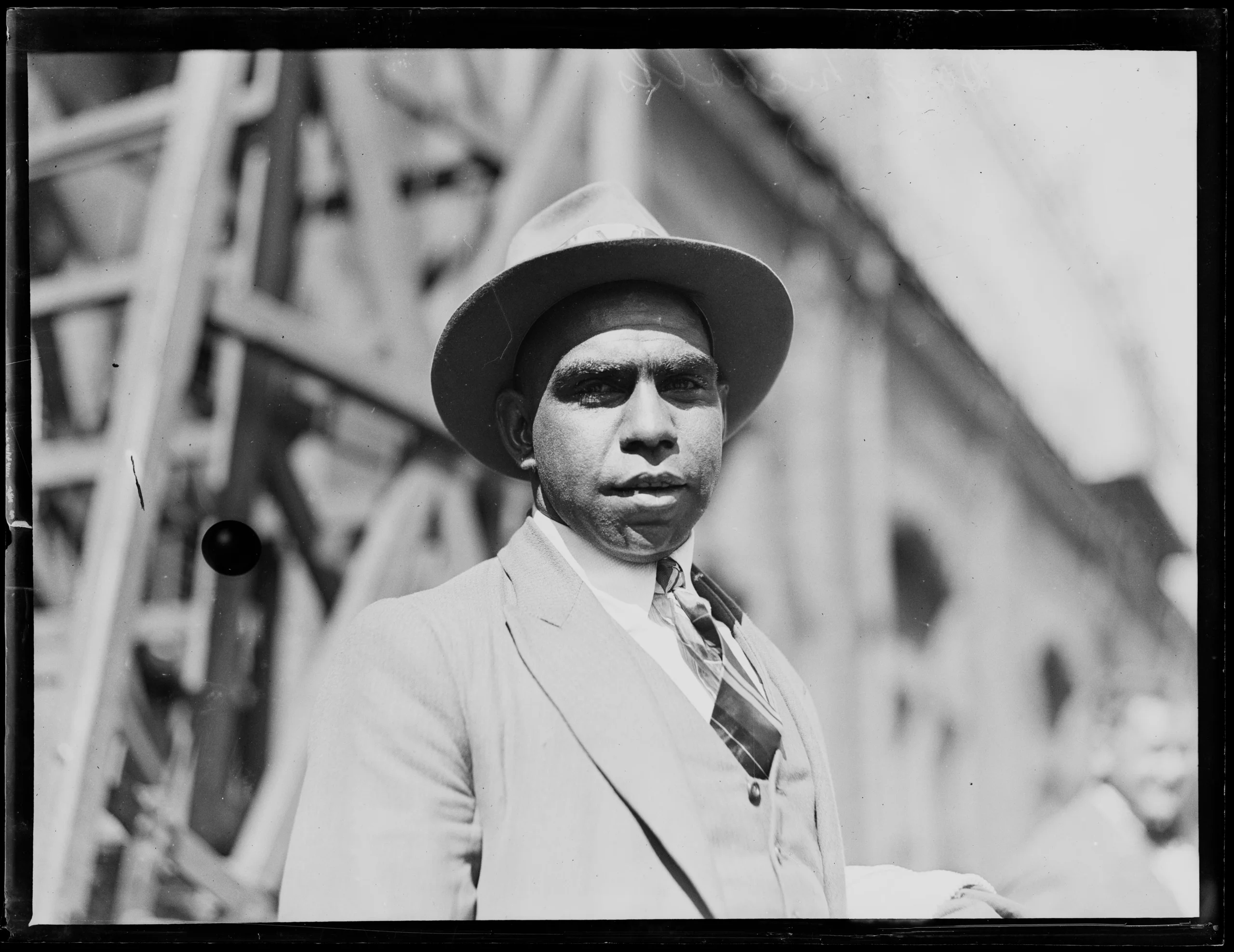
Douglas Nicholls
 Australia
boxer•Australian rules football player•pastor
Also known as: Sir Doug Nicholls, Cummera
Birthday
December 9, 1906
Birth Sign
Sagittarius
Birthplace
Cummeragunja Reserve, New South Wales, Australia
Age
Died at 81
About
Sir Douglas Ralph Nicholls was a Yorta Yorta man who became one of the most significant Aboriginal Australians of the 20th century. Born on the Cummeragunja Reserve in 1906, he built a life that spanned professional sport, Christian ministry, and relentless advocacy for Indigenous rights. He is remembered as the first Aboriginal Australian to be knighted, receiving the honour in 1972, and the first to hold vice-regal office when he became Governor of South Australia in 1976.
Nicholls' career was remarkable for its range. He played Australian rules football for Fitzroy in the VFL, boxed professionally, and later became a pastor in the Churches of Christ. His advocacy work through the Aborigines' Advancement League helped push constitutional change and equal rights onto the national agenda. Though his governorship lasted only five months due to failing health, his influence never waned. Fans and historians alike celebrate him as a bridge-builder who worked within the system without ever compromising on the goal of equality.
Early Life & Background
Douglas Nicholls grew up on the Cummeragunja Reserve, a government-controlled mission along the Murray River in New South Wales. Life there was harsh, with strict restrictions on movement, education, and employment for Aboriginal people. Despite these barriers, young Doug showed exceptional athletic talent. He earned the nickname "Cummera" and worked as a boxer, runner, and footballer in his teens and twenties.
In 1929, he won the Nyah Gift, a prestigious professional footrace that put him on the map as a sprinter. That victory opened doors that were otherwise closed to Aboriginal Australians of his era. He began boxing professionally and caught the attention of football scouts, eventually landing a spot with Fitzroy in the Victorian Football League. His early life was defined by this determination to excel in the face of systemic disadvantage, a quality that would carry him through every chapter of his career.
Career Growth
Nicholls' career unfolded in distinct phases, each building on the last. After his athletic success, he found his true calling in the church, becoming a pastor in the Churches of Christ denomination in the 1930s. He planted and led several congregations, using the pulpit as a platform for advocating Aboriginal rights.
By the 1950s and 1960s, he had become a leading figure in the Aborigines' Advancement League, campaigning for constitutional change and equal rights. He lobbied governments at every level and became a prominent public voice for reconciliation. In 1972, he was knighted as a Knight Bachelor, the first Aboriginal Australian to receive that honour. Four years later, he was appointed Governor of South Australia, another historic first. His time in office was cut short by poor health, and he resigned in 1977. Even after stepping down, he continued to speak out until his death in 1988.
Career Timeline
Public Image & Style
Nicholls is remembered as a quiet but persistent advocate, known for his dignity and his ability to work within existing systems. He never shied from confrontation, but he preferred persuasion to protest. The media often portrayed him as a statesman-like figure, and he was widely respected across political and cultural lines. His legacy is most visible today in the AFL's Sir Doug Nicholls Round, which celebrates Indigenous players and culture each year. Fans and players alike see the round as a moment to honour his contributions, and in 2026, the league went further by broadcasting games in First Nations languages, a fitting tribute to a man who spent his life building bridges.
Fame & Fandom (iFAMOUS Rankings)
Sir Douglas Nicholls carved his name into Australian history not through viral moments but through decades of quiet, relentless persistence. His fame is not measured in chart positions or streaming numbers, but in the enduring respect of a nation. The iFANN Global Fame Engine has evaluated his legacy, yet as of August 2026, he does not hold a placement in the published rankings, neither the Global Top 1,000 nor any Top-100 scope list. That absence says less about his impact and more about the nature of his renown: it is institutional, ceremonial, and deeply woven into the fabric of Australian life.
His admirers have no formal fandom name, no collective label like 'Beliebers' or 'Directioners.' Instead, his following is the Australian public itself, honoring him through state-sanctioned memorials. The AFL's Sir Doug Nicholls Round, held annually since 2013, sees every club design Indigenous-themed guernseys, and in 2026, two matches were broadcast in traditional First Nations languages. His portrait hangs in the Victorian Aboriginal Honour Roll, and the Sir Doug Nicholls Centre in Melbourne bears his name. These are the rituals of his legacy, not fan-driven campaigns, but national commemorations.
The legends surrounding Nicholls are grounded in documented milestones. The story most often retold is his appointment as the 28th Governor of South Australia in 1976, the first Aboriginal person to hold vice-regal office. It was a seismic shift, a moment that broke new ground. His rise from the Cummeragunja mission to Government House is the core narrative of his life, a reflection of resilience against systemic racism. While his fame may not register on contemporary celebrity indices, his name remains synonymous with dignity and breakthrough, a legacy that transcends any ranking.
Interesting Facts and Legends
Nicholls was named Father of the Year, a rare honour for an Aboriginal man in that era. He also played for Northcote in addition to Fitzroy, and his football career predated the VFL's official recognition of Aboriginal players. The AFL's Sir Doug Nicholls Round, held annually since 2013, sees all 18 clubs design special Indigenous-themed guernseys. In 2026, two matches were broadcast in traditional First Nations languages with support from Triple M. Nicholls' portrait hangs in the Victorian Aboriginal Honour Roll, and his name graces the Sir Doug Nicholls Centre in Melbourne.
One of the most retold stories from his life is his appointment as Governor of South Australia in 1976, the first Aboriginal Australian to hold vice-regal office. It was a moment that stunned the nation and became a symbol of progress. Another enduring tale is his athletic versatility: he boxed professionally and played VFL football simultaneously, a dual career that seems almost mythical today. His work as a pastor and activist is equally legendary, with countless anecdotes of his persuasive, dignified approach to advocacy. These stories are not folklore but documented history, passed down as inspiration.
Family & Personal Life
Douglas Nicholls married Gladys Bux, a Yorta Yorta woman, and the couple had several children together. Gladys was a constant support throughout his career, and the marriage lasted until his death in 1988. He was named Father of the Year in recognition of his family life, a testament to his role as a devoted husband and father. The family lived in various parts of Victoria, and Nicholls often spoke about the importance of family values in his public addresses.
Notable Connections
Gladys Nicholls, his wife of over 50 years, stood beside him through his sporting, pastoral, and political careers. Jack Buckskin, an Indigenous leader, crafted the 2026 Sir Doug Nicholls Round gift exchange, continuing a partnership with the Kuwarna. Tim Kelly of the West Coast Eagles spoke about the personal significance of the round in 2026, highlighting how Nicholls' legacy inspires current players.
Relationships & Dating History
Douglas Nicholls married Gladys Bux, a Yorta Yorta woman, and the couple shared a lifelong partnership. They had several children together, and Nicholls was named Father of the Year in recognition of his family life. Gladys was a constant source of support throughout his career, from his sporting days to his governorship. There are no documented records of other romantic relationships. The marriage lasted until his death in 1988.
- MarriedGladys Nicholls1927 - 1988Married for over 50 years, they had several children together.
Death & Aftermath
Died
June 4, 1988 (aged 81)
Death Place
Melbourne, Victoria
Cause of Death
Natural causes associated with old age
In the final years of his life, Sir Douglas Nicholls resided in Melbourne, Victoria, continuing his advocacy within the state's Indigenous community. He passed away on June 4, 1988, at the age of 81, ending a life defined by historic firsts as the first Aboriginal Australian knighted and the first to serve as a Governor of South Australia. The official cause of death was recorded as natural causes associated with old age. Tributes poured in from the Victorian government and the broader Indigenous community, honoring his legacy. While specific details regarding the funeral venue or immediate list of mourners remain unrecorded in available sources, his burial remains are part of the historical record in Victoria. Decades later, his posthumous influence has been cultivated through public dedications. Most notably, the Australian Football League established the "Sir Doug Nicholls Round," an annual event celebrating Indigenous culture in the sport that continues to be active. He was inducted into the Victorian Aboriginal Honour Roll in 2011.
Net Worth (Estate Value)
$1 Million
iFANN Editorial Team estimate
As a public figure who died in 1988, Douglas Nicholls' financial legacy is not well-documented. No contemporary net worth figures exist from celebrity-wealth sources, and his estate's value has never been publicly reported. However, iFANN's editorial research currently estimates his net worth at $1 Million, a figure that reflects the modest means of a man who devoted his life to service rather than accumulation. His true wealth lies in his cultural impact: the AFL's annual Sir Doug Nicholls Round, the Sir Doug Nicholls Centre, and numerous commemorations keep his name alive. While his monetary estate was likely modest, his enduring influence on Australian society is immeasurable. As of 2026, his legacy continues to generate cultural capital through these tributes, though the financial estimate remains a symbolic acknowledgment of his worth.
Awards Won (4)
Douglas Nicholls was honoured with a knighthood (Knight Bachelor) in 1972, an Officer of the Order of the British Empire (OBE), and a Knight Commander of the Royal Victorian Order (KCVO). He was also named Father of the Year and posthumously inducted into the Victorian Aboriginal Honour Roll in 2011.
1972 · Honour
Services to the Aboriginal community
1962 · Honour
Services to the Aboriginal community
Known For
First Aboriginal Australian Governor
1976 · Governor of South Australia
First Aboriginal Australian Knight Bachelor
1972 · Honour
VFL footballer for Fitzroy
1932 · Player
Pastor and Aboriginal rights advocate
1935 · Leader
Keywords
Sources
Quick Facts
- Profession
- boxer, Australian rules football player, pastor
- Born
- December 9, 1906
- Birthplace
- Cummeragunja Reserve
- Died
- June 4, 1988
- Death Place
- Mooroopna
- Gender
- Male
- Spouse
- Gladys Nicholls
- Birth Sign
- Sagittarius
- First Aboriginal Governor
- Yes
- First Aboriginal Knight Bachelor
- Yes
Personal Details
- Full Name
- Douglas Ralph Nicholls
- Spouse
- Gladys Nicholls
- Children
- Several (names not publicly documented)
Frequently Asked Questions
Who was Douglas Nicholls?
Was Douglas Nicholls the first Aboriginal Governor?
How did Douglas Nicholls die?
Why is the Sir Doug Nicholls Round named after him?
Did Douglas Nicholls have children?
Similar People
Join the community
fans discussing