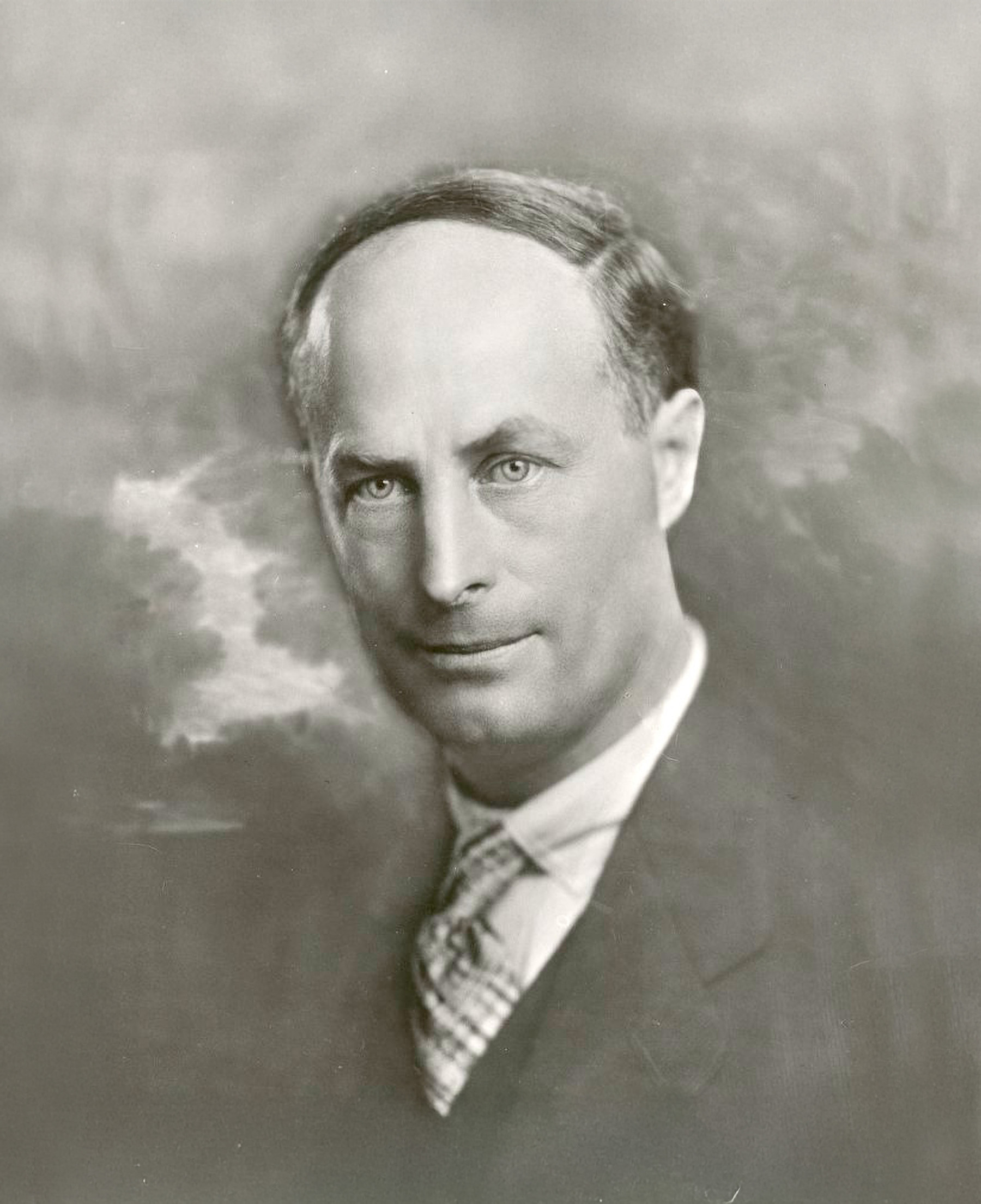
Douglas Mawson
 Australia
Also known as: Sir Douglas Mawson
Birthday
May 5, 1882
Birth Sign
Taurus
Birthplace
Shipley, Yorkshire, England
Age
Died at 76
Height
6 ft 0 in (183 cm)
About
Sir Douglas Mawson was an Australian geologist, Antarctic explorer, and academic, widely regarded as a titan of the Heroic Age of Antarctic Exploration. Born in Shipley, England, he was brought to Australia as an infant and grew up to become one of the leading figures of polar exploration. His most famous expedition, the Australasian Antarctic Expedition (1911–1914), mapped thousands of kilometers of uncharted coastline and gathered invaluable scientific data. He also led the British Australian and New Zealand Antarctic Research Expedition (BANZARE) in 1929–1931, which helped establish the Australian Antarctic Territory. Mawson's contributions to geology were equally significant, particularly his work on the Precambrian rocks of South Australia's Flinders Ranges and the Adelaide Superbasin, where fossil beds provided crucial evidence about the origins of early animal life.
Mawson studied mining engineering and geology at the University of Sydney, then took a lecturing post at the University of Adelaide in 1906. His first taste of polar exploration came with Shackleton's Nimrod Expedition (1907–1909), where he joined the party that made the first ascent of Mount Erebus and later reached the South Magnetic Pole. That experience fueled his ambition, and he soon organized his own expedition. The Australasian Antarctic Expedition was a triumph of endurance, but it also brought tragedy. In 1912, Mawson was the sole survivor of the Far Eastern Party after his two companions, Xavier Mertz and Belgrave Ninnis, died. He walked alone for over a month to return to base, an ordeal that became legendary. His account of the journey, The Home of the Blizzard, was published in 1915.
After being knighted in 1914, Mawson served in World War I with British and Russian forces, then returned to Adelaide, where he became a full professor in 1921. He continued to shape Australian geology, focusing on the Adelaide Superbasin, where fossil beds shed light on the origins of animal life. His legacy is etched into the map of Antarctica, with numerous landmarks bearing his name. Mawson died on 14 October 1958, aged 76, having earned a place among the most courageous and scientifically minded explorers of his era. His portrait appeared on the Australian $100 note from 1984 to 1996, and his story continues to inspire new generations of scientists and adventurers.
Early Life & Background
Mawson was born in Shipley, Yorkshire, England, on 5 May 1882, the son of Robert Ellis Mawson, a cloth merchant, and Margaret Ann Moore, who came from a family with Methodist roots. The family emigrated to Australia when he was an infant, settling in the Rooty Hill area of New South Wales. Growing up in the Australian bush, he developed a deep curiosity for the natural world, spending hours collecting rocks and observing wildlife.
He attended Fort Street Model School in Sydney, where he excelled in science. His academic talent earned him a place at the University of Sydney, where he studied mining engineering and geology. While still an undergraduate, he worked as a junior demonstrator in chemistry and later geology. In 1902, he graduated with a Bachelor of Engineering, and in 1909 he completed his Doctor of Science.
His first professional appointment came in 1903 when he was named geologist to the New Hebrides (now Vanuatu) geological survey. There he studied mineral deposits and published his first scientific papers. In 1905, he took up a lectureship in mineralogy and petrology at the University of Adelaide, a position that would tie him to South Australia for the rest of his life. A year later, while exploring the Flinders Ranges, he discovered a new uranium-bearing mineral, which he named davidite. This finding would later prove important for Australia's nuclear industry.
Career Growth
Mawson's polar career took off when he joined Ernest Shackleton's Nimrod Expedition (1907–1909) as a geologist. He was part of the party that made the first ascent of Mount Erebus, Antarctica's active volcano, and later led a separate team that reached the South Magnetic Pole on 16 January 1909. These achievements established his reputation as a leading polar scientist.
His crowning achievement was the Australasian Antarctic Expedition (AAE) of 1911–1914. Mawson organized and led this ambitious undertaking, which established bases at Commonwealth Bay and Macquarie Island. The expedition's sledging parties mapped thousands of kilometres of previously uncharted coastline, discovering George V Land and Queen Mary Land. The scientific output was enormous, including magnetic observations, meteorological data, and geological collections. The expedition also established the first radio communication link between Antarctica and the outside world, relaying messages from Macquarie Island.
The expedition is most famous for the tragedy of the Far Eastern Party. In December 1912, Mawson, Xavier Mertz, and Belgrave Ninnis set out on a sledging journey. Ninnis fell into a crevasse with the sledge carrying most of the food and the best dogs, and died. Mertz and Mawson struggled back, but Mertz died on 8 January 1913, likely from vitamin A poisoning caused by eating husky dog livers. Mawson continued alone, walking for over a month, covering roughly 160 kilometres, and returned to base on 8 February 1913, just hours after the rescue ship had departed. His extraordinary survival, including cutting his sledge in half to lighten the load and eating his remaining dogs, became legendary.
After the AAE, Mawson led the British Australian and New Zealand Antarctic Research Expedition (BANZARE) from 1929 to 1931 aboard the RRS Discovery. This two-voyage expedition combined scientific research with territorial claims, flying the British flag over newly charted coastline and dropping proclamation cylinders. The work directly contributed to the establishment of the Australian Antarctic Territory, which was formally transferred to Australian control in 1933. Mawson's efforts were instrumental in securing approximately 42 per cent of Antarctica for Australia.
In 1921, he became a full professor of geology and mineralogy at the University of Adelaide, a position he held until his retirement in 1952. His geological research focused on the Precambrian rocks of South Australia's Flinders Ranges and the Adelaide Superbasin, where fossil beds provided crucial evidence about the origins of early animal life. He was elected a Fellow of the Royal Society in 1923 and was a founding Fellow of the Australian Academy of Science in 1954. He also received the Founder's Medal from the Royal Geographical Society in 1915, the Clarke Medal from the Royal Society of New South Wales in 1936, and the Wollaston Medal from the Geological Society of London in 1936.
Career Timeline
Public Image & Style
Mawson is portrayed in Australian public memory as a national hero, a stoic, scientifically rigorous explorer whose endurance epitomises the Australian character. The National Museum of Australia describes him as "a national hero," and the BBC has noted he is "one of the less celebrated figures" of the Heroic Age despite a story "as gripping as the exploits" of his more famous contemporaries. His aesthetic is that of the Edwardian scientific explorer: formal, meticulous, and understated. His published account, The Home of the Blizzard, remains a classic of polar literature. There is no formal fandom name, but Antarctic history enthusiasts and Australian heritage communities form an active interest group. His image appeared on the $100 note, cementing his status in Australian popular consciousness. The Aurora Expeditions ship Douglas Mawson was named one of TIME's "World's Greatest Places 2026" and features a Polar Class 6/Ice Class 1A rating with an inverted "X-bow" design.
Fame & Fandom (iFAMOUS Rankings)
Douglas Mawson never had a fanbase in the modern sense, no fan art, no hashtag campaigns, no birthday billboards. His admirers are historians, polar enthusiasts, and Australians who grew up with his story as a kind of national scripture. There is no formal fandom name, and the only 'fans' in recent headlines are travelers aboard the cruise ship that bears his name. But his legend, built on a single, almost impossible survival trek, has outlasted the celebrity of many who once commanded more attention.
In the global fame rankings, Mawson's legacy is a quiet one. As of August 2026, iFANN's Global Fame Engine has evaluated his cultural footprint but has not placed him among the world's top 1,000 most famous people, nor on any Top-100 scope list. That absence says more about the nature of his fame than its size, he is a hero in Australia, a footnote elsewhere, a figure whose renown is measured in museum exhibits and commemorative stamps rather than streaming numbers or tabloid inches.
What fame he holds is anchored to one story: the 1912–1913 trek that nearly killed him. When his companions died, one lost to a crevasse, the other to suspected vitamin A poisoning from dog liver, Mawson walked alone for weeks, frostbitten and starving, until he stumbled back to his hut at Cape Denison. The rescue ship had just left. He made it, but the party stayed another winter. That moment, arriving to find salvation had already sailed, is the kind of lore that turns a man into a legend, even without a fandom to chant his name.
Interesting Facts and Legends
Mawson's survival trek in 1912–1913 is considered one of the greatest feats of endurance in polar history. He walked approximately 160 kilometres alone, with frostbitten feet and a skin condition from eating dog liver. The soles of his feet separated from the flesh during his return trek, yet he continued walking. He discovered the mineral davidite in 1906, which later became significant for Australia's uranium mining industry. Mawson's expedition established the first radio communication link between Antarctica and the outside world, relaying messages from Macquarie Island. He was initially offered a place on Robert Falcon Scott's Terra Nova Expedition but declined to lead his own Australian expedition instead. Mawson served in World War I with British and Russian forces, working on munitions and explosives research. He was described as a tall, robust man, standing approximately 6 feet (183 cm) tall, with a strong build that served him well in the demanding conditions of Antarctic exploration.
The most iconic moment of his legend is his return to Cape Denison in 1913: after his two companions died, he walked alone for weeks, only to find that the rescue ship had departed just hours earlier. He and the remaining men were forced to winter over again. In 2025, his great-granddaughter christened the expedition ship Douglas Mawson, and the vessel later launched in Antarctica. That same year, newly deciphered diaries revealed his earlier explorations of the Flinders Ranges, adding a fresh chapter to his legacy beyond the ice.
Notable Quotes
“We shall stick it out to the end, but we are getting weaker, of course, and the end cannot be far.”
“I have striven to do my duty, and to leave behind me a record of work done which may be of service to science.”
Family & Personal Life
Mawson married Francisca Adriana "Paquita" Delprat on 31 March 1914, at Holy Trinity Church in Balaclava, Melbourne. Paquita was the daughter of Guillaume Daniel Delprat, a Dutch-born metallurgist and general manager of the Broken Hill Proprietary Company (BHP). The couple met during Mawson's courtship while he was preparing for the AAE. They had two daughters: Patricia (born 1915) and Jessica (born 1917). Paquita was a constant support throughout Mawson's career, managing the home front during his expeditions and later helping to edit and promote his scientific work. She died in 1974. The marriage lasted until Mawson's death in 1958, a stable, lifelong union with no public record of other romantic relationships.
His great-granddaughter Emma McEwin christened the Aurora Expeditions ship Douglas Mawson in November 2025, carrying forward the explorer's legacy.
Notable Connections
Xavier Mertz, Swiss mountaineer and companion on the Far Eastern Party, died during the 1912–1913 trek. Belgrave Ninnis, British military officer and companion on the Far Eastern Party, fell into a crevasse and died. Ernest Shackleton led the Nimrod Expedition, giving Mawson his first Antarctic experience. Francisca Adriana "Paquita" Delprat Mawson was his wife and lifelong supporter. Emma McEwin, his great-granddaughter, christened the Aurora Expeditions ship in 2025. David Parer directed the 1983 documentary Douglas Mawson: The Survivor.
Relationships & Dating History
Mawson's personal life was remarkably stable and centered on his marriage to Francisca Adriana "Paquita" Delprat. They met while he was preparing for the Australasian Antarctic Expedition, and married on 31 March 1914 at Holy Trinity Church in Balaclava, Melbourne. The couple had two daughters, Patricia (born 1915) and Jessica (born 1917). Paquita was a constant support throughout Mawson's career, managing the home front during his expeditions and later helping to edit and promote his scientific work. The marriage lasted until Mawson's death in 1958, a stable, lifelong union with no public record of other romantic relationships. Paquita died in 1974.
- MarriedFrancisca Adriana Delprat1914 - 1958Married on 31 March 1914; had two daughters, Patricia and Jessica; marriage lasted until Mawson's death in 1958.
Death & Aftermath
Died
October 14, 1958 (aged 76)
Death Place
Adelaide, South Australia
Cause of Death
Unknown
Sir Douglas Mawson spent his final years in Adelaide, South Australia, working as a professor at the University of Adelaide until the end of his life. He passed away on October 14, 1958, at the age of 76 within the city where he had long been a distinguished academic figure. His passing marked the quiet conclusion of an era for the Heroic Age of Antarctic exploration, treated by the nation as the natural end for a titan of polar science rather than a subject of immediate public spectacle. Tributes arrived through institutional channels, cementing his status as Australia's greatest polar explorer and acknowledging his role in shaping territorial claims to forty-two percent of Antarctica.
While the specific logistics of his funeral service remain unreported in historical records, his legacy was immediately preserved through the establishment of the Mawson's Huts Foundation and the continued operation of the Mawson Station bearing his name. Decades later, his influence expanded when a ship named Douglas Mawson was christened in December 2025 by his great-granddaughter, Emma McEwin, ensuring his name traversed polar waters once more. Recent deciphering of his diaries has also revealed new dimensions regarding his explorations of the Flinders Ranges, adding fresh scholarly value to his archives. Posthumous honors include his election as a founding Fellow of the Australian Academy of Science in 1954.
Net Worth (Estate Value)
$1 Million
iFANN Editorial Team estimate
As a historical figure who died in 1958, Mawson's personal net worth is not meaningfully tracked by celebrity-wealth sources. His estate's value is primarily scholarly and cultural rather than commercial. The estate is managed by his descendants, and its principal revenue sources are minimal, primarily royalties from his published works, including The Home of the Blizzard, and the licensing of his image and story for documentaries, books, and commemorative projects. The 1983 documentary Douglas Mawson: The Survivor, directed by David Parer, dramatised his 1912 expedition. The ongoing commercial value of his legacy is most visibly realised through the Aurora Expeditions ship bearing his name, though the ship's revenues accrue to the company, not the family. iFANN currently estimates the estate's value at around $1 million, reflecting the limited but steady income from royalties and licensing.
Awards Won (3)
Mawson received numerous honours for his contributions to science and exploration. He was knighted in 1914, appointed Officer of the Order of the British Empire, and elected a Fellow of the Royal Society in 1923. He was awarded the Founder's Medal of the Royal Geographical Society in 1915, the Clarke Medal of the Royal Society of New South Wales in 1936, and the Wollaston Medal of the Geological Society of London in 1936. He also received honorary doctorates from several universities.
1915 · Geography
Antarctic exploration
1936 · Natural Science
Geological research
Known For
Australasian Antarctic Expedition
1911 · Leader
BANZARE
1929 · Leader
The Home of the Blizzard
1915 · Author
Keywords
Sources
Quick Facts
- Profession
- explorer, geologist
- Born
- May 5, 1882
- Birthplace
- Shipley, Yorkshire, England
- Died
- October 14, 1958
- Death Place
- Brighton, South Australia
- Gender
- Male
- Spouse
- Francisca Adriana Delprat
- Birth Sign
- Taurus
Personal Details
- Full Name
- Douglas Mawson
- Height
- 6 ft 0 in (183 cm)
- Spouse
- Francisca Adriana Delprat
- Children
- Patricia Mawson, Jessica Mawson
- Education
- University of Sydney (B.E., 1902; D.Sc., 1909)
Frequently Asked Questions
How did Douglas Mawson survive his Antarctic trek?
Did Douglas Mawson reach the South Pole?
What happened to Douglas Mawson's companions?
What was Douglas Mawson's net worth?
Was Douglas Mawson married and did he have children?
Similar People
Join the community
fans discussing