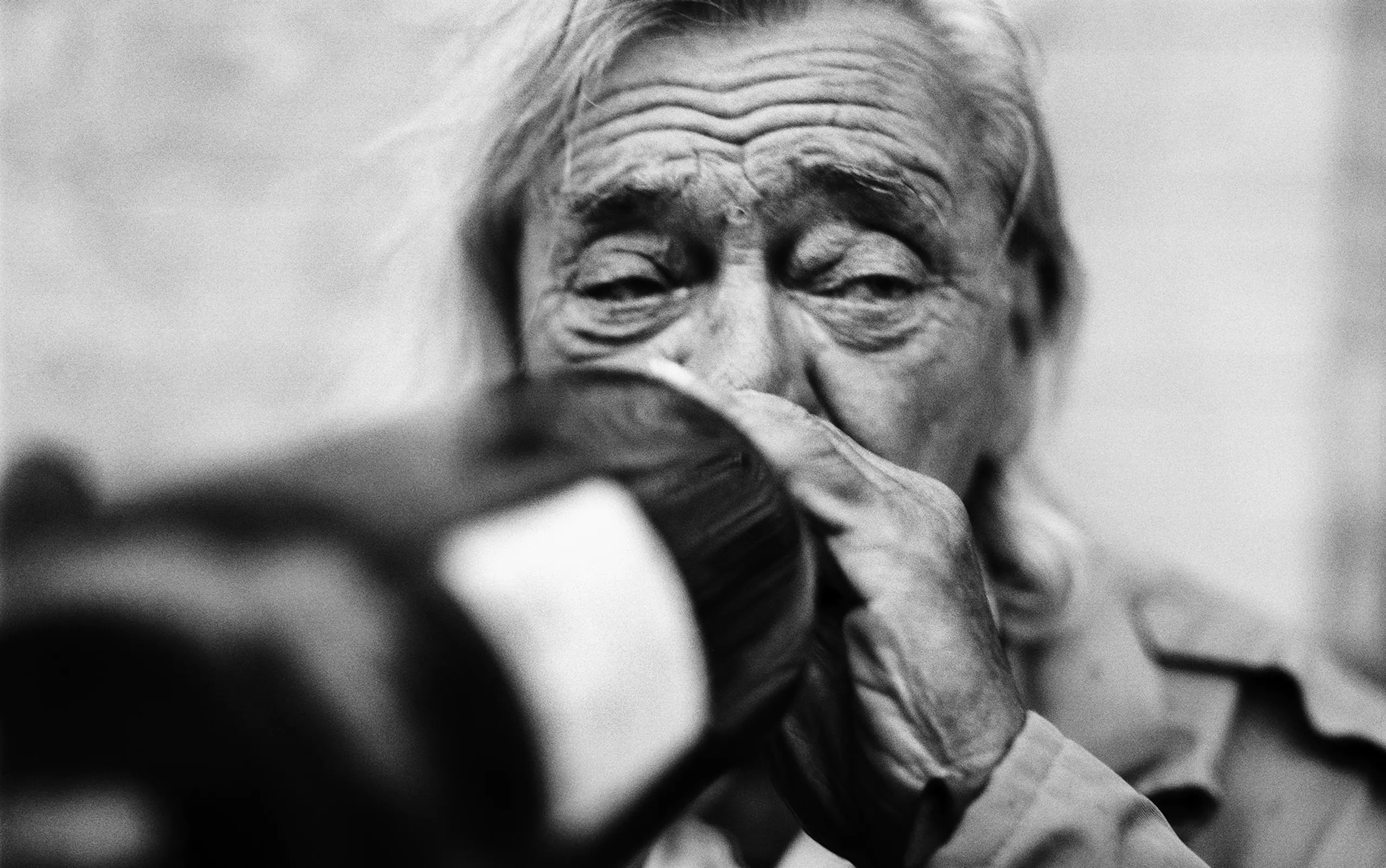
Donald O. Hebb
 Canada
psychologist•neuroscientist•professor
Also known as: D. O. Hebb, Donald Olding Hebb
Birthday
July 22, 1904
Birth Sign
Cancer
Birthplace
Chester, Nova Scotia
Age
Died at 81
About
Donald Olding Hebb was a Canadian psychologist who fundamentally reshaped how science understands the brain's role in learning and memory. Born in Chester, Nova Scotia, he earned his doctorate from Harvard before joining McGill University, where he spent most of his career. His 1949 book The Organization of Behavior introduced the concept now known as Hebbian learning, proposing that neural connections strengthen when neurons fire together. This principle became a cornerstone for modern neuroscience and artificial intelligence.
A 2002 survey ranked him as the 19th most cited psychologist of the 20th century. He died on August 20, 1985, at age 81 in Halifax. His legacy lives on through the foundational theories he established and the numerous awards named in his honor.
Early Life & Background
Donald Olding Hebb grew up in the small coastal town of Chester, Nova Scotia, in a family that valued education despite limited financial means. His early years were marked by a strong aptitude for literature and writing, leading him to initially aspire to become a novelist rather than a scientist. This literary background would later serve him well, allowing him to synthesize complex biological and psychological concepts into cohesive, readable theories.
He attended Dalhousie University in Halifax, where he completed his undergraduate studies and discovered a deepening interest in psychology. The transition from literature to science happened during this period, prompting him to pursue graduate work at Harvard University. He earned his PhD in 1936, marking a pivotal shift from his early creative ambitions to a rigorous career in scientific research.
After receiving his doctorate, Hebb returned to Canada to join McGill University in Montreal. He began as a research fellow under the renowned psychologist Kenneth Craik. For over a decade, he worked as a lecturer and researcher, building the foundation for his future breakthroughs while the fields of psychology and physiology began to merge around him.
Career Growth
His career reached its zenith with the publication of The Organization of Behavior: A Neuropsychological Theory in 1949. This seminal work proposed that behavior could be explained by neural mechanisms, bridging the gap between abstract psychological theory and biological reality. The book introduced the concept of cell assemblies and phase sequences, laying the groundwork for connectionist models in artificial intelligence decades before they became mainstream.
In the 1950s, Hebb conducted legendary sensory deprivation experiments at McGill. Students were paid to lie in soundproof rooms wearing translucent goggles and cardboard cuffs for days. The results showed severe hallucinations and cognitive impairment, demonstrating the brain's absolute dependence on sensory input. These studies influenced protocols for space travel and interrogation techniques.
Hebb continued to refine his theories throughout the 1960s and 1970s. In 1967, he was elected a Fellow of the Royal Society. He remained a professor at McGill until his retirement in 1985. His work remains one of the most influential in the history of psychology, with his ideas serving as the cornerstone for modern neural network research.
Career Timeline
Public Image & Style
Hebb is viewed as a serious, intellectual figure whose contributions transcend typical celebrity status. His public persona is defined by his rigorous approach to science and his ability to bridge the gap between psychology and biology. Unlike many figures of his era, he did not seek media attention, preferring to let his work speak for itself. His image is that of a dedicated scholar who changed the way we understand the mind.
Fame & Fandom
In the iFANN Global Fame Rankings, Donald O. Hebb holds the position of the 57th most famous person in AI as of the September 2026 evaluation. This placement reflects his enduring relevance in the field of artificial intelligence, where his theories continue to drive innovation. While he does not appear in general global fame lists, his standing within the specialized domain of AI is significant and steady.
Hebb does not have a traditional fandom with fan clubs or billboards. His admirers are neuroscientists, psychologists, and students who cite his 1949 book The Organization of Behavior. The closest equivalent to a fan ritual is the repetition of the maxim "neurons that fire together wire together" in labs and lecture halls worldwide. This phrase, though a paraphrase, has become a scholarly shorthand that functions as a mantra in the scientific community.
His fame is entirely institutional, carried by textbooks and the ongoing application of his theories. The Donald O. Hebb Award is given annually by the International Neural Network Society, and he was posthumously inducted into the Nova Scotia Science Hall of Fame in 2011. These honors reflect a legacy measured in influence rather than headlines.
Interesting Facts and Legends
Before committing to science, Donald Hebb originally wanted to be a novelist. His literary training helped him articulate complex neuropsychological theories in ways that resonated across disciplines. The famous phrase "neurons that fire together wire together" is a popular paraphrase; Hebb never actually used these exact words in his writings.
His sensory deprivation experiments involved students lying in isolation for extended periods. The participants experienced hallucinations and cognitive decline within hours, proving that the human brain requires constant sensory stimulation to function normally. These findings were so significant that they were later referenced in discussions regarding CIA interrogation methods and the psychological effects of long-term space travel.
Hebb's influence extends far beyond academia into the realm of technology. His principles are fundamental to the development of modern artificial intelligence and machine learning algorithms. Almost every major text on neural networks references his work, making him a silent architect of the digital age.
Notable Quotes
“When an axon of cell A is near enough to excite a cell B and repeatedly or persistently takes part in firing it, some growth process or metabolic change takes place in one or both cells such that A's efficiency, as one of the cells firing B, is increased.”
“The study of behavior must be based on the study of the nervous system.”
Family & Personal Life
Donald Hebb was born to parents who were not wealthy but placed a high value on education. He grew up in Chester, Nova Scotia, where he displayed an early talent for writing. While specific details about his siblings or extended family are scarce in public records, his upbringing in a small coastal community clearly shaped his perspective. He lived a quiet life dedicated to his academic pursuits, keeping his personal affairs largely out of the public eye.
Notable Connections
Relationships & Dating History
Donald O. Hebb was a private individual who did not maintain a public romantic profile. Historical records do not document specific details regarding his dating history, engagements, or marriages in the manner of celebrity biographies. It is generally understood that he remained focused on his academic pursuits throughout his life. There is no public record of children, divorces, or high-profile relationships. He lived a quiet life dedicated to science, and his personal life remains largely unpublicized in available historical archives. As of his death in 1985, his marital status is unknown, though he is often described as having lived a solitary life dedicated to his work.
Death & Aftermath
Died
August 20, 1985 (aged 81)
Death Place
Halifax, Nova Scotia
Cause of Death
Natural causes
The scientific community marked Donald O. Hebb's passing not with vigils or chart surges, but with a quiet, enduring tribute that reshaped how institutions honor his work decades later. He died on August 20, 1985, in Halifax, Nova Scotia, at the age of 81. The available records confirm no public dispute, legal controversy, or specific medical investigation followed his final days; his death was a natural event consistent with his advanced years. While the logistical details of his private burial or memorial service remain absent from the public record, the void left by his absence was quickly filled by academic recognition rather than immediate mass mourning events. Posthumous honors arrived steadily to cement his status as a foundational figure in neuropsychology.
In 2011, he was inducted into Nova Scotia's Science Hall of Fame, and he is recognized as a laureate of the Canadian Medical Hall of Fame. The International Neural Network Society established the Donald O. Hebb Award to recognize outstanding contributions to neural network research, with recipients including Bart Kosko in 2023 and Kenji Doya in 2018. His core concept that cells firing together wire together remains a central tenet in modern neuroscience literature up to 2024. No films or new releases dedicated specifically to his life appeared immediately following his death, though his biography and theories continue to be reviewed in academic journals and encyclopedias.
Net Worth (Estate Value)
$0
iFANN Editorial Team estimate
As a university professor and researcher, Donald O. Hebb did not accumulate wealth through commercial ventures, endorsements, or entertainment contracts. There is no public net worth figure comparable to celebrities. His estate value is not a subject of public financial reporting. His legacy is intellectual rather than financial. Posthumous earnings related to his work come from the continued publication and licensing of his books, which generate royalties for publishers and academic institutions, but these funds do not constitute a personal estate managed for heirs in the way a celebrity estate might be.
The Donald O. Hebb Award and associated academic programs are funded by institutional endowments and grants, not by his personal assets. The iFANN Editorial Team estimates his estate value at $0 for the purpose of this profile, as no financial data exists to suggest a monetary fortune.
Awards Won (3)
Hebb received numerous prestigious honors, including election as a Fellow of the Royal Society in 1967. He was inducted into the Canadian Medical Hall of Fame and the Nova Scotia Science Hall of Fame. The Canadian Psychological Association established the Donald O. Hebb Award in 1986 to recognize outstanding contributions to psychology in Canada.
1967 · Science
1986 · Medical Science
Known For
The Organization of Behavior
1949 · Author
Sensory Deprivation Experiments
1954 · Researcher
Keywords
Sources
Quick Facts
- Profession
- psychologist, neuroscientist, professor
- Born
- July 22, 1904
- Birthplace
- Chester, Nova Scotia
- Died
- August 20, 1985
- Gender
- Male
- Birth Sign
- Cancer
Personal Details
- Full Name
- Donald Olding Hebb
- Children
- Education
- Dalhousie University (B.A.), Harvard University (Ph.D., 1936)
Frequently Asked Questions
Who was Donald O. Hebb?
What is the Hebbian Learning Rule?
Did Donald O. Hebb die?
What was Donald O. Hebb's most famous book?
Why are Hebb's sensory deprivation experiments famous?
Similar People
Join the community
fans discussing