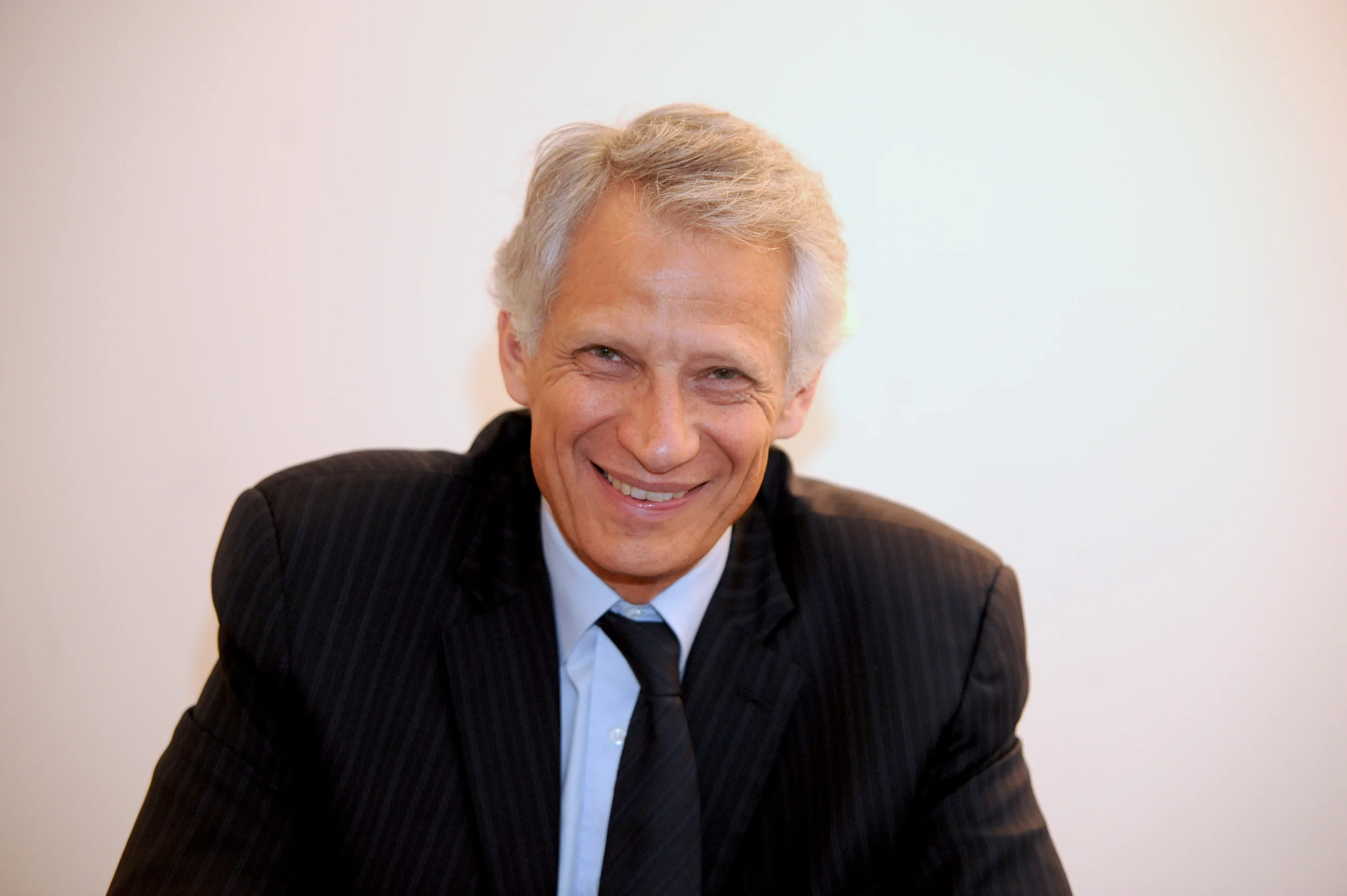
Dominique de Villepin
 France
Also known as: Dominique Marie François René Galouzeau de Villepin, Dominique Galouzeau de Villepin
Birthday
November 14, 1953
Birth Sign
Scorpio
Birthplace
Rabat, Morocco
Age
72 years old
Height
6 ft 3 in (191 cm)
About
Dominique de Villepin is a French politician, diplomat, and writer who served as Prime Minister of France from 2005 to 2007. A career diplomat turned statesman, he is best known for his impassioned 2003 United Nations speech opposing the invasion of Iraq, a moment that defined his international reputation as a champion of multilateralism.
Born in Rabat, Morocco, and raised across continents, de Villepin rose through the ranks of the French foreign service before becoming a close aide to President Jacques Chirac. His tenure as foreign minister, interior minister, and finally prime minister was marked by both bold diplomatic stands and contentious domestic reforms.
Since leaving office, he has remained active as a writer, lecturer, and Distinguished Professor at CEIBS. His literary works include essays on Napoleon and poetry, and he continues to speak on global governance and international affairs. With a towering presence and a flair for oratory, de Villepin remains a distinctive voice in French public life.
Early Life & Background
Dominique de Villepin was born on November 14, 1953, in Rabat, Morocco, then part of the French Protectorate. His father, Xavier de Villepin, was a commercial director who later became a senator, and his mother, Yvonne Hétier, was a senior administrative court counsel. Because of his father's diplomatic postings, de Villepin spent his childhood abroad, living in Venezuela for four years before moving to the United States.
In America, he attended the Lycée Français de New York and was deeply influenced by the Beat Generation and the hippie counterculture of the 1960s. He has said that Jack Kerouac and other American poets left a lasting mark on him. After graduating in 1971, he moved to France, where he studied law and literature, then attended Sciences-Po and later the École Nationale d'Administration (ENA), graduating in 1980 as part of the prestigious "Voltaire" class.
De Villepin entered the French diplomatic service in June 1980, initially working on African and Malagasy affairs. From 1984 to 1989, he served at the French Embassy in Washington, D.C., handling Middle East issues during the Iran-Contra affair. He then held postings in New Delhi and Paris, eventually becoming principal private secretary to Foreign Minister Alain Juppé in 1993, a role that positioned him for his rise to the top of French politics.
Career Growth
De Villepin's breakthrough came in 1995 when President Jacques Chirac appointed him Secretary-General of the Presidency, making him chief of staff at the Élysée Palace for seven years. In 2002, he became Minister of Foreign Affairs, and his opposition to the US invasion of Iraq in 2003 brought him international acclaim. His speech at the UN Security Council, which drew applause, solidified his reputation as a leading voice for multilateralism.
He served as Minister of the Interior from 2004 to 2005, where he invoked a state of emergency to quell suburban riots. In May 2005, he was appointed Prime Minister. His premiership was marked by the "battle for jobs" and labour reforms, but his proposed First Employment Contract (CPE) sparked massive protests, forcing him to withdraw the measure in April 2006. This political setback weakened his standing, and he was replaced by François Fillon in May 2007.
After leaving office, de Villepin faced the Clearstream affair, a legal battle over accusations against his rival Nicolas Sarkozy. He was cleared of all charges in 2010. He then founded the République Solidaire party and ran for president in 2012, finishing in the single digits. Since then, he has focused on writing, teaching at CEIBS, and speaking at international forums, and in 2024 he joined other former leaders in calling for a global tax on the ultra-rich.
Career Timeline
Public Image & Style
De Villepin projects an image of aristocratic elegance and intellectual gravitas. His tall, athletic frame and tanned appearance earned him media attention, often described as a statesman with a poet's soul.
Known for his eloquent, sometimes theatrical speeches, he is seen as a passionate defender of French sovereignty and multilateralism. His 2003 UN address became a defining moment, casting him as a moral voice against the Iraq War.
His public persona is that of a cultivated intellectual, often quoting poets and historians. After his acquittal in the Clearstream affair, he gained admiration from across the political spectrum for his critiques of Nicolas Sarkozy's "imperial rule" style. He remains a respected figure in international circles, though his domestic political influence has waned.
Fame & Fandom
Dominique de Villepin commands a global audience defined by political gravitas rather than pop culture adulation. His influence resonates through diplomatic circles, academic institutions, and historical archives where his 2003 United Nations speech remains a definitive moment in international relations. Despite this enduring legacy, iFANN's Global Fame Engine has evaluated this person, but they do not currently hold a placement in the published rankings (Global Top 1,000 or a Top-100 scope list). This absence from the charts reflects a status rooted in serious statesmanship rather than viral celebrity metrics or mass entertainment consumption. The world recognizes him as a formidable architect of French foreign policy, yet he does not compete for spots on lists designed for entertainers or athletes. Consequently, there is no formal name for his fanbase. While admirers exist within political science communities and among those who follow European history, no organized community uses a specific moniker to identify supporters. His engagement remains strictly professional, characterized by speeches at international summits and appearances on major news networks. Unlike figures with dedicated cults of personality, Villepin's public presence is measured, intellectual, and devoid of the chaotic energy that drives modern fandoms. His reputation stands firm on principles and historical impact, making him a figure of significant respect without the trappings of a traditional celebrity following.
Interesting Facts and Legends
Known for his imposing physical presence, Dominique de Villepin stands 6 feet 3 inches tall, an athletic build that often drew media attention during his tenure in public office. He serves as an honorary member of the International Raoul Wallenberg Foundation, reflecting his commitment to human rights. His literary contributions are substantial, including a 2001 essay titled "Les Cent-Jours ou l'esprit de sacrifice" focused on Napoleon and a 2016 work on peacebuilding called "Mémoire de paix pour temps de guerre," which was translated into Chinese in 2018. A lifelong poet, he has published several collections inspired by his deep love of literature. Since stepping back from daily politics, he has traveled extensively on business to Iran, Argentina, Venezuela, and Colombia.
The most legendary moment in his career occurred at the United Nations Security Council, where he delivered a defiant speech. In this address, he famously declared that war in Iraq would be illegal and stated, "The French people want peace," directly challenging the US position before the invasion. This single event cemented his reputation as a champion of multilateralism and a moral voice against the conflict. While recent reports from 2026 mention a legal probe regarding gifts received while serving as foreign minister, this controversy is viewed as a political matter rather than part of his celebratory mythology.
Notable Quotes
“The 'Beat generation' movement left its mark on me, so did the hippie movement.”
“We do not believe that the use of force is the right way to solve the crisis in Iraq.”
“The world is not a unipolar world. It is a multipolar world.”
Family & Personal Life
De Villepin is married to Marie-Laure de Villepin, and the couple has three children: Marie, born in 1986, Arthur, and Victoire, born in 1989. His wife, Marie-Laure, has largely stayed out of the public eye, though she has supported him throughout his political career.
His father, Xavier de Villepin, was a senator representing French citizens abroad, and his mother, Yvonne Hétier, was a senior administrative court counsel. The family's aristocratic lineage is reflected in the name Galouzeau de Villepin.
De Villepin's childhood was shaped by his father's diplomatic postings, which took the family to Venezuela and the United States. He has spoken about the influence of his international upbringing on his worldview.
Notable Connections
Relationships & Dating History
De Villepin has been married to Marie-Laure de Villepin for decades, and the marriage has remained intact throughout his political career. The couple has three children: Marie, Arthur, and Victoire.
There are no credible reports of any other romantic relationships. His marriage has been a stable presence in his life, with Marie-Laure often appearing at official events.
As of 2026, de Villepin remains married to Marie-Laure, and they continue to live together in France.
- MarriedMarie-Laure de VillepinCurrentLong-term marriage, together for decades, three children.
Salary, Net Worth In 2026
$10 Million
iFANN Editorial Team estimate
iFANN currently estimates Dominique de Villepin's net worth at $10 Million as of 2026. This financial standing stems from decades of dedicated public service, a prolific career as a writer, and his current position as a Distinguished Professor at CEIBS, where he instructs students in international affairs. As a former Prime Minister and minister, de Villepin earned a government salary, yet his income has been significantly bolstered by numerous publications, including essays on Napoleon and diplomacy. He remains a sought-after speaker at international conferences, commanding fees for his appearances that reflect his stature as a seasoned statesman. Beyond his teaching and writing, de Villepin holds various honorary positions and engages in diverse business and cultural activities. His wealth has grown steadily since leaving office, driven by the continued demand for his expertise in teaching, writing, and speaking engagements.
Awards & Accolades
View 1 records, honours and achievementsKnown For
Prime Minister of France
2005-2007 · Prime Minister
UN Speech Against Iraq War
2003 · Foreign Minister
Minister of Foreign Affairs
2002-2004 · Minister
Keywords
Sources
Quick Facts
- Profession
- politician, diplomat, writer
- Born
- November 14, 1953
- Birthplace
- Rabat, Morocco
- Gender
- Male
- Spouse
- Marie-Laure de Villepin
- Children
- 3
- Height
- 6 ft 3 in (191 cm)
Personal Details
- Full Name
- Dominique Marie François René Galouzeau de Villepin
- Height
- 6 ft 3 in (191 cm)
- Spouse
- Marie-Laure de Villepin
- Children
- 3
- Education
- Institut d'Études Politiques (Sciences-Po), École Nationale d'Administration (ENA)
Frequently Asked Questions
How old is Dominique de Villepin?
What is Dominique de Villepin's net worth in 2026?
Is Dominique de Villepin still active in politics?
What is Dominique de Villepin best known for?
What happened with Dominique de Villepin and the Clearstream affair?
Social Media
Similar People
Join the community
fans discussing